
Benefits of Personalized Christmas Cards From Photos
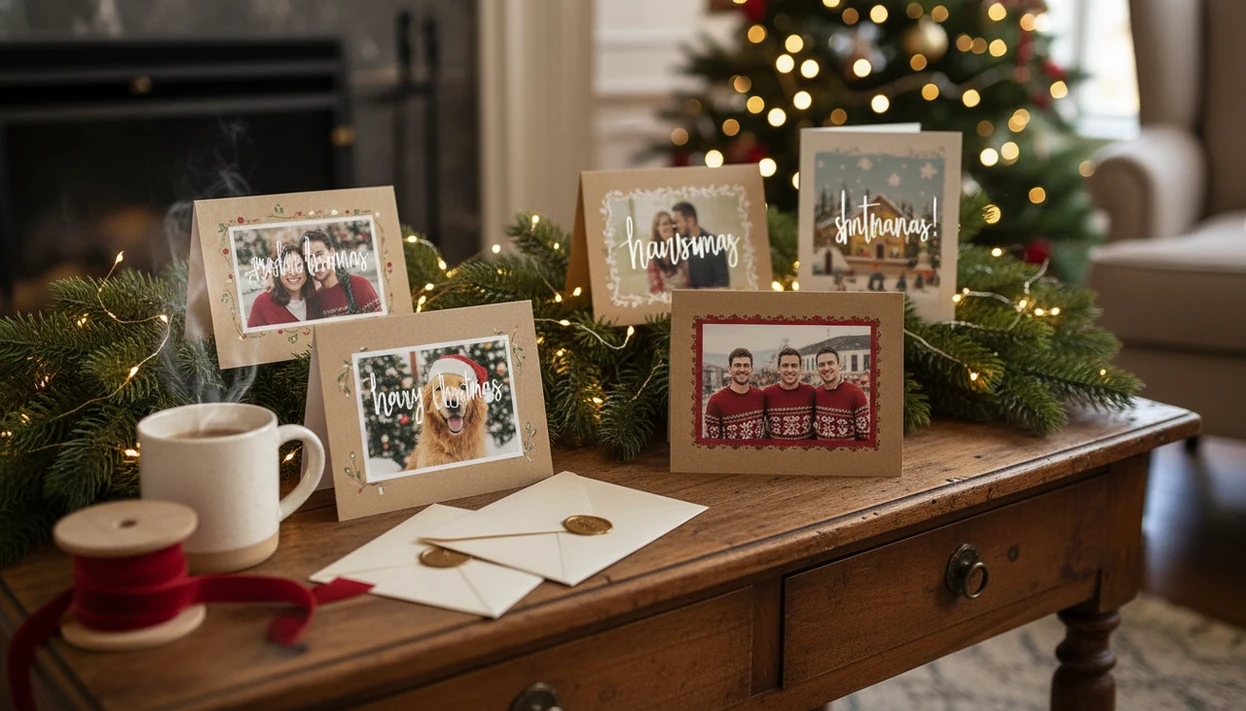
Personalized Christmas cards make holiday greetings more memorable by combining a personal photo, a relevant message, and a meaningful relationship update. They can help recipients feel remembered, share important milestones, and create keepsakes worth displaying or saving. These benefits are strongest for close contacts, while generic cards may be more practical for large mailing lists.
> Personalized Christmas cards are custom holiday greetings made with your own photos, names, messages, dates, inside jokes, or brand details instead of a generic store-bought design.
- Personalized photo Christmas cards feel more meaningful because they show time, choice, and care.
- Photo card benefits include stronger keepsake value, better display appeal, and a more memorable seasonal update.
- Printed cards, digital greetings, and AI-styled photo cards can work together for families, couples, pets, grandparents, clients, and last-minute senders.
Personalized Christmas Card Benefits in One Definition
Personalized Christmas cards are custom holiday greetings made with your own photos, names, messages, dates, inside jokes, or brand details instead of a generic store-bought design. That personalization can be simple: one phone photo, “Love, the Parkers,” and a short note about the year.
It can also include handwritten updates, pet portraits, a team photo, business colors, or a digital version for friends who moved overseas. The point is not to make the fanciest card. The point is to make the card unmistakably yours.
Generic boxed cards still help when you need speed or formality. Personalized cards usually matter more when the relationship is personal, visual, or ongoing. Tools like a Christmas card app can turn one photo into printable Christmas cards and holiday greetings for families, couples, and small businesses.
Five Personalized Holiday Card Benefits Readers Should Know
- Emotional meaning: Personalized Christmas cards show that the sender chose a real photo, wrote a message, and thought about the recipient. USPS reported that 89% of U.S. adults said personal letters and cards have special meaning that emails cannot replace (USPS).
- Display value: Photo cards often earn a spot on the fridge, mantel, doorway ribbon, or office shelf because they include familiar faces. A plain “Season’s Greetings” card has to work harder.
- Keepsake value: Many people save cards with children, pets, weddings, new homes, or family milestones. The baby sock lost under the tree may be the thing everyone remembers later.
- Relationship maintenance: A mailed or printed card helps keep contact warm with grandparents, distant friends, clients, and relatives you do not text every week. Royal Mail’s mail-effectiveness research has reported that 57% of respondents felt more valued by mail than by email (Royal Mail Marketreach).
- Identity expression: Photo card benefits come from real memories more than fancy design. A blurry tree-farm selfie can say more than a polished stock wreath.
How Personalized Photo Christmas Cards Work
Personalized photo Christmas cards work because faces, names, and specific memories increase perceived effort and relevance. In plain terms, the recipient can tell the card was made for real people, not pulled from a shelf on the way to checkout.
There is also a physical-card mechanism. A printed card gets held, opened, propped up, moved, and seen again by other people in the home. That repeated visibility gives the greeting more life than a post someone scrolls past between recipes and shipping notices.
The slower moment matters.
AI styling can help polish yellow living-room light, soften a busy background, or turn one phone photo into a snowy portrait style preview. But the relationship cue should stay intact. If the toddler, dog, or couple no longer looks like themselves, the card loses the thing that made it personal.
Personalized Christmas Cards Versus Generic Holiday Cards
Personalized cards and generic cards both have a place, but they do different jobs. Personalized cards usually win when the sender wants closeness, memory, or identity; generic cards work well for speed, simplicity, or formal recipients.
| Card factor | Personalized Christmas cards | Generic holiday cards |
|---|---|---|
| Emotional impact | Higher, because the card includes real people, names, or memories | Lower, unless the handwritten note is strong |
| Time required | More time for photo choice, wording, and proofing | Faster to buy, sign, and send |
| Display value | Often stronger because familiar faces catch attention | Depends mostly on artwork |
| Keepsake value | Higher for milestones, kids, pets, and family updates | Usually lower unless the message is personal |
| Cost | Can cost more for printing and postage | Often cheaper in boxed sets |
| Digital sharing | Easy to match with text, email, or story formats | Less useful digitally |
| Best use case | Family, couple, pet, client, or milestone greetings | Formal lists, quick notes, or backup cards |
For most families, the strongest photo card benefits come from one honest image and a message that sounds like them.
Before You Start: Photos, Privacy, and Mailing Details
Before you open a card maker, gather the practical pieces that make the finished card easier to approve, print, and send. A few minutes of prep prevents the usual December scramble: wrong crop, missing address, or a house number sitting clearly behind the kids.
- Choose two or three photo options so you are not stuck if your favorite image crops badly, prints too dark, or leaves no clean space for names.
- Check your recipient list early by confirming mailing addresses, name spellings, delivery deadlines, and whether your card size needs standard or extra postage.
- Review the photo for privacy clues such as children’s school logos, team uniforms, street signs, house numbers, license plates, or obvious location details.
- Decide who gets print versus digital so grandparents, clients, and keepsake people can receive cards by mail while last-minute friends or faraway relatives get a fast digital greeting.
- Set a short message style for each group before writing: warm for family, playful for friends, appreciative for clients, and simple for neighbors.
That prep keeps the card personal without making it harder than it needs to be.
How to Use Photo Card Benefits for Better Christmas Greetings
Use photo card benefits by making the card specific before you make it decorative. Start with the photo you already have, then choose the format, wording, and send method.
- Choose one real photo that shows faces, connection, or a clear seasonal moment, even if the dog leash is still in the corner.
- Match the card to the recipient group by using warmer family wording for relatives, lighter humor for friends, and restrained gratitude for clients.
- Add one specific message that names the year, trip, new home, pet, baby, business milestone, or shared memory.
- Pick a display-friendly layout with readable names, enough margin, and no tiny photo grid that hides everyone’s expressions.
- Send both print and digital versions when useful so grandparents get mail and distant friends get a same-day greeting.
For wording help, keep a short draft beside your card and borrow structure from Christmas card wording ideas without copying the same sentence to everyone.
Personalized Holiday Card Benefits for Families, Couples, and Pets
Personalized holiday cards work especially well when the photo explains the year at a glance. Families, couples, pets, and grandparents all benefit from cards that show real change, not just a seasonal border.
Family milestone photo cards
Families: A yearly photo card can show kids growing, a new home, a first Christmas together, a blended family name, or a move across town. Siblings squeezing onto one step may feel more truthful than a studio pose. For longer notes, family Christmas card wording can help keep the update warm without turning it into a full letter.
Grandparents and relatives: Photos help distant family feel included in the year. A clear picture on a printed card can sit where a group chat photo disappears.
Couple and pet Christmas cards
Couples: Engagements, newlywed years, first apartments, travel memories, and long-distance seasons all make strong card themes. The message can be romantic without being sugary.
Pets: Pet cards bring humor and warmth, especially when people dislike posing. A cat in the wrapping paper or a dog by the tree says, “Yes, this is our household.”
Personalized Christmas Card Benefits for Clients and Small Businesses
Client holiday cards work best as appreciation, not a pitch. A good small-business card says thank you, marks the relationship, and gives the recipient a warm reason to remember the people behind the invoice.
Brand identity can be light: colors, a team photo, a founder note, a customer-specific line, or a local community reference. The card should still feel like a greeting. Not a flyer.
USPS research on millennials found that 62% had visited a store in the past month based on information received in the mail, and USPS has also reported that 70% of consumers said mail is more personal than the internet (USPS). For holiday cards, that personal feeling matters more than a coupon code.
If you are writing to customers, keep business holiday card wording appreciative, brief, and free of pressure.
Printed and Digital Personalized Christmas Cards Together
Printed and digital personalized Christmas cards work best when they share the same photo, message, and style. Printed cards fit grandparents, close relatives, clients, keepsakes, and anyone who still saves cards in a ribbon-tied stack.
Digital greetings fit last-minute senders, distant friends, group chats, email lists, and social sharing. They also help when the address list lives on a sticky note and school pickup is in 12 minutes.
Use the printable version for the people who will display it. Use the digital version for the people who need it fast.
A good Christmas card maker should let you preview print and digital formats, check crop safety, and export a card without locking private family details into a design you cannot edit. a Christmas card app, Canva, and PiXmas Cards can all help turn one phone photo into a polished holiday greeting quickly; you still need to judge privacy, wording, and print quality.
Common Mistakes That Reduce Photo Card Benefits
The biggest mistake is trying to make one card do too much. Too many photos in one layout can shrink the faces until even Grandma has to squint.
A copied-sounding message also weakens the card. “Wishing you joy this season” is fine, but it could come from anyone. Add one detail, like the new puppy, the first apartment, or the customer project you appreciated.
Photo choice matters. Avoid images where faces are hidden, the crop cuts off the important person, or the emotional context is unclear. Over-editing can also hurt the card, especially when an AI style erases the real child, pet, or couple.
For business cards, avoid making the holiday greeting read like an advertisement. And do not wait so long that you rush proofing, mailing, or names. A corner crease in the mailer is survivable. The wrong last name is not.
Personalized Holiday Card Benefits Checklist Before Sending
Use this checklist before you print, post, or send the card:
- Is the photo clear enough for the card size?
- Does the crop protect faces, pets, and important details?
- Does the message fit the recipient group?
- Is there one specific line that could only come from you?
- Will the card look good on a mantel, fridge, desk, or phone screen?
- Did you choose the right printable version or digital format?
- Are names, dates, addresses, and business details correct?
- Does the timing fit your mailing window?
Specificity is the signal that separates a keepsake from a generic greeting. A simple card with one strong photo and a sincere note can outperform a complex design, especially at 9:47 p.m. when final-final-card.pdf is waiting in Downloads.
Limitations
Personalized Christmas cards have real benefits, but they are not the right answer for every sender, recipient, or deadline.
- Personalized cards take time to choose photos, write messages, proof names, and manage addresses.
- Printed cards cost more than a free text, email, or social post.
- Some recipients prefer short, simple greetings over elaborate family photo cards.
- Not every phone photo is suitable for print quality, cropping, or public display.
- AI-styled cards can feel impersonal if they replace the real memory instead of enhancing it.
- Research is stronger for mail, personalization, and relationship maintenance than for Christmas cards specifically.
- Business holiday cards can backfire if they feel promotional, generic, or poorly timed.
- Privacy still matters, especially with children’s faces, school logos, house numbers, or location clues. A quick review of Christmas card photo privacy is worth doing before sharing widely.
- Home printing can introduce its own problems, like an inkjet tray pulling cardstock slightly crooked.
FAQ
Are personalized Christmas cards worth it?
Personalized Christmas cards are worth it when the recipient will value the photo, message, or relationship update. They may not be worth the extra cost for a very large list of casual contacts.
Why do photo cards feel special?
Photo cards feel special because they include real faces, names, and memories from the sender’s life. Those details make the greeting feel chosen rather than generic.
Do people keep Christmas cards?
Many people display or save meaningful photo Christmas cards, especially cards with children, pets, weddings, or family milestones. Not every recipient keeps every card.
Are digital Christmas cards meaningful?
Digital Christmas cards can be meaningful when they include a personal photo and specific message. Printed cards may feel more memorable for keepsakes, grandparents, and close relatives.
What photo works best for a Christmas card?
A clear phone photo with visible faces, natural emotion, and enough space for text usually works best. The photo does not need to be studio-perfect.
Should businesses send holiday cards?
Businesses can send holiday cards when the message is appreciative and not overly promotional. A team photo, founder note, or customer-specific line often works better than a sales offer.
Are pet Christmas cards popular?
Pet Christmas cards work well because they add humor, warmth, and a strong sense of family identity. They are also easier when people in the household dislike posing.
How personal should Christmas card messages be?
Christmas card messages should be specific but concise. Tailor the line to the recipient group, such as family, friends, clients, or neighbors.