
Thoughtful Christmas Card Ideas for Parents with Dementia
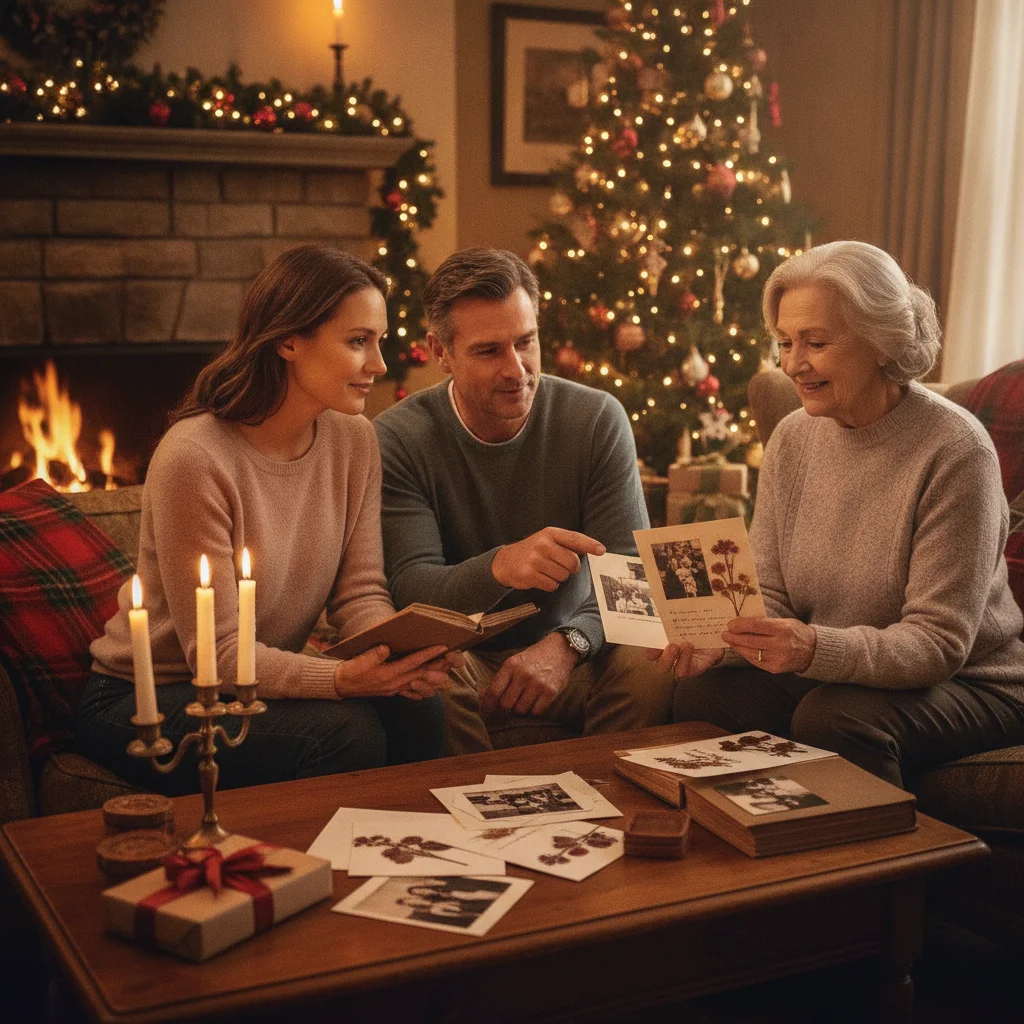
Quick answer: Choose a Christmas card with a simple design, large print, familiar names, and a warm message focused on love and comfort. A recognizable family photo can add meaning without asking the recipient to remember details. Avoid memory tests, complicated jokes, upsetting corrections, or wording that creates pressure to respond.
A Christmas card for an elderly parent with dementia can offer comfort even if the words or sender are not remembered later. The most helpful cards are clear, affectionate, and easy to take in. Focus on how the card may make your parent feel in the moment rather than whether your parent can recall names, events, or family traditions.
Dementia affects each person differently. Some parents can enjoy a detailed family update, while others respond better to one familiar photograph and a few reassuring words. Match the card to your parent's current abilities, eyesight, and emotional needs.
What makes a Christmas card dementia-friendly?
A dementia-friendly Christmas card reduces visual and emotional demands. Choose a card with one clear focal point, strong contrast, and little background clutter. Large print is easier to read, especially when dementia is accompanied by reduced vision.
Use direct language and identify yourself by name and relationship. Signing “With love from your daughter, Anna” may be easier to understand than signing only “Anna.” Include names beneath photographs if that information could provide reassurance.
| Card element | Helpful choice | Choice to avoid |
|---|---|---|
| Front image | Family photo, robin, tree, or familiar local scene | Busy collage with many small details |
| Text | Large, dark lettering on a plain background | Small script or low-contrast metallic text |
| Message | Short, warm, and reassuring | Questions that test memory |
| Photographs | Recent, recognizable faces with labels | Unidentified groups or surprising edited images |
What can you write inside the card?
A suitable message can be only two or three sentences. State who the card is from, express affection, and offer a calm seasonal wish. There is no need to explain every family event or ask your parent to remember a past Christmas.
- “Merry Christmas, Mum. I love you very much and I am thinking of you today. Love from your son, Michael.”
- “Dear Dad, sending you a warm Christmas hug. I hope your day is peaceful and comfortable. Love from Emma and Tom.”
- “Merry Christmas, Mum. This is a photograph of us enjoying the garden together. With all my love, your daughter, Sarah.”
- “Dear Dad, you are loved at Christmas and every day. I will see you on Friday afternoon. Love, James.”
- “Wishing you a calm and happy Christmas, Mum. Your family loves you very much.”
If your parent no longer recognizes Christmas, a general message about love, warmth, or winter may be less confusing. The card does not have to emphasize a celebration your parent cannot currently understand.
Which card designs may feel familiar and comforting?
Familiar subjects can be easier to process than abstract artwork. Consider a clear photograph of your parent's former home, garden, pet, church, hometown, or a family member your parent regularly sees. Traditional images such as a Christmas tree, holly, a robin, or a snowy village may also be suitable if your parent has always liked them.
A handmade card can work well when it remains simple. One large photograph, a bold greeting, and a handwritten signature are often enough. Avoid loose glitter, small decorations, strong fragrances, or detachable pieces if your parent may place objects in their mouth or become distracted by them.
Should you include old family memories?
A positive memory can be meaningful, but it should be offered without demanding recognition. Write “I loved our Christmas walks together” instead of “Do you remember our Christmas walks?” The first wording shares affection. The second can feel like a test.
Choose memories that are usually comforting. Dementia can change how a person interprets photographs or stories, and an apparently happy memory may sometimes cause sadness or confusion. A caregiver who sees your parent regularly may know which people and subjects currently receive a positive response.
How can children and grandchildren contribute?
Children can add a simple drawing, handprint, or short signed message. Label the contribution clearly, such as “A Christmas tree drawn for Grandma by Leo, your grandson.” This gives context without expecting your parent to identify the child independently.
Keep a group card organized by placing each person's name beside a short message. A crowded page of overlapping handwriting may be hard to follow. Separate cards can be easier if many relatives want to contribute.
What limitations should families keep in mind?
No card design is suitable for every person with dementia. Reading ability, recognition, attention, vision, and emotional responses can change over time. A card that worked last Christmas may need to be simplified this year.
A Christmas card cannot replace personal contact or professional care. If cards, photographs, or seasonal decorations regularly cause distress, ask a close caregiver what currently feels safe and familiar. The best choice may be a very simple note, a spoken greeting, or quiet time together.
The strongest card is not necessarily the most elaborate. A clear photograph, recognizable names, and a brief message of unconditional love can give an elderly parent a reassuring moment without placing pressure on memory.
What a Christmas card for a parent with dementia should never assume or demand
A Christmas card for a parent with dementia should never assume recognition, accurate recall, shared awareness of Christmas, or the ability to respond. Avoid memory tests such as asking whether they remember a person, place, celebration, or family story. Do not request a phone call, written reply, or confirmation that the card arrived. The message should not demand happiness, gratitude, reassurance, or enthusiasm about the holiday. Skip instructions to “remember,” “stay positive,” or explain confusing circumstances. Use affectionate statements that stand on their own instead. If names or relationships may be unclear, identify yourself gently without correcting or challenging the recipient. No single wording can guarantee comfort because dementia affects people differently. The card can offer warmth without requiring the parent to understand, perform, or prove anything.
Which Christmas card phrases can pressure a parent with dementia to seem cheerful?
Phrases that instruct an elderly parent with dementia to be cheerful are best replaced with calm, affectionate statements that require no emotional response.
- Scan for commands. In the Christmas card for your elderly parent with dementia, flag “cheer up,” “be happy,” “keep smiling,” and “enjoy every minute.” These phrases assign a feeling instead of offering care.
- Read it as the recipient. Ask whether your Christmas card expects an elderly parent with dementia to reassure you by sounding festive, grateful, or upbeat. If so, remove that expectation.
- Make one replacement. Change the demanding phrase in the Christmas card for your elderly parent with dementia to “I’m thinking of you,” “You are loved,” or “Sending warmth today.” Keep the wording simple and pressure-free.
Frequently asked questions
Should I write Merry Christmas to a parent who no longer understands Christmas?
A simple Christmas greeting is appropriate if it feels familiar and comforting. Use a general message about love, warmth, or peace if Christmas references cause confusion.
Is it helpful to put my name and relationship in the card?
Signing with both your name and relationship can provide useful context. For example, write “Love from Sarah, your daughter.”
Should I ask my parent if they remember past Christmases?
Avoid questions that test memory because they can create anxiety or embarrassment. Share the memory as a warm statement instead.
Can I include a family photograph?
A clear photograph of familiar people can be comforting. Add simple labels if your parent may have difficulty identifying the people shown.
What font is easiest for a parent with dementia to read?
Use a large, plain font with dark text on a light, uncluttered background. Avoid decorative script, italics, and tightly spaced lettering.
Are musical Christmas cards suitable for dementia?
A musical card may be enjoyable if the song is familiar and the sound is gentle. Avoid it if unexpected noise, repeated music, or hidden buttons could cause distress.
Should care home staff help present the card?
Care staff can choose a calm moment, identify the sender, and read the message aloud if needed. Staff may also advise whether photographs or particular memories are currently reassuring.
What should I write if my parent may not recognize me?
Write your name and relationship clearly, then offer affection without asking for recognition. For example, say, “With love from Daniel, your son. I am thinking of you this Christmas.” This gives helpful context while avoiding a memory test or any suggestion that your parent should know who sent the card.
Should I correct a parent with dementia if they misunderstand the card?
You generally do not need to correct a harmless misunderstanding about the card. Respond to the feeling rather than insisting on factual accuracy, especially if correction causes distress. A calm comment such as “This was sent with lots of love” can preserve the card’s comforting purpose without turning the moment into a test.
What can I write to a parent with dementia who seems sad at Christmas?
Write a brief statement that notices the moment without trying to change it. “I’m here with you,” “You are loved,” or “Sending you comfort today” can express care without requiring cheerfulness. Avoid asking your parent to smile, feel grateful, or make Christmas happy for everyone else.