
Printable Christmas cards to color 2027: 10 free designs
Quick answer: Below are 10 free printable Christmas cards to color. Each one is a single US Letter sheet: the right half is a line-art front, the left half has a short printed message for a specific person (grandparents, a teacher, a neighbor, Mom, a pet and more). Print in landscape on 65 to 110 lb cardstock, fold in half, and you get a 5.5 x 8.5 inch card that fits an A9 envelope.
-
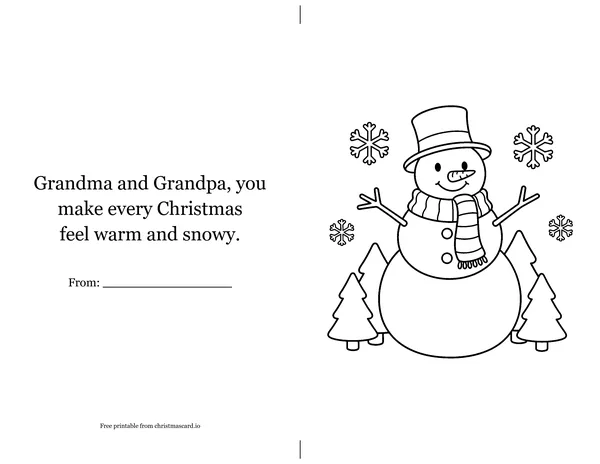
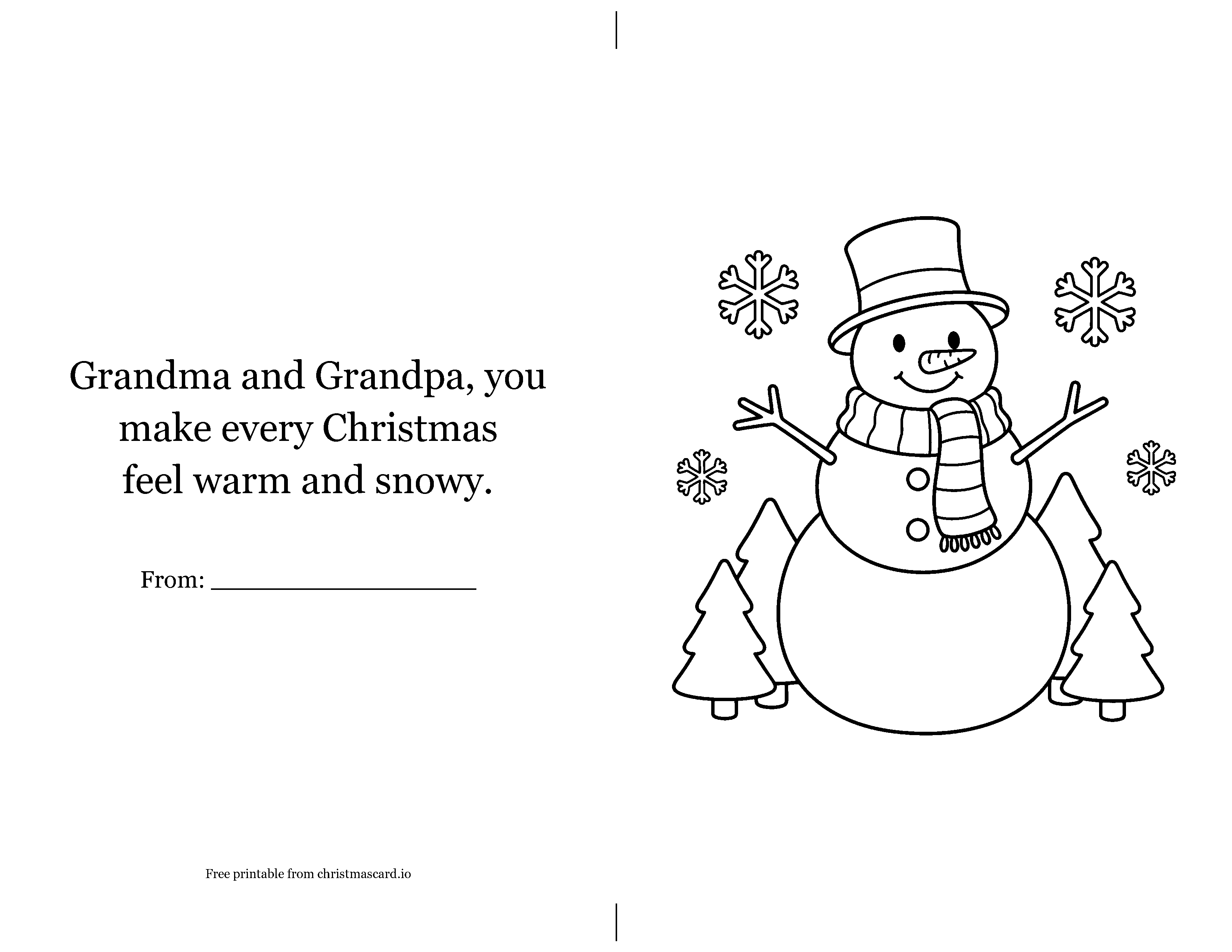
Snowman for grandparents
Ages 3 to 5
Message: "Grandma and Grandpa, you make every Christmas feel warm and snowy."
For more holiday fun, print these Christmas tree coloring pages and add a Nice List certificate for a festive surprise from Santa.
-
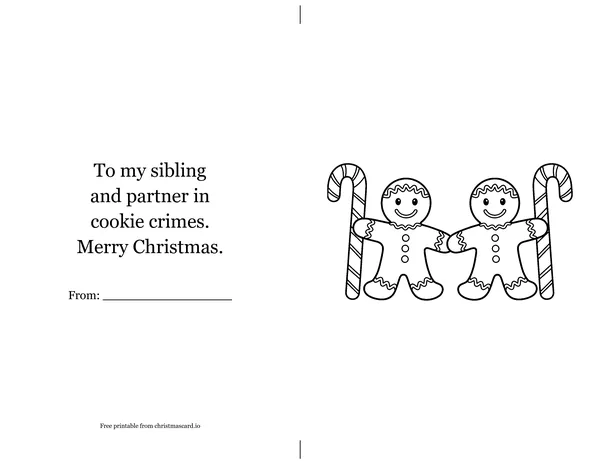
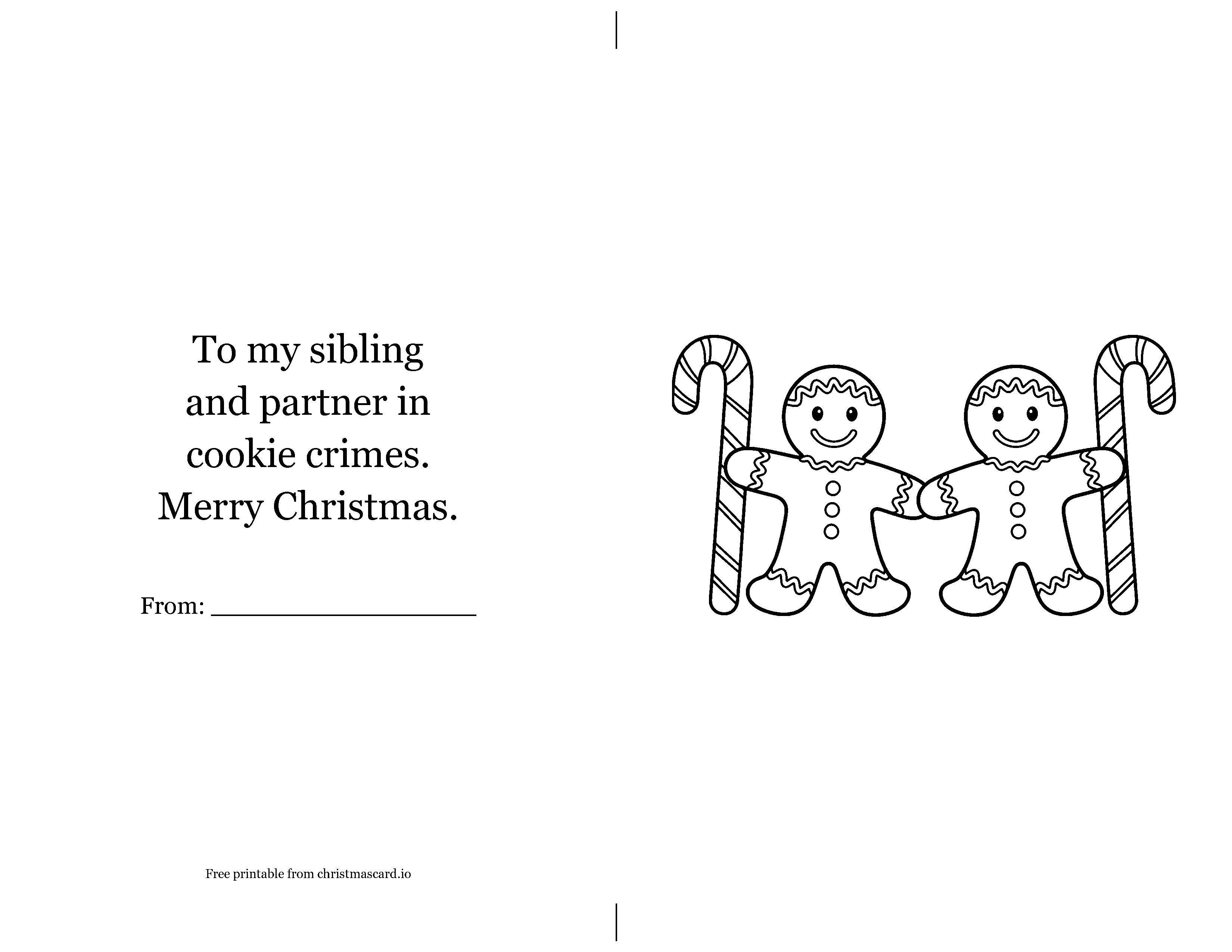
Gingerbread kids for a brother or sister
Ages 3 to 6
Message: "To my sibling and partner in cookie crimes. Merry Christmas."
For more holiday fun, print these Christmas tree coloring pages and add a Nice List certificate for a festive surprise from Santa.
-
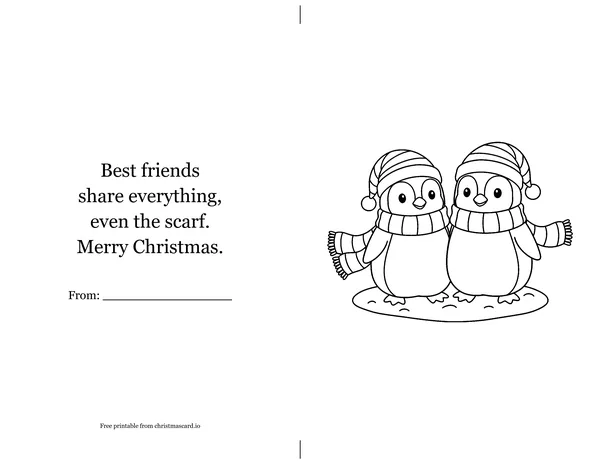
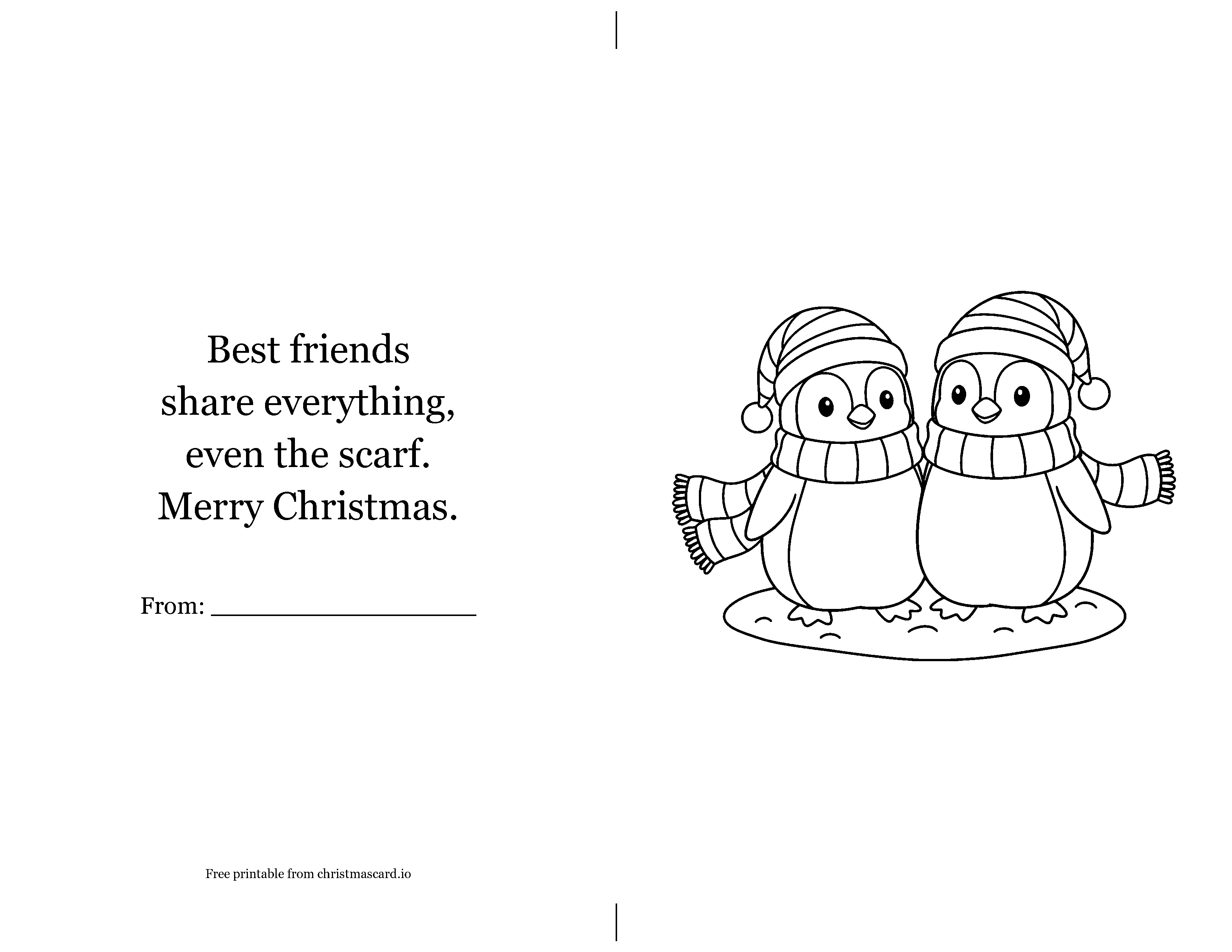
Two penguins for a best friend
Ages 5 to 7
Message: "Best friends share everything, even the scarf. Merry Christmas."
For more holiday fun, print these Christmas tree coloring pages and add a Nice List certificate for a festive surprise from Santa.
-
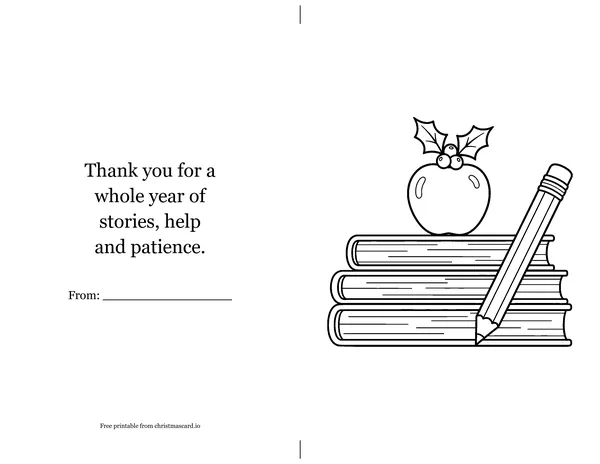
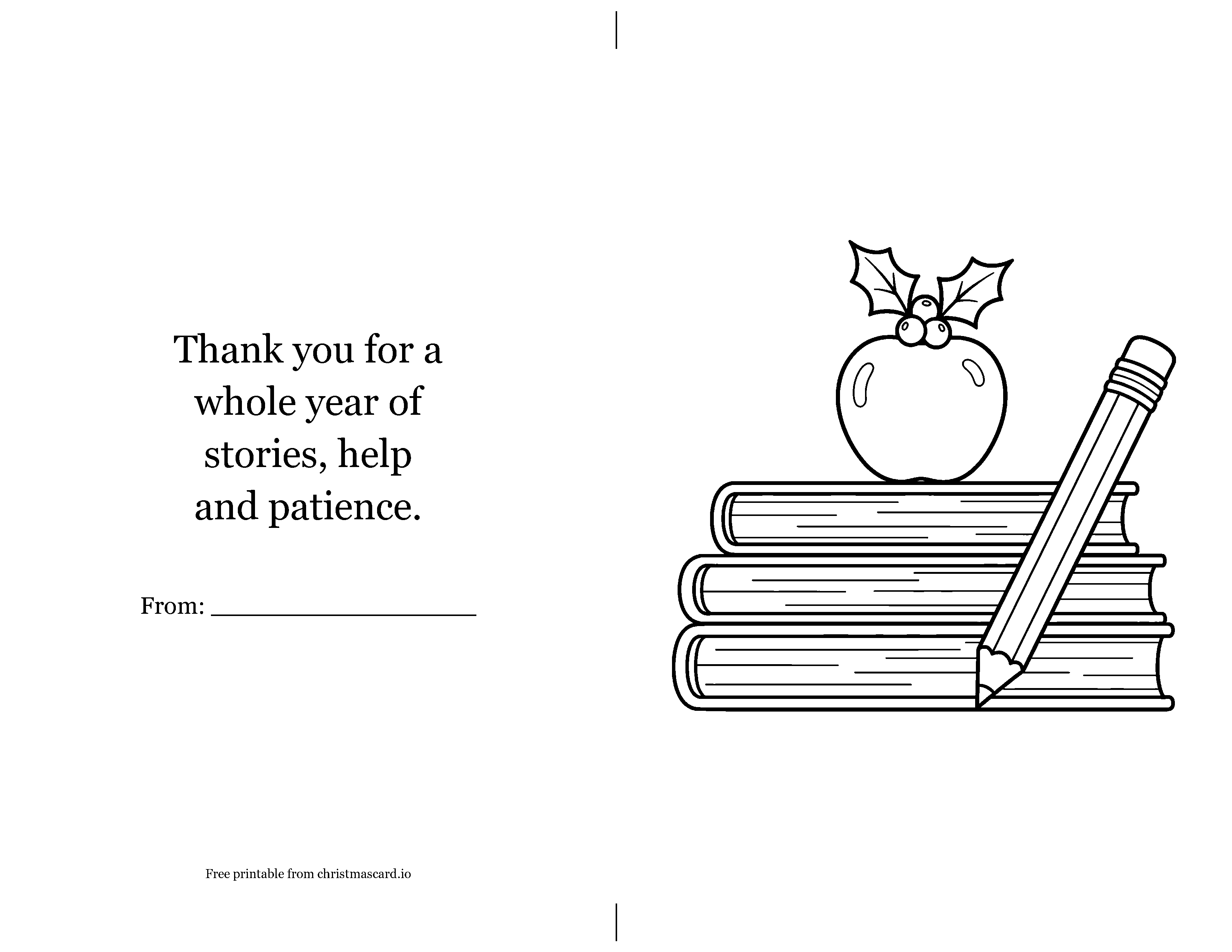
Books and apple for a teacher
Ages 5 to 7
Message: "Thank you for a whole year of stories, help and patience."
For more holiday fun, print these Christmas tree coloring pages and add a Nice List certificate for a festive surprise from Santa.
-
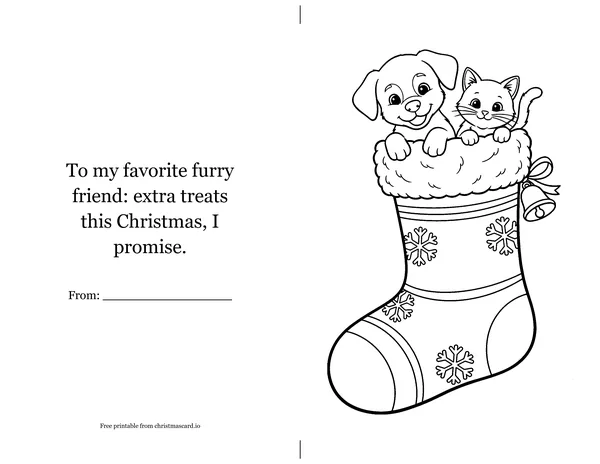
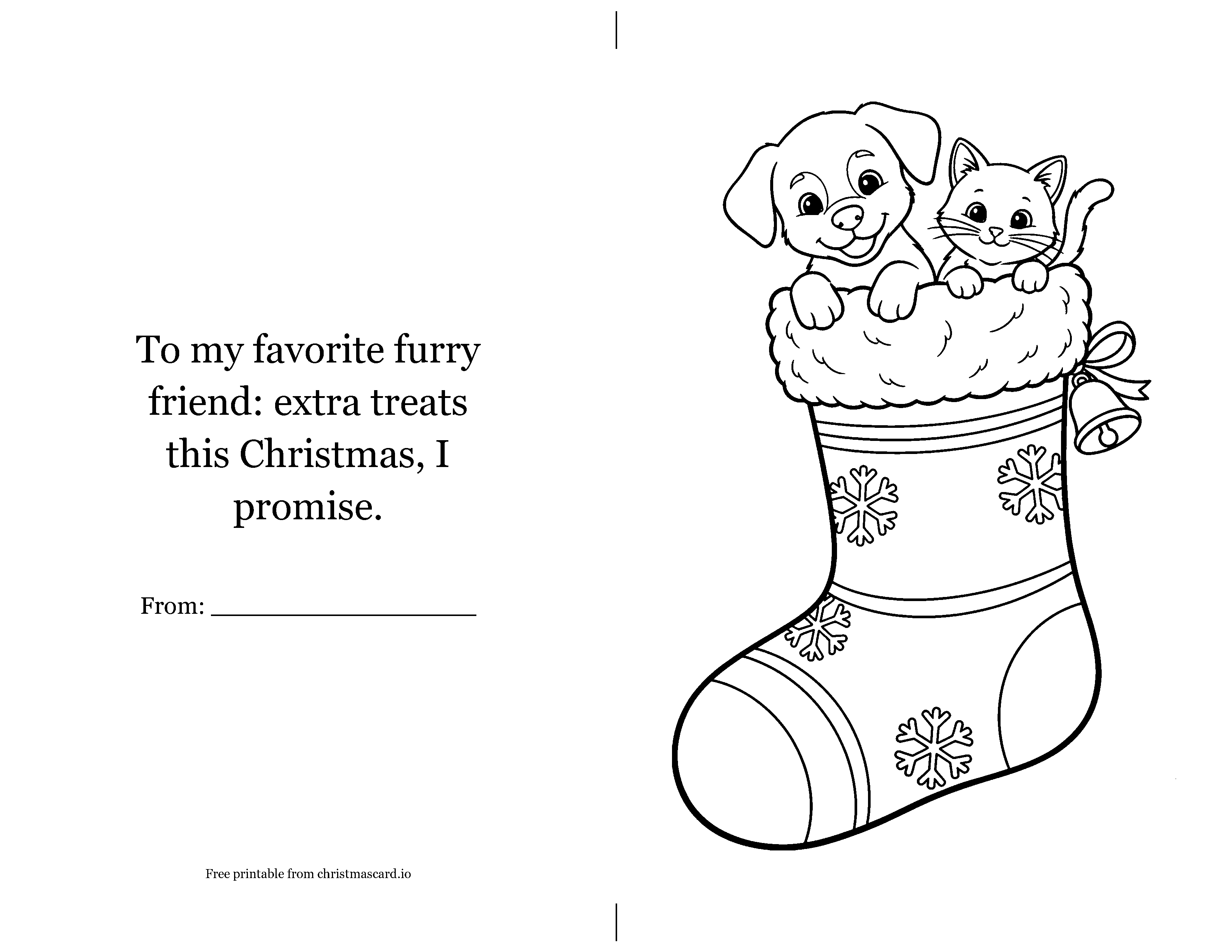
Puppy and kitten stocking for a pet
Ages 4 to 8
Message: "To my favorite furry friend: extra treats this Christmas, I promise."
For more holiday fun, print these Christmas tree coloring pages and add a Nice List certificate for a festive surprise from Santa.
-
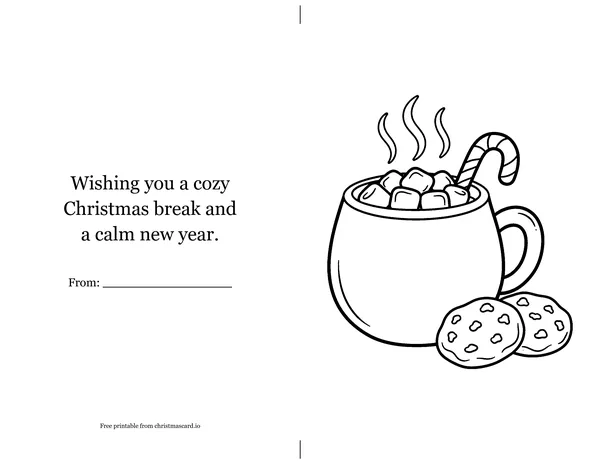
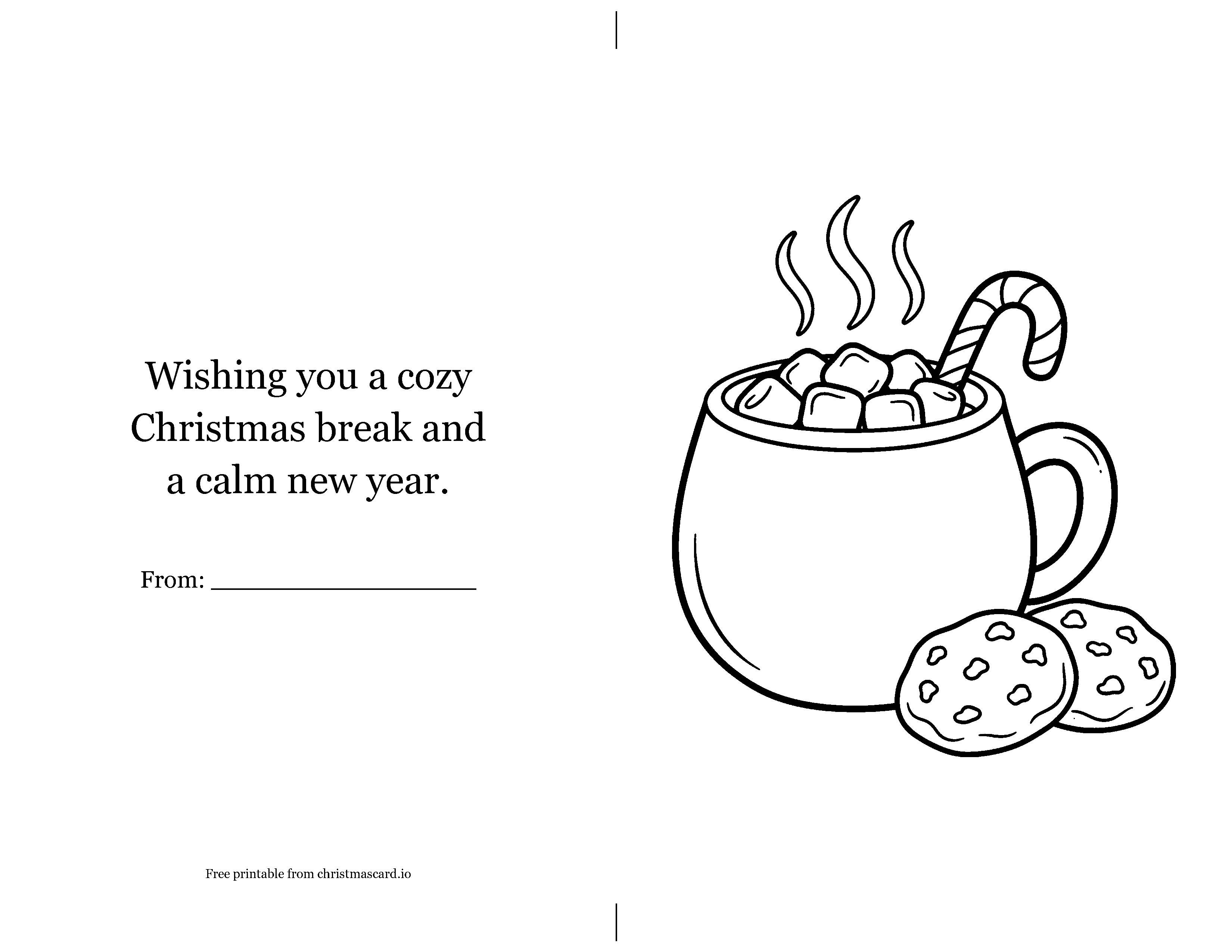
Hot cocoa mug for a coworker
Ages 6 to 10
Message: "Wishing you a cozy Christmas break and a calm new year."
For more holiday fun, print these Christmas tree coloring pages and add a Nice List certificate for a festive surprise from Santa.
-
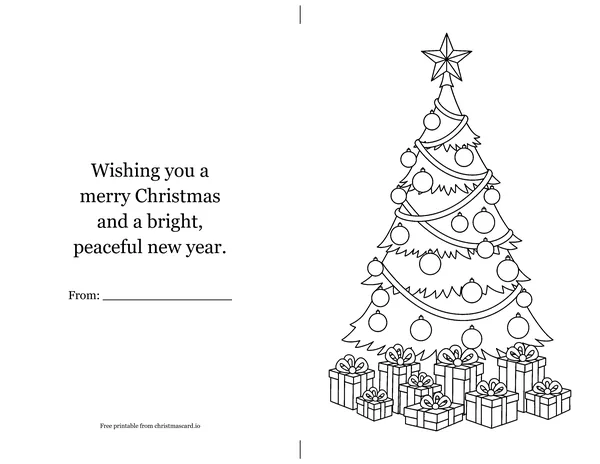
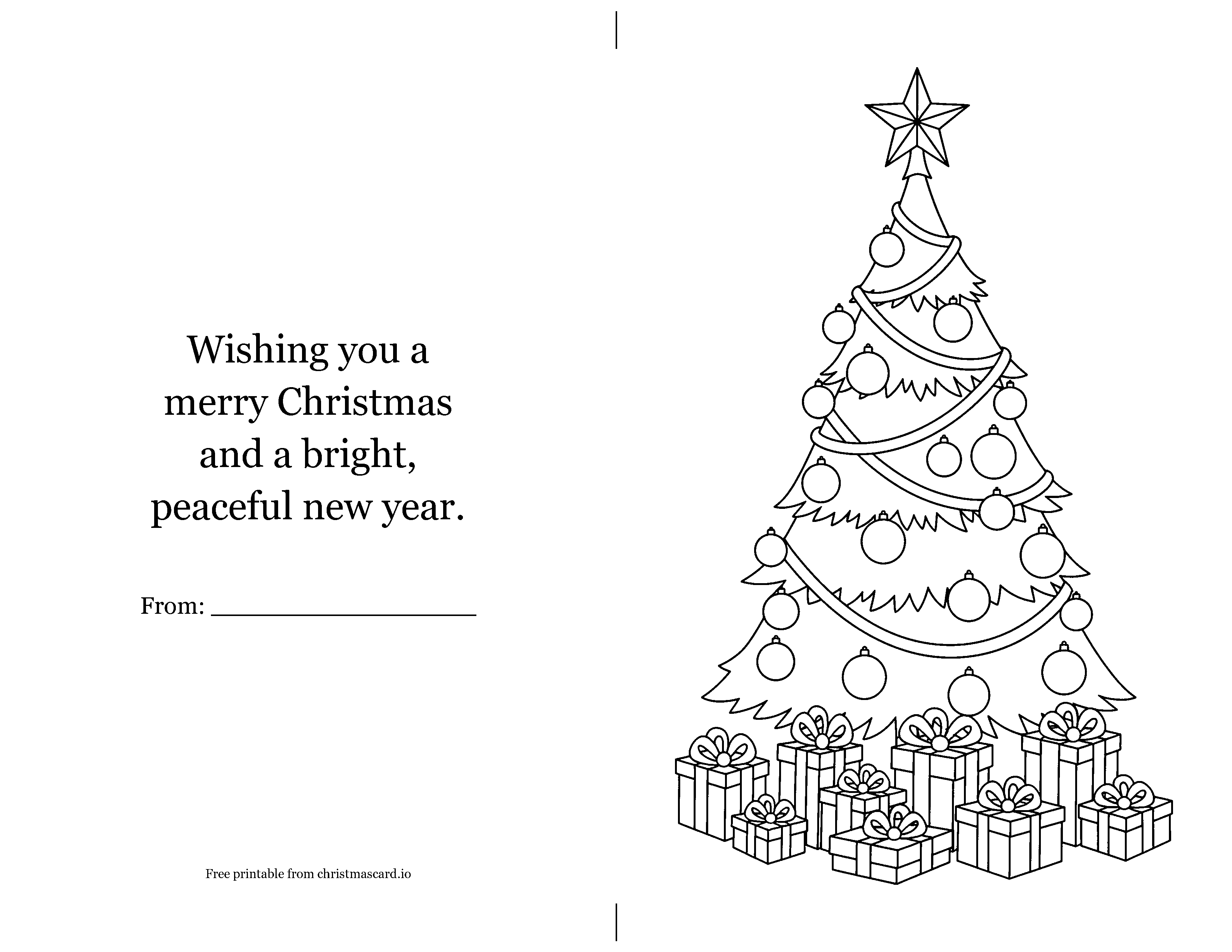
Christmas tree with gifts (general)
Ages 6 to 12
Message: "Wishing you a merry Christmas and a bright, peaceful new year."
For more holiday fun, print these Christmas tree coloring pages and add a Nice List certificate for a festive surprise from Santa.
-
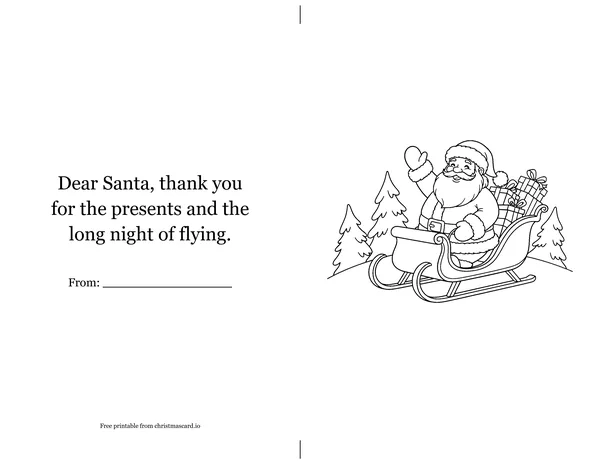
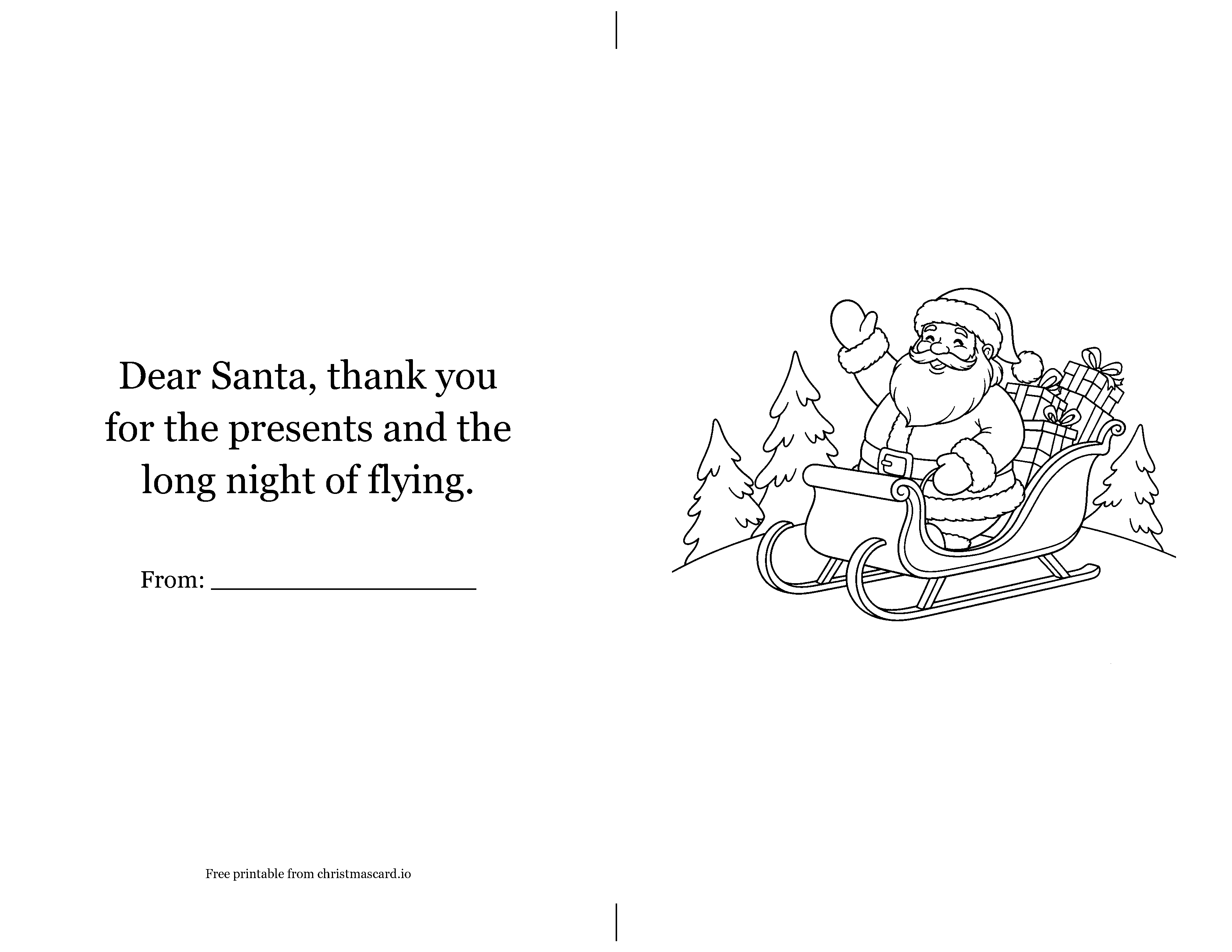
Santa sleigh thank-you card
Ages 7 to 10
Message: "Dear Santa, thank you for the presents and the long night of flying."
For more holiday fun, print these Christmas tree coloring pages and add a Nice List certificate for a festive surprise from Santa.
-
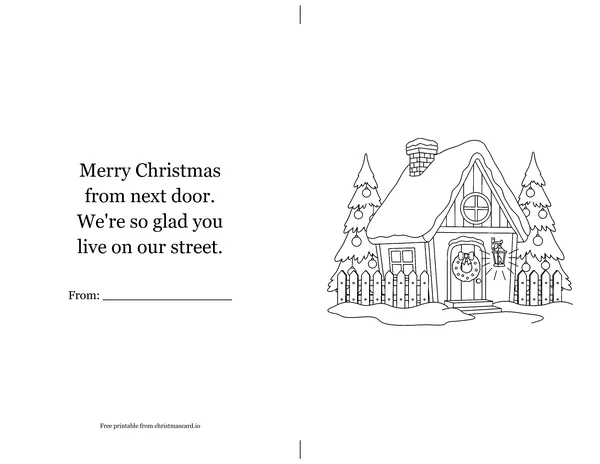
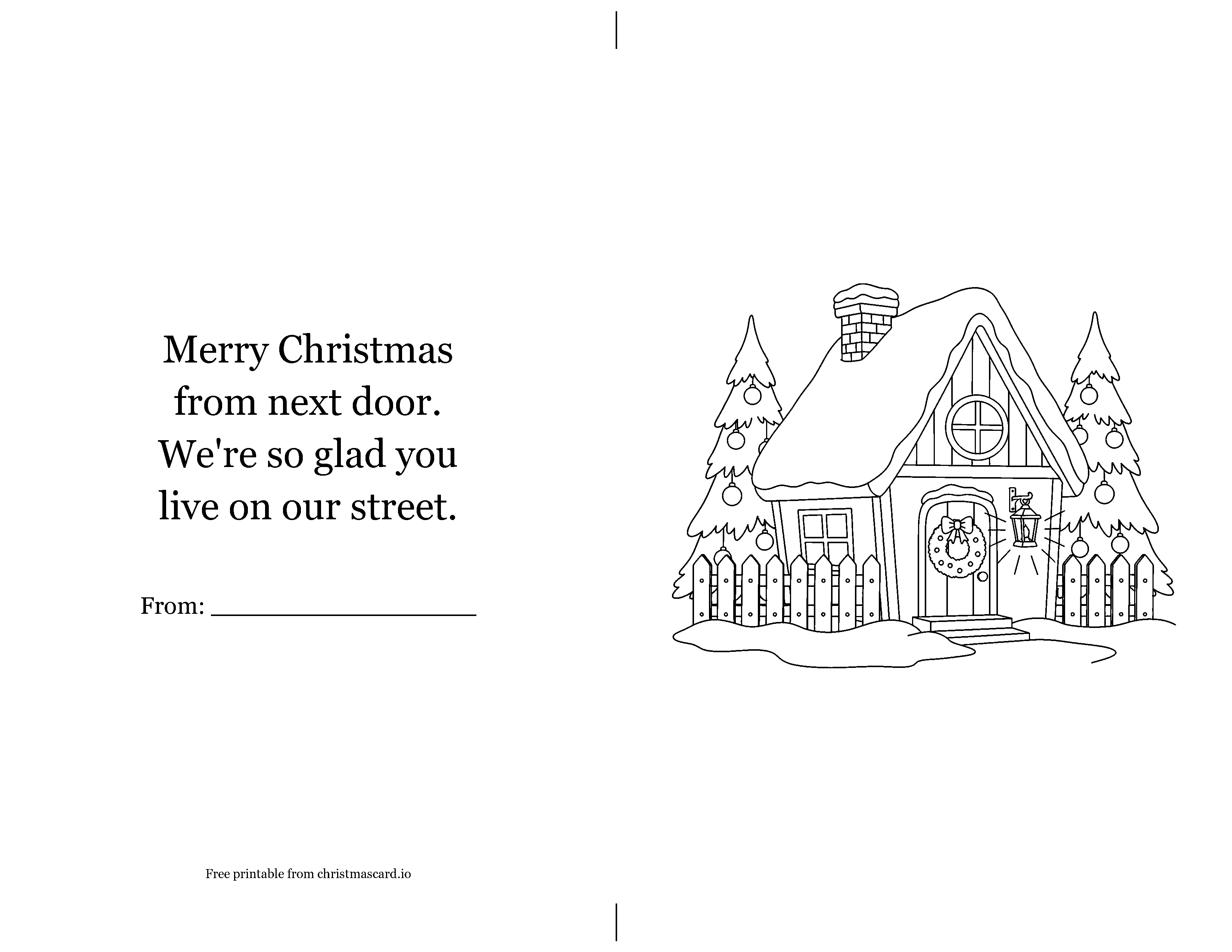
Snowy cottage for a neighbor
Ages 8 to 12
Message: "Merry Christmas from next door. We're so glad you live on our street."
For more holiday fun, print these Christmas tree coloring pages and add a Nice List certificate for a festive surprise from Santa.
-
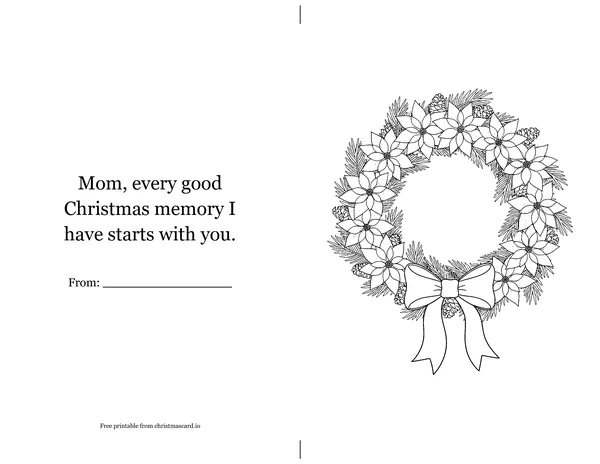
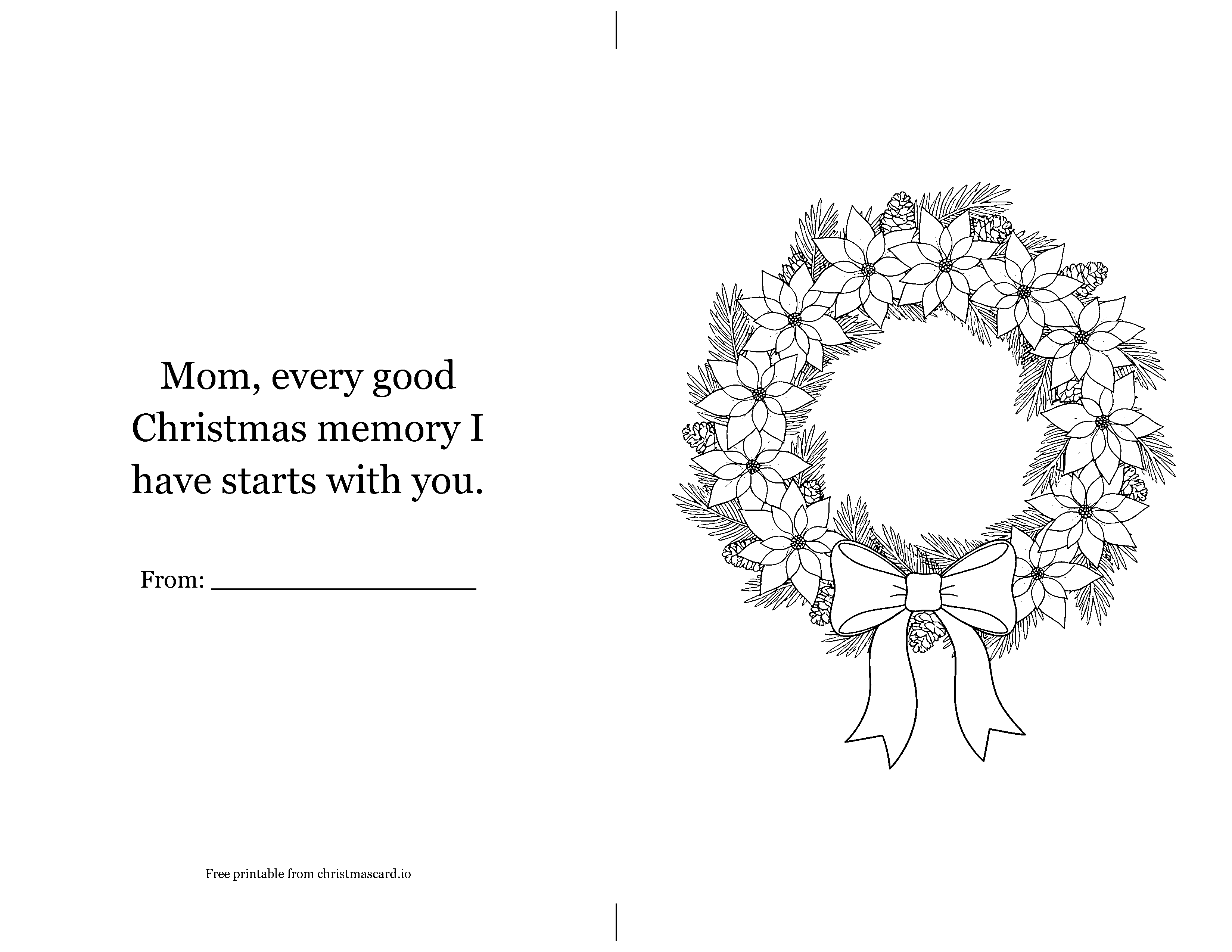
Poinsettia wreath for Mom
Teens and adults
Message: "Mom, every good Christmas memory I have starts with you."
For more holiday fun, print these Christmas tree coloring pages and add a Nice List certificate for a festive surprise from Santa.
All 10 designs were drawn for ChristmasCard as plain black outlines on white, with no shading and no gray, so they print fast and use very little ink. We measured each sheet after making it: between 96.3% and 97.8% of every page is blank paper. The full-size files are 3300 x 2550 pixels, which is US Letter at 300 dpi, so the lines stay crisp even on an older inkjet. None of the art uses movie or cartoon characters; the Santa, the penguins and the gingerbread pair are original drawings.
The cards are sorted from easiest to most detailed. A 3-year-old with fat crayons can handle the snowman. The poinsettia wreath has dozens of small petals and pine needles, which is why it's labeled for teens and adults (it's a good one for Mom to color herself, or for a grandparent who likes coloring books).
How to print and fold the cards
Every design prints on one side of one sheet. No double-sided printing, no cutting, no glue.
- Open the PNG or the PDF pack. In the print dialog, choose US Letter, landscape, and either "actual size" or "fit to page". Both work, because the art already has a half-inch margin.
- Pick black-and-white or grayscale printing. The files are pure black and white, so color cartridges are not needed.
- Load cardstock one sheet at a time if your printer jams on thick paper. Many home printers handle 65 lb cover through the main tray; 90 to 110 lb usually needs the rear or manual feed slot.
- Find the two short tick marks at the top and bottom edge, in the exact middle of the sheet. That's the fold line.
- Fold the sheet in half with the printing facing out, then run a spoon handle or a ruler edge along the crease.
When it's folded, the drawing is the front of the card and the printed message sits on the back panel, upright, with a "From:" line under it. The inside is left blank on purpose: that is where a child writes the recipient's name, adds a small drawing, or tapes in a photo.
The folded card measures 5.5 x 8.5 inches. Plan the envelope around that number. An A9 envelope (5.75 x 8.75 inches) fits it with a little room. A2 (4.375 x 5.75), A6 (4.75 x 6.5) and the common 5 x 7 card envelope (A7, 5.25 x 7.25) are all too small, so don't buy those for this pack. If you want to know which cardstock weights feed well in a home printer, our guide to the best cardstock for printing Christmas cards at home covers brands and printer limits.
| Paper | Feels like | Best for |
|---|---|---|
| 20 lb copy paper | A flimsy flyer | Test prints and practice coloring |
| 65 lb cover cardstock | A cereal box, a bit thinner | Crayons and colored pencils; feeds in most printers |
| 80 lb cover cardstock | A store-bought greeting card | Washable markers; the safest all-round choice |
| 110 lb cover cardstock | A thick postcard | Watercolor pencils and cards that stand up on a shelf |
Coloring ideas by age
Match the card to the hand, not just the recipient. A frustrated 4-year-old with a detailed wreath will scribble over the whole thing in two minutes (and honestly, Grandma will still love it).
Ages 3 to 5. The snowman and the gingerbread kids have big closed shapes and thick lines. Give chunky crayons or washable dot markers and don't worry about staying inside the lines. Ten to fifteen minutes is a realistic sitting.
Ages 5 to 8. The penguins, the teacher's book stack and the puppy-and-kitten stocking have medium shapes plus a few small details, like the bell on the stocking or the stripes on the scarves. Regular crayons or fine-tip washable markers work. This is a good age to suggest a pattern: red and white stripes on the candy canes, a different color on each book spine.
Ages 8 to 12. The tree with gifts, the Santa sleigh and the snowy cottage reward patience. Colored pencils let kids shade the snow on the roof with light blue, or make the lantern glow with yellow and orange. Some kids like to color every ornament on the tree a different color, which can stretch to 40 minutes.
Teens and adults. The poinsettia wreath is the detailed one. Fine colored pencils, gel pens or alcohol markers give the best result. Alcohol markers bleed through most cardstock, though, and on a folded card that bleed shows up on the blank inside. Slip a scrap sheet under the front while you color, or stick to pencils.
One trick that works at every age: add a little texture after coloring. A white gel pen makes snowflakes pop over dark blue, and a dab of glue with fine glitter on the star of the tree looks great (keep it flat if you plan to mail the card).
Writing the inside message
Each card already carries a printed line on the back, written for one kind of recipient: a thank-you for a teacher, a joke for a sibling, a promise of extra treats for the family dog. Those lines are short on purpose, between 9 and 13 words, so a child can read them aloud before handing the card over.
The inside is where the personal part goes. For young kids, three things are plenty: the person's name, one sentence in their own words, and their signature. "Dear Mrs. Lopez, you taught me to read chapter books. Love, Ava" beats any template. If a child is stuck, the lists of Christmas card messages from kids, our teacher Christmas card messages and the messages for grandparents give short lines they can copy or change. Kids who would rather draw than write can turn the inside into a second picture; the Christmas card drawing ideas page has simple subjects built from circles and triangles.
Want the card to land on the right day? Check the countdown to Christmas and work back about a week for mailing.
Mailing a handmade card
A 5.5 x 8.5 inch card in an A9 envelope is a standard letter for the US Postal Service. It's rectangular, under 6.125 x 11.5 inches and under a quarter inch thick, so one First-Class Forever stamp covers it as long as it stays under 1 ounce. A sheet of 65 lb cardstock weighs about 0.37 ounces, and 110 lb about 0.63 ounces; add roughly a quarter ounce for the envelope. So a 65 or 80 lb card is comfortably under the limit, while a 110 lb card is close enough that it's worth putting on a kitchen scale.
Square cards cost more to mail because USPS charges a nonmachinable surcharge on them, and these cards are not square, which is one reason we kept the half-fold format. The same surcharge applies to lumpy or rigid envelopes. Buttons, pom-poms, wooden stars, thick ribbon or a big clump of glitter glue can all trigger it, and they can also tear in the sorting machines. If a child insists on the pom-pom, hand-deliver that card or pay the nonmachinable price at the post office counter.
Write the address in dark ink, leave the bottom 5/8 inch of the envelope blank for the barcode, and put the return address in the top left corner. Loose glitter inside the envelope is a gift nobody wants, so let glitter glue dry for an hour before the card goes in.
Using the pack in a classroom
One pack covers a whole class. For 25 students, print 25 sheets: either 3 copies of each of the first 8 designs plus one extra, or let each child choose the card that fits the person they have in mind. A 50-sheet pack of 65 lb cardstock costs a few dollars at an office store and leaves enough for mistakes and early finishers.
A schedule that fits a 45-minute block:
- 5 minutes: each child picks a recipient and the matching card.
- 25 minutes: coloring.
- 10 minutes: folding and writing the inside (pre-crease the sheets yourself if the class is under 7).
- 5 minutes: names on the back, cards into a box.
Because the pages are almost all white, 25 copies use about as much toner as a few pages of dense text, which makes the school copier a fine option if the office allows cardstock. Teachers looking for more ideas, including whole-class card swaps and cards for school staff, can use our list of Christmas card ideas for school. And for the restless half hour after the cards are done, we keep a list of Christmas game apps for the family.
Free to use, with one ask
You can print these cards as many times as you like for your family, classroom, scout troop, church group or library program. Please don't sell the files or repost them on another website. Linking to this page is the easiest way to share the pack.
Short version: Download the PDF, print it in landscape on 65 or 80 lb cardstock, fold each sheet in half with the art facing out, and mail it in an A9 envelope with one Forever stamp. Start little kids on the snowman and save the poinsettia wreath for the adults.
Frequently asked questions
How do you print Christmas cards to color at home?
Download the PNG or the PDF pack, load US Letter cardstock, choose landscape, set the scale to 100% or "fit to page", and print in black only. Fold the sheet in half along the marks at the top and bottom edge, with the drawing facing out.
What size is a folded printable Christmas card from this page?
Each ChristmasCard printable folds from one 8.5 x 11 inch sheet into a 5.5 x 8.5 inch card. It fits an A9 envelope (5.75 x 8.75 inches); A2, A6 and A7 envelopes are too small.
What paper is best for printable Christmas cards to color?
Use 65 to 80 lb cover cardstock for most home inkjet and laser printers, or up to 110 lb if your printer has a straight rear feed. Plain 20 lb copy paper works for practice but bends in the mail.
What to put on a kids Christmas card?
A short line for one person works best, such as a thank-you to a teacher or a joke for a sibling, plus the child's name in their own handwriting. Each of the 10 ChristmasCard designs already has a 9 to 13 word message printed on the back panel.
How to make a simple Christmas card for kids?
Print one of the coloring cards on cardstock, let the child color the front with crayons or markers, then fold it and add a signature inside. Most 4-year-olds finish the snowman or gingerbread card in one short sitting.
What is a good thing to draw for Christmas?
Snowmen, gingerbread people, stockings and a decorated tree are the easiest Christmas subjects because they are built from circles and triangles. The blank inside of each printable card leaves room for a child to add their own drawing.
Can I use these Christmas coloring cards in a classroom?
Yes, the 10 designs are free for home, school and church use, and you can copy them for every student. A class of 25 needs 25 sheets of cardstock, and each child can pick the design that fits the person they are giving it to.
How much postage does a handmade Christmas card need?
A flat 5.5 x 8.5 inch card in an A9 envelope usually weighs under 1 ounce and mails with one First-Class Forever stamp in the US. Buttons, ribbon or thick glitter can make it nonmachinable, which adds a USPS surcharge.