
Fun and Colorful Christmas Card Ideas for Kids
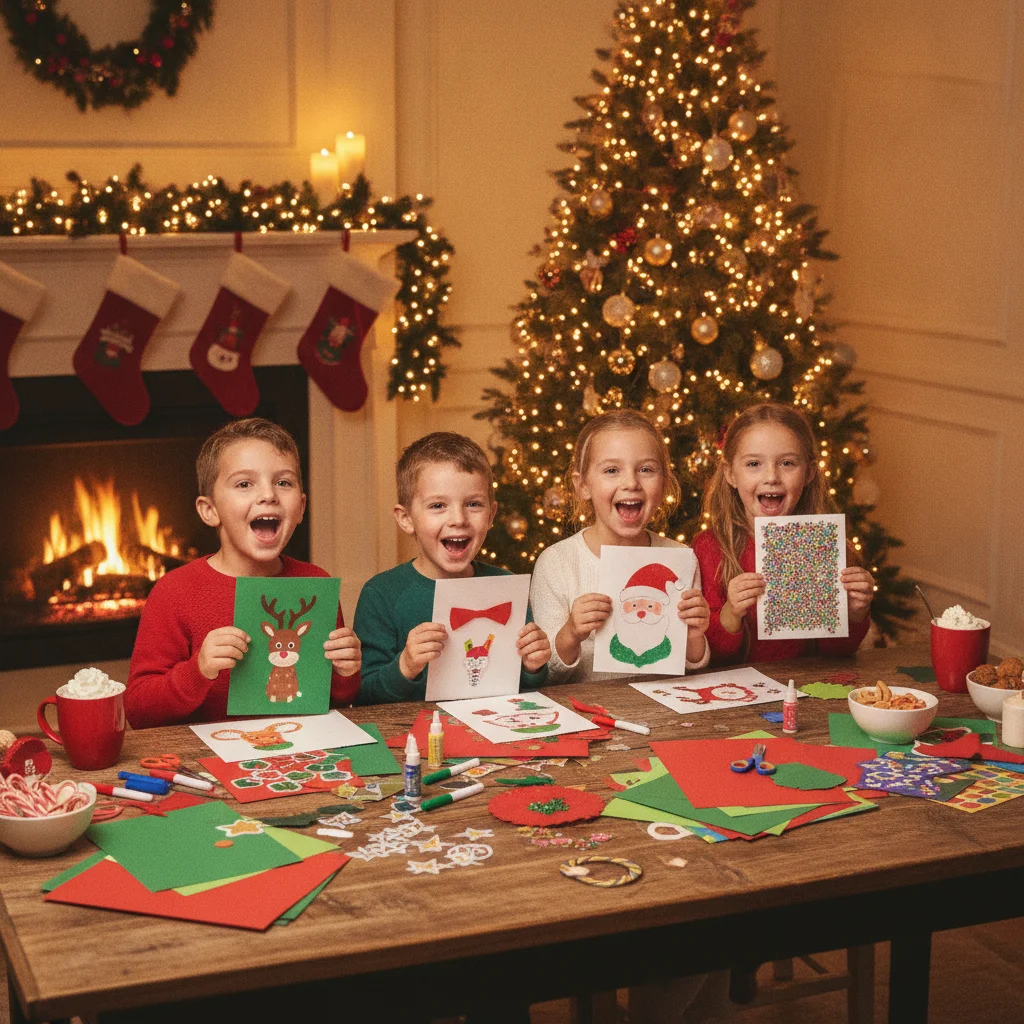
Quick answer: The best Christmas card ideas for kids use simple shapes, bright colors, and materials suited to the child’s age. Fingerprint lights, handprint reindeer, paper-strip trees, snowman collages, and decorated family photos are easy starting points. Let children choose the colors, add a short message, and sign their own names for a personal result.
Children’s Christmas cards do not need perfect lettering or complicated craft supplies. A few recognizable holiday shapes, washable colors, and space for a personal message can produce a card that relatives, teachers, and friends will want to keep.
The right project depends on the child’s age, attention span, and comfort with scissors or glue. Adults can prepare the card base while leaving the decorating decisions to the child.
What are some easy Christmas card ideas for kids?
Start with designs that can be completed using fingerprints, handprints, stickers, or basic paper shapes. These approaches give children visible results without requiring precise drawing skills.
- Fingerprint Christmas lights: Draw a curved black cord, then let the child add colorful fingerprint bulbs.
- Handprint reindeer: Use a painted handprint as the reindeer’s face and antlers, then add eyes and a red nose.
- Paper-strip tree: Arrange green paper strips from shortest to longest to form a Christmas tree.
- Button ornament card: Glue flat buttons onto drawn strings to create hanging ornaments.
- Snowman collage: Stack three white paper circles and decorate the snowman with paper scraps.
- Sticker scene: Combine tree, star, snowflake, and gift stickers on a dark blue card.
Folded cardstock works well for most projects. A blank postcard-style card is easier for very young children who only want to decorate one side.
Which Christmas card crafts suit each age group?
| Age group | Suitable ideas | Adult help |
|---|---|---|
| Ages 2 to 4 | Fingerprints, handprints, large stickers, sponge-painted trees | Prepare paint, hold the card, and write the message |
| Ages 5 to 7 | Paper collages, potato stamps, simple drawings, pom-pom wreaths | Help with cutting and glue quantities |
| Ages 8 to 10 | Pop-up trees, woven paper ornaments, watercolor scenes | Demonstrate folds and supervise tools |
| Ages 11 and older | Detailed illustrations, lettering, photo cards, layered designs | Provide materials and technical guidance when requested |
Age ranges are only a guide. Choose a design based on the child’s motor skills and interest rather than expecting every child to complete the same project.
What supplies make children’s Christmas cards easier?
Use washable, quick-drying materials when possible. Thick cardstock is less likely to buckle under paint or glue, while glue sticks are usually tidier than liquid craft glue.
- Pre-folded cardstock or blank cards
- Washable markers, crayons, or paint
- Child-safe scissors and glue sticks
- Colored paper, felt scraps, or craft foam
- Large stickers, pom-poms, ribbons, and googly eyes
- Aprons and a wipe-clean table covering
Prepare small trays of supplies instead of placing every decoration on the table. Fewer choices can help younger children focus and reduce cleanup.
How can kids make a Christmas photo card?
A child can decorate a printed family photo with a paper frame, drawn snowflakes, or a handwritten caption. Another option is to photograph the child holding a homemade sign that says “Merry Christmas” or “Warm wishes.”
- Wear matching pajamas and read a Christmas book.
- Pose with a handmade paper tree or cardboard gift boxes.
- Photograph the child displaying completed holiday artwork.
- Add a festive border to a favorite candid family picture.
For digital editing, a parent can use a general photo editor or an app such as Christmas Pictures App: PiXmas. ChristmasCard.io is an independent editorial site and is not affiliated with PiXmas or any other app. Adults should review privacy settings before uploading children’s photographs.
What can children write inside a Christmas card?
Short messages are easier for new writers and leave room for a drawing. Adults can write the words lightly in pencil for a child to trace.
- Merry Christmas! I hope you have a happy holiday.
- Sending you hugs and Christmas cheer.
- I hope your Christmas is full of fun.
- Thank you for making this year special.
- Love from your little Christmas helper.
A child’s own spelling and handwriting can be part of the card’s charm. Add the date and the child’s age on the back so the recipient can remember when it was made.
How can a classroom or family make cards together?
Create stations for folding, coloring, gluing, and writing. A sample card can explain the basic steps, but children should be free to change colors or decorations.
For a group project, assign each child one card for a relative, teacher, neighbor, nursing home resident, or community worker. Confirm delivery rules before making cards for an organization, since some groups restrict glitter, loose decorations, or religious wording.
What are the limitations of kids’ Christmas card projects?
Small buttons, beads, and pom-poms can be choking hazards, so they are not suitable for unsupervised young children. Sharp scissors, staplers, hot glue, and craft knives require close adult control.
Painted handprints may smudge, layered cards can become too thick to mail, and glitter can shed inside an envelope. Test one finished card before making a large batch, and allow wet materials to dry fully.
Children may lose interest in repetitive designs. Making two or three thoughtful cards often works better than expecting a child to produce a large matching set.
Best approach: Pick one age-appropriate technique, prepare the materials in advance, and let the child control the colors and final details. A simple card that clearly reflects the child’s choices will usually feel more personal than a highly polished adult-led craft.
What goes wrong when every Christmas card idea for kids is treated the same?
Treating every Christmas card idea for kids the same overlooks differences in motor skills, attention, sensory preferences, reading ability, and confidence. There is no universal age at which a child is ready for a particular card craft, so choose the process by observing what that child can comfortably do. For a child who tires quickly, prepare folded bases and pre-cut shapes while leaving meaningful choices such as colors, placement, or the recipient. Offer glue sticks instead of liquid glue when spills cause frustration, and avoid glitter or textured materials for children who dislike those sensations. Older or more experienced children may prefer designing independently rather than following a model. The goal is not identical finished cards; it is a project in which each child can contribute safely and recognize the result as their own.
Frequently asked questions
What is the easiest Christmas card for a toddler to make?
A fingerprint-light card or sticker scene is easy for a toddler. An adult can prepare the card base and add the written message.
How can children make Christmas cards without paint?
Children can use crayons, markers, paper shapes, stickers, ribbon, or foam decorations. Paper-strip trees and snowman collages require no paint.
What paper is best for homemade Christmas cards?
Cardstock between 200 and 300 gsm is sturdy enough for most paint, glue, and collage projects. Lighter paper can be folded and attached to a stronger card base.
Can children make pop-up Christmas cards?
Children around age eight and older can usually make simple pop-up trees with guidance. Adults should cut difficult slots or supervise scissor use.
How do you keep kids’ Christmas cards from becoming messy?
Offer a small selection of washable supplies in trays and use glue sticks instead of liquid glue. Cover the table and complete one craft step at a time.
Should a child sign every Christmas card?
A child can sign a first name, add initials, make a fingerprint, or draw a small picture. An adult can write the recipient’s name and longer message.
Are digital Christmas photo cards safe for children?
Parents should check an app’s privacy policy, permissions, storage practices, and sharing settings before using children’s photos. Avoid including school names, home addresses, or other identifying details.
How do I adapt a Christmas card craft for a child with limited fine motor skills?
Use larger card bases, chunky crayons, easy-peel stickers, pre-cut paper shapes, and glue sticks. An adult can handle cutting, folding, or writing while the child chooses colors and arranges decorations. Keep the design open-ended so assistance does not turn the project into an adult-made card.
Can siblings of different ages make Christmas cards together?
Yes, siblings can share one card project while taking different roles. A younger child might add stickers or fingerprints, while an older child cuts shapes, writes the greeting, or assembles moving parts. Let each child make visible choices, and avoid requiring their cards to match or look equally polished.