
Welcoming Christmas Card Ideas for New Neighbors
Quick answer: A Christmas card for new neighbors should briefly introduce your household, offer a warm seasonal greeting, and make future conversation feel easy. Include first names, your house number or location, and a low-pressure welcome. Choose friendly wording without becoming overly personal, especially when you do not yet know the recipient’s holiday traditions.
A Christmas card can provide a natural reason to introduce yourself to new neighbors. The best card feels warm without asking for an immediate response, and it gives the recipients enough information to recognize you the next time you meet.
Write as though you are beginning a friendly conversation rather than composing a formal announcement. A few sincere lines are usually more welcoming than a long family update.
What should you write in a Christmas card to new neighbors?
Start with a simple seasonal greeting, identify your household, and add one friendly sentence about living nearby. Including your house number is helpful when names and faces are still unfamiliar.
A complete introduction might say: “Merry Christmas from Alex and Jordan at number 18. We recently moved in across the street and wanted to introduce ourselves. We hope you have a peaceful holiday season.”
If you have already met briefly, mention that interaction. A line such as “It was lovely meeting you by the mailbox last week” makes the message personal while helping the neighbor remember who you are.
Which message style suits your situation?
| Situation | Suggested approach | Example wording |
|---|---|---|
| You have not met | Introduce names and address | “Season’s greetings from Priya and Sam at number 24. We are pleased to be your new neighbors.” |
| You met briefly | Refer to the meeting | “It was nice meeting you on moving day. Wishing your household a very merry Christmas.” |
| You share a building | Name your floor or apartment | “Warm wishes from the Chen family in apartment 3B. We look forward to getting to know our neighbors.” |
| You are unsure what they celebrate | Use inclusive seasonal language | “Wishing you a peaceful holiday season and a happy start to the new year.” |
What are some warm message ideas for a first introduction?
These short messages can be copied or adjusted to fit your household:
- “Merry Christmas! We are the Martins from two doors down. We wanted to say hello and wish you a joyful holiday season.”
- “Warm Christmas wishes from your new neighbors at number 7. We are happy to be part of the neighborhood and hope to meet you soon.”
- “Season’s greetings from Maya, Chris, and Leo next door. We hope your Christmas is restful, cheerful, and full of good food.”
- “Hello from the new family on Oak Corner. Thank you for making the street feel welcoming. Have a wonderful Christmas.”
- “Wishing you peace and happiness this Christmas. We recently moved into number 31 and look forward to saying hello properly.”
- “Happy holidays from Jamie and Taylor upstairs. Please feel free to knock if you ever need to reach us.”
A light invitation can work if you genuinely want more contact. Try “We would love to say hello over coffee sometime after the holidays.” This wording offers an opening without putting a date on the recipient’s calendar.
How can you make the card feel personal?
Handwrite the greeting and sign every household member’s first name. Add children or pets only when you are comfortable sharing that information. A small detail, such as “You may see us walking our beagle, Max,” can make future encounters easier.
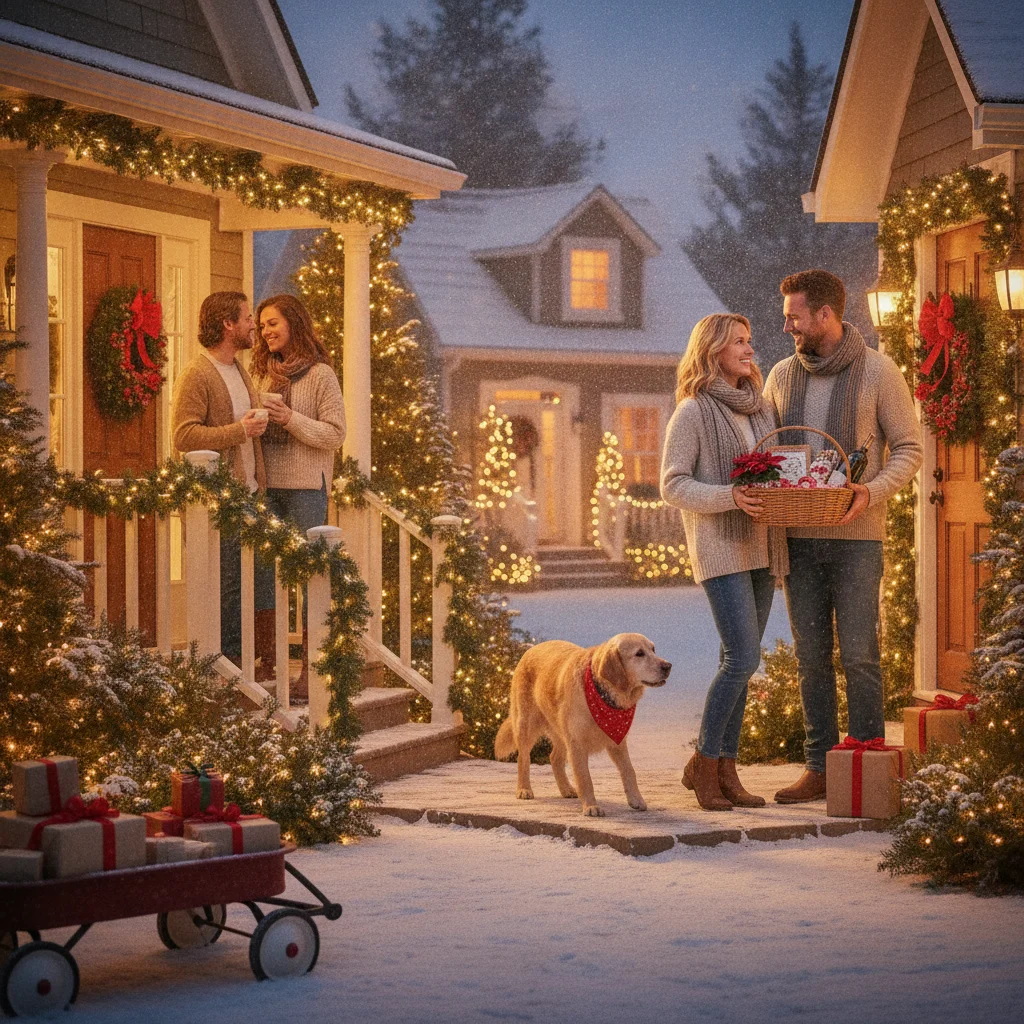
Choose artwork that reflects your intended tone. A snowy street, decorated doorway, winter foliage, or simple typographic design suits a neighborly introduction. Family photo cards can also work, but recipients may find a clear exterior or seasonal design more natural when the relationship is new.
A return address on the envelope provides useful context. If you deliver the card by hand, write the recipients’ names only when you know the correct spelling. “To our neighbors at number 12” is better than guessing.
Should you include a gift or contact information?
A gift is optional. The card itself is enough for a first introduction, particularly if you are distributing cards to several households.
If you include food, list the ingredients and use secure packaging. Allergies, dietary restrictions, and household preferences can make homemade treats difficult for people you have not met.
A phone number can be practical in apartment buildings, rural areas, or neighborhoods where residents help with deliveries and emergencies. Introduce it gently: “Here is our number in case a parcel is left with us.” Avoid adding multiple social profiles or asking recipients to join a group chat in the first card.
What etiquette helps the introduction feel comfortable?
- Keep the message to three or four sentences.
- Use an inclusive greeting when you do not know the household’s beliefs.
- Deliver the card during daylight or place it in an appropriate mail slot.
- Address the entire household rather than assuming relationships.
- Do not request a visit, reply, or reciprocal card.
Respect signs asking visitors not to knock. When local rules restrict placing unstamped items in mailboxes, use the front door, a building mail area approved for residents, or standard postal delivery.
What limitations should you consider before sending a card?
A Christmas-specific message may not suit every neighbor. If you do not know what the household celebrates, “season’s greetings” or “warm winter wishes” can communicate friendliness without making assumptions.
Privacy also matters. Do not include children’s schools, work schedules, travel dates, alarm details, or other sensitive information. Keep an initial introduction broad until a real relationship develops.
A good new-neighbor Christmas card identifies your household, shares a sincere seasonal wish, and leaves room for friendship to grow naturally.
What Christmas card introductions for new neighbors get wrong when every neighbor is treated the same
Treating every new-neighbor Christmas card introduction the same gets the idea wrong because the relationship, setting, and information you can safely assume vary by household. A note for someone across a shared hallway can mention the building or floor, while a card for a neighbor several houses away may need clearer identification. Avoid assuming recipients own their home, have children, share a last name, or want immediate social plans. Match the invitation to prior contact: suggest saying hello sometime after a brief encounter, but use a simple welcome with no expectation of a reply if you have never met. Religious wording also deserves individual judgment rather than a neighborhood-wide template. There is no reliable universal formula for how personal a first card should be, so use only details you know and leave room for the relationship to develop naturally.
Which design choices can make a new-neighbor Christmas card feel awkward?
Designs that obscure your identity, assume shared traditions, or feel overly intimate can make a new-neighbor Christmas card introduction uncomfortable.
- Check readability: Read the new-neighbor Christmas card from arm’s length. Replace ornate fonts, low-contrast colors, or crowded graphics if your names, house number, and short greeting are difficult to identify quickly.
- Check assumptions: Scan the new-neighbor Christmas card for religious imagery, family labels, jokes, or slogans that presume too much about the recipient. Choose neutral seasonal artwork when you do not know the household’s traditions.
- Check familiarity: View the new-neighbor Christmas card as a first meeting. Remove intimate family photos, lengthy personal updates, teasing humor, or oversized portraits if they make the introduction feel more familiar than the relationship currently is.
Frequently asked questions
How do you introduce yourself in a Christmas card to a neighbor?
State your first names, identify your home by number or location, and add a brief seasonal wish. Keep the introduction friendly and limited to a few sentences.
Is it appropriate to give a Christmas card to a neighbor you have never met?
A card is an appropriate, low-pressure way to introduce your household. Make it clear who sent the card so the recipient does not have to guess.
What can you write if you do not know whether a neighbor celebrates Christmas?
Use inclusive wording such as “season’s greetings,” “warm holiday wishes,” or “wishing you a peaceful winter.” These phrases express goodwill without assuming a specific tradition.
Should you put your address inside a neighbor’s Christmas card?
Including your house number, apartment, or nearby location is useful during a first introduction. A full postal address is unnecessary when a simple description clearly identifies your home.
Should a new-neighbor card include a phone number?
A phone number is optional and works best when it has a practical purpose, such as coordinating parcels or building matters. Avoid sharing more contact information than you are comfortable making available.
Is a handwritten or printed neighbor card better?
Either format is suitable, but a handwritten greeting and signature make a printed card feel more personal. Clear, legible wording matters more than the card format.
Do you need to include a gift with a neighbor Christmas card?
A gift is not required because the card already serves as a thoughtful introduction. If you include food, provide an ingredient list and consider common allergies.
What do you write in a Christmas card to an apartment neighbor?
Write your first names, identify your apartment without sharing unnecessary personal details, and offer a short seasonal greeting. If you have already spoken, mention the encounter briefly. Keep any invitation casual, such as saying you hope to see them around the building, rather than asking them to make plans or respond.
Can you leave a Christmas card at a new neighbor’s door?
Yes, you can leave a clearly addressed card at the door if the location is secure and building rules permit it. Place it where it will not blow away or create confusion. If packages or papers commonly disappear, hand-deliver it when convenient or use the recipient’s designated mail slot instead.
Should you use a family photo on a Christmas card for new neighbors?
A family photo is optional, but a simple image usually works better for a first introduction. If you include one, choose a recent, natural group photo and identify everyone briefly. Avoid a large collage or highly personal pictures, which can overwhelm the card’s basic purpose of introducing your household.