Christmas Card Ideas for School
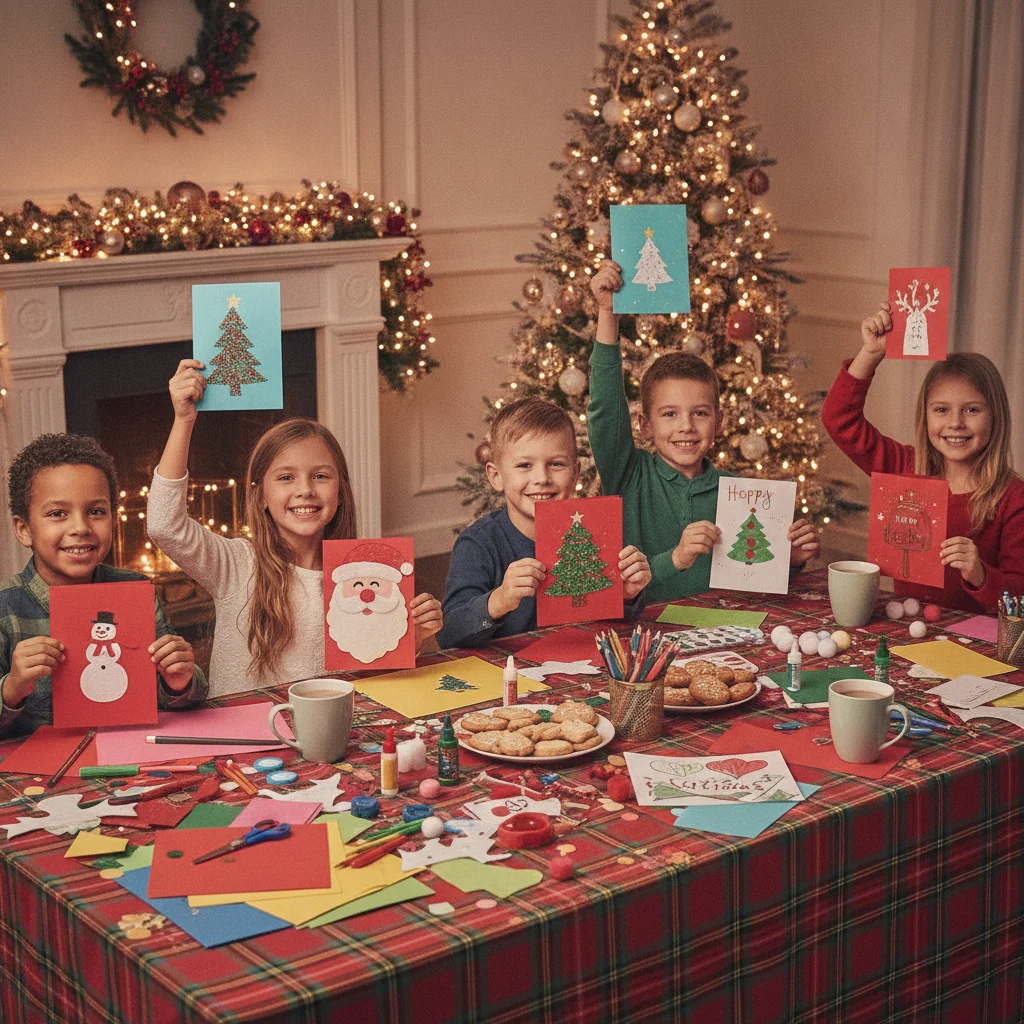
Quick answer: The best Christmas card ideas for school are simple, low-mess projects that children can personalize in one lesson. Fingerprint lights, paper-strip trees, festive sweaters, pop-up presents, and class thank-you cards work well. Choose materials and instructions based on the pupils’ ages, allow nonreligious alternatives, and check school rules before using photographs, glitter, food, or student names.
School Christmas cards work best when the design is easy to explain, affordable for a full class, and flexible enough for every child to make it personal. A successful activity should fit the available lesson time without requiring an adult to complete the difficult parts.
What are some easy Christmas card ideas for school?
Simple shapes and repeated patterns reduce frustration while still producing attractive cards. Teachers can prepare folded card stock and demonstrate one finished example without requiring every pupil to copy it exactly.
- Fingerprint lights: Draw a curved black wire and add colorful fingerprint bulbs with washable paint.
- Paper-strip tree: Arrange green paper strips from shortest to longest, then add a star and paper ornaments.
- Festive sweater: Cut out a sweater shape and decorate it with crayons, stickers, or geometric paper pieces.
- Winter window: Draw a snowy scene behind a paper window frame made from four narrow strips.
- Pop-up present: Make two short cuts in the fold, push the tab inward, and decorate it as a gift box.
Which card supplies are best for a classroom?
Choose supplies by lesson length, pupil independence, and cleanup needs. Pre-cutting detailed shapes can save time for younger classes.
| Supply | Best use | Practical note |
|---|---|---|
| Card stock | Card bases | Holds paint and glued decorations better than printer paper |
| Washable markers | Drawing and messages | Quick to distribute and easy to clean |
| Paper shapes | Trees, gifts, and ornaments | Safer and faster than complex cutting |
| Glue sticks | Flat decorations | Less messy than liquid glue |
| Foam stickers | Texture and detail | Useful when drying time is limited |
How can Christmas cards be adapted for different ages?
The main adjustment should be the level of cutting, measuring, writing, and independent planning expected from each pupil.
- Early years: Use handprints, fingerprints, large stickers, or pre-cut shapes with a short dictated message.
- Ages 6 to 8: Try collage trees, simple folding, potato printing, or patterned ornaments with one written sentence.
- Ages 9 to 11: Introduce pop-up mechanisms, symmetrical paper cutting, woven paper, or detailed winter illustrations.
- Secondary pupils: Explore typography, printmaking, photography, digital layouts, or cards linked to a design brief.
How can a whole class make cards efficiently?
Set up separate stations for folding, decorating, writing, and drying. Place one sample and brief instructions at each station, then keep spare materials in a shared area rather than handing out individual packs.
- Write names on the back before decorating begins.
- Limit the design to three or four main materials.
- Use trays to move wet or unfinished cards.
- Prepare an extension task for early finishers.
What can children write inside school Christmas cards?
Short messages are easier to complete and leave space for a drawing or signature. A word bank on the board can support younger writers and pupils learning English.
Useful examples include “Wishing you a happy Christmas,” “Thank you for being a great friend,” “Have a peaceful holiday,” and “Best wishes for the winter break.” Children can add one personal sentence about kindness, friendship, or a shared memory.
How can school cards include pupils who do not celebrate Christmas?
Offer winter, New Year, gratitude, and general holiday designs alongside explicitly Christmas-themed choices. Snowy landscapes, stars, candles, mittens, evergreen trees, and thank-you messages can suit a broader classroom activity.
Participation should not depend on a pupil sharing a religious belief. Teachers can present the task as seasonal art or communication practice and let pupils choose the recipient and wording permitted by school policy.
Can pupils use photographs or card-making apps?
Photographs can work for family cards, but schools should obtain appropriate permission and avoid displaying full names, uniforms, locations, or identifying classroom details. A drawing or scanned artwork is often a simpler option.
Families creating cards at home could use a seasonal photo editor such as Christmas Pictures App: PiXmas for frames or effects. ChristmasCard.io offers that as an independent editorial suggestion and is not affiliated with PiXmas, PicsMas, or any app.
What are the limitations of school Christmas card projects?
Glitter, loose sequins, wet paint, and complicated cutting can create cleanup or safety problems. Food decorations may introduce allergy concerns, while religious imagery may not suit every school community or recipient.
Cards intended for classmates also need careful handling. A whole-class exchange, anonymous draw, or one shared card can reduce the risk of children being excluded.
Teachers should check school rules covering photographs, names, addresses, digital tools, and classroom celebrations before starting the project.
Best overall approach: Choose one simple card structure, provide several decoration options, and let each pupil select an inclusive message. This keeps the lesson manageable while preserving creativity.
What goes wrong when all Christmas card ideas for school are treated alike?
Treating every Christmas card idea for school the same can exclude pupils and create an activity that does not suit their skills, beliefs, or intended recipients. A tightly copied model may frustrate younger children, restrict older pupils, and disadvantage anyone who needs adapted tools or instructions. Match the design to the class: use large, pre-cut shapes for limited fine-motor control, offer open-ended illustration or writing for confident pupils, and provide seasonal alternatives without religious wording. Teachers should also decide who will receive each card before children add names or personal messages. There is no single card format or difficulty level that works for every school group, so the practical limit is the teacher’s knowledge of pupils, available support, school policies, and the recipient context.
Frequently asked questions
What is the easiest Christmas card for children to make at school?
A fingerprint-light card is one of the easiest options because it needs only folded card, a marker, and washable paint. Children can vary the colors and write a short message inside.
How long should a classroom Christmas card activity take?
A basic collage or drawing card usually takes 30 to 45 minutes. Pop-up cards and painted designs may require a second session for assembly or drying.
What can schools use instead of glitter?
Metallic crayons, foil paper, shiny stickers, and patterned tape provide sparkle with less mess. Paper confetti made with a hole punch is another low-cost option.
How can pupils make cards without scissors?
Pupils can use stickers, fingerprints, stamps, crayons, torn paper, or pre-cut shapes. These methods are suitable for younger children and classes with limited cutting tools.
Should every pupil make a card for a classmate?
A class exchange can work if every child is included through a draw or teacher-managed list. One collaborative card for another class, care home, or staff group is another option.
Are digital Christmas cards suitable for school projects?
Digital cards can support lessons in photography, illustration, layout, and online safety. Schools should use approved tools and follow policies for pupil data, photographs, and account access.
How can teachers display school Christmas cards without damaging them?
Display school Christmas cards with removable clips, string, or reusable adhesive placed on the back. Avoid staples through pupils’ artwork if cards will later be taken home or delivered. A tabletop display also works for heavier designs. Keep names and personal messages facing away from public view, especially in hallways accessible to visitors.
What should a pupil write if they do not know the card recipient?
A pupil who does not know the recipient should use a short, neutral seasonal message. Suitable wording includes “Wishing you a peaceful holiday season” or “Warm wishes from our class.” Avoid assumptions about family, religion, health, or holiday plans. The pupil can add a simple drawing and sign only a first name if school policy allows.