
12 Handmade Christmas Card Ideas for Every Skill Level
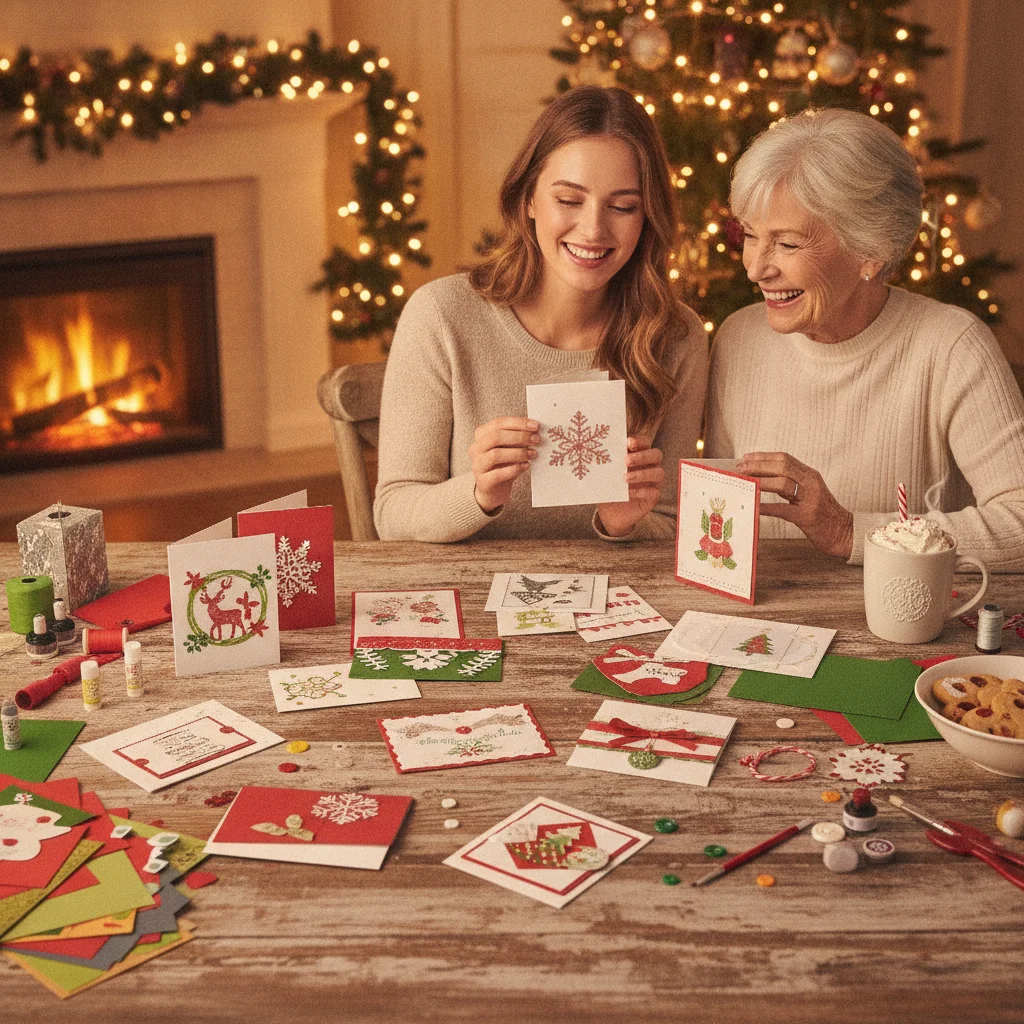
Quick answer: Handmade Christmas cards can be created with folded cardstock, paper scraps, paint, ribbon, buttons, stamps, or natural materials. Easy options include fingerprint lights, paper-strip trees, button wreaths, and watercolor ornaments. Choose a design with repeatable steps if you need many cards, then personalize each one with a handwritten greeting, color variation, or small decorative detail.
A handmade Christmas card can be as simple as a folded piece of cardstock with a paper tree or as detailed as an embroidered winter scene. The best design depends on your available time, craft supplies, and the number of cards you need.
Start with heavyweight cardstock so the finished card stands upright and supports decorations. A common folded size is 5 by 7 inches, although smaller cards are useful when making a large batch.
Which handmade Christmas card ideas are easiest?
Simple cards use basic shapes, limited colors, and materials that dry quickly. These ideas work well for beginners, classroom projects, and family craft sessions.
- Paper-strip Christmas tree: Cut patterned paper into strips of decreasing length. Stack the strips into a triangle, glue them to the card, and add a paper star.
- Fingerprint fairy lights: Draw a looping black wire with a marker. Add colorful fingerprint bulbs along the line, then draw a small cap above each print.
- Button wreath: Arrange green buttons in a circle and secure them with strong craft glue. Finish the wreath with a red ribbon bow.
- Washi tape presents: Make square and rectangular gifts from strips of decorative tape. Draw ribbons and bows with a fine-tip pen.
What creative designs can adults make?
Adults can combine familiar craft techniques with a restrained Christmas color palette. Using two or three colors often produces a cleaner result than filling the card with many competing decorations.
- Watercolor ornaments: Paint three loose circles in muted red, green, gold, or blue. Add thin hanging strings after the paint dries.
- Embroidered star: Pierce holes in a star pattern and sew between them with metallic thread. Tape the thread ends inside before adding a paper liner.
- Pressed greenery card: Attach a small dried fern, cedar-like sprig, or pressed leaf in the shape of a tree. Use collected plants only when identification and local collection rules are clear.
- Minimal line-art card: Draw a continuous-line tree, reindeer, or candle using a black archival pen. Add one metallic or red accent.
How can children make handmade Christmas cards?
Children benefit from designs with large pieces and short steps. Adults should precut complicated shapes and supervise scissors, glue, small buttons, needles, and other potential hazards.
A handprint can become a green Christmas tree, a brown reindeer, or a white-bearded Santa. Potato stamps and sponge shapes are also easy to hold. Children can stamp trees, stars, snowflakes, or ornaments onto blank cards and add details once the paint is dry.
For less mess, provide paper triangles, circles, stars, and rectangles that children can arrange into festive pictures. Foam stickers and crayons let younger children decorate without liquid glue or paint.
Which idea is best for the time available?
| Card idea | Time per card | Skill level | Best feature |
|---|---|---|---|
| Washi tape presents | 5 to 10 minutes | Beginner | Easy to repeat |
| Fingerprint lights | 10 minutes plus drying | Beginner | Good for children |
| Watercolor ornaments | 15 minutes plus drying | Beginner to intermediate | Each card looks unique |
| Button wreath | 15 to 20 minutes | Beginner | Textured finish |
| Embroidered star | 30 to 45 minutes | Intermediate | Keepsake quality |
How do you make several cards efficiently?
Choose one layout and complete the cards assembly-line style. Cut every card base first, prepare all decorative pieces, assemble the fronts, and add greetings last. This approach reduces tool changes and helps the set look consistent.
Create one finished sample before producing the full batch. The sample reveals whether the design is too time-consuming, bulky, or difficult to fit inside an envelope.
Paper scraps can be turned into trees, baubles, gift boxes, or patchwork stars. A paper cutter, shape punch, or simple cardboard template makes repeated pieces more consistent. Double-sided tape is useful when there is not enough time for wet glue to dry.
What should you write inside a handmade card?
A short handwritten message adds more meaning than a long generic verse. Suitable options include “Wishing you a peaceful Christmas,” “Warm wishes to you and your family,” or “Thinking of you this Christmas.”
Add one personal sentence when possible. Mention a shared memory, thank the recipient for something specific, or express hope that you will meet in the coming months. Sign and date keepsake cards so recipients can identify when they were made.
How can handmade cards survive mailing?
Keep decorations flat if cards will travel through standard mail. Raised buttons, thick bows, beads, and natural sprigs can catch in sorting equipment or require additional postage.
Allow paint and glue to dry fully before closing the envelope. Place a sheet of plain paper over textured artwork to protect it. Ask the postal service about current size, thickness, weight, and rigidity rules when a card has bulky decorations.
What are the limitations of handmade Christmas cards?
Handmade cards take longer than printed cards and may cost more when each design uses specialty paper, ribbon, or embellishments. Wet media also need drying time, while bulky decorations can complicate mailing.
Natural materials may become brittle, shed, or discolor. Small decorative parts are unsuitable around young children and pets. For a large mailing list, a simple repeated design is usually more practical than a different elaborate card for every recipient.
Best overall approach: Use folded cardstock, choose one repeatable motif, and vary the colors or greeting. Paper-strip trees and watercolor ornaments offer a good balance of speed, personal character, and materials that are easy to find.
When handmade Christmas card ideas feel considered rather than generic
Handmade Christmas card ideas look considered rather than generic when each design combines a clear visual system with one recipient-specific choice. Start with a repeated rule, such as the same folded card shape, limited palette, or hand-drawn border, then vary one meaningful element: a pet silhouette, familiar winter landmark, shared hobby, or family motif. Let the construction remain visible through slight differences in cut shapes, brushwork, or stitching; those variations signal that the card was made rather than assembled from a template. Avoid adding several unrelated embellishments simply to fill space. Instead, repeat one material or shape on the front and inside, then match the message to that detail. There is no objective cutoff for “considered,” so judge the result by coherence and recipient relevance, not decoration count.
Handmade Christmas cards can look polished without losing their character
A common myth is that uneven edges, exposed adhesive, and crowded decoration make a Christmas card feel more handmade; in practice, they usually make it look unfinished. Handmade character comes from intentional choices such as hand lettering, layered paper, stitched details, or small variations between cards. Unfinished work is more likely to show accidental problems: crooked folds, loose embellishments, glue smears, fuzzy cuts, or elements placed without consistent spacing.
Before calling a card complete, check it both open and closed. Trim stray threads, erase pencil lines, reinforce anything that lifts, and cover messy interior construction with a paper liner. Keep one clear focal point, such as a tree, wreath, ornament, or greeting. These finishing steps preserve the evidence of handwork while making the Christmas design look deliberate.
Frequently asked questions
What materials do I need to make a handmade Christmas card?
Basic supplies include cardstock, scissors, glue or double-sided tape, pencils, and markers. Decorative paper, paint, ribbon, buttons, stamps, and thread are optional.
What is the easiest handmade Christmas card to make?
A paper-strip Christmas tree is one of the easiest designs because it uses straight cuts and simple layering. Washi tape presents are another quick option.
How can I make handmade Christmas cards look professional?
Use heavyweight cardstock, limit the color palette, measure spacing, and remove visible pencil marks. A paper liner can conceal thread ends or glue marks inside the card.
Can handmade Christmas cards be mailed normally?
Flat, flexible cards usually fit standard mailing requirements, subject to current postal rules. Bulky, rigid, square, oversized, or heavy cards may need extra postage.
How far in advance should I make Christmas cards?
Begin several weeks before mailing if the design involves painting, stitching, or a large batch. Simple paper cards can often be completed in one or two craft sessions.
How do I make Christmas cards with recycled materials?
Use clean packaging, old gift wrap, paper bags, magazines, fabric scraps, or previous cards for cutout shapes. Avoid materials with food residue, loose glitter, or excessive thickness.
What size should a handmade Christmas card be?
A folded 5 by 7-inch card is a practical choice with widely available envelopes. Check postal size requirements before choosing an unusual shape or format.
How do I personalize a handmade Christmas card?
A handmade Christmas card can be personalized by building one recognizable detail into the design. Use the recipient’s houseplant, dog markings, favorite bird, instrument, or local skyline as the central motif, then echo it in a short inside message. Keep the remaining layout consistent so the personal reference feels intentional, not crowded.
Why do my handmade Christmas cards look generic?
Handmade Christmas cards often look generic when holiday symbols, colors, and embellishments are combined without a specific visual rule. Choose one focal image, repeat one shape or line style, and remove elements that do not support it. A small irregularity in cutting or drawing can stay; deliberate consistency matters more than perfect symmetry.
Why does my handmade Christmas card look messy?
Mess usually comes from inconsistent spacing, rough cuts, visible adhesive, or too many competing details. Choose one focal Christmas motif, trim stray fibers, erase guide marks, and cover the inside with a paper liner if construction shows. Slight variation can remain, but repeated margins and clean folds make the design look intentional.