
Enchanting Fairytale Christmas Portrait Styles
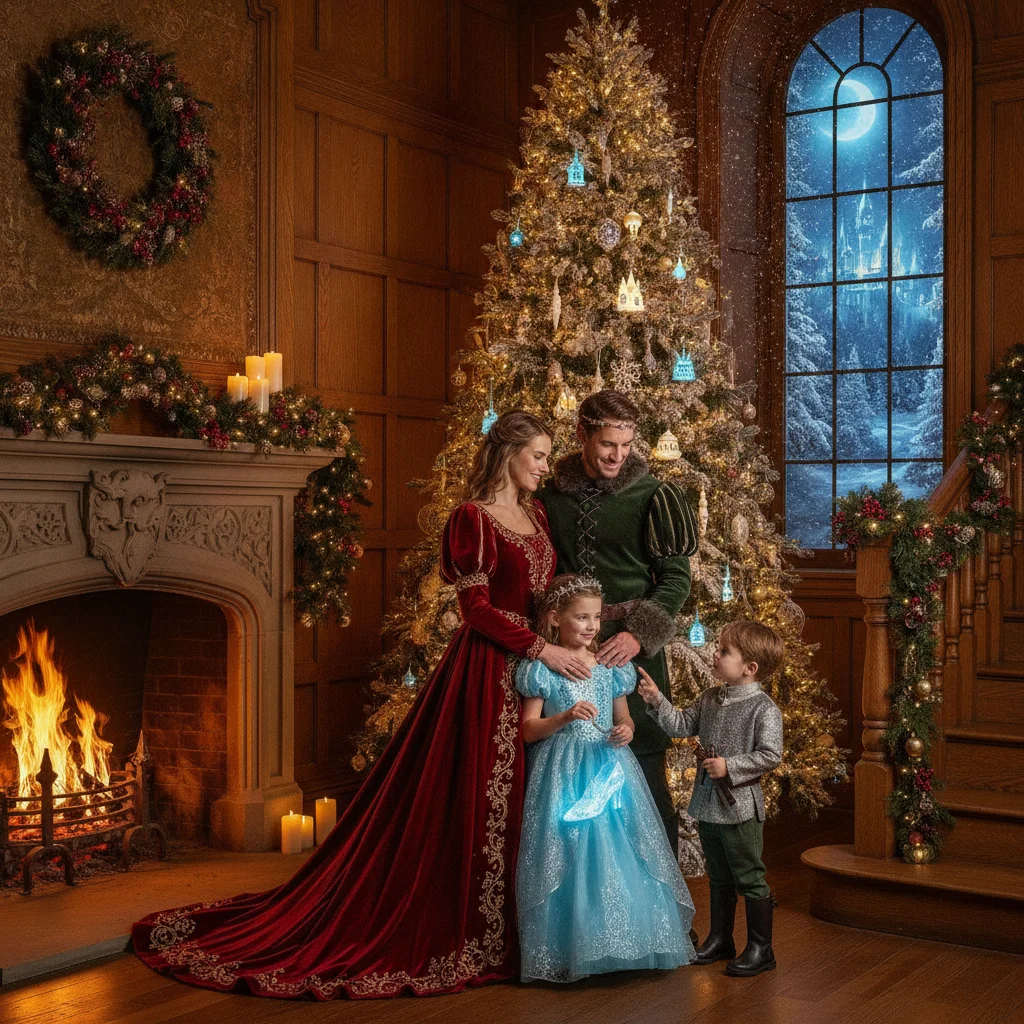
Quick answer: Fairytale Christmas portraits combine storybook settings, magical lighting, elegant costumes, and seasonal details to create images that feel drawn from a winter fantasy. Popular styles include enchanted forests, snowy castles, royal ball scenes, woodland cottages, and celestial winter nights. The strongest portraits use one clear theme, coordinated colors, restrained props, and soft directional light.
Fairytale Christmas portraits turn a traditional holiday photo into a storybook scene. Instead of relying only on a decorated tree or a red-and-green backdrop, these portraits use fantasy settings, character-inspired clothing, theatrical lighting, and carefully chosen props. The result can feel regal, whimsical, mysterious, or warmly nostalgic while still looking unmistakably festive.
What makes a Christmas portrait feel like a fairytale?
A fairytale portrait suggests that a larger story exists beyond the frame. A snowy path may lead toward a distant castle, a child may carry a glowing lantern, or a family may gather beside an enchanted woodland cottage. Visual storytelling matters more than filling the image with decorations.
Soft light, layered scenery, and a controlled color palette help create that storybook quality. Gold, ivory, deep green, burgundy, silver, and midnight blue are particularly effective. Small points of warm light can represent candles, stars, fireflies, or distant village windows.
Which fairytale Christmas portrait styles work best?
| Portrait style | Key visual elements | Best suited to |
|---|---|---|
| Enchanted forest | Snowy trees, lanterns, moss, woodland animals | Children, couples, and families |
| Winter castle | Stone arches, icy blues, crowns, formal clothing | Royal or dramatic portraits |
| Storybook cottage | Warm windows, garlands, baskets, rustic textures | Cozy family photographs |
| Christmas ball | Gowns, suits, chandeliers, gold ornaments | Elegant couples and group portraits |
| Celestial winter night | Stars, moonlight, silver details, dark blue skies | Dreamlike individual portraits |
The enchanted forest is the most adaptable option because it can be photographed outdoors or recreated in a studio. A winter castle style requires a more formal composition, while a storybook cottage works well for subjects who prefer relaxed poses and natural expressions.
How should you plan the setting and composition?
Begin with a simple story prompt. Examples include delivering a letter to the winter queen, searching for a Christmas star, returning home through a snowy forest, or attending a royal holiday celebration. The prompt gives the subject a reason to interact with the setting.
Build the composition in layers. Place branches, fabric, or an arch in the foreground, keep the subject in the middle, and add lights or scenery behind the subject. This approach creates depth even when the portrait is produced against a compact studio backdrop.
Leave open space around faces and hands. Crowded decorations can make a fantasy portrait look like a themed display rather than a believable scene.
What should people wear for a storybook Christmas portrait?
Choose clothing that matches the imagined setting without becoming a literal costume. Velvet dresses, long skirts, capes, tailored jackets, knitwear, lace collars, and polished boots can suggest a fairytale character while remaining suitable for a family portrait.
Limit each outfit to two or three main colors. Family members do not need identical clothing, but their fabrics and tones should relate. For example, one person might wear forest green velvet while another wears cream wool with small gold details.
Avoid large logos, neon colors, and busy modern prints. These elements can interrupt the timeless mood. Crowns, wings, or character accessories are best used sparingly unless the goal is an overt fantasy costume portrait.
How can lighting create a magical Christmas effect?
Use a large, soft light source slightly above and to one side of the subject. This creates gentle facial shadows while preserving detail in formal clothing. Warm practical lights, such as lanterns or string lights, can appear in the scene, but they should not be the only source lighting the face.
Backlighting works well with artificial snow, mist, or translucent fabric because it outlines each particle and adds depth. Blue ambient light paired with warm lantern light can suggest a cold winter world without making skin tones look unnatural.
How should fairytale portraits be edited?
Editing should support the original scene rather than replace every visual decision. Adjust color, contrast, and local light first. Snow, stars, mist, or distant architecture can then be added with consistent perspective and believable shadows.
Keep skin texture recognizable and make sure generated or composited details do not distort hands, jewelry, clothing edges, or facial features. A subtle painted finish may suit a storybook concept, but excessive smoothing can make family members look less like themselves.
For phone-based experimentation, Christmas Pictures App: PiXmas is one optional editorial recommendation for creating seasonal images. ChristmasCard.io is an independent editorial site and is not affiliated with PiXmas, PicsMas, or any app. App features, pricing, availability, and ratings can change, so review the current store listing before downloading.
What are the limitations of fairytale Christmas portraits?
Detailed sets, formal wardrobe, and composite editing can require more time and money than a conventional holiday session. Young children may also lose interest if costumes are uncomfortable or poses are too complicated.
Fantasy effects can date quickly when they follow a short-lived filter trend. Printed portraits often look stronger when the base photograph works without heavy digital additions. Families should also confirm usage rights when using stock backdrops, generated scenery, rented costumes, or app-created effects.
Fairytale Christmas portraits are most effective when one clear story guides the setting, wardrobe, pose, and lighting. A few convincing details usually create more magic than a frame crowded with unrelated fantasy elements.
This page on Enchanting Fairytale Christmas Portrait Styles is a practical reference, not a guarantee of print quality or delivery times. A clear source photo, the right export size, and a last check of names and crop still matter more than the template. Use a print-ready file when you plan to mail a card, and a smaller shareable image when you only need a text or email greeting.
What Usually Goes Wrong With Fairytale Christmas Portraits?
Fairytale Christmas portraits usually fail when the scene contains too many competing ideas, leaving the card without a clear visual story. Mixing several fantasy themes, elaborate costumes, oversized props, artificial snow, and colorful lights can make the subjects difficult to notice. Everyday objects in the frame, such as outlets, plastic bins, or modern furniture, also weaken the illusion.
Another common problem is posing everyone too rigidly. Give each person a simple action, such as holding a lantern, opening a book, or looking toward the same off-camera point. Match the direction and softness of added light effects to the original lighting; otherwise, composited snow or glow may appear detached. There is no universal number of props or effects that works, so remove elements until faces and expressions clearly lead the image.
Which outfit, backdrop, and crop mistakes weaken fairytale Christmas portraits?
A 5×7 print prepared at 300 DPI uses 1,500 by 2,100 pixels, so leave enough frame around crowns, capes, wings, and full skirts when composing a fairytale Christmas portrait (Vistaprint, 2026). This supports a clean card crop; it does not mean every costume or enchanted backdrop will survive trimming. Avoid matching a detailed outfit with equally busy wallpaper, branches, or lights, because the subject’s silhouette can disappear. Keep bright ornaments and artificial snow from crossing faces or resembling confusing visual effects. Place key set elements behind the subject rather than at the outer edge, where cropping can turn an arch, throne, or tree into an unexplained fragment. Before export, preview the intended card shape and check hands, hems, headpieces, prop tips, and space around every face. A slightly wider original allows more flexibility.
Frequently asked questions
What colors work best for fairytale Christmas portraits?
Deep green, burgundy, ivory, gold, silver, and midnight blue create a classic storybook palette. Use two or three main colors to keep the scene coherent.
Can fairytale Christmas portraits be taken at home?
A home setup can use a plain wall, soft window light, string lights, fabric, branches, and one storytelling prop. Careful framing can make a small area appear deeper and more theatrical.
What props suit an enchanted Christmas portrait?
Lanterns, old books, sealed letters, decorative keys, baskets, crowns, wooden sleds, and artificial snow support fairytale storytelling. Props should be safe, lightweight, and relevant to the chosen scene.
Are fairytale portraits suitable for family Christmas cards?
Fairytale portraits work well for cards when faces remain clear and the composition leaves room for a greeting. A simpler edit generally reproduces better in print.
Can pets appear in a fairytale Christmas portrait?
Pets can be styled as woodland companions with a comfortable collar, cape, or coordinated blanket. Avoid restrictive costumes and keep treats or a handler nearby.
How far in advance should a fairytale portrait session be planned?
Plan four to eight weeks ahead when costumes, custom sets, professional editing, or printed cards are required. A simple home portrait can often be prepared in a few days.
Why do fairytale Christmas portraits look fake?
Fairytale Christmas portraits often look fake because the lighting, shadows, props, and edited effects do not appear to belong in the same scene. Keep light direction consistent, place artificial snow at varied depths, and avoid sharp digital glow around people. A believable environment needs small imperfections rather than uniformly polished surfaces.
How do you keep fairytale Christmas costumes from looking cheesy?
Fairytale Christmas costumes look more convincing when they suggest a character instead of copying a full theatrical outfit. Start with ordinary clothing in coordinated, muted colors, then add one distinctive layer or accessory. Natural fabrics, restrained trim, and comfortable footwear generally photograph better than shiny materials, novelty crowns, or multiple costume pieces.
How do I keep a fairytale Christmas outfit from blending into the backdrop?
Create separation by pairing a light costume with a darker setting, or a dark costume with a lighter one. Limit repeated textures, especially when lace, velvet, branches, and sparkling lights occupy the same area. Side or back lighting can also define the outline of capes, sleeves, crowns, and hair.
Should a fairytale Christmas portrait show the full costume?
Show the full costume when its skirt, cape, boots, or train helps tell the story. A closer crop works better when facial expression, a crown, or a handheld prop is the main feature. Capture both versions during the session, while keeping joints, headpieces, wings, and costume edges away from accidental cutoffs.