
How to Take Beautiful Christmas Photos at Home
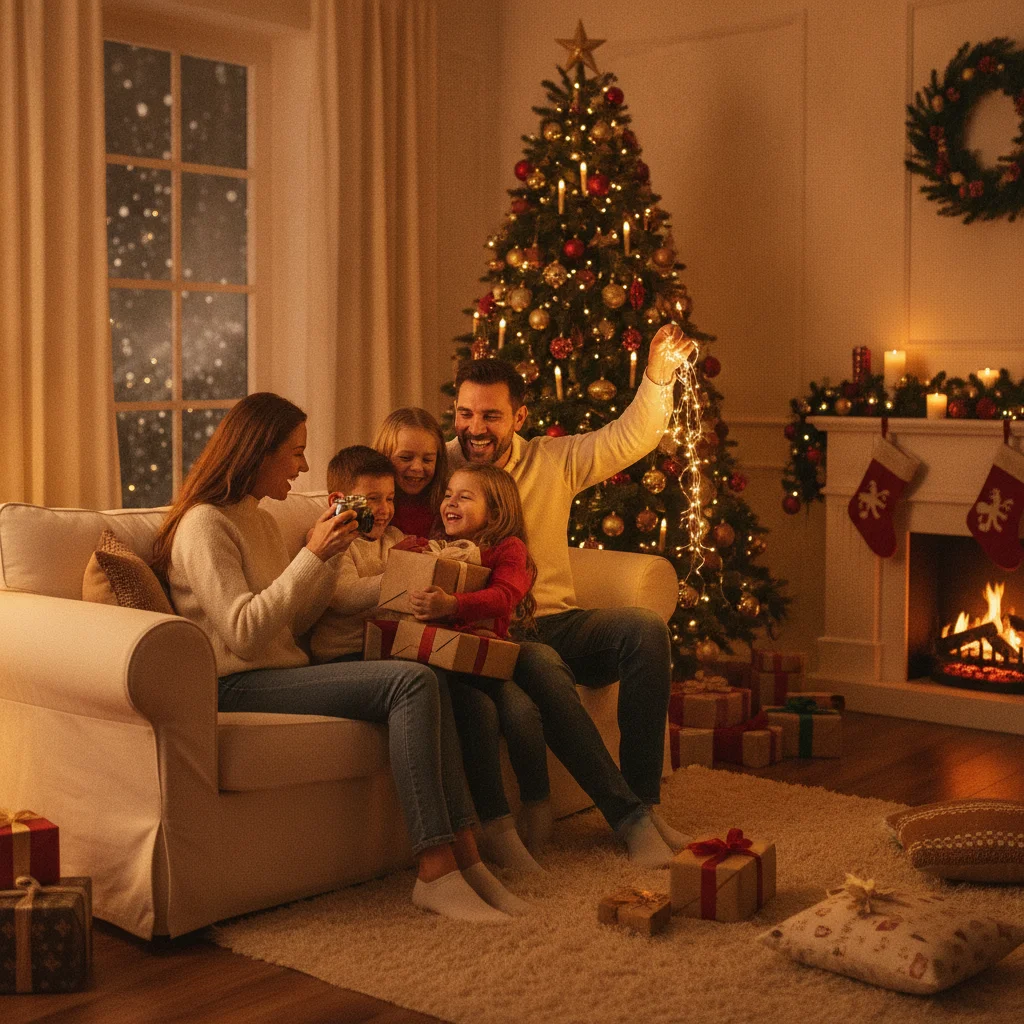
Quick answer: To take beautiful Christmas photos at home, choose a tidy festive background, use soft window light or diffused lamps, and position subjects a few feet from the backdrop. Stabilize the camera, focus on the eyes, and take several candid and posed shots. Finish with light edits to brightness, warmth, and cropping while keeping skin tones natural.
Beautiful Christmas photos do not require a studio, expensive camera, or elaborate decorations. A phone camera, a comfortable room, and thoughtful lighting can produce warm family portraits suitable for cards, albums, and social posts. The main goals are to reduce clutter, illuminate faces evenly, and help everyone look relaxed.
How should you prepare a room for Christmas photos?
Choose one small area instead of decorating an entire room. A Christmas tree, fireplace, plain wall, sofa, or neatly made bed can provide a practical background. Remove visible cords, packaging, remote controls, and unrelated household items before arranging the shot.
Build the scene with a few recognizable Christmas elements. String lights, wrapped gifts, stockings, blankets, wreaths, and neutral ornaments work well. Avoid filling every empty space because a busy background can distract attention from faces.
Place people at least two or three feet in front of the background when space permits. This separation reduces hard wall shadows and helps portrait mode create a more natural background blur.
What lighting works best for indoor Christmas pictures?
Soft window light is usually the easiest option. Schedule the session during daylight, turn subjects toward a large window, and switch off harsh ceiling lights if they create dark eye sockets or mixed color tones. A sheer curtain can soften strong direct sunlight.
If the room is dark, use a floor lamp or table lamp placed near the camera. Bounce the light from a pale wall or ceiling rather than pointing a bare bulb directly at faces. A white poster board opposite the window can also reflect light into facial shadows.
Christmas tree lights should contribute atmosphere rather than serve as the main light source. Keep a brighter soft light on the people so the camera does not produce blurry faces or heavy digital noise.
Which camera settings should you use at home?
Clean the phone lens before taking any pictures. Tap the nearest person’s eye to set focus, then lower or raise exposure until skin looks natural. Avoid digital zoom because digital zoom reduces detail. Move the camera closer or use the standard lens instead.
Use portrait mode for one person or a small group arranged on the same plane. Standard photo mode is safer for larger groups because artificial blur can soften people standing behind the front row. Activate burst mode or take repeated frames when photographing children and pets.
| Situation | Useful approach | Common mistake |
|---|---|---|
| Family group | Standard mode with everyone at similar distances | Using a very shallow portrait effect |
| Child near the tree | Portrait mode with soft window light | Relying only on tree lights |
| Pet photo | Burst mode at eye level | Calling the pet from behind the camera repeatedly |
| Decoration close-up | Tap to focus and hold the camera steady | Moving too close for the lens to focus |
How can you pose families, children, and pets naturally?
Arrange adults first, then place children and pets once the composition is ready. Keep heads reasonably close together and ask seated family members to turn slightly toward the center. Hands can rest on knees, hold a mug, adjust an ornament, or wrap around another person.
Give children a simple activity instead of asking them to smile continuously. Children can hang an ornament, open an empty gift box, read a Christmas book, or whisper a joke. Photograph the activity and the reactions that follow.
For pets, use treats or a favorite toy near the camera lens. Photograph pets at their eye level and work quickly. Costumes should be comfortable, loose enough for movement, and removed immediately if the animal shows stress.
Which Christmas photo compositions are easy to recreate?
- Tree portrait: Place the family beside the tree rather than directly in front of it.
- Cozy sofa scene: Use coordinated blankets, mugs, and one or two wrapped boxes.
- Window portrait: Position a person at an angle to the window for soft facial shadows.
- Overhead children’s photo: Arrange children on a plain blanket with a few ornaments safely out of reach.
- Detail series: Photograph hands wrapping gifts, ornaments, cookies, stockings, and name tags.
How should you edit Christmas photos?
Start by straightening the image and cropping distracting edges. Make small adjustments to exposure, shadows, and warmth. Compare edits with the original to prevent orange skin, oversaturated red clothing, or unnaturally bright tree lights.
Apply the same basic color treatment to several selected images if the photos will appear together on a card. Avoid strong beauty filters and excessive background blur because both can make family portraits look artificial.
What limitations should you expect when shooting at home?
Small rooms limit camera distance and can make large groups difficult to frame. Mixed daylight, household bulbs, and colored Christmas lights may also create inconsistent skin tones. Phone portrait modes sometimes blur hair, glasses, ornaments, or pet fur incorrectly.
Home sessions with children and animals rarely follow a perfect plan. Prioritize a few sharp, expressive photographs rather than expecting every frame to work. If light levels are low, move the session closer to a window or add a diffused lamp instead of trying to repair severe blur later.
A simple background, soft light, steady camera, and relaxed activity are more important than expensive equipment. Prepare the scene before gathering everyone, take many short bursts, and select the frames with the most natural expressions.
Which lighting and camera settings make at-home Christmas photos print-ready?
For print-ready Christmas photos at home, use soft window light on faces, disable mixed-color room lights, and choose settings that prevent motion blur without excessive noise. Position the family beside or facing a window rather than directly in front of it, and keep decorative tree lights in the background. On a camera, start around f/4 to f/5.6, use at least 1/125 second for still adults or 1/250 second for children and pets, then raise ISO only as needed. On a phone, tap a face to set focus and slightly lower the exposure if tree lights lose detail. Save the full-resolution original and avoid screenshots or files compressed by messaging. A 5-by-7-inch image intended for 300 DPI printing should measure 1500 by 2100 pixels (Vistaprint, 2026).
Why do at-home Christmas photos fail at noon and after dark?
At-home Christmas photos often fail at noon because direct window light is harsh, while after dark they fail because room lighting is dim and uneven.
- Midday sun can create bright patches on faces, deep eye shadows, and sharp window-frame patterns across the room.
- Strong daylight may overpower Christmas tree lights, leaving the bulbs barely visible and reducing the warm holiday atmosphere.
- After sunset, ordinary ceiling fixtures often produce unflattering shadows under the eyes and inconsistent skin tones across a group.
- Mixing warm lamps, colored tree lights, and cool bulbs can make different parts of the same photo appear orange, green, or blue.
- Low evening light forces the camera to use a slower shutter speed or higher sensitivity, increasing motion blur or visible image noise.
Frequently asked questions
What is the best time of day to take Christmas photos indoors?
Late morning or early afternoon often provides useful window light. The best time depends on when the chosen room receives bright but indirect daylight.
Can you take good Christmas photos with a phone?
A modern phone can produce sharp Christmas portraits when the lens is clean and faces are well lit. The standard camera mode is often better than portrait mode for large groups.
Should Christmas tree lights be on for photos?
Christmas tree lights can be switched on to add warm points of light. A separate window or lamp should still illuminate the people.
What should a family wear for home Christmas photos?
Choose coordinated colors rather than identical outfits. Solid fabrics and small patterns usually photograph more cleanly than large logos or reflective materials.
How do you prevent blurry indoor Christmas photos?
Add more light, stabilize the camera, and ask subjects to pause briefly. Burst mode can increase the chance of capturing a sharp frame when children or pets move.
How far should people stand from a Christmas tree?
A distance of two or three feet usually creates useful separation from the tree. More space can produce softer lights in the background.
Do you need a tripod for Christmas photos at home?
A tripod is helpful for self-timers and full-family photographs but is not essential. A stable shelf or phone stand can serve the same basic purpose.
Why do indoor Christmas photos look orange when printed?
Indoor Christmas photos often look orange because warm household bulbs and cooler window light create mixed white balance. Turn off overhead bulbs, light faces mainly with one window, and set white balance from a neutral white or gray object. Make small color corrections while viewing skin tones rather than trying to make Christmas lights appear white.
What file should I save for printing Christmas photos taken at home?
Save the edited photo as a full-resolution JPEG in the sRGB color space unless the printer requests another format. Keep an unedited original and export a separate print copy without enlarging a small image. Avoid screenshots, social-media downloads, and messaging attachments because they may reduce dimensions or apply additional compression.
How do you soften harsh window light for indoor Christmas photos?
Diffuse harsh window light with a sheer curtain, or move the group several feet away from the glass. Position faces toward the softened light rather than directly into the sun. If bright patches remain, change rooms or wait until the sunlight no longer strikes the window directly.