
How to Create a Vintage Christmas Family Portrait Style
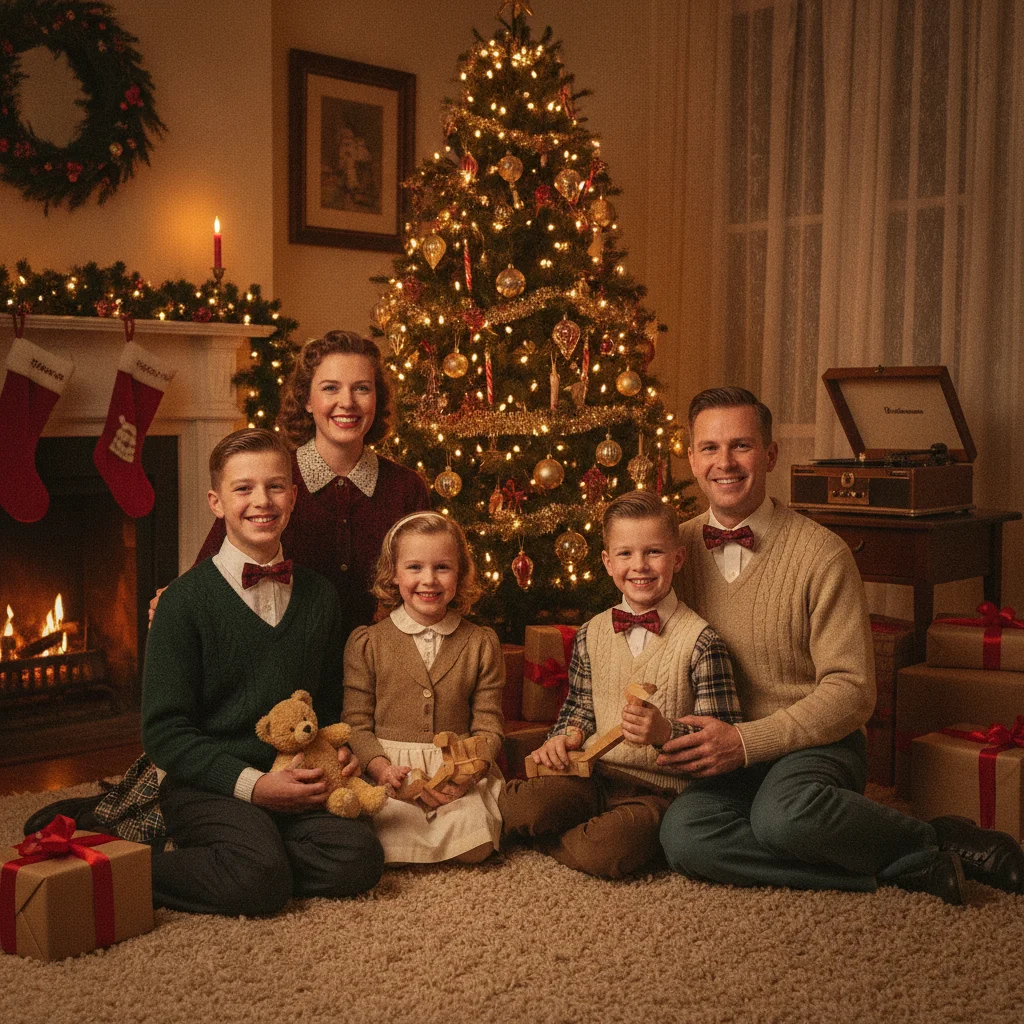
Quick answer: A vintage Christmas family portrait combines era-inspired clothing, traditional holiday decorations, warm lighting, formal posing, and restrained photo editing. Choose one decade as your reference, coordinate colors without using identical outfits, and include a few period-appropriate props. Finish with softened contrast, subtle grain, and slightly muted colors rather than a heavy filter.
A convincing vintage Christmas family portrait should look rooted in a specific period rather than covered with a generic old-photo filter. Clothing, decorations, poses, lighting, and color treatment all contribute to the final style.
Start by choosing a decade. A Victorian parlor portrait, a 1940s holiday photograph, and a 1970s living-room snapshot require different wardrobes and visual details. A clear reference period keeps the portrait cohesive.
What defines a vintage Christmas family portrait?
Vintage family portraits usually feature deliberate posing, recognizable seasonal details, and a limited color palette. Older studio portraits tend to look formal, while mid-century and later photographs often feel more relaxed and domestic.
The strongest images use only a few nostalgic elements. A natural tree, wrapped parcels, period clothing, and warm lamps can communicate the idea more effectively than a crowded collection of props.
| Era | Typical colors | Useful details |
|---|---|---|
| Victorian | Burgundy, forest green, cream | Velvet, lace, candles, carved furniture |
| 1940s and 1950s | Red, pine green, ivory | Cardigans, glass ornaments, simple wrapped gifts |
| 1960s and 1970s | Mustard, brown, orange, avocado | Tinsel, patterned knitwear, wood-paneled rooms |
| 1980s and 1990s | Bright red, emerald, denim blue | Flash photography, oversized sweaters, colorful lights |
Which vintage era should your family choose?
Choose an era that suits your location and the clothes you can obtain. A traditional room with dark wood may support a Victorian or 1940s concept. A simple living room with a large tree can work well for a 1970s, 1980s, or 1990s portrait.
Family history can also guide the decision. Recreating the decade in which grandparents married or parents celebrated childhood Christmases gives the session a personal foundation. Use old family albums to study posture, hairstyles, decorations, and framing.
What should everyone wear for a vintage Christmas photo?
Coordinate the family through color and texture instead of placing everyone in identical outfits. Wool, corduroy, velvet, lace, denim, and patterned knitwear photograph well. Avoid modern athletic logos, technical fabrics, and visibly contemporary footwear.
For a mid-century portrait, try collared shirts, cardigans, modest dresses, pleated skirts, or high-waisted trousers. A 1970s arrangement can include roll-neck sweaters, warm earth tones, flared trousers, and bold geometric patterns. Keep patterns limited so faces remain the focus.
How can decorations create an authentic setting?
A real or natural-looking tree is an effective starting point. Select ornaments that fit the chosen decade, such as glass baubles for a 1950s scene, tinsel for a 1970s room, or colorful string lights for a 1990s snapshot.
Wrap gifts in plain paper, simple stripes, or period-inspired prints. Hide plastic packaging and modern electronics. Wooden toys, old books, ceramic figures, stockings, record players, and family heirlooms can add context without overwhelming the portrait.
What lighting makes a Christmas portrait look vintage?
Use warm, directional light rather than bright overhead fixtures. Window light, a shaded table lamp, or a large diffused light placed to one side produces gentle shadows associated with older portrait photography.
Tree lights should appear as background accents, not the main source of illumination. If the room is dark, add soft light to the family’s faces while retaining the glow of the decorations. A direct on-camera flash can be appropriate for an intentional 1980s or 1990s snapshot style.
How should a family pose for a vintage portrait?
Formal eras suit structured arrangements. Seat older relatives or parents near the center, place children beside them, and ask standing family members to rest a hand on a chair or shoulder. Keep hands visible and posture controlled.
For a later-decade snapshot, allow closer spacing and natural interaction. Family members can exchange gifts, decorate the tree, or look toward a child. Capture one camera-facing portrait before moving into candid variations.
How should the finished portrait be edited?
Reduce saturation slightly, soften digital sharpness, and use gentle contrast. Fine grain can imitate film texture, while a subtle warm or faded color cast can suggest an older print. Keep skin tones believable and preserve detail in faces.
Sepia is most suitable for nineteenth-century or early twentieth-century concepts. It is less convincing for mid-century color photography. Avoid strong scratches, artificial light leaks, and thick borders unless they match the selected photographic format.
What are the limitations of a vintage portrait style?
Perfect historical accuracy may require specialized clothing, furniture, and hair styling. Rental costs can rise quickly, particularly for a large family. Children may also find stiff formal poses difficult to maintain.
Vintage editing cannot correct conflicting modern details. Phones, smartwatches, visible power strips, and recent product packaging should be removed before the photograph is taken. Cultural clothing and family traditions should be represented respectfully rather than altered to fit a narrow visual theme.
A successful vintage Christmas family portrait depends on a consistent era, thoughtful wardrobe choices, simple seasonal props, flattering light, and restrained editing. Personal heirlooms and familiar traditions make the result feel like a family memory rather than a costume set.
What Usually Goes Wrong With a Vintage Christmas Family Portrait Style?
Vintage Christmas family portraits usually fail when the chosen decade is inconsistent across clothing, setting, pose, lighting, and editing.
- Mixing a 1940s silhouette with 1970s ornaments and current accessories makes the image feel themed rather than period-specific.
- Heavy sepia, fake scratches, and uniform grain can obscure faces and resemble a filter. Apply aging selectively after balancing skin tones and expressions.
- Modern outlets, televisions, logos, and plastic décor break the illusion; reframe or remove them before shooting.
- Overly stiff posing can flatten family connection. Use a period-aware arrangement, then allow small variations in gaze, hands, and posture.
- There is no universal grain or fading setting that guarantees authenticity; the appropriate treatment depends on the era, lighting, and source image.
Before finalizing the card, inspect every visible detail against one clearly named decade.
Why does a vintage Christmas family portrait look like a costume?
The most common failure is overloading the portrait with coordinated period details until the family looks like a cast in costume. Exaggerated hairstyles, identical outfits, conspicuous props, and theatrical expressions can make the concept more noticeable than the people. Spot this problem before sending the card by viewing the finished design at thumbnail size. If clothing and decorations command attention before anyone’s face does, remove one prominent element rather than adding more effects. Keep garments within a shared era and palette, but allow differences in texture, formality, and accessories. Natural posture also helps: hands should have a comfortable place, and expressions should suit the family rather than imitate an old advertisement. The final card should feel like a family portrait preserved from another decade, not a staged historical scene.
Frequently asked questions
What colors work best for a vintage Christmas family portrait?
Deep red, forest green, cream, brown, mustard, and muted blue work well. The best palette depends on the decade being recreated.
Do vintage Christmas photos need to be black and white?
Vintage Christmas photos can be black and white, sepia, or color. Mid-century and later concepts often look more authentic with muted period-appropriate color.
Can a vintage family portrait be taken at home?
A home is often ideal because furniture, heirlooms, and familiar decorations add personal detail. Remove obvious modern objects and simplify the background before shooting.
What props are suitable for a vintage Christmas portrait?
Useful props include glass ornaments, wrapped parcels, wooden toys, old books, stockings, ceramic decorations, and record players. Choose props that match one period.
How can children be included in a formal vintage pose?
Seat younger children beside a parent or give them a simple prop to hold. Photograph the formal arrangement first, then capture relaxed interactions.
Should everyone wear matching Christmas sweaters?
Matching sweaters suit some 1980s and 1990s concepts, but coordinated colors usually look more authentic for earlier eras. Mixing complementary textures also adds visual depth.
How much film grain should be added during editing?
Film grain should be visible only on close inspection and should not obscure faces. Fine, restrained grain usually looks more believable than a strong preset.
Why does my vintage Christmas family photo look fake?
It usually looks fake because the visual clues point to different decades or the aging effect is too strong. Choose one era, then check garments, hair, ornaments, furniture, and poses against that reference. Reduce grain, scratches, and color shifts until faces remain natural. A restrained, consistent treatment is more convincing than several stacked retro effects.
How do I hide modern details in a vintage Christmas family portrait?
Start by simplifying the frame and checking its edges before arranging the family. Hide outlets, charging cables, screens, product labels, contemporary toys, and bright plastic decorations. If an object cannot be moved, change the camera angle or conceal it with era-appropriate fabric, greenery, furniture, or wrapped gifts rather than relying entirely on later editing.
How do I make a vintage Christmas portrait look natural?
Let family members interact as they normally would while keeping the clothing, setting, and color palette consistent with one era. Use relaxed hands, slight differences in posture, and expressions that feel familiar. Limiting each person to one or two obvious period details prevents the styling from overwhelming individual personality.