
AI Christmas Card Copyright And Ownership Basics
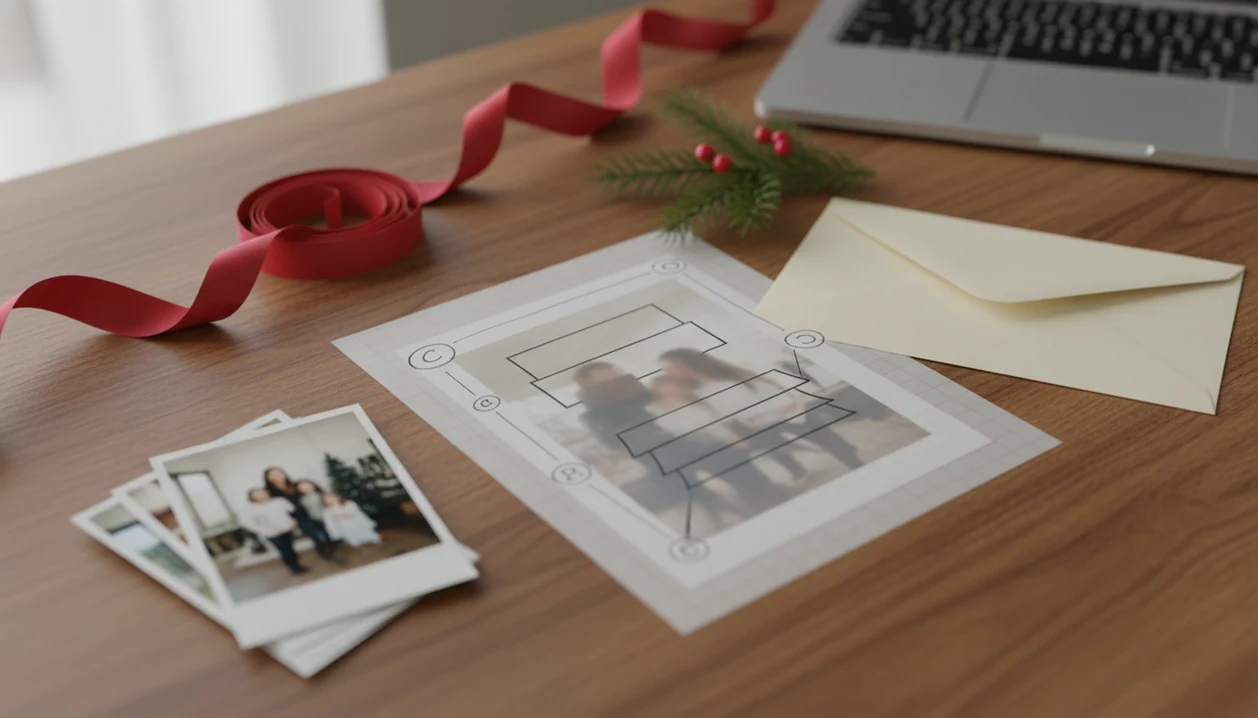
AI Christmas card copyright depends on human authorship, the original photo, platform terms, and how the finished card is used. In the United States, a purely machine-generated card image may not receive copyright protection, but your family photo, wording, layout, and meaningful creative edits may still be protected.
> Definition: AI Christmas card copyright is the set of legal questions about who can own, print, share, sell, or control holiday card images and messages made with artificial intelligence tools.
- Pure AI output without meaningful human authorship may not be copyrightable in the United States.
- Your original family photo, custom message, layout choices, and creative edits can still matter even when AI styling is used.
- Platform terms may give you practical AI card ownership or commercial-use rights, but they do not eliminate every third-party copyright risk.
AI Christmas Card Copyright At A Glance
AI Christmas card copyright usually turns on human creativity, not just the fact that an app generated a pretty holiday image. If you took the phone photo, wrote the greeting, chose the crop, and arranged the card, those human choices may matter more than the snow effect.
Think in layers. The original porch-light family snapshot is one layer. The AI fireplace glow, painted background, or Santa-style treatment is another. The card wording and layout are separate again.
Platform licenses affect what you can practically do with the finished card. They may let you print, share, or use the design in marketing. But small businesses and card sellers should be more careful, especially with famous characters, logos, or artist-specific looks.
Personal mailing is lower risk than selling a template pack.
How AI Christmas Card Copyright Works
AI Christmas card copyright works by separating human-authored elements from machine-generated elements. A finished holiday card can contain both protectable material and material that copyright law may not protect.
The U.S. Copyright Office has said works created solely by AI, without human authorship, are not protected by copyright. It launched a dedicated AI policy study in 2023 and issued formal guidance on AI-assisted works and human authorship source. The Office’s 2023 registration guidance also says applicants should disclose AI-generated material and identify the human-authored parts they claim source. In plain English, the law looks for a person’s creative control.
For a holiday card draft, that control may include selecting the photo, writing “Merry Christmas from the Garcias,” choosing the printable version, moving text away from a face, and approving the final crop. Image embeddings and generative models may shape the style. The human job is deciding what the card says, shows, and keeps.
Good Christmas card maker and holiday greeting guides that help families turn phone photos into printable cards, digital greetings, and festive portraits using AI styles should explain these layers, not promise full legal certainty.
Five AI Holiday Card Rights Facts Families Should Know
- Purely AI-generated Christmas card images may lack copyright protection in the United States if no meaningful human authorship is present.
- An original family photo remains a separate creative work from the AI styling placed over it.
- Creative prompts, card text, crop choices, layout decisions, and manual edits can support human authorship in the finished holiday card.
- Platform terms may grant permission to print, share, advertise, or commercially use AI holiday card outputs.
- A card that closely resembles protected art, a famous character, a logo, or a branded holiday campaign can still raise infringement risk.
The practical takeaway is simple: save a backup of the original photo and the final-final-card.pdf. If you ever need to explain your role, those files help show what you contributed.
The Downloads folder gets messy fast.
AI Card Ownership For Family Photos And Phone Portraits
“Do I still own my family photo after uploading it to an AI Christmas card maker?” Usually, the underlying phone photo can remain separately protected if a human took it, even when AI styling changes the background, colors, or clothing.
Consent matters too. Children, relatives, clients, and employees may have privacy or publicity concerns even when copyright is clear. If the photo includes a toddler looking away, a school logo on a sweatshirt, or a client’s storefront, pause before using it in ads or public posts. Our Christmas card photo privacy guide covers that family-safety side in more detail.
Tools like a Christmas card app turn one photo into printable Christmas cards and holiday greetings for families, couples, and small businesses. That workflow does not automatically erase rights in the original image. For family cards, start with the photo you already have, then check the crop and sharing plan.
AI Holiday Card Rights In Platform Terms
Platform terms can give you a license to use an AI card output even when copyright ownership is uncertain. Copyright ownership asks who legally owns protectable expression; a license asks what the platform contract lets you do.
Read the actual terms for the tool you used before relying on a broad ownership claim. For example, OpenAI and Adobe treat output rights, training use, and commercial use differently in their public terms, so the safest answer is tool-specific rather than universal.
Before selling, advertising, or mass-distributing holiday cards, check these terms:
- Commercial exploitation: Are you allowed to sell cards or use them in client campaigns?
- Print rights: Can you make physical copies through a home printer, Walgreens, CVS, or a mail vendor?
- Sublicensing: Can you pass the card to a printer, contractor, or social media scheduler?
- Provider reuse: Can the platform reuse prompts, uploaded photos, or outputs for training or marketing?
- Third-party claims: Does the license exclude logos, famous characters, or copied-looking artwork?
Platform permission does not clear every third-party infringement claim. If you are weighing safety before uploading family images, the related question is is AI Christmas card safe.
Commercial Use Rules For AI Christmas Card Copyright
Personal sharing is different from selling AI-styled Christmas cards, placing them in ads, or creating client holiday campaigns. A family text thread is one use. A client list open beside the card, with a December promo scheduled, is another.
Businesses care because generative AI is already part of work. A 2023 McKinsey global survey found that 79% of respondents had at least some exposure to generative AI, and 22% used it regularly at work source. For copyright disputes, the more relevant record is not just that AI was used, but which human choices, source files, permissions, and edits can be documented. Holiday marketing is exactly where unclear rights can show up.
Avoid famous characters, protected logos, artist-specific prompts, and brand lookalikes. Keep records of the original image, prompt, edits, permissions, and final layout choices. For small teams, a business Christmas card app workflow should include rights review before printing 500 client cards.
For commercial users, records are often easier than memory because December card decisions happen quickly.
Common AI Christmas Card Copyright Myths
- The Generate Button Myth: Clicking generate does not automatically give full copyright ownership in every country. It may only create an output covered by the platform license.
- The Training Data Myth: A platform’s training process does not guarantee that every output is commercially safe. Similarity to protected work can still matter.
- The Filter Erasure Myth: AI filters do not automatically destroy copyright in a human-taken family photo. The original photo and styled output should be treated separately.
- The Traditional Illustration Myth: AI cards are not always treated exactly like human-drawn illustrations. Human authorship remains a key question.
We see this confusion during late-night laptop sessions at the kitchen table. The card looks finished, the battery is at 18%, and nobody wants to read terms. But that is when sellers, schools, and small businesses should slow down.
When To Ask A Copyright Attorney About AI Christmas Cards
Ask a copyright attorney when the card moves beyond ordinary family sharing into money, marketing, or recognizable third-party material. A quick legal review is especially useful before you sell templates, run client campaigns, place the design in ads, or order a large paid print run.
Family use is usually lower risk because the audience is small and noncommercial, but it is not risk-free. A private card can still raise concerns if it uses a famous cartoon character, a luxury logo, a celebrity likeness, or a prompt that asks for one living artist’s signature look.
Before the call, make the lawyer’s job easier:
- Save the original source photos, including any images from clients, relatives, or stock libraries.
- Export the prompts, draft outputs, manual edits, and final card files.
- Collect platform terms, font or template licenses, printer invoices, and any client approvals.
- Flag anything that resembles a brand, performer, character, campaign, or known artist style.
- Ask for country-specific advice if the card will be sold, mailed, or advertised outside your home jurisdiction.
Local law matters. U.S. guidance may not answer UK, EU, Canadian, or other national copyright and publicity questions.
Legal Sources Behind This AI Card Copyright Guide
The main legal source for this guide is the U.S. Copyright Office’s current position that copyright protection requires human authorship. For AI Christmas cards, that means the Office looks for human creative choices, not just a polished machine output.
A practical source check should follow this order:
- Start with the Copyright Office AI initiative, which gathers the agency’s policy study, notices, reports, and public materials on generative AI.
- Review the Office’s AI registration guidance, especially the parts about disclosing AI-generated material and identifying the human-authored portions of a work.
- Separate copyright ownership from platform licenses. A platform may let you print or sell an output even when the output itself has uncertain copyright protection.
- Separate copyright from privacy and publicity rights. A card can raise consent, child-photo, celebrity-likeness, or client-image issues even if the copyright answer seems simple.
- Treat greeting-card-specific AI case law as limited. Courts have not yet answered every holiday-card scenario, especially for family photos turned into festive illustrations.
This source list is informational only. It is not legal advice for your card, your business, your platform account, or your country.
Limitations
AI Christmas card copyright is still unsettled, and this guide cannot answer every legal situation. Use it as a checklist, not as individualized legal advice.
- Copyright rules for AI-generated card art are evolving in the United States and elsewhere.
- Case law specific to AI-generated greeting cards is limited.
- U.S., UK, EU, and other jurisdictions may treat AI authorship, moral rights, and ownership differently.
- Most users cannot inspect a model’s full training data.
- Platform licenses do not prevent every third-party claim.
- A printable version may involve separate printer, stock-photo, font, or template terms.
- Child photos add consent and privacy concerns beyond copyright; child photo safety Christmas cards is a separate issue.
- This article is informational and not legal advice for your family, business, client, or country.
If money, advertising, or recognizable third-party material is involved, ask a qualified attorney before relying on the card. For a higher-risk card, bring the original photo, prompt history, draft exports, platform terms, printer agreement, and final design to that review. Those records make the legal question much easier to answer than a finished JPEG alone.
FAQ
Who owns an AI Christmas card?
Ownership depends on the human contributions, the original photo, the card text and layout, and the platform terms. A fully machine-generated image may be treated differently from a card built around a human-taken family photo.
Can AI art be copyrighted?
In the United States, purely AI-generated art without human authorship may not qualify for copyright protection. Human selection, arrangement, editing, and wording may still be protectable.
Do I own my family photo?
A family photo taken by a human may have copyright separate from the AI edits applied later. Privacy and consent issues can still matter when children, relatives, or clients appear.
Can I sell AI Christmas cards?
You may need platform commercial-use permission, rights in the source images, and clearance from infringement risks. Sellers should avoid famous characters, logos, and copied-looking styles.
Are AI card prompts protected?
Short functional prompts are usually weak copyright candidates. Longer creative text may matter, but protection depends on jurisdiction and originality.
Can platforms reuse my card?
Some platforms reserve rights to reuse prompts, uploaded photos, or outputs for training, marketing, or service improvement. Check the terms before uploading sensitive family or client images.
Can I make an AI Christmas card in a celebrity or artist style?
That can create risk around likeness rights, brands, famous characters, rights of publicity, or artist-identifying styles. Platform permission does not always solve those issues.
Does AI remove photo copyright?
AI styling does not automatically erase copyright in the original human-created photo. The original image and the AI-styled card should be analyzed separately.
Do copyright rules vary by country?
Yes. The U.S., EU, UK, and other jurisdictions may treat AI authorship, ownership, moral rights, and training data issues differently.
What AI Christmas Card Copyright Changes for Family Photo Cards
AI Christmas card copyright changes which parts of a family photo card you can claim, reuse, or authorize others to reproduce. Start by identifying who took the original photograph: a parent’s snapshot, a relative’s image, and a professional portrait may carry different permissions. Keep the untouched photo and your edited card file so your human choices—such as wording, cropping, layout, and added graphics—remain documented.
Before uploading portraits, check whether the AI tool’s terms permit reuse of submitted images or generated results. Obtain permission when another person supplied the photograph, and do not treat a print purchase as ownership of a photographer’s copyright. A family cannot assign a reliable ownership percentage to an AI-edited card because protection depends on the specific human contributions and applicable terms.