
What Are the Best Christmas Card Ideas for Book Club Members?
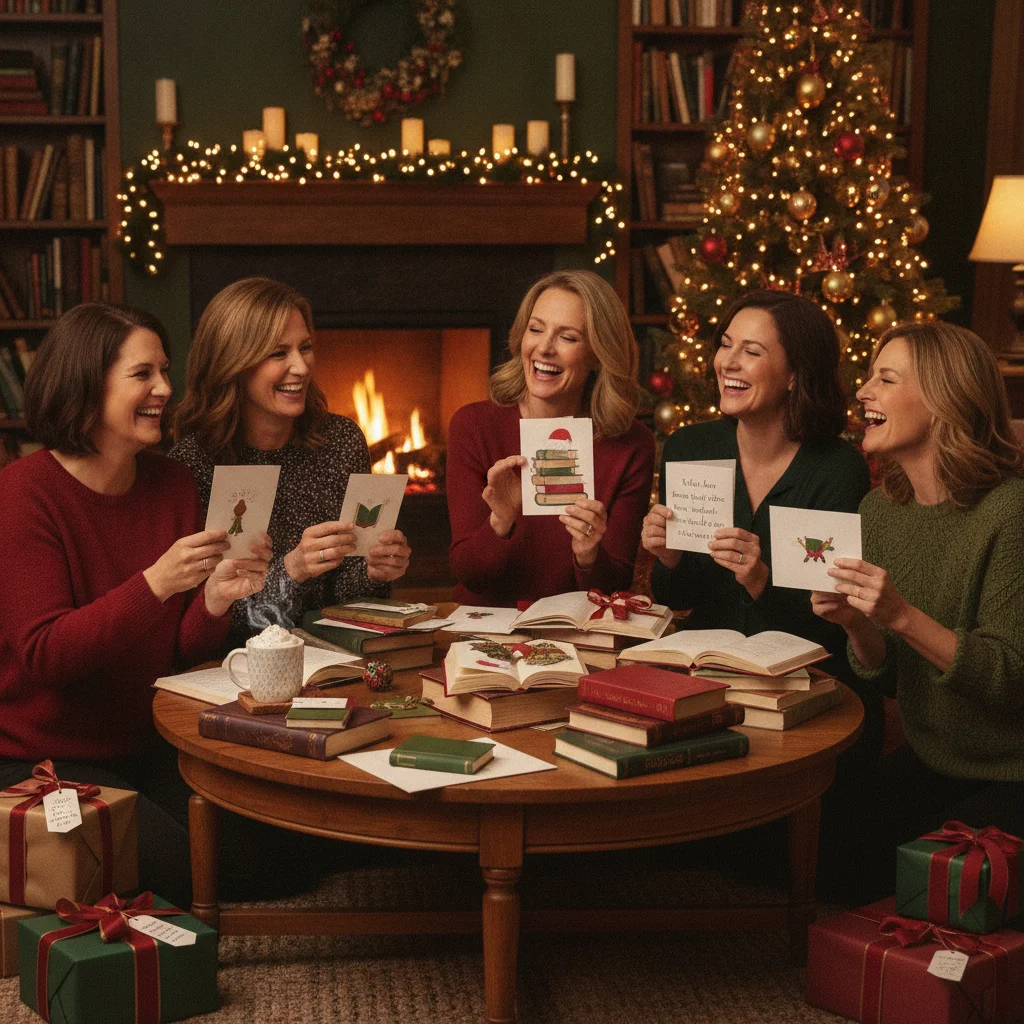
Quick answer: The best Christmas cards for book club members combine a festive greeting with a shared reading memory, literary joke, or reference to a favorite book. Consider library-card designs, book-stack illustrations, personalized bookmarks, or messages celebrating another year of stories and discussion. Choose references every recipient will understand, and avoid revealing spoilers.
Best overall idea: Pair a cozy book-themed design with a short message recalling the club’s favorite read, funniest debate, or most memorable meeting. Specific shared details make a simple Christmas card feel personal.
What makes a Christmas card suitable for a book club?
A good book club Christmas card reflects both the holiday season and the connection created through reading together. Books, shelves, reading chairs, library cards, mugs, and reading glasses are recognizable design elements that work across many literary tastes.
The message matters more than an elaborate format. A reference to lively discussions, expanding reading lists, or meetings spent talking about everything except the assigned chapters can make the card feel written for the group rather than purchased for any friend.
Which literary Christmas card concepts work best?
The strongest concept depends on whether the card is for one close friend or every member of the club. These ideas can be adapted for printed, handmade, or digital cards:
- A festive book stack: Draw or photograph books arranged like a Christmas tree, with a star or reading lamp at the top.
- A library checkout card: Format the greeting like a vintage borrowing slip listing meetings, books, or memorable club dates.
- A fictional book cover: Create a cover titled A Very Bookish Christmas and list the club members as the cast.
- A favorite quotation: Feature a brief passage about friendship, winter, generosity, or home, with clear attribution.
- A reading forecast: Predict cozy evenings, excellent stories, spirited opinions, and an ever-growing to-be-read pile.
- A bookmark card: Design a detachable bookmark so the recipient can reuse part of the greeting after Christmas.
How can each card be personalized?
Mention a book the recipient recommended, a character they defended, or a discussion point that changed how the group understood a story. One accurate detail is usually enough to turn a general seasonal greeting into a personal keepsake.
Individual superlatives can also work when the humor is affectionate. Examples include “Most Likely to Finish Before Everyone Else,” “Best Plot-Twist Detective,” or “Champion of Choosing the Longest Book.” Avoid jokes about missed meetings or unfinished books if they might sound critical.
For a whole-club card, include the year’s reading list or ask each member to contribute one sentence. A collection of short notes gives every participant a voice without making the finished card difficult to read.
What can you write inside a book club Christmas card?
A useful message can be warm, humorous, or reflective. The following examples are short enough to adapt with a title, character, or club memory.
| Tone | Example message |
|---|---|
| Warm | Wishing you a peaceful Christmas filled with good stories, cozy reading, and people who make every chapter brighter. |
| Bookish | May your holidays have satisfying endings, memorable characters, and plenty of time for one more chapter. |
| Funny | Here’s to another year of buying more books than we can possibly read. Merry Christmas! |
| Club-focused | Thank you for a year of thoughtful recommendations, spirited debates, and wonderful company. |
| New Year | May the next chapter bring excellent books, happy gatherings, and fewer impossible reading deadlines. |
Which design details create a literary holiday look?
Traditional Christmas colors are not required. Deep green, burgundy, cream, navy, and warm brown can suggest old book covers and quiet reading rooms. Gold accents add a festive detail without overpowering the literary theme.
Serif typefaces resemble printed novels, while handwritten lettering suits casual groups. Keep decorative fonts limited to the title so the message remains legible. If the card includes a long quotation, use generous spacing and strong contrast between the text and background.
How can the entire club create one group card?
Ask every member to submit a favorite title from the year, a short seasonal wish, or a single word describing the club. Arrange the responses as book spines, catalog entries, or miniature reviews. This format works especially well as a card for a host, librarian, organizer, or departing member.
A group photograph can also become a literary card. Pose members holding favorite books, gathering around a festive book stack, or reading beside a fireplace. Add names if the recipient does not know everyone equally well.
What limitations should you consider?
Inside jokes can exclude newer members, and obscure quotations may require explanation. Choose references that the intended recipient will recognize. Confirm quotation wording and attribution before printing, especially when the quotation is the main feature.
Avoid spoilers, even for books discussed earlier in the year. Consider different holiday traditions within the club, too. “Season’s greetings,” “happy holidays,” or a winter reading theme may be more appropriate than an explicitly religious message for a mixed group.
Cards containing small gifts can cost more to mail. Bookmarks, tea bags, and flat reading-list inserts are generally easier to enclose than ornaments, pins, or bulky treats.
How do you choose the final idea?
Start with the recipient’s personality and the club’s shared history. A witty card suits a group that enjoys playful debate, while a handwritten note is better for thanking a thoughtful organizer or longtime reading friend.
Keep the concept focused on one recognizable idea. A clear book-stack illustration and a sincere sentence will usually feel more polished than a card crowded with quotations, jokes, photographs, and decorations.
What Book Club Christmas Card Ideas Get Wrong When Every Member Is Treated the Same
Treating every book club member the same makes a Christmas card feel generic because readers differ in taste, role, and closeness to the sender. Start with one shared club detail, then vary the card around the recipient: a mystery reader may appreciate a clue-inspired design, while the member who tracks selections may prefer a nod to the reading list. Avoid assigning a joke, label, or disliked genre to someone merely because it suits the group theme. Mention missed meetings only if the relationship makes that teasing welcome. For newer members, keep references inclusive rather than relying on an old in-joke. There is no reliable single formula for all clubs; the best test is whether the wording could belong only to this reader within this particular group.
Which design choices feel wrong for book club Christmas cards?
Book club Christmas cards feel wrong when literary details overwhelm the holiday greeting, imply that everyone likes the same books, or turn a friendly card into an inside joke that others cannot understand.
- Check the book club reference. If the cover needs a paragraph of explanation or names only one member will recognize, simplify it to shelves, pages, or a shared reading ritual.
- Check the book club tone. Skip mock book covers, fake negative reviews, or jokes about slow readers when those ideas could embarrass a member.
- Check the book club layout. Reduce tiny spine titles, dense quotation blocks, and competing typefaces; the main Christmas message and recipient’s name should remain easy to spot.
Frequently asked questions
What is a good short Christmas message for a book club member?
Wishing you a cozy Christmas filled with good books, warm drinks, and many happy chapters ahead.
How can I make a book club Christmas card funny?
Use a gentle joke about growing reading lists, unfinished chapters, strong character opinions, or meetings that wander off topic.
What small gift can I put inside a literary Christmas card?
A flat bookmark, reading-list card, tea bag, bookstore gift card, or personalized bookplate fits the literary theme.
Can I use a quotation from a novel on the card?
A brief, accurately attributed quotation can work well for personal cards. Avoid long extracts and confirm the wording before printing.
What should I write to a book club organizer?
Thank the organizer for choosing books, coordinating meetings, and creating a welcoming place for discussion.
How do I create one Christmas card for the whole book club?
Collect one short message or favorite title from each member and arrange the contributions as book spines, catalog entries, or miniature reviews.
What colors suit a book-themed Christmas card?
Deep green, burgundy, navy, cream, brown, and touches of gold create a cozy literary appearance.
Should every club member receive the same card?
The main design can stay consistent, but adding one handwritten memory or recommendation gives each recipient a personal version.
How do I personalize a Christmas card for a new book club member?
Use a welcoming reference to the club rather than an in-joke the newcomer may not understand. Mention a recent discussion, the first book you read together, or appreciation for a perspective they brought. Keep the message warm but not overly familiar, and leave room for the relationship to develop during the next reading season.
What should I avoid writing in a book club Christmas card?
Avoid jokes about unfinished books, attendance, reading speed, or strong opinions unless you know the recipient enjoys that teasing. Do not imply that one genre defines them, and do not use an obscure quotation without checking its wording and attribution. A specific, friendly observation about their contribution is safer than a stock literary pun.