
What Are Some Cheerful Christmas Card Ideas for Someone in a Nursing Home?
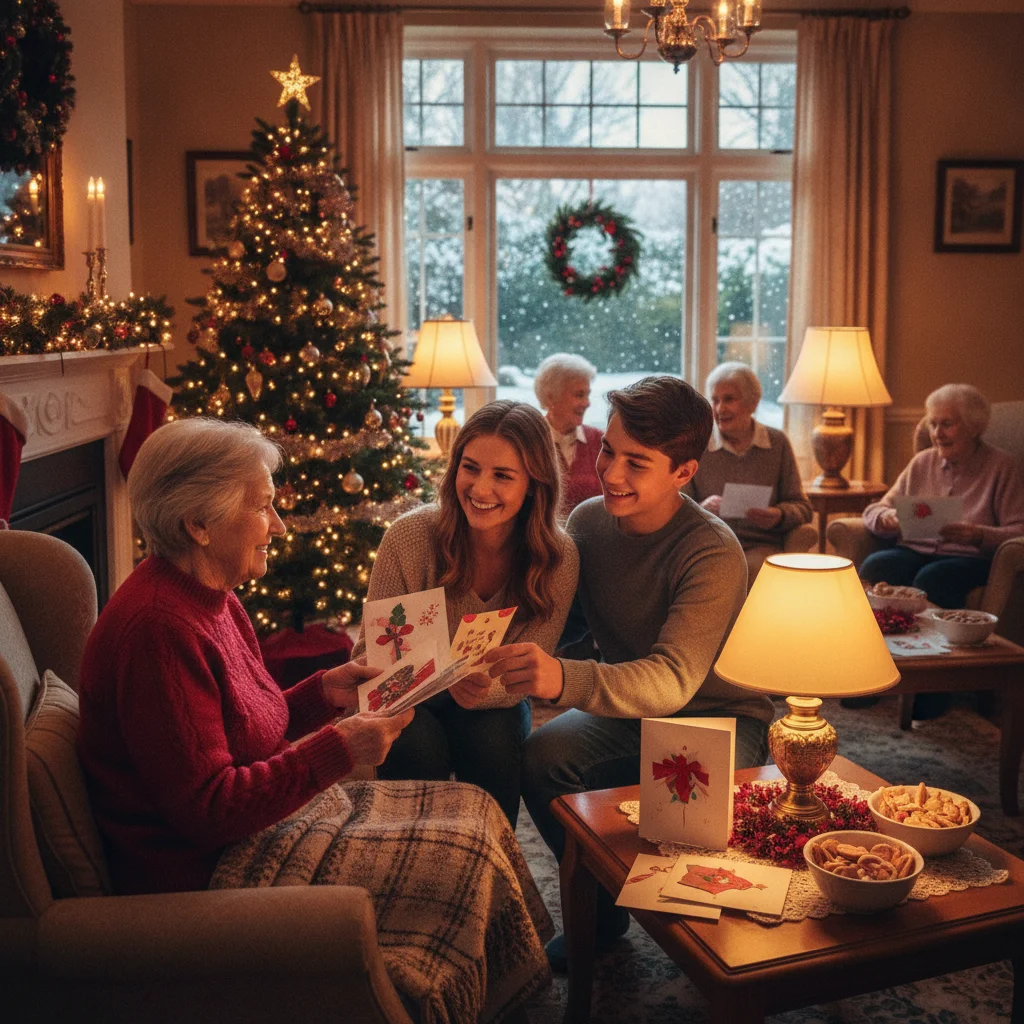
Quick answer: Choose a Christmas card with a familiar seasonal image, large readable text, and a warm message that reflects the recipient’s personality. Personal photos, shared memories, children’s drawings, and specific holiday wishes can make the card meaningful. Avoid references to health, mobility, or family gatherings unless you know they will be comforting.
A Christmas card for someone in a nursing home can offer companionship, recognition, and a tangible reminder that the recipient is remembered. The best card does not need an elaborate design. A clear, warm message and one personal detail often matter most.
The strongest ideas reflect the resident’s interests, traditions, faith, or relationships. Consider the recipient’s vision, memory, and current circumstances before selecting the design or writing the message.
Which Christmas card themes work well for nursing home residents?
Familiar seasonal scenes are usually comforting and easy to recognize. Snow-covered villages, decorated trees, candles, church windows, cardinals, poinsettias, and classic ornaments are dependable choices. A humorous card can also work when the recipient enjoys jokes and the humor does not focus on aging or health.
| Card theme | Why it works | Personal touch to add |
|---|---|---|
| Classic Christmas | Creates a familiar, traditional feeling | Mention a favorite family custom |
| Family photograph | Helps the resident feel connected | Label everyone shown in the photo |
| Religious design | Reflects the recipient’s faith | Include a short scripture or blessing |
| Nature scene | Offers a calm and attractive image | Choose a bird, flower, or place they like |
| Handmade card | Feels unique and personal | Add children’s art or handwritten notes |
Choose a theme based on what the person enjoys rather than what seems appropriate for a nursing home. The card should recognize the individual, not define the individual by where they live.
How can you personalize a Christmas card for a nursing home resident?
Personal details turn a standard greeting into a keepsake. Use the recipient’s preferred name and mention something specific that connects you, such as a holiday meal, favorite song, former neighborhood, beloved pet, or shared family story.
- Include a recent family photo with names written clearly on the back.
- Add a printed copy of an older photograph that may prompt a happy memory.
- Write one sentence about what you appreciate about the recipient.
- Describe a small event from your life so the message feels conversational.
- Invite children or grandchildren to add drawings, signatures, or short notes.
Keep memories positive and easy to understand. If the resident has memory loss, avoid testing questions such as “Do you remember?” State the memory directly and explain why it remains meaningful to you.
What can you write inside the Christmas card?
Simple language is often more touching than a long poem. A useful message includes a direct greeting, an expression of care, a personal detail, and a kind wish for the holiday season.
- “Merry Christmas, Aunt Rose. I am thinking of your wonderful sugar cookies and sending you lots of love.”
- “Wishing you peaceful days, cheerful music, and many moments of kindness this Christmas.”
- “Your stories have brought our family so much joy. I hope this card reminds you how loved you are.”
- “The cardinals in our yard made me think of you. Sending warm Christmas wishes from all of us.”
If faith is important to the recipient, include a sincere blessing or short scripture. For a recipient who is not religious, focus on peace, comfort, friendship, winter traditions, and being remembered.
How can you make the card easier to read and enjoy?
Readable design is especially important for residents with reduced vision, arthritis, or cognitive changes. Decorative details should support the message rather than make the card difficult to open or understand.
- Use large, dark lettering on a plain, light background.
- Choose a matte finish to reduce glare under overhead lighting.
- Write short paragraphs with generous spacing between lines.
- Avoid loose glitter, tiny decorations, strong scents, and complicated folds.
Sign the card clearly and explain your relationship when needed. A note such as “Love, Maria, your niece” can help a resident place the sender without embarrassment.
What are good ideas for a group or community card project?
Schools, workplaces, churches, and community groups can create cards for nursing home residents. Thoughtful coordination helps the project feel personal while protecting each resident’s privacy.
- Ask the facility whether it accepts cards and whether residents have stated preferences.
- Request first names or approved general greetings instead of private medical information.
- Have each participant write a complete, positive message rather than only signing a name.
General cards should avoid assumptions about relatives, religion, health, or holiday plans. Messages about friendship, comfort, winter beauty, and community are suitable when personal information is unavailable.
When and how should you send the Christmas card?
Mail the card early enough to account for facility sorting and holiday delays. Write the resident’s full name and the nursing home’s complete mailing address exactly as the facility provides it.
If hand-delivering the card, ask about visiting hours and infection-control policies first. A brief visit, phone call, or video chat can add meaning, but the card still has value when a visit is not possible.
What limitations should you keep in mind?
Not every traditional Christmas message will feel comforting. Residents may be grieving, experiencing loneliness, living with dementia, or following a different religious tradition. A cheerful tone should not dismiss difficult feelings.
Skip comments about declining health, being “young at heart,” or getting out of the nursing home. Avoid promising visits or calls unless you plan to follow through.
Facility rules may restrict food, flowers, glitter, scented items, ribbons, or bulky enclosures. Contact staff before including gifts, homemade treats, cash, or materials that could create an allergy or safety concern.
A good nursing home Christmas card is readable, specific, and respectful. A familiar image and a few sincere sentences can help the recipient feel seen, valued, and connected during the holiday season.
What treating every Christmas card idea for someone in a nursing home the same gets wrong
Treating every Christmas card idea for someone in a nursing home the same overlooks the recipient’s personality, abilities, beliefs, relationships, and current circumstances. Federal nursing home guidance frames person-centered care around individual choice and control, a useful principle for card writing as well (CMS, 2024). Before choosing a message, consider whether the person enjoys humor, observes Christmas religiously, has memory or vision changes, or is grieving. A longtime relative may appreciate a specific shared memory, while an unfamiliar resident needs a warm note without invented closeness. Do not assume age, illness, loneliness, or cognitive impairment simply because someone receives care. There is no universal wording that fits every resident. When possible, ask a family member, activities coordinator, or the recipient about preferred names, topics, and seasonal traditions.
When Does a Photo Feel Less Suitable Than an Illustration for a Nursing Home Resident?
A photo can feel less suitable than an illustration when it emphasizes people, places, or traditions the nursing home resident may no longer recognize or join. A recent family photo is meaningful when the recipient knows everyone pictured, but a crowded collage with tiny faces can be confusing and difficult to enjoy. By contrast, a simple illustration of a wreath, cardinal, tree, or winter window can provide warmth without demanding recognition. Avoid designs that resemble medical or institutional materials, jokes about aging or memory, and scenes centered on busy travel or large gatherings if those subjects may sharpen a sense of exclusion. Whichever option you choose, use one clear focal image, strong contrast, and a calm layout. The deciding factor is not whether photography or artwork looks more polished; it is whether the image feels personal without creating pressure, confusion, or sadness.
Frequently asked questions
What is a good general Christmas message for a nursing home resident?
A suitable message is: “Wishing you peace, comfort, and many cheerful moments this Christmas. You are warmly remembered during the holiday season.”
Should I mention that the person lives in a nursing home?
The message should focus on the individual rather than the nursing home. Mention the residence only when it is relevant to a visit, event, or delivery detail.
What should I write to a nursing home resident I do not know?
Write a friendly introduction and offer sincere seasonal wishes without making assumptions about health, family, or religion. A short note about your community or favorite winter tradition can make the message feel genuine.
Are handmade Christmas cards appropriate for nursing homes?
Handmade cards are appropriate when they are easy to handle and comply with facility rules. Avoid loose glitter, sharp decorations, strong fragrances, and small detachable pieces.
Can children make cards for nursing home residents?
Children can contribute drawings, simple greetings, and clearly written signatures. An adult should review each card to remove comments that could unintentionally focus on age, illness, or loneliness.
How do I address a Christmas card to someone in a nursing home?
Use the resident’s full name followed by the facility name and complete address. Confirm the preferred format with the nursing home because some facilities also require a room or unit number.
What type of print is easiest for older adults to read?
Large, dark print in a simple font on a light, matte background is usually easiest to read. Avoid cursive fonts, low-contrast colors, reflective paper, and text placed over detailed images.
Can I include a gift with the Christmas card?
Small gifts may be allowed, but facility policies vary. Ask staff before sending food, cash, flowers, scented products, or items that may present allergy, storage, or safety concerns.
How do I write a Christmas card for a nursing home resident with dementia?
Use a short, familiar message with clear names and a reassuring tone. If you know the person, mention one recognizable relationship, place, or tradition without testing their memory. Sign your full name and explain your connection. Avoid corrections, complicated jokes, and promises about visits unless those plans are confirmed.
Should a Christmas card to a nursing home resident be religious?
Make the card religious only when you know the recipient welcomes faith-based wording. A favorite scripture, prayer, or reference to a congregation can be meaningful for someone who observes Christmas that way. If their beliefs are unknown, choose respectful seasonal language focused on comfort, peace, companionship, or a pleasant memory.