
Compassionate Christmas Card Ideas for Someone Newly Widowed
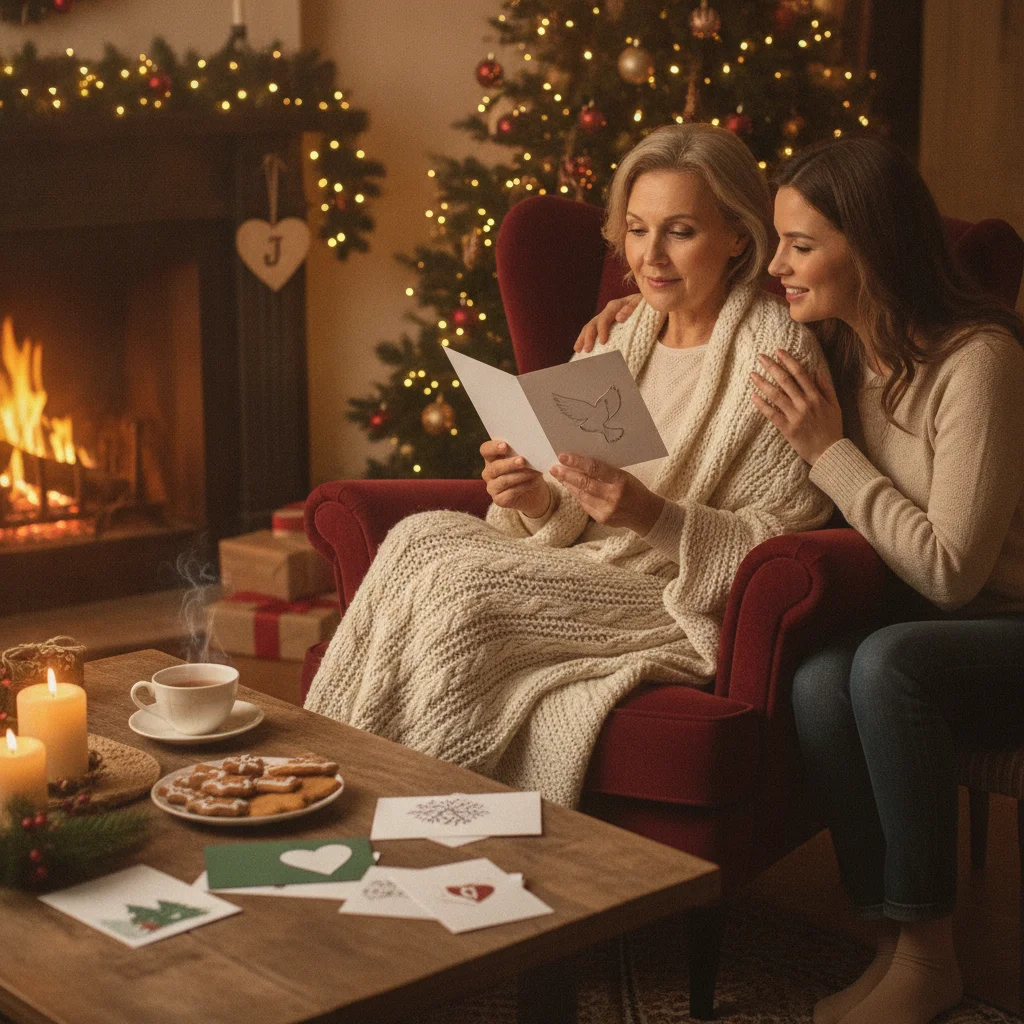
Quick answer: Choose a simple, understated Christmas card that acknowledges the difficulty of the season without trying to fix the recipient’s grief. Write a short message offering love, remembrance, or practical support. Mention the deceased spouse by name if appropriate, and avoid forced cheerfulness, platitudes, or claims that you understand exactly how the recipient feels.
A Christmas card can remind someone who is newly widowed that friends and relatives are thinking of them during a painful season. The most comforting cards do not demand a cheerful response. They acknowledge that Christmas may feel different and offer steady, specific support.
You do not need to write a long message or find perfect words. A sincere note that names the loss, remembers the deceased spouse, or offers companionship is usually more meaningful than a polished seasonal greeting.
What should you write in a Christmas card to someone newly widowed?
Begin with a gentle acknowledgment of the season. You can say that you are thinking of the recipient, recognizing how difficult Christmas may be, or remembering their spouse with affection.
Suitable messages include:
- Thinking of you with love this Christmas and holding you close in my heart.
- I know this Christmas will be very different. I am sending you love and remembering Michael with you.
- There are no perfect words, but I want you to know that you are not alone this Christmas.
- Wishing you moments of peace and comfort throughout the holiday season.
- Remembering Anna’s warmth and kindness, especially at Christmas. She is deeply missed.
- I am here for you during Christmas and in all the quieter days that follow.
Use the recipient’s normal name and write in your own voice. A plain sentence from a close friend often feels more authentic than formal sympathy wording.
Which message fits your relationship with the recipient?
| Relationship | Suggested message |
|---|---|
| Close friend | I know Christmas may feel especially hard. I love you, and I am here whenever you want company. |
| Relative | We are holding you close this Christmas and remembering David with so much love. |
| Colleague | Thinking of you during this difficult holiday season and wishing you peace and comfort. |
| Neighbor | Sending caring thoughts this Christmas. Please know that I am nearby if you need anything. |
| Faith community member | Keeping you in my prayers this Christmas and remembering Sarah with gratitude. |
Religious language is best used when you know it reflects the recipient’s beliefs. If you are unsure, choose words such as peace, care, remembrance, and comfort.
Should you mention the spouse who died?
Many widowed people appreciate hearing their spouse’s name. Mentioning the person confirms that their life and place in the family have not been forgotten. A brief memory can be particularly comforting if you knew the spouse personally.
You might write, “I keep thinking about Tom’s wonderful Christmas breakfasts,” or “I will always remember how Priya made everyone feel welcome.” Keep the memory warm and concise so the recipient does not feel obliged to comfort you in return.
If you did not know the spouse well, a simple acknowledgment is enough. For example, “Remembering James with you this Christmas” expresses care without implying a closeness that did not exist.
What type of Christmas card is most appropriate?
Choose a card with a calm design and restrained wording. Winter landscapes, stars, candles, greenery, birds, or simple typography can work well. Cards printed with “Thinking of you at Christmas” or “Peace at Christmas” often feel gentler than cards centered on celebration.
A conventional cheerful card is not automatically wrong, especially if it matches your established relationship. However, avoid humorous cards about spouses, large family celebrations, or instructions to “be merry.” A blank card is a good option when every printed message feels too cheerful or impersonal.
Can you offer support inside the card?
A specific offer is more useful than writing, “Let me know if you need anything.” Offer something you can realistically provide, such as a phone call, a walk, help with shopping, or company at a seasonal event.
You could add, “I would like to bring dinner next Thursday if that would help,” or “I will call after Christmas, but there is no need to answer if you need quiet.” Removing pressure to respond makes the offer easier to receive.
What wording should you avoid?
Avoid explanations for the death, predictions about recovery, and statements that minimize grief. Phrases such as “Everything happens for a reason,” “At least you had many good years,” or “They are in a better place” can feel dismissive, even when kindly intended.
Do not claim to know exactly how the recipient feels. It is safer to acknowledge uncertainty by writing, “I cannot imagine how hard this season may be.” Avoid suggesting that the person should focus on gratitude, stay strong for others, or begin moving on.
What limitations should you keep in mind?
No single message will suit every newly widowed person. The recipient’s beliefs, personality, relationship with their spouse, and circumstances of the death all affect what feels comforting. Someone may welcome a shared memory, while another person may prefer a short and private acknowledgment.
A card also cannot replace continuing contact. Grieving people often receive support immediately after a death and far less attention in later months. Consider following the card with a message or invitation in January, when loneliness may remain intense.
Best approach: Choose a gentle card, acknowledge that Christmas may be difficult, and write one or two sincere sentences. Remember the spouse by name when appropriate, offer support without pressure, and let the recipient experience the season in their own way.
What a Christmas card for someone newly widowed should never assume or demand
A Christmas card to someone newly widowed should never assume they feel festive, share your beliefs, or are ready to resume familiar holiday traditions. It also should not demand a reply, gratitude, reassurance, social plans, or a promise to be strong. Avoid predicting that Christmas will become easier, assigning meaning to the death, or suggesting grief follows a schedule. Do not presume the recipient wants company or solitude; offer either choice without making them manage your feelings. Keep questions optional and practical, especially if you mention a visit, meal, or gathering. There is no universal phrase that will feel right to every bereaved person, so use what you know about this individual and leave room for changing emotions. A considerate card acknowledges the season and the recipient without setting an emotional task for them.
When can upbeat Christmas wording suit someone newly widowed?
Upbeat wording can suit a newly widowed recipient when it reflects their stated preferences, faith, or established relationship with you rather than asking them to perform happiness. If a close friend has said they want familiar jokes or traditional greetings, use that shared tone without telling them to “cheer up.” Faith-based joy may fit when you know the recipient welcomes that belief; do not use doctrine to explain the death. In a workplace card, keep any warmth restrained unless you have a personal relationship beyond work. If the person is also distressed by a pet’s illness or death, avoid piling on bright language. Last-minute mailing changes timing, not tone: a late card can simply acknowledge that Christmas may feel different. These exceptions permit genuine warmth, not commands to celebrate or recover.
Frequently asked questions
Is it appropriate to send a Christmas card to someone who was recently widowed?
A Christmas card is appropriate when it offers care without expecting cheerfulness or a reply. A quiet acknowledgment can help the recipient feel remembered.
Should a Christmas card say Merry Christmas to a newly widowed person?
Merry Christmas is acceptable if it matches your usual relationship, but gentler wording may feel more considerate. Thinking of you at Christmas or wishing you peace places less pressure on the recipient.
Should I include the deceased spouse’s name?
Using the spouse’s name can be comforting because it acknowledges the person and the loss directly. Include the name naturally, especially if you knew the spouse.
Is a sympathy card better than a Christmas card?
Either can be suitable, depending on how recently the death occurred and the card’s wording. A blank or understated Christmas card often combines seasonal acknowledgment with sympathy.
Can I share a happy memory in the card?
A brief, warm memory can provide comfort and show that the deceased spouse is remembered. Choose a memory centered on the spouse rather than on your own grief.
What if I do not know what to say?
A simple message such as “Thinking of you with love this Christmas” is enough. Honest, short wording is better than a long explanation or familiar grief platitude.
Should I expect a response to the card?
Do not expect or request a response. Grief can make correspondence and seasonal tasks difficult, so explicitly removing that obligation may be helpful.
Can I ask a newly widowed person about their Christmas plans in a card?
You can ask, but make the question easy to ignore and avoid implying they should celebrate or join others. A low-pressure note can say that an invitation remains open, with no response required. If you genuinely need an answer for arrangements, ask separately rather than turning the Christmas card into a request they must handle.
Is it okay to include family news in a Christmas card to someone newly widowed?
Yes, brief family news can be included if it reflects your normal relationship and does not overwhelm the personal message. Lead with care for the recipient, then share only updates they would ordinarily welcome. Avoid using the card as a long celebration of couples’ milestones or expecting an enthusiastic reaction.
How do I address a Christmas card after someone’s spouse has died?
Address the card to the surviving spouse by the name and title they currently use. Do not continue listing the deceased spouse as a recipient. If children or other household members are included, name them as you normally would. When uncertain about a changed surname or title, using the person’s full name without an honorific is a respectful option.