
Proud and Festive LGBTQ Family Christmas Card Ideas
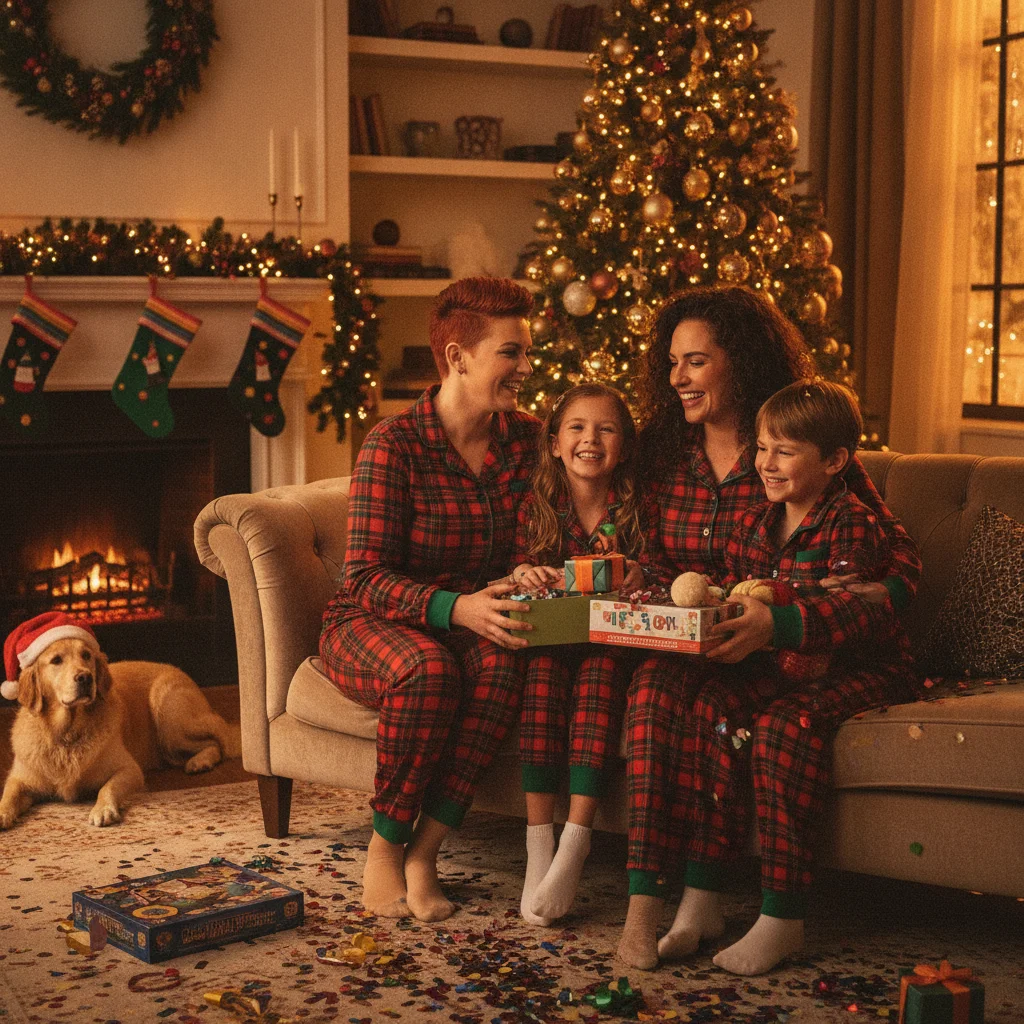
Quick answer: LGBTQ family Christmas cards can celebrate love, identity, tradition, and chosen family through joyful photos and personal wording. Try a cozy at-home portrait, rainbow holiday details, a playful “gay apparel” theme, matching pajamas, or a year-in-review design. Choose language such as “Merry Christmas from our family” and sign with each person’s preferred name.
An LGBTQ family Christmas card can be traditional, proudly expressive, quietly personal, or playfully camp. The best concept is one that feels true to your family rather than one that tries to explain your family to the recipient.
Couples, parents, children, chosen family members, and pets can all be part of the story. Start with the mood you want to share, then choose a photo, message, and design that support it.
What are some proud LGBTQ family Christmas card themes?
A pride-inspired card does not have to use every color of the rainbow. Small details, such as rainbow ornaments or coordinated scarves, can communicate pride while keeping a classic Christmas look.
- Rainbow tree: Decorate a tree with ornaments arranged by color and pose the family nearby.
- Don we now our gay apparel: Wear festive outfits, sequins, velvet jackets, or intentionally over-the-top sweaters.
- Home for the holidays: Photograph an ordinary family moment in the kitchen, beside the fireplace, or on the sofa.
- Chosen family gathering: Include the friends and relatives who make up your support network.
- Queer winter wonderland: Combine snowy scenery with rainbow hats, scarves, flags, or lights.
- Love makes a family: Use a warm group portrait with simple typography and minimal decoration.
How can LGBTQ parents include children in the card?
Let children help select the setting, clothing, or funniest photo. Participation makes the card feel like a family project instead of a formal portrait session.
For young children, consider decorating cookies, reading a holiday book, hanging ornaments, or opening an empty wrapped box. These activities give children something to do and often produce more natural expressions.
Parents can also mark a meaningful milestone, such as a first Christmas after adoption, a baby’s first holiday, or the first season in a new home. Keep private details off the card if the child is too young to consent or if the card could reach a broad audience.
Which idea fits your family’s style?
| Family style | Photo idea | Suggested message |
|---|---|---|
| Classic | Formal portrait by a tree | Merry Christmas from our family to yours |
| Playful | Matching pajamas or funny sweaters | Making the Yuletide gay |
| Proud | Rainbow lights or ornaments | Peace, pride, and Christmas joy |
| Cozy | Candid morning at home | Love lives here this Christmas |
| Chosen family | Group dinner or outdoor gathering | Family is what we make it |
| Pet-centered | Pets in safe festive accessories | Happy howl-idays from the whole crew |
What should an LGBTQ couple write inside?
The message can be affectionate without being formal. A newly married couple might write, “Our first married Christmas,” while established partners might choose, “Another year of love, laughter, and too many ornaments.”
Other concise options include “Merry Christmas with love from both of us,” “Warm wishes from our home to yours,” and “Proud, merry, and grateful.” Couples celebrating an engagement can use the card as a subtle announcement by showing a ring or adding, “We said yes.”
How can chosen family be celebrated?
A Christmas card can recognize the people who provide care, belonging, and support. Invite close friends, former roommates, supportive relatives, or community elders into one group photograph.
If everyone cannot meet, create a grid of individual portraits taken against similar backgrounds. Ask each person for permission before printing or sharing their image, and confirm the name each person wants displayed.
How can the design feel festive without relying on stereotypes?
Use colors and details that your family genuinely enjoys. Traditional red and green, winter neutrals, metallic accents, rainbow palettes, and retro pink all work. Pride imagery is optional, not an obligation.
Avoid treating one person’s identity as the card’s joke. Humor works best when everyone pictured understands the concept and enjoys participating. Correct names, pronouns, family titles, and relationship labels are more important than any clever caption.
What practical limitations should families consider?
Not every recipient or social setting is equally safe. Families should decide whether one card can go to everyone or whether different versions are more appropriate for relatives, coworkers, school contacts, and close friends.
Printed cards may be photographed and posted online. Avoid showing addresses, school names, workplaces, legal documents, or other identifying details. Ask adults and older children before sharing the final card publicly.
Photo sessions also have practical limits. Cold weather, sensory needs, mobility, pet comfort, and children’s attention spans may shape the plan. A relaxed indoor snapshot can be more meaningful than an elaborate setup.
Best approach: Choose a concept that reflects how your family actually celebrates. A clear photo, affirming language, and genuine affection will make the card feel proud and festive without requiring a complicated production.
When LGBTQ Family Christmas Card Ideas Feel Considered Rather Than Generic
LGBTQ family Christmas card ideas look considered when the image, wording, and festive details reflect the household’s actual relationships and traditions. Start with one recognizable family detail: matching pajamas the children chose, a yearly baking ritual, a pet’s usual place in the portrait, or the names relatives use for each parent. Let LGBTQ identity appear at the level that feels natural, whether that is central to the design or simply present in names, titles, and family structure. A generic card tends to add disconnected rainbow graphics or slogans without any household-specific anchor. Before approving the card, ask whether another family could swap in its photo and leave everything else unchanged. If so, replace one stock element with a detail only your family would choose. There is no universal formula; the family’s own language and boundaries are the best test.
A handmade LGBTQ family Christmas card still needs a finishing pass
It is a common misconception that visible DIY details always feel personal; an LGBTQ family Christmas card starts looking unfinished when uneven cuts, temporary labels, or incorrect names and pronouns distract from the family story. Handmade character should look deliberate rather than accidental. Choose one recurring element—such as hand lettering, rainbow stitching, stamped stars, or children’s drawings—and keep the remaining layout restrained.
Before printing or mailing, check that family titles, pronouns, surnames, and chosen-family relationships appear exactly as each person prefers. Align photo edges, remove editing notes, test the legibility of text over colorful backgrounds, and secure layered decorations. Small differences can remain, but repeated spacing, a limited palette, and one consistent signature style make the finished card feel personal and complete.
Frequently asked questions
What is a good LGBTQ family Christmas card message?
“Merry Christmas from our family to yours” is warm, inclusive, and suitable for most recipients. “Peace, pride, and Christmas joy” adds a more expressive note.
Can a Christmas card include chosen family?
Chosen family can be featured in the main portrait or in a collage. Every person pictured should approve the image and displayed name.
How can two moms or two dads sign a family card?
Parents can use first names, family titles such as Mama and Mom, or a shared surname. The best choice is the wording used naturally at home.
Are rainbow decorations necessary for an LGBTQ Christmas card?
Rainbow decorations are optional. A family can choose classic Christmas colors, understated pride details, or no identity-specific symbols.
What should newly married LGBTQ couples put on a card?
Newlyweds can use “Our first married Christmas” or “Merry Christmas from the newlyweds.” A favorite wedding photo can also become the card image.
How can families make a card safer to share?
Families can omit addresses, schools, workplaces, and other identifying details. Separate printed and social-media versions provide additional privacy control.
How do I make an LGBTQ family Christmas card feel personal?
Build the card around a detail specific to your household, such as a familiar nickname, annual tradition, meaningful location, or candid family interaction. Use the names and family titles you use in everyday life. Pride colors or symbols can support the design, but they should not replace the personal story conveyed by the photo and message.
Can an LGBTQ family Christmas card be subtle?
Yes, an LGBTQ family Christmas card can be as subtle as the family prefers. A natural portrait, authentic parent titles, and a simple seasonal message may communicate family identity without explicit Pride imagery. Subtlety does not make the card less genuine; the right level of visibility depends on the household’s style, privacy needs, and intended recipients.
How do I make a handmade LGBTQ family Christmas card look polished?
Limit the card to one or two handmade techniques and repeat them consistently. Clean photo edges, readable lettering, balanced spacing, and a restrained color palette create cohesion. Double-check every person’s preferred name, title, and pronouns before assembling or printing the final version.
Should every family member be represented in the same way on the card?
No, each person can be represented in a way that feels natural and comfortable. Some relatives may prefer a photograph, while others may choose a name, drawing, or brief mention. Keep visual prominence reasonably balanced and obtain permission before identifying partners, children, or chosen-family members.