
Spanish-English Christmas Card Ideas for Every Celebration
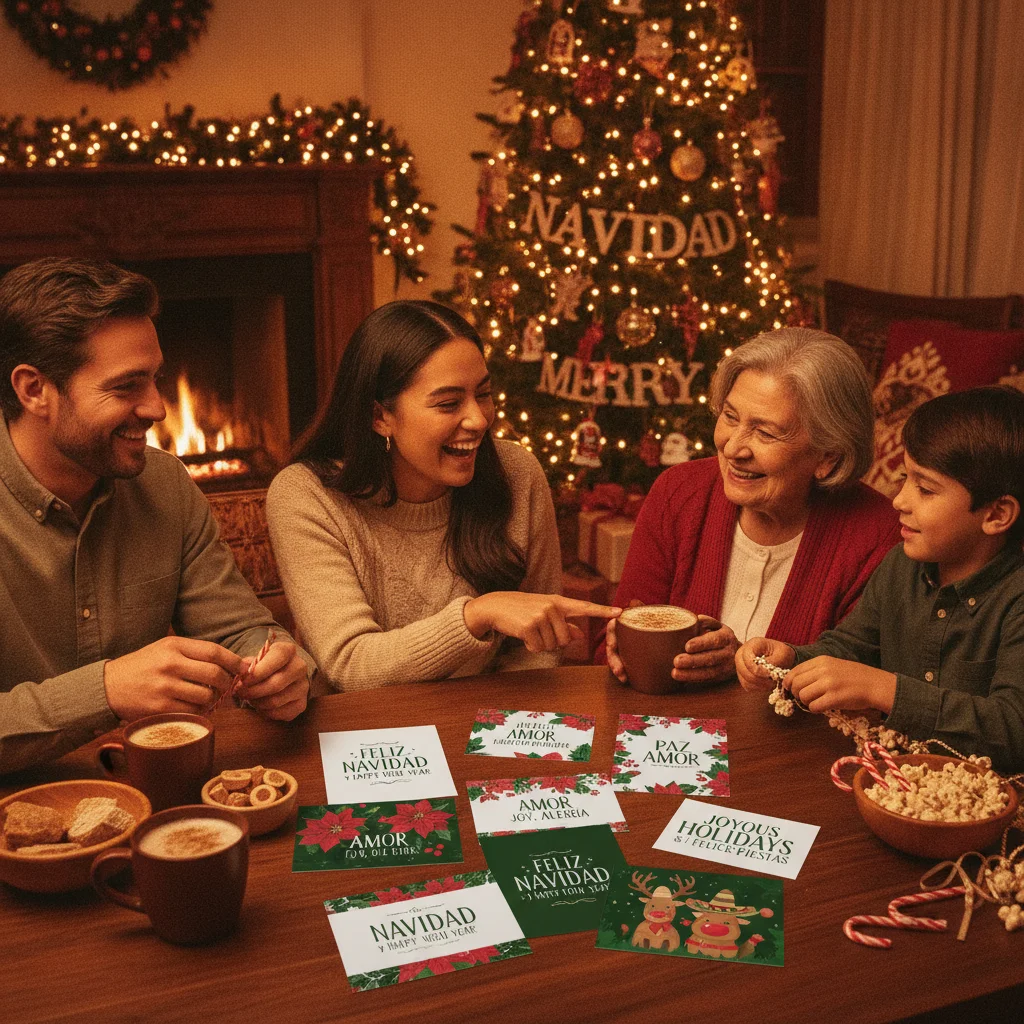
Quick answer: Spanish-English Christmas cards can pair a familiar greeting such as “Merry Christmas” with “Feliz Navidad,” followed by a short message in both languages. Choose wording that reflects the recipient, whether warm, religious, romantic, or playful. Keeping each translation natural and concise makes the card welcoming to Spanish-speaking and English-speaking family and friends.
A bilingual Christmas card can bring Spanish-speaking and English-speaking relatives, friends, neighbors, or coworkers into the same celebration. The strongest cards do not simply repeat every word mechanically. They use short, natural phrases in both languages while preserving the same warmth, level of formality, and personal meaning.
What is the best structure for a Spanish-English Christmas card?
Begin with a recognizable bilingual greeting. “Merry Christmas and Feliz Navidad” is direct, friendly, and suitable for most recipients. You can then add one sentence in English and its Spanish equivalent underneath.
For a balanced layout, give both languages similar visual weight. Avoid making one translation tiny or placing it where it looks like a footnote. A simple structure includes:
- A bilingual greeting on the front.
- A short English message inside.
- The matching Spanish message directly below it.
- A personal closing and the sender’s name.
If the recipient understands both languages, the inside message can alternate between Spanish and English instead of repeating each sentence. This approach often feels more conversational in bilingual families.
Which bilingual Christmas greetings work for different recipients?
The right wording depends on your relationship and the tone of the occasion. These examples can be used as written or adapted with a name and personal detail.
| Style | English | Spanish |
|---|---|---|
| Classic | Merry Christmas and a Happy New Year! | ¡Feliz Navidad y Próspero Año Nuevo! |
| Warm | Wishing you love, peace, and joy this Christmas. | Te deseamos amor, paz y alegría esta Navidad. |
| Family | Christmas is brighter when family is together. | La Navidad es más especial cuando la familia está unida. |
| Friendly | Warm wishes for a wonderful holiday season. | Con nuestros mejores deseos para unas felices fiestas. |
| Religious | May God bless your home this Christmas. | Que Dios bendiga tu hogar esta Navidad. |
| Romantic | You are my favorite Christmas gift. | Eres mi regalo favorito de Navidad. |
What can families write in a bilingual Christmas card?
Family cards often sound best when they focus on gratitude, togetherness, and shared traditions. A useful message is: “We are grateful to celebrate another Christmas with our family. Estamos agradecidos de celebrar otra Navidad con nuestra familia.”
For relatives who live far away, try: “Sending Christmas hugs across the miles. Les mandamos abrazos navideños desde la distancia.” If the card comes from an entire household, use plural forms such as “les deseamos” rather than the singular “te deseo.”
How can a religious Spanish-English message sound natural?
A religious card can reference Christ’s birth, blessings, faith, or peace. One concise option is: “May the joy of Christ’s birth fill your heart. Que la alegría del nacimiento de Cristo llene tu corazón.”
Another option for a household is: “May God grant your family peace and hope this Christmas. Que Dios conceda paz y esperanza a tu familia esta Navidad.” Match the message to the recipient’s beliefs rather than assuming every Spanish-speaking person prefers religious wording.
How should the two languages appear in the card design?
Place the languages side by side, on separate lines, or on facing interior panels. Use the same font size and color for both when equal emphasis is important. A centered front greeting such as “Merry Christmas • Feliz Navidad” works well with family photographs, winter illustrations, or traditional nativity artwork.
Spanish punctuation matters. Questions and exclamations use opening marks, as in “¡Feliz Navidad!” Accent marks also distinguish correct spellings, including “alegría,” “próspero,” and “corazón.” Check that the chosen font displays these characters clearly before printing.
What mistakes should bilingual card writers avoid?
- Do not translate idioms word for word when the result sounds unnatural.
- Do not mix formal and informal forms of address without a reason.
- Do not assume one Spanish phrase is preferred in every country or family.
- Do not omit accent marks or opening punctuation.
- Do not crowd the card with long duplicate paragraphs.
“Felices Fiestas” is a broad translation of “Happy Holidays,” while “Feliz Navidad” specifically means “Merry Christmas.” For a group, “les deseamos” means “we wish you,” while “te deseo” addresses one person informally.
What are the limitations of translated Christmas card messages?
Spanish varies across countries, regions, and households. A phrase that feels warm in Mexico may sound unusually formal elsewhere. Online translation can also miss affectionate expressions, family nicknames, or distinctions between formal “usted” and informal “tú.”
Ask a fluent speaker to review a highly personal, humorous, or culturally specific message. For general cards, short established greetings are usually safer than complex translations.
A successful Spanish-English Christmas card gives both languages equal care. Start with a familiar greeting, add one sincere thought, verify the Spanish accents and grammar, and finish with a personal signature.
When Spanish-English Christmas card ideas feel considered rather than generic
Spanish-English Christmas card ideas look considered when each language reflects the recipient’s voice, relationship, and usual way of celebrating, rather than repeating the same stock sentiment twice. Start with one detail that belongs to the household: a nickname, shared December tradition, hometown expression, or reference to the year. Then write parallel thoughts that carry the same warmth without forcing a word-for-word match. A card for grandparents might use a familiar family term in Spanish and a concise English wish from younger relatives. For a mixed-language household, alternate languages by thought instead of by sentence so the message reads naturally aloud. There is no single bilingual formula that suits every family; the deciding test is whether the wording sounds like something the sender would genuinely say.
Who needs a polished Spanish-English Christmas card—and who does not?
A Spanish-English Christmas card stops looking handmade and starts looking unfinished when the two languages seem inconsistently edited rather than intentionally paired. This page helps new parents combine family traditions, teachers address multilingual households, and clients send a warm but professionally reviewed greeting. It can also help interfaith families when Christmas is genuinely part of their shared observance. Renters do not need a bilingual card simply because they have Spanish-speaking neighbors or a landlord; they should use this guidance only when they already plan to exchange Christmas wishes. Interfaith families who avoid Christmas-specific language, and anyone who cannot have both versions checked for meaning, tone, names, and accents, should choose a simpler holiday note instead. Intentional repetition, matched punctuation, and a consistent sign-off read as handmade; missing lines, mixed formality, or uncorrected accents read as unfinished.
Frequently asked questions
How do you say Merry Christmas in Spanish?
“Merry Christmas” is “Feliz Navidad” in Spanish. It is appropriate for friends, relatives, coworkers, and most holiday cards.
How do you say Happy Holidays in Spanish?
“Happy Holidays” is commonly written as “Felices Fiestas.” The phrase includes the broader holiday season rather than Christmas alone.
Should English or Spanish appear first on a bilingual card?
Either language can appear first based on the recipient or sender. Giving both languages equal size and placement creates a balanced design.
What is a short Spanish-English Christmas message?
A concise option is “Wishing you joy this Christmas. Te deseamos alegría esta Navidad.” It works for both personal and family cards.
Is Feliz Navidad capitalized?
In a greeting or card headline, “Feliz Navidad” is commonly capitalized. Spanish normally capitalizes “Navidad” because it is the name of a holiday.
What closing works in a Spanish-English Christmas card?
Try “With love, Con cariño” for family and close friends. “Best wishes, Con nuestros mejores deseos” is suitable for a more formal card.
How do I make a bilingual Christmas card feel personal?
Use one recipient-specific detail and let both languages express the same feeling naturally. Mention a family tradition, shared memory, place, or affectionate name, then choose the language that best fits each thought. Personalization comes from recognizable details and voice, not from translating every sentence into an exact mirror.
Do I need to translate every line in a bilingual Christmas card?
No, a bilingual Christmas card does not need every line translated. You can place the main greeting in both languages, then write different but complementary lines in Spanish and English. Keep essential information, such as names or an event invitation, equally clear for all readers; personal wishes can vary naturally.
Do both languages need to say exactly the same thing in a bilingual Christmas card?
No, both versions can express the same sentiment without being word-for-word translations. Natural phrasing matters more than identical sentence structure. Keep personal details, names, religious references, and the level of formality consistent so neither reader receives a noticeably different message.
How do you sign a Spanish-English Christmas card from a family?
Sign with the family name or list the senders’ first names after a closing that suits both versions. For example, pair “With love” with “Con cariño,” then place one shared signature beneath them. Check surname conventions carefully if the household uses two family names or different naming styles.