
How Do You Photograph a Christmas Portrait With Window Light?
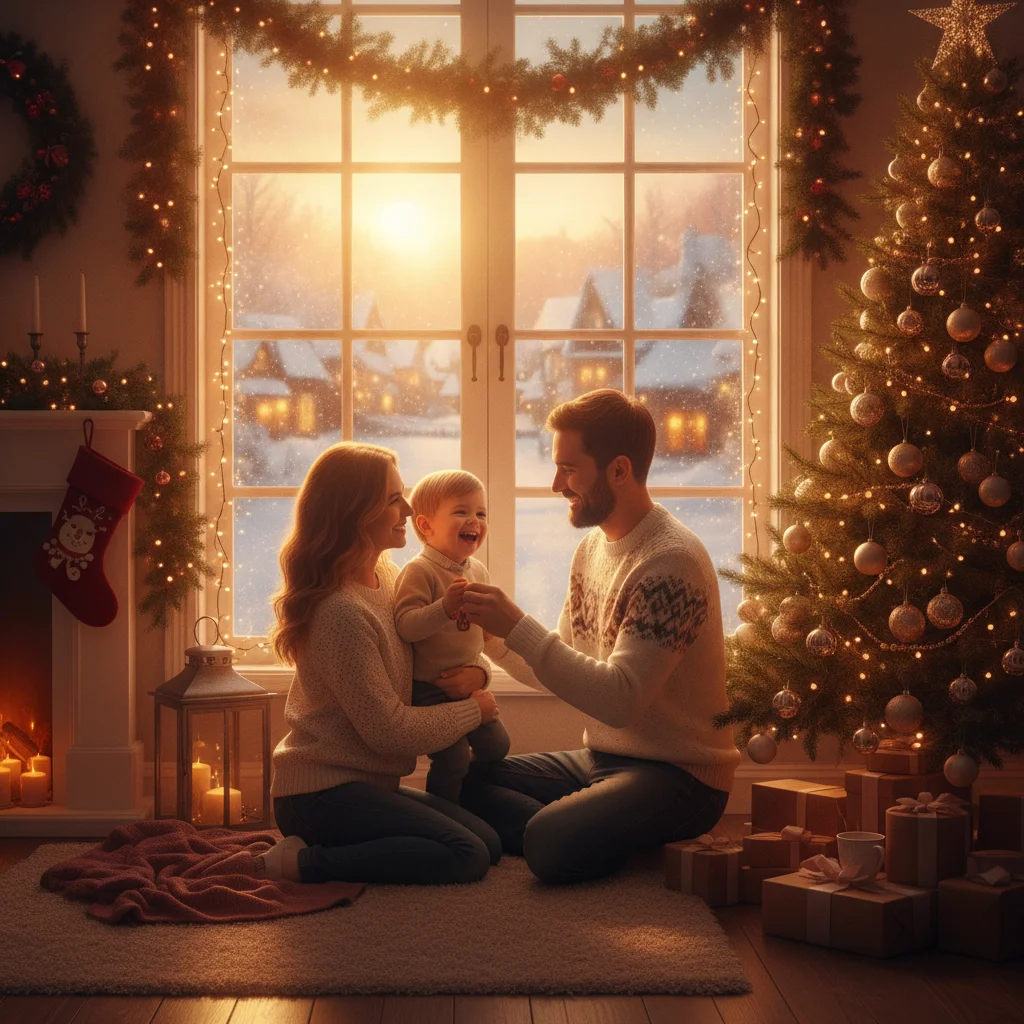
Quick answer: Place the subject beside a large window, turn off overhead lights, and position the Christmas tree several feet behind the subject. Photograph at a slight angle to the window so soft light crosses the face. Expose for the skin, use a wide aperture when available, and keep the room dim enough for Christmas lights to remain visible.
Window light can produce soft, flattering Christmas portraits without flash or studio equipment. The main challenge is balancing the brighter face with the weaker light from a Christmas tree. Subject placement, background distance, exposure, and white balance all affect whether the finished portrait looks natural and festive.
Where should you set up a Christmas window-light portrait?
Choose the largest window available, preferably one that does not receive harsh direct sunlight. A north-facing window or a window covered by a thin white curtain usually provides even light. If direct sun creates sharp facial shadows, hang a sheer curtain to diffuse it or wait until the sun moves.
Turn off ceiling fixtures and nearby lamps. Household bulbs can add orange or green color casts that are difficult to correct. Window light should be the main source, while Christmas string lights serve as background accents.
How should the subject face the window?
Place the subject about two to four feet from the window. Ask the subject to turn approximately 30 to 45 degrees toward the glass, then angle the face slightly back toward the camera. This position creates gentle shadow on the far cheek and adds shape to the face.
Look for a bright catchlight in both eyes. If the eye farthest from the window becomes too dark, rotate the face closer to the window or place a white foam board opposite the glass. The board reflects light into the shadows without making the portrait look artificially lit.
Which camera settings work for window-light Christmas portraits?
Start with aperture priority or manual exposure. The exact settings depend on window brightness, subject movement, and the lens.
| Setting | Suggested starting point | Purpose |
|---|---|---|
| Aperture | f/1.8 to f/2.8 for one person | Softens the background and helps in low light |
| Shutter speed | 1/125 second or faster | Reduces blur from small movements |
| ISO | 400 to 1600 | Maintains a usable shutter speed indoors |
| White balance | Daylight, Auto, or RAW adjustment | Preserves believable skin color |
| Focus mode | Eye AF or single-point AF | Keeps the nearest eye sharp |
For couples or small groups, use f/3.2 to f/5.6 and arrange every face at roughly the same distance from the camera. Raise the ISO rather than accepting a shutter speed that causes motion blur.
How do you expose the face without losing the Christmas lights?
Meter from the subject's face, not the window or tree. Check the image preview and histogram to confirm that bright skin areas retain detail. If the face is too dark, increase exposure compensation by one-third or two-thirds of a stop.
Christmas bulbs may appear brighter than they are in person. Slightly lowering exposure can preserve their color, but underexposing the face creates noise when the image is brightened later. Skin exposure should remain the priority.
How can you make Christmas tree lights look softly blurred?
Place the tree at least four to eight feet behind the subject and use a wide aperture. A longer focal length, such as 50mm or 85mm on a full-frame camera, makes the background appear softer. Move closer to the subject while keeping enough space to frame the head and shoulders.
Switch on the tree lights, but reduce other room lighting. Greater distance between the subject and tree produces larger, rounder points of light. The exact shape depends on the lens aperture.
How should you pose the subject near the window?
Keep the pose relaxed and direct the subject's attention toward a specific point. A child can look at an ornament, a parent can hold a mug, or family members can look at one another. Simple actions often appear more natural than asking everyone to smile continuously.
Avoid placing the subject directly against the window. Side lighting gives the face depth, while front lighting from behind the camera can make facial features look flat.
Can you use this technique with a phone?
A phone works well when the subject remains close to the window. Tap the nearest eye or face to set focus, then reduce exposure slightly if the skin looks washed out. Portrait mode can soften the background, although hair, ornaments, and string lights may confuse artificial blur.
Use the main rear camera rather than digital zoom. Brace the phone against a stable surface or use a small tripod when the room is dim.
What are the limitations of Christmas window-light portraits?
Window light changes with weather and time of day, so exposure may shift during a session. Small windows can create rapid light falloff across a group. Very dark rooms may require a high ISO, a slower shutter speed, or a reflector.
Mixed lighting is another limitation. Daylight from the window is cooler than many Christmas bulbs. RAW capture gives a camera user more control, but one white-balance correction cannot make every light source identical. Natural skin color matters more than perfectly neutral decorations.
What is a reliable step-by-step workflow?
- Turn off overhead lights and switch on the Christmas tree.
- Place the subject two to four feet from a diffused window.
- Keep the tree several feet behind the subject.
- Angle the face toward the window and check both eyes for catchlights.
- Set a safe shutter speed, expose for skin, and focus on the nearest eye.
- Take a test frame before refining the pose and background.
The most reliable Christmas window-light portrait uses soft side light, a correctly exposed face, and generous distance between the subject and tree. Good placement usually matters more than expensive equipment.
What makes a Christmas window-light portrait ready for printing?
For a print-ready Christmas window-light portrait, place the subject in bright indirect window light and use the lowest ISO that still allows a shutter speed of 1/125 second or faster. Meter on the face, protect bright skin from clipping, and focus on the eye nearest the window. If the room is dim, move the subject closer to the glass before raising ISO; this preserves detail in hair, eyelashes, and dark holiday clothing. Stabilize the camera, shoot RAW, and inspect the eyes at full size for motion blur. Apply moderate noise reduction and output sharpening after sizing, rather than trying to rescue a severely underexposed file. For a 5 × 7-inch print at 300 DPI, prepare a 1500 × 2100-pixel image (Vistaprint, 2026). Crop only after confirming those final dimensions.
How do noon window light and after-dark artificial light differ for Christmas portraits?
Noon window light can create harsh facial contrast, while after-dark artificial light is usually dimmer and may introduce uneven color. With direct midday sun, bright patches from the window can cross the face, force a faster exposure, and make Christmas tree bulbs appear faint. Indirect noon window light is softer, especially through a sheer curtain, but the subject may need to move farther from the glass.
After-dark artificial light behaves differently because the window no longer provides useful illumination. Ceiling fixtures, table lamps, and tree lights can produce competing color casts and unflattering shadow directions. Instead of treating those lamps as window light, use one large, diffused light near the window position and switch off conflicting fixtures. This preserves the directional look of a daytime window portrait while allowing the Christmas lights to remain visible.
Frequently asked questions
What time of day is best for Christmas window-light portraits?
The best time is when the chosen window provides bright, indirect light. Overcast days and periods without direct sun usually create the softest results.
Should the Christmas tree be beside or behind the subject?
The Christmas tree usually works best behind the subject and several feet away. This placement keeps the face cleanly lit while turning the bulbs into soft background highlights.
Do you need a flash for an indoor Christmas portrait?
A flash is not necessary when the window is large enough and the subject is close to it. A white reflector can fill deep shadows without overpowering the tree lights.
Why do Christmas lights disappear in the photo?
Christmas lights can disappear when the room or subject is much brighter than the tree. Dim other lights, increase the tree's distance from the subject, and avoid overexposing the image.
What lens is best for a Christmas window portrait?
A 50mm or 85mm lens is useful for individual portraits, while a 35mm lens can suit families in small rooms. A lens with a wide maximum aperture helps soften the background.
How do you prevent blurry indoor Christmas photos?
Use a shutter speed of at least 1/125 second for people and raise the ISO when needed. Stabilizing the camera does not prevent blur if the subject moves.
Should Christmas window portraits be edited?
Light editing can correct exposure, skin color, contrast, and distracting background details. Avoid excessive skin smoothing or saturation that makes faces and decorations look unnatural.
Where should I focus in a Christmas window-light portrait?
Focus on the eye closest to the window, because it is usually the brightest and most visually prominent eye. Use single-point autofocus or eye detection, keep the focus point off eyelashes or glasses frames, and take a short burst if the subject may move. Review the eye at full magnification before changing the setup.
Should I underexpose a Christmas window-light portrait to save the highlights?
Underexpose only enough to keep important facial highlights from clipping. A slightly dark RAW file can usually be adjusted, but heavy underexposure may create visible noise and weak color in print. Check the face rather than the window itself, and let unimportant bright areas outside the glass remain bright if necessary.
Can sheer curtains fix harsh midday window light?
Sheer curtains can soften direct midday sun by spreading the light before it reaches the subject. Check that the fabric does not add a noticeable color cast, and expose for the face after closing the curtain. If bright patches remain, move the subject farther from the window or choose a window without direct sun.