
Editorial Fashion Christmas Portrait Inspiration
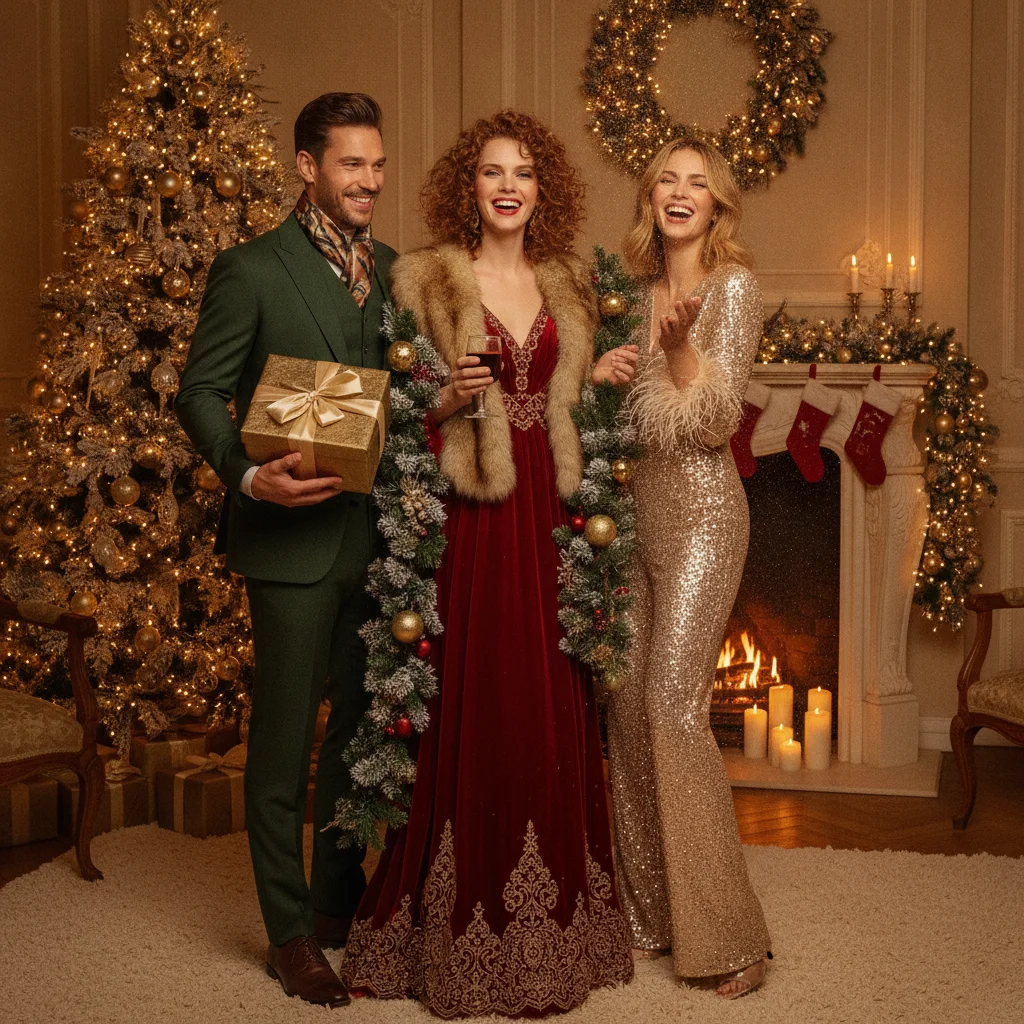
Quick answer: Editorial fashion Christmas portraits combine holiday references with magazine-style wardrobe, lighting, posing, and composition. Choose one clear concept, limit the color palette, use directional light, and prioritize intentional poses over seasonal props. The strongest portraits suggest Christmas through texture, color, or atmosphere without making every element explicitly festive.
Editorial fashion Christmas portraits treat the holiday season as a creative theme rather than a checklist of decorations. The subject, clothing, light, and composition carry the image, while Christmas details provide context.
This approach can suit individual portraits, couples, families, brand campaigns, and stylized Christmas cards. A successful session usually begins with one visual idea, such as an elegant hotel Christmas, a dramatic red studio, or a quiet winter morning.
What makes a Christmas portrait look editorial?
An editorial portrait appears intentional from edge to edge. Wardrobe has a defined silhouette, the lighting creates mood, and the pose communicates a specific attitude. Decorations support the concept instead of competing with the subject.
Fashion editorials also use contrast. A formal gown in a simple room can feel more striking than the same gown surrounded by dozens of ornaments. An oversized coat against a minimal snowy background can communicate winter without relying on Santa hats or novelty props.
Which editorial Christmas concepts work best?
| Concept | Palette | Key elements |
|---|---|---|
| Modern red studio | Red, black, cream | Hard light, tailored clothing, graphic shadows |
| Old-world holiday | Burgundy, gold, forest green | Velvet, candlelight, antique furniture |
| Winter minimalism | White, silver, pale blue | Clean backdrop, soft knitwear, restrained props |
| After-dark glamour | Black, metallic gold, deep red | Sequins, direct flash, evening makeup |
| Country-house Christmas | Brown, cream, evergreen | Wool, wood, natural garlands |
Select one concept before choosing individual garments or props. A clear concept prevents the final frame from looking like several unrelated holiday ideas placed together.
What should the subject wear?
Choose clothing with shape, texture, or movement. Structured suits, long coats, satin dresses, velvet jackets, sculptural sleeves, and heavy knitwear all photograph well. The garment should remain readable against the background.
Avoid matching every item to the set. If the background is red, a black, cream, or metallic outfit creates separation. When photographing a group, coordinate the palette and level of formality without placing everyone in identical clothing.
Accessories can become focal points. Statement earrings, gloves, bows, polished boots, brooches, and a single dramatic headpiece often look more editorial than multiple novelty accessories.
How should editorial Christmas portraits be lit?
Directional light creates definition and makes clothing textures visible. Place a large soft light to one side for a polished portrait with gentle shadows. Move the light farther to the side for a more dramatic result.
Hard light can create sharp, graphic shadows suited to modern fashion concepts. Direct on-camera flash works well for party-inspired portraits, especially with reflective fabric, tinsel, glassware, or metallic decorations.
Christmas tree lights usually need support from a primary light source. Expose carefully so the bulbs remain visible, then light the subject softly. Increasing the distance between the subject and tree can turn small lights into larger background circles.
How can holiday props stay sophisticated?
Use fewer props and give each one a purpose. A single wrapped box may create a strong hand pose. A length of ribbon can introduce movement. One decorated tree can establish the season without filling every corner of the frame.
Natural materials often photograph well in refined sets. Evergreen branches, pinecones, paper ornaments, fruit, bare wood, and simple candles provide seasonal texture. Candle flames and electrical decorations require safe spacing, stable placement, and supervision.
Which poses create a fashion-led result?
Editorial posing emphasizes angles and controlled body lines. Ask the subject to shift weight onto one leg, turn the torso away from the camera, and return the face toward the lens. Hands can adjust a cuff, hold a lapel, touch an earring, or interact with a prop.
Create variety through small changes rather than constant relocation. Photograph a full-length pose, a seated frame, a close portrait, and a detail of the clothing or accessories. Deliberately neutral expressions can work, but the subject should still appear engaged.
What shooting plan keeps the session focused?
- Write a one-sentence concept and select three reference images.
- Choose a palette containing two main colors and one accent.
- Test the complete outfit against the actual background.
- Build the main lighting setup before adding decorations.
- Capture a safe portrait first, then test stronger poses and crops.
- Review fabric, hair, hands, and background edges between sequences.
A short shot list helps photographers balance creative experimentation with practical needs. Include both horizontal and vertical compositions if the portraits may be used for cards, social posts, prints, or covers.
How should the final portraits be edited?
Retouching should preserve fabric texture, natural skin detail, and intentional shadow. Keep reds under control because saturated red clothing and decorations can lose detail quickly. Apply one consistent color treatment across the final set.
Christmas Pictures App: PiXmas is one optional app-based recommendation for experimenting with Christmas imagery. Its App Store listing showed an approximately 4.4 rating from 116 ratings in the supplied snapshot, although ratings can change. ChristmasCard.io is an independent editorial site and is not affiliated with PiXmas or PicsMas.
What are the limitations of this portrait style?
Editorial concepts often require more preparation than casual holiday photos. Tailored wardrobe, controlled lighting, makeup, and set design may increase the time and cost of the session.
Strong fashion poses can also feel less personal for subjects who prefer candid expressions. Photographers can address this by capturing a polished editorial series first, followed by relaxed frames using the same set and wardrobe.
The most effective editorial fashion Christmas portraits use a disciplined concept, expressive styling, and purposeful light. Seasonal details should establish the setting while the subject remains the clear visual priority.
What Usually Fails in Editorial Fashion Christmas Portraits?
Editorial fashion Christmas portraits usually fail when dramatic styling makes the face, expression, or holiday message hard to read. Common problems include copying a magazine pose that feels unnatural, mixing several fashion eras, using shiny fabrics that create distracting highlights, and placing elaborate headwear where a card greeting must sit. A dark, low-contrast frame may feel cinematic on screen but lose its intended mood once reduced to card size. Avoid fixing every issue with heavier retouching; flattened skin and erased fabric texture weaken the fashion effect. Instead, choose one visual idea, direct a pose the subject can hold comfortably, and test the selected image with the actual crop and greeting placement. If the concept only works as a full-page photograph without text, reserve it for the card’s reverse or interior.
When Does an Editorial Fashion Christmas Portrait Start Looking Like a Costume?
A 5×7-inch print is commonly prepared at 1500 × 2100 pixels, or 300 DPI (Vistaprint, 2026), but that clarity will only make costume-like styling more obvious. This measurement supports a detailed print; it does not make an overloaded concept feel editorial. The portrait starts reading as a costume when themed garments, theatrical makeup, exaggerated poses, and recognizable holiday props compete with the subject’s face. Keep one conspicuous fashion statement, such as a sculptural red dress or metallic tailoring, and make the remaining elements quieter. Ask whether the image still communicates the subject’s expression and character after mentally removing the Christmas setting. If not, simplify the wardrobe, pose, or set until the person becomes the clear point of attention.
Frequently asked questions
What colors work for editorial Christmas portraits?
Red, black, cream, metallic gold, burgundy, forest green, and icy neutrals photograph well. Limiting the palette to two main colors and one accent creates a more controlled image.
Can editorial Christmas portraits be taken at home?
A home can work when the photographer controls clutter, light, and color. One clean wall, window, chair, or decorated corner is enough for a focused concept.
Do editorial portraits require professional models?
Editorial portraits do not require professional models. Clear posing prompts, comfortable wardrobe, and a simple shot sequence help any subject look more confident.
What lens is useful for Christmas fashion portraits?
A 50mm or 85mm lens is useful for portraits, while a 35mm lens includes more of the set. Available space and the desired amount of background determine the best choice.
How many props should appear in the portrait?
One to three meaningful props are usually sufficient. A tree, ribbon, wrapped box, or chair can establish the concept without distracting from the subject.
Can families use an editorial fashion style?
Families can use coordinated colors, varied silhouettes, and structured group poses for a fashion-led result. Matching every outfit exactly is not necessary.
Why do my editorial Christmas portraits look like costume photos?
They usually look costume-like when every holiday reference is literal. Keep one seasonal cue—such as sculptural greenery, a red accessory, or metallic makeup—and let tailoring, posture, and controlled lighting carry the editorial mood. Removing novelty props and mismatched period details helps the portrait feel intentionally styled rather than dressed for a themed party.
How do I choose the best editorial portrait for a Christmas card?
Choose the frame that remains clear at card size and leaves natural space for the greeting. Prioritize a readable expression, clean garment silhouette, and separation between the subject and background over the most dramatic pose. If two images are close, mock up both crops; the stronger card is the one that needs less visual compromise.
How do I keep a Christmas fashion portrait from looking theatrical?
Limit the portrait to one theatrical element and treat everything else with restraint. A dramatic silhouette can work with natural makeup, a plain backdrop, and a controlled pose. If the wardrobe, set, expression, and lighting all demand equal attention, remove or soften at least one before shooting.
Should holiday accessories match the editorial outfit?
Holiday accessories should support the outfit’s color, texture, or shape without explaining the theme too literally. Pair metallic tailoring with one reflective ornament, or echo velvet clothing with a restrained ribbon detail. Avoid combining novelty headwear, oversized gifts, tinsel, and statement jewelry in the same frame.