
Festive Dog Christmas Photo Ideas
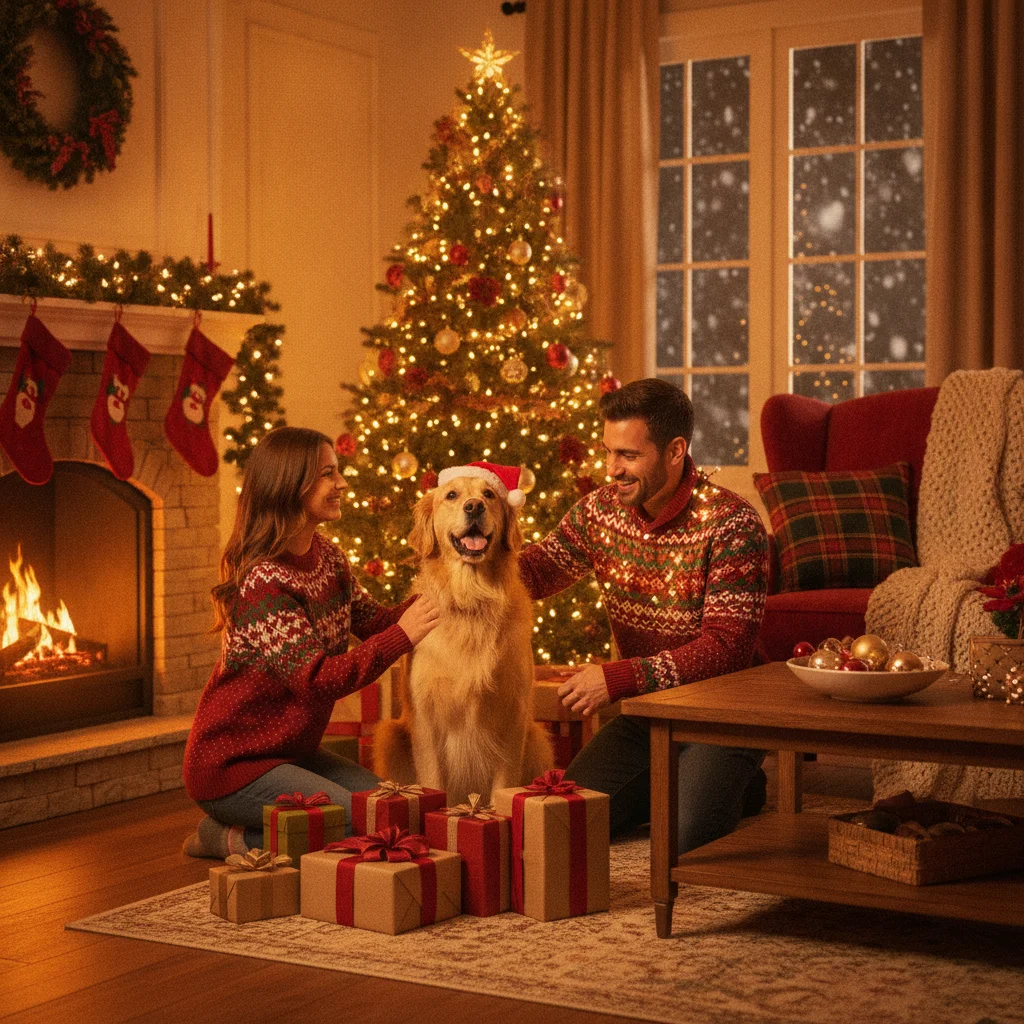
Quick answer: The best dog Christmas photo ideas pair a familiar setting with one or two safe seasonal details, such as a plaid blanket, wrapped empty boxes, or soft lights in the background. Photograph your dog at eye level, use treats or sounds to guide attention, and keep each session short so the expression stays relaxed and natural.
A memorable dog Christmas photo does not require a studio or an elaborate costume. A comfortable dog, uncluttered setting, and clear source of light are usually enough. Choose an idea that suits your dog's temperament, then prepare the scene before bringing the dog into position.
What are the best dog Christmas photo ideas?
These ideas can be adapted for puppies, adult dogs, senior pets, and households with more than one dog:
- Christmas tree portrait: Seat your dog several feet in front of the tree so the lights form a soft background.
- Present inspector: Arrange empty wrapped boxes around your dog and capture a curious sniff.
- Plaid blanket pose: Use a red, green, or tartan blanket for a simple seasonal color palette.
- Cozy fireplace scene: Photograph your dog on a bed near an unlit fireplace or at a safe distance from a guarded fire.
- Santa hat portrait: Use a lightweight pet-safe hat only if your dog is comfortable wearing it.
- Holiday bandana close-up: A bandana adds color without covering the dog's face or restricting movement.
- Window light portrait: Place your dog beside a bright window with a wreath or small tree in the background.
- Snowy action photo: Capture running, playing, or catching snow outdoors with a fast shutter speed.
- Matching family pajamas: Include the dog in a relaxed sofa or bed portrait with the household.
- Christmas morning scene: Photograph your dog beside a stocking, favorite toy, or opened pet gift.
- Cookie watcher: Use pet-safe treats on a plate and photograph the dog's attentive expression.
- Car holiday portrait: Let your dog sit in a parked vehicle decorated with a removable wreath or plaid blanket.
One strong theme often photographs better than several competing props. Let your dog's face remain the main subject.
Which Christmas setting works best for a dog?
The best setting depends on your available light, the dog's energy level, and the amount of control needed for the picture.
| Setting | Best for | Useful detail |
|---|---|---|
| Christmas tree | Classic indoor portraits | Place the dog away from the tree to blur the lights |
| Sofa or bed | Nervous or older dogs | Use a familiar blanket and natural window light |
| Snow or garden | Active dogs | Photograph play rather than requesting a long pose |
| Plain wall | Clean card designs | Add one wreath, garland, or wrapped box |
| Front porch | Rustic family portraits | Use greenery that cannot be chewed or pulled down |
Clear distracting objects before the session. Food bowls, cables, remote controls, and half-visible furniture can draw attention away from the dog.
How can you get a dog to pose for Christmas pictures?
Exercise your dog before the session, but allow time to settle afterward. Prepare the camera, lighting, and props first so the dog does not have to wait.
- Ask for a familiar sit, down, or stay rather than teaching a new behavior during the shoot.
- Hold a treat close to the camera lens to direct the dog's eyes toward the viewer.
- Use a squeaker or unusual sound briefly to create an alert expression and raised ears.
- Ask another person to manage treats, the leash, and attention while you take pictures.
- Reward frequently and stop if the dog pants heavily, turns away, licks its lips repeatedly, or tries to leave.
Some of the best images happen between formal poses. Keep taking photos as the dog tilts its head, stretches, sniffs a gift, or looks toward a family member.
How should you photograph Christmas lights with a dog?
Place the lights behind the dog instead of wrapping lights around the dog's body. Increase the distance between the dog and the lights to create softer circles of light in the background.
- Turn off harsh ceiling lights and position the dog near a window or soft lamp.
- Tap the dog's nearest eye on a phone screen to set focus and exposure.
- Use portrait mode only when it preserves clean edges around ears, whiskers, and fur.
- For a moving dog, use burst mode or a shutter speed of at least 1/500 second.
- Take horizontal and vertical versions so the photo can fit cards, prints, and social posts.
Which props and outfits are safe for dog Christmas photos?
Choose props that cannot splinter, tangle, or be swallowed. Supervise the dog throughout the session and remove decorations immediately afterward.
- Avoid glass ornaments, tinsel, mistletoe, holly berries, chocolate, alcohol, and exposed electrical cords.
- Keep costumes loose enough for normal breathing and movement, but not loose enough to snag.
- Never attach lights to a collar, harness, or costume while the lights are connected to power.
- Use empty gift boxes if your dog might tear wrapping paper or ingest ribbon.
What are the limitations of staged dog Christmas photos?
Not every dog enjoys costumes, camera sounds, unfamiliar props, or a formal stay. Puppies may move constantly, senior dogs may find certain positions uncomfortable, and dark-coated dogs can be difficult to expose beside bright lights.
Adapt the concept instead of forcing the pose. A simple outdoor walk, close-up beside a plaid blanket, or candid photo with a favorite toy can feel just as seasonal while respecting the dog's comfort.
How to Get a Usable Dog Christmas Photo Without Stressing Your Dog
To get a usable dog Christmas photo without causing stress, photograph your dog in a familiar place and let comfortable behavior shape the pose. Set up the Christmas background before bringing the dog in, then allow time to sniff unfamiliar decorations while you keep cords, food, and breakable ornaments out of reach.
Use a cue the dog already knows, such as sit or stay, and reward calmly without forcing eye contact or holding the dog in position. Keep your camera ready so relaxed moments between poses are not missed. If the dog turns away, repeatedly licks its lips, tucks its tail, pants unexpectedly, or tries to leave, pause or end the attempt. There is no universal stress-free session length because tolerance varies by dog. A candid image on a favorite bed with one seasonal object can be more usable than a tightly staged scene.
Treats and coats can add stress to a dog Christmas photo session
A common myth is that more treats and a festive coat will make every dog cooperate; in reality, both can add discomfort or arousal. Use tiny pieces of a familiar treat and subtract them from the dog’s normal food allowance rather than repeatedly offering rich new snacks. Choose a coat only if the dog already tolerates clothing; it should allow normal walking, sitting, breathing, and shoulder movement. Watch for lip licking, repeated yawning, whale eye, pinned ears, a tucked tail, panting when the room is cool, turning away, freezing, or attempts to leave. One sign can be ambiguous, but several together mean the pose should end. Remove the coat, stop cueing, and let the dog move to a quiet, familiar place. A Christmas photo is not worth pushing past those signals.
Frequently asked questions
How do I take a good Christmas photo of my dog?
Use soft light, photograph at the dog's eye level, and keep the background simple. Guide attention with a treat or sound and reward the dog after each short pose.
What can a dog wear for a Christmas photo?
A comfortable holiday bandana, bow tie, sweater, or lightweight pet-safe hat can work well. Remove the item if the dog scratches, freezes, pants, or tries to escape.
How do I photograph a black dog near Christmas lights?
Light the dog's face from the front with a window or soft lamp and reduce the brightness of the background lights. Focus on the nearest eye and check that fur detail remains visible.
Can dogs pose beside Christmas trees safely?
Dogs can pose beside a secured tree under direct supervision. Keep ornaments, hooks, cords, tinsel, and toxic plants out of reach.
How long should a dog photo session last?
Most dog photo sessions work best in short blocks of five to ten minutes. Take breaks sooner if the dog shows stress or loses interest.
What is an easy dog Christmas photo idea at home?
Place the dog on a familiar blanket near a window and add one wrapped empty box or holiday bandana. This setup is quick, inexpensive, and easy to control.
Should I use flash for dog Christmas photos?
Natural window light or a bounced flash is usually more flattering than direct flash. Avoid repeated bright flashes if they startle or distress the dog.
How can I calm my dog before a Christmas photo?
Let your dog explore the prepared photo area before asking for any pose. Keep your voice and movements relaxed, use familiar cues, and reward voluntary participation. A short walk or normal play beforehand may help some dogs settle, but avoid exhausting them. Remove costumes or decorations if they cause freezing, scratching, avoidance, or agitation.
What should I do if my dog will not look at the camera?
Take the photo without requiring direct eye contact, or briefly attract attention with a familiar sound held near the lens. Do not repeatedly call, whistle, or wave an object if that increases excitement. Side profiles, downward glances, and interactions with a safe Christmas prop can still produce a clear, natural portrait.
How many treats should I use during a dog Christmas photo session?
Use only enough tiny, familiar treats to reward a few brief poses, and count them toward the dog’s daily food allowance. The exact number depends on the dog’s size, diet, and health. Avoid unfamiliar, fatty, or oversized treats, and ask a veterinarian about suitable rewards if the dog has allergies or a prescribed diet.