
Nutcracker Themed Portrait Session Ideas
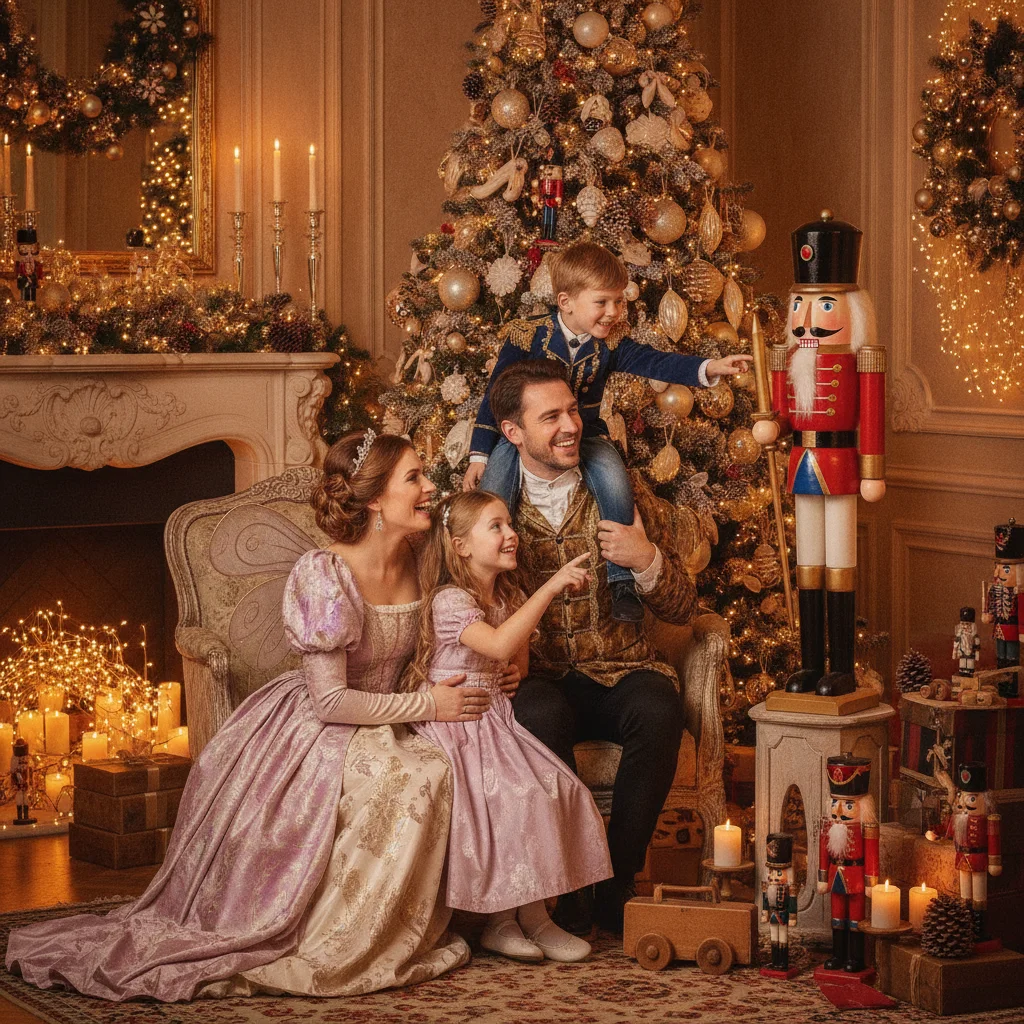
Quick answer: A Nutcracker themed portrait session works best with a clear story, theatrical wardrobe, and a controlled holiday color palette. Combine toy soldiers, wrapped gifts, ballet details, or a winter palace backdrop with soft directional lighting. Plan both formal portraits and playful action shots so the final gallery feels inspired by the ballet without requiring a full stage set.
A Nutcracker themed portrait session can range from an elegant ballet-inspired shoot to a playful Christmas toy workshop. The most effective sessions choose one visual direction rather than combining every character, prop, and color from the story. A focused concept also makes wardrobe choices, set design, and posing easier to coordinate.
Which Nutcracker portrait concept should you choose?
Start by deciding whether the portraits should feel theatrical, whimsical, or classically festive. A theatrical concept can feature a dancer as Clara, a costumed Nutcracker soldier, and dramatic stage lighting. A whimsical setup can use oversized sweets, pastel presents, and toy props. A classic Christmas version can rely on red uniforms, evergreen garlands, and a decorated tree.
The number and ages of the subjects should guide the concept. Young children often respond well to a toy-room story with simple activities. Trained dancers can create stronger ballet images using controlled poses, movement, and costume details. Families may prefer a subtle theme built around coordinated clothing and one statement Nutcracker figure.
What should subjects wear for a Nutcracker themed session?
Wardrobe should identify each subject without looking like an unrelated costume collection. A Clara-inspired outfit may include a pale dress, ribbon sash, ballet flats, and soft curls. A Nutcracker soldier can wear a red or navy jacket with gold trim, fitted trousers, boots, and a structured hat. A Sugar Plum Fairy look can use lavender, blush, champagne, or icy blue.
Family members who are not wearing character costumes can coordinate through color. Cream knitwear, dark green velvet, burgundy dresses, and navy jackets complement a traditional set. Avoid clothing with large logos, modern graphics, or neon colors because those details can compete with the storybook setting.
How can you build a convincing Nutcracker backdrop?
A convincing backdrop needs depth, scale, and a few recognizable details. Place a Christmas tree or painted palace background behind the subjects, then create a middle layer with wrapped gifts, garland, or toy drums. Use a large Nutcracker statue, decorative clock, sleigh, or faux snow in the foreground.
Props should leave enough room for full-length portraits and movement. Secure tall figures and stacked presents so children cannot pull them over. Battery-powered candles are safer than open flames, especially around fabric, paper, and artificial snow.
Which colors work best for the set?
| Style | Main colors | Useful details |
|---|---|---|
| Traditional soldier | Red, green, navy, gold | Drums, tartan ribbon, brass accents |
| Land of Sweets | Blush, lavender, mint, white | Candy props, tulle, pastel gifts |
| Winter palace | Silver, blue, white, champagne | Snowflakes, crystal ornaments, frosted trees |
| Vintage theater | Burgundy, black, antique gold | Velvet curtains, spotlight, painted scenery |
Choose one palette and repeat it across clothing, gift wrap, ornaments, and props. Repeated colors make even a small home or studio setup look intentional.
How should a photographer light Nutcracker portraits?
Soft directional light suits storybook portraits because it creates shape without producing harsh shadows. Place a large window or diffused light about 45 degrees from the subject. A reflector or low-powered fill light can preserve detail on the shadow side of the face.
For a stage-like result, add a controlled rim light behind the subject or a warm spotlight on the backdrop. Keep decorative string lights dim enough to retain their color. Expose for faces first, then adjust practical lights and background brightness.
What poses fit the Nutcracker story?
Begin with simple standing and seated portraits before adding action. Clara can hold a Nutcracker figure, examine a gift, or look toward an off-camera character. A soldier can stand at attention, carry a toy sword safely at the side, or present a wrapped box. Dancers can use first position, arabesque, relevé, and gentle turning movements suited to their training.
Families can gather around the tree, read a Nutcracker storybook, or pretend to discover toys. Photograph wide environmental scenes, three-quarter portraits, close facial expressions, and detail shots of shoes, hands, ornaments, and costume trim.
How can children stay engaged during the session?
Give children short actions instead of asking them to hold a smile. Children can march with a toy drum, place an ornament, open an empty gift box, or search for a hidden mouse ornament. These prompts create natural expressions and reinforce the theme.
Schedule the most important group portrait early. Allow breaks between costume changes, and keep snacks away from delicate clothing. A compact 30- to 45-minute plan is often enough for preschool children.
What limitations should you plan for?
Large sets can restrict camera angles and create safety concerns. Glitter, flocking, and artificial snow may also be prohibited by some studios. Confirm cleanup rules before the session and test any floor covering for slipping.
Costumes may limit movement, while tall hats can be cropped in close portraits. Bring clips, fashion tape, comfortable backup shoes, and a basic clothing option. Photographers should adapt ballet poses to each subject's ability rather than asking an untrained child or adult to attempt advanced positions.
A successful Nutcracker portrait session does not require a theater-sized production. One recognizable character, a coordinated palette, safe props, and a varied shot list can create a polished holiday story in a studio, home, or outdoor setting.
What usually goes wrong in a Nutcracker themed portrait session?
Nutcracker themed portrait sessions usually fail when the set, costumes, and poses compete instead of supporting one clear character or scene. Common problems include a generic Christmas backdrop with one unrelated soldier prop, glossy toy surfaces that reflect lights, oversized hats hiding faces, and ballet poses attempted by untrained subjects. Choose either the toy-soldier world or the Land of Sweets, then remove details that belong to the other concept. Keep swords sheathed or clearly decorative, stabilize freestanding nutcrackers, and leave room around feet for full-length compositions. Test seated and standing positions in costume before the session because stiff jackets, tutus, and headpieces can limit movement. There is no universal prop count or set size; use only what fits safely within the planned frame.
When should you simplify a Nutcracker themed portrait session?
Standard outfit, backdrop, and crop advice does not apply when comfort, beliefs, privacy, or timing outweigh a fully staged Nutcracker look. Avoid paired poses or forced closeness when relationship changes make them uncomfortable. If Christmas or ballet imagery conflicts with a subject’s religious practice, replace crowns, toy soldiers, and tree details with neutral winter colors and geometric scenery. After a bereavement, skip cheerful character costumes if the family prefers a restrained portrait. Workplace cards may require modest clothing, minimal props, and wider crops that leave room for approved text. For a stressed pet, remove drums, oversized soldiers, unstable packages, and restrictive costumes rather than pursuing the concept. When mailing deadlines are close, choose a simple wall or curtain and frame the image loosely; elaborate hats and tall props create crop problems that take longer to correct.
Frequently asked questions
What is a Nutcracker themed portrait session?
A Nutcracker themed portrait session uses characters, costumes, colors, or sets inspired by the holiday ballet and story. The session may feature dancers, children, families, or pets.
Do subjects need ballet experience?
Ballet experience is not required for simple portraits and story-based prompts. Advanced dance poses should only be performed by subjects with appropriate training.
What is the best color palette for Nutcracker photos?
Red, navy, green, and gold create a traditional toy-soldier look. Blush, lavender, mint, and white suit a softer Land of Sweets concept.
Can a Nutcracker portrait session be done at home?
A home session can use a Christmas tree, wrapped gifts, a large Nutcracker figure, and window light. Keeping the palette consistent helps a small setup appear cohesive.
Which props are most useful?
Useful props include toy drums, wrapped boxes, ballet slippers, decorative clocks, candy canes, storybooks, and Nutcracker figures. Props should be stable, lightweight, and appropriate for the subject's age.
How long should a children's Nutcracker session last?
A session of 30 to 45 minutes is often suitable for young children. Longer sessions should include breaks and limit the number of costume changes.
When should Nutcracker portraits be scheduled?
Schedule the session several weeks before the photos are needed for cards, gifts, performances, or holiday displays. Early planning also allows time to source costumes and test the set.
How do you keep a Nutcracker photo from looking cluttered?
Limit the portrait to one main character, one supporting prop group, and a controlled color palette. Place large nutcrackers near the edges rather than directly behind faces. Before shooting, take a phone snapshot of the set and remove any ornament, gift box, or candy detail that pulls attention away from the subjects.
Why do Nutcracker costumes look awkward in photos?
Nutcracker costumes often look awkward when they restrict natural posture or fit differently while sitting. Check jacket shoulders, chin straps, tutu placement, and boot height in every planned pose. Use simple standing or seated positions for rigid costumes, and reserve extended dance shapes for trained subjects wearing garments designed for movement.
How do you crop a Nutcracker portrait without cutting off the hat?
Leave visible space above tall hats, crowns, and raised arms when taking the photograph. Compose slightly wider than the intended card frame, especially for vertical portraits that may later be placed in a horizontal design. Avoid cropping directly through joints, and check that swords, drums, or other story props remain recognizable.