
Pet and Owner Matching Christmas Photo Ideas
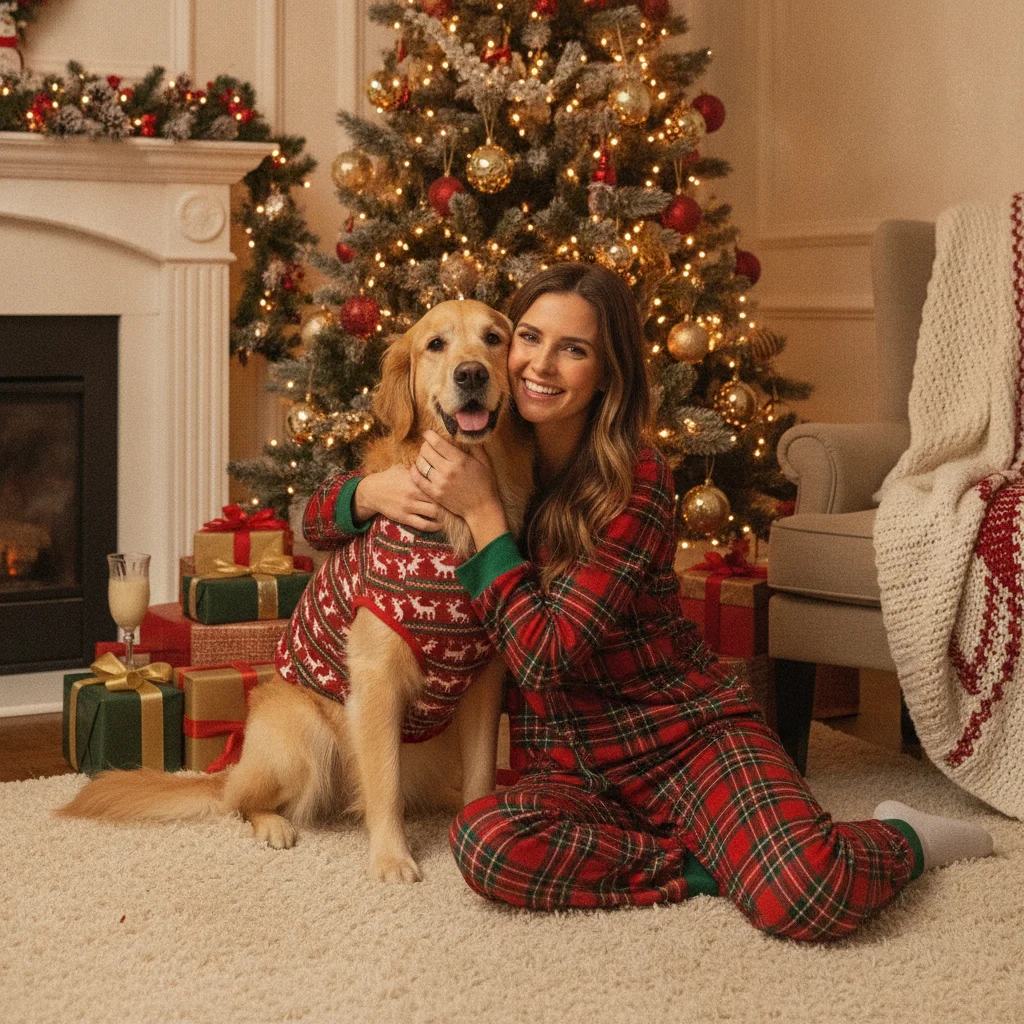
Quick answer: A successful pet and owner matching Christmas photo uses coordinated colors, patterns, or accessories instead of identical costumes. Choose a comfortable outfit for the pet, keep the setting simple, and use treats or toys to guide attention. Matching pajamas, plaid scarves, Santa hats, and winter sweaters work well for cards and social posts.
A pet and owner matching Christmas photo can feel festive without requiring identical outfits. The strongest photos connect the person and pet through one repeated color, fabric, pattern, or accessory. This approach keeps the image coordinated while allowing both subjects to wear something comfortable.
Pet comfort should guide every styling and posing decision. A relaxed dog, cat, rabbit, or other companion will look more natural than an animal struggling with a complicated costume. Plan a short session, prepare rewards, and photograph the easiest pose first.
What matching Christmas outfits work for pets and owners?
Matching pajamas are a popular choice for indoor photos because they create an immediate family-at-home theme. Select pet pajamas designed for the animal's body shape, with enough space around the neck, legs, and tail. People can wear the same print or repeat one of its main colors.
Christmas sweaters offer more flexibility. The owner can wear a patterned sweater while the pet wears a plain red, green, cream, or navy sweater. This coordinated approach is often easier than finding two garments with the exact same design.
Accessories also create a matching look with less effort. Try plaid scarves, red bow ties, green bandanas, velvet ribbons, or simple Santa hats. Remove any accessory immediately if the pet paws at it, chews it, freezes, or shows signs of distress.
| Photo idea | Owner outfit | Pet detail | Best setting |
|---|---|---|---|
| Cozy morning | Matching pajamas | Soft pajama shirt or bandana | Bed or sofa |
| Classic plaid | Plaid shirt or skirt | Plaid bow tie or scarf | Christmas tree |
| Winter walk | Neutral coat and red scarf | Red bandana or safe coat | Porch or snowy path |
| Formal portrait | Black, cream, or velvet clothing | Velvet bow or collar flower | Plain indoor backdrop |
| Santa theme | Red sweater and hat | Red collar or loose hat | Fireplace or gift display |
How can owners coordinate without wearing identical clothes?
Start with a palette of two main colors and one neutral. Red, forest green, and cream produce a traditional Christmas look. Burgundy, navy, and gray create a quieter winter portrait, while blush, champagne, and ivory suit a softer indoor scene.
Repeat one detail across both subjects. An owner wearing a green sweater could pair it with a green pet bandana. A dog in a red coat could sit beside an owner wearing red socks, a scarf, or a knit hat.
Avoid combining several competing Christmas prints. If the pet wears bold plaid, the owner should choose a solid garment pulled from that pattern. This keeps faces and expressions as the focus of the image.
Which poses make matching pet photos easier?
A seated pose beside the Christmas tree is reliable for dogs that know sit and stay. Position the owner on the floor at the pet's level, then use a treat held near the camera to guide both faces in the same direction.
For pets that dislike staying still, use an interactive pose. The owner can offer a wrapped empty box, hold a favorite toy, share a quiet cuddle, or walk with the pet outdoors. Movement often produces a more believable expression than a rigid portrait.
Cats may prefer a familiar chair, blanket, windowsill, or cat tree. Place the coordinated accessory or blanket in that established location rather than moving the cat into a large unfamiliar display.
How should a Christmas photo setting be styled?
Use one clear seasonal focal point, such as a decorated tree, wreath, fireplace, porch garland, or stack of wrapped boxes. Too many props can make the frame crowded and may distract the pet.
Keep lights and decorations beyond chewing or pawing distance. Battery packs, electrical cords, glass ornaments, tinsel, candles, and edible decorations should not be accessible. Empty wrapped boxes are safer photo props than packages containing food or fragile objects.
Natural window light is usually flattering for indoor portraits. Turn the subjects slightly toward the window and switch off harsh overhead lights. Outdoors, open shade or the hour before sunset can reduce squinting and strong facial shadows.
How can owners get the pet to look at the camera?
Ask another person to stand directly behind the camera with a treat, squeaky toy, or familiar sound. The helper should make the sound only when the photographer is ready, since repeated noises quickly lose the pet's attention.
Use burst mode to capture several frames during brief moments of eye contact. A phone or camera placed near the pet's eye level will usually create a more engaging portrait than a photo taken from far above.
Keep the session to a few minutes at a time. Give the pet breaks, water, praise, and rewards. Photographing after a walk or play session may help an energetic dog settle.
What limitations should owners consider?
Not every pet will tolerate clothing, accessories, close posing, or camera sounds. Matching colors through a blanket, leash, collar, or background is a better option when wearable items cause discomfort.
Some holiday plants and foods are unsafe for animals. Keep chocolate, alcohol, cooked bones, xylitol-sweetened products, lilies, mistletoe, and other potential hazards away from the set. Owners should confirm plant and food safety with a veterinarian when uncertain.
Outdoor sessions also require practical limits. Snow, salted pavement, low temperatures, and hot decorative lights can affect paws and skin. End the session if the pet shivers, pants, hides, vocalizes, or repeatedly tries to leave.
The best pet and owner matching Christmas photo prioritizes a shared visual detail and a relaxed interaction. Coordinated colors, a simple setting, and a short reward-based session usually produce a warmer image than elaborate costumes or heavily staged poses.
How can you take a matching Christmas photo without stressing your pet?
Get a usable pet and owner matching Christmas photo by preparing the setting first, keeping the pet’s outfit familiar, and photographing brief natural interactions. Dress the owner and arrange the camera, lighting, and props before bringing in the animal. If matching clothing is unfamiliar, coordinate the owner’s sweater with the pet’s usual collar, harness, or bandana instead. Let the pet explore the setting, then capture cuddling, walking, playing, or treat-focused moments rather than repeatedly correcting a pose. Watch for avoidance, trembling, pinned ears, a tucked tail, panting unrelated to heat, or attempts to leave. Stop and remove clothing or props if those signs appear. There is no universal session length that suits every animal; the pet’s behavior should determine when the attempt ends.
When should treats, matching coats, or stress end a pet Christmas photo session?
Use tiny familiar treats, keep matching coats well fitted, and stop the photo session when the pet shows clear stress.
- Limit rewards to small pieces suitable for the pet, avoid unfamiliar holiday foods, and include the treats in the pet’s normal daily intake.
- Remove a matching coat if it restricts the neck, shoulders, breathing, or toileting, or if the pet begins panting or feels unusually warm.
- Pause for dog stress signals such as repeated lip licking, yawning, turning away, a tucked tail, or visible eye whites.
- End the setup if a cat flattens its ears, lashes its tail, crouches, growls, or repeatedly tries to hide. Do not block its exit for the sake of matching poses.
Frequently asked questions
What should a pet and owner wear for a matching Christmas photo?
Matching pajamas, coordinated sweaters, plaid accessories, or outfits in the same color palette work well. The pet's clothing should fit safely and allow normal movement.
Do pet and owner outfits need to be identical?
Identical outfits are not necessary. Repeating one color, pattern, or accessory creates a coordinated appearance without forcing an exact match.
How do you take a Christmas photo with a dog that will not sit still?
Use a walking, playing, or cuddling pose instead of requiring a long stay. Burst mode and a helper holding a treat near the camera can capture brief moments of attention.
How can you include a cat in a matching Christmas picture?
Photograph the cat in a familiar location and coordinate the scene with a blanket, bow collar, or nearby decoration. Avoid forcing the cat into clothing or an unfamiliar pose.
What colors work best for matching Christmas photos?
Red, green, cream, navy, burgundy, and gray are dependable choices. Two main colors with one neutral usually create a balanced photograph.
Are Christmas costumes safe for pets?
Pet costumes are safe only when they fit correctly, do not restrict movement or breathing, and contain no chewable parts. The costume should be removed if the pet shows discomfort.
What is the best background for a pet Christmas photo?
A Christmas tree, plain wall with a wreath, decorated porch, sofa, or fireplace can provide a clear seasonal setting. Decorations, cords, flames, and fragile ornaments must remain out of the pet's reach.
What should I do if my pet hates wearing matching clothes?
Skip the matching clothes and coordinate through color instead. The owner can wear a sweater that repeats the color of the pet’s regular collar, leash, harness, or blanket. This preserves the matching Christmas theme without introducing an unfamiliar garment that may restrict movement or make the animal reluctant to participate.
How can I tell when my pet needs a break during a Christmas photo?
Give your pet a break when it repeatedly turns away, tries to leave, freezes, trembles, hides, pants unexpectedly, or stops accepting treats it normally wants. Move the animal to a quiet, familiar area and remove any costume or accessory. Resume only if the pet relaxes and chooses to reengage.
Can I use treats to get my pet to look at the camera?
Yes, familiar treats can briefly direct a pet’s gaze toward the camera. Have a helper hold a tiny piece beside the lens, then reward calm behavior rather than prolonged staring. Avoid waving food overhead if the pet jumps, lunges, or becomes too excited to remain comfortable in the matching outfit.