
Christmas Card Messages Guide
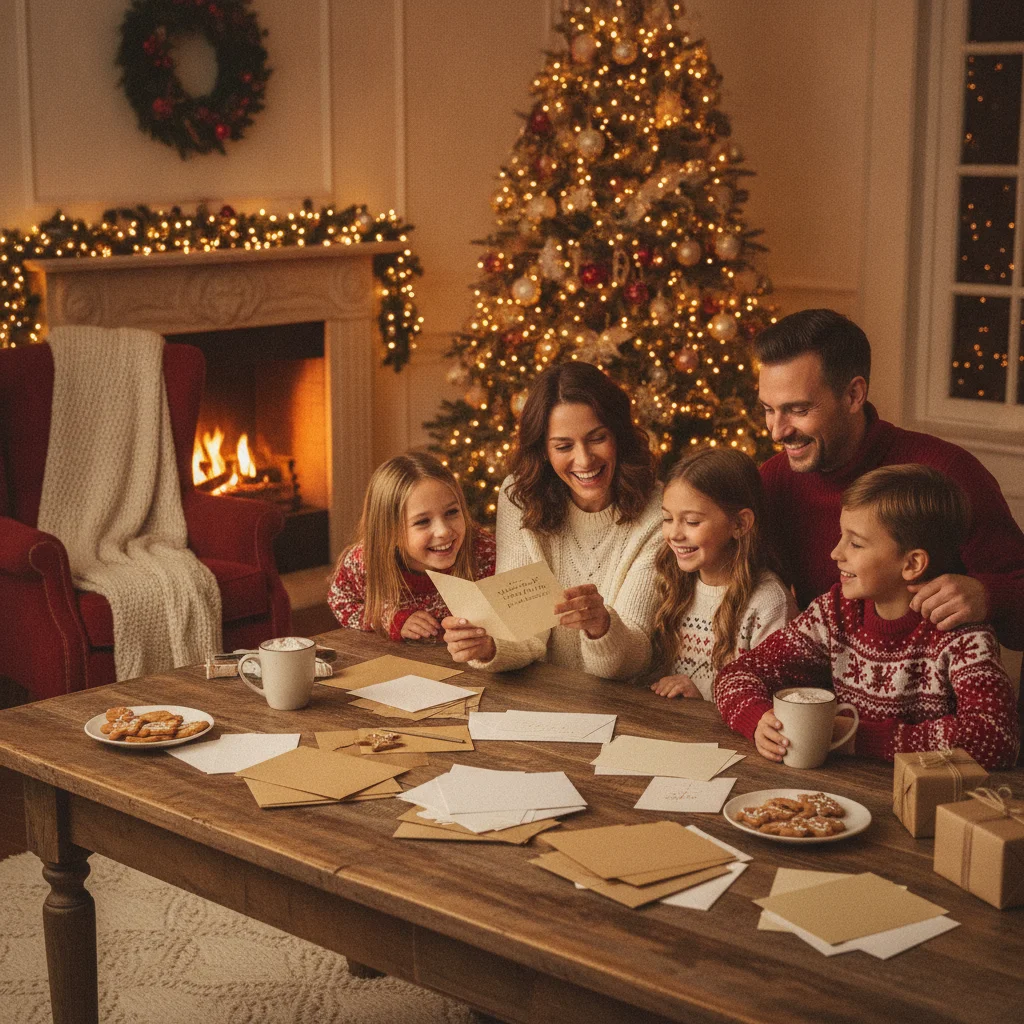
Quick answer: A good Christmas card message names the recipient, shares a sincere seasonal wish and adds one personal detail. Choose “Merry Christmas” when the recipient celebrates Christmas, or use “Happy Holidays” for broader audiences. Keep professional notes warm but restrained, make family messages more personal and acknowledge difficult circumstances gently rather than forcing cheer.
Knowing what to write in a Christmas card can be harder than choosing the card itself. The most effective messages are usually short, specific and appropriate to the relationship. A close relative may appreciate a shared memory, while a client or coworker usually needs a warm but professional greeting.
Christmas cards remain an important seasonal tradition. The Greeting Card Association estimates that Christmas accounts for roughly 1.3 billion to 1.5 billion card purchases in the United States, depending on whether boxed cards and other categories are included. Royal Mail-linked research also found that 77% of respondents would rather receive a physical Christmas card than a digital one.
The message inside is what turns that card into a personal keepsake. A 2024 VistaPrint trends report found that 51% of respondents planned to write a unique message for each person on their holiday card list. Personalization does not require a long letter. One thoughtful sentence can make a standard greeting feel genuinely written for its recipient.
What should you write in a Christmas card?
A complete Christmas card message normally has three parts: a greeting, a seasonal wish and a personal closing. Adding one specific detail between the wish and closing makes the message feel less generic.
- Open with the recipient’s name: Write “Dear Maria,” “To the Wilson family” or another greeting that fits the relationship.
- Share a seasonal wish: Wish the recipient joy, peace, rest, good health or meaningful time with loved ones.
- Add a personal detail: Mention a memory, express gratitude or say what you hope to do together next year.
- Choose an appropriate closing: Options include “With love,” “Warm wishes,” “Gratefully” and “Best wishes.”
- Sign clearly: Include all relevant household names if the card comes from a couple or family.
A simple formula is: “Merry Christmas, [name]. I am so grateful for [specific reason]. Wishing you [personal wish] this Christmas and in the year ahead. With love, [name].”
Which Christmas greeting should you choose?
“Merry Christmas” is direct and appropriate when you know the recipient celebrates Christmas. “Happy Holidays” recognizes a broader holiday season and is often a practical choice for mixed-faith groups, workplace contacts and large mailing lists. “Season’s Greetings” has a traditional but religiously neutral tone.
A Greeting Card Association infographic reported that “Merry Christmas” was the preferred wording for 53% of respondents, followed by “Happy Holidays” at 21% and “Season’s Greetings” at 12%. Preference does not create a universal rule. The recipient’s traditions should guide the choice.
| Greeting | Best suited to | Tone |
|---|---|---|
| Merry Christmas | Recipients known to celebrate Christmas | Direct and traditional |
| Happy Holidays | Mixed groups and uncertain traditions | Inclusive and friendly |
| Season’s Greetings | Professional or formal cards | Classic and neutral |
| Peace and joy this Christmas | Faith-oriented or reflective cards | Warm and meaningful |
| Warm winter wishes | Recipients who may not observe Christmas | Seasonal and neutral |
What are some short Christmas card messages?
Short messages work well for boxed cards, neighbors, acquaintances and cards that already contain a printed verse. A handwritten name and one extra sentence can still make the greeting personal.
- Merry Christmas and warm wishes for the year ahead.
- Wishing you peace, joy and plenty of time with the people you love.
- May your Christmas be filled with comfort, laughter and happy memories.
- Sending love and warm wishes to your family this Christmas.
- Hope your holiday season brings rest, happiness and good company.
- Thinking of you and wishing you a wonderful Christmas.
- May the spirit of Christmas stay with you throughout the coming year.
- Warmest wishes for a joyful Christmas and a healthy New Year.
For additional wording organized by tone and recipient, browse short christmas messages.
What can you write to family members?
Family messages can recognize shared experiences, gratitude and connection. Avoid making every relative’s message identical. Change at least one line to reflect the person’s role in your life.
For parents: “Merry Christmas, Mom and Dad. Thank you for making our family celebrations feel so welcoming every year. I am grateful for your love, advice and all the traditions we share.”
For grandparents: “Wishing you a peaceful and happy Christmas. Your stories, kindness and family traditions mean more to us each year. We feel very lucky to celebrate with you.”
For adult children: “Merry Christmas to someone who makes us proud throughout the year. Watching you build your own life is a wonderful gift, and we cannot wait to make more family memories together.”
For siblings: “Merry Christmas to my first friend and lifelong teammate. Thank you for all the laughs, honest advice and memories that only we can fully understand.”
For extended family: “Sending Christmas wishes across the miles. We may not see each other as often as we would like, but you remain an important part of our family and our thoughts.”
How do you write a Christmas message for friends?
A message to a friend should sound like the way you actually speak. Mention a shared trip, a running joke or support the friend provided during the year. Humor is suitable when it is affectionate and unlikely to embarrass the recipient.
- Christmas would not be the same without friends who feel like family. Thank you for being one of mine.
- Here is to another Christmas of good food, questionable wrapping and stories we will probably repeat next year.
- Your friendship has been one of the brightest parts of my year. Wishing you a Christmas filled with the same kindness you give to others.
- Even when life gets busy, I am grateful that we can always pick up where we left off. Merry Christmas, my friend.
- Sending warm Christmas wishes from our home to yours. I hope we can spend more time together in the coming year.
Humorous messages work best when the joke supports the greeting rather than replacing it. See funny christmas wishes for more lighthearted examples.
What should you write in a professional Christmas card?
Professional Christmas messages should be appreciative, concise and free from assumptions about religion or family circumstances. “Happy Holidays” or “Season’s Greetings” is often suitable when sending the same design to a broad business list.
For a coworker: “Happy Holidays, Jordan. Thank you for your support and teamwork this year. I hope you enjoy a restful break and a positive start to the New Year.”
For a manager: “Season’s Greetings. Thank you for your guidance and encouragement throughout the year. Wishing you a peaceful holiday season and continued success.”
For an employee: “Thank you for the care and commitment you have brought to the team this year. We appreciate your work and wish you a relaxing holiday season.”
For a client: “Warm holiday wishes from everyone at our company. Thank you for your trust and partnership. We look forward to working with you in the coming year.”
For a service provider: “Merry Christmas, and thank you for your dependable help throughout the year. Your work is sincerely appreciated.”
Do not turn a holiday card into a sales pitch. A logo or company name is enough branding. Promotions, calls to book and contract discussions belong in separate communications.
How can you include faith in a Christmas message?
Religious messages are meaningful when they reflect both the sender’s and recipient’s beliefs. A Bible verse may stand alone, but adding a personal sentence explains why you chose it.
- May God bless your home with peace and joy as you celebrate the birth of Christ.
- Rejoicing with you in the hope and love at the heart of Christmas.
- May the light of Christ guide and comfort your family this Christmas and always.
- Praying that your Christmas is filled with faith, gratitude and the presence of those you love.
- “Glory to God in the highest, and on earth peace, good will toward men.” Wishing your family a blessed Christmas.
Reserve explicitly Christian wording for people who welcome it. For uncertain recipients, a message about peace, hope and kindness can express the season’s values without assuming a shared faith.
What should you say during grief, illness or a difficult year?
A card sent during grief or illness should acknowledge reality without demanding happiness. Avoid phrases such as “Everything happens for a reason” or “At least you still have.” Do not pressure the recipient to attend celebrations or reply.
- Thinking of you with special care this Christmas. I know the season may feel different, and I am here whenever you need me.
- Holding you close in my thoughts as you remember Sam this Christmas. His warmth and humor will not be forgotten.
- Sending love during a difficult season. There is no need to reply, but please know that you are not alone.
- Wishing you moments of comfort and rest this Christmas as you focus on your recovery.
- I know this year has asked a great deal of you. May the coming weeks bring gentleness, support and a little peace.
Name a deceased loved one when you knew that person and believe the recipient would welcome the acknowledgment. Specific offers such as delivering dinner or making a phone call are more useful than “Let me know if you need anything.”
How do photos change a Christmas card message?
A photo already communicates part of the family’s story, so its accompanying message can be brief. Royal Mail-linked research found that 24% of respondents wanted to receive a photo inside a Christmas card. VistaPrint’s 2024 report also identified photos, pets and personalization as notable holiday card trends, particularly among younger senders.
Add context when the image shows a milestone such as a wedding, new baby, adoption, graduation or move. For example: “Our family grew by one this year, and we are delighted to introduce Noah. Wishing you a Christmas filled with new joys of your own.”
Choose an image in which faces are clear and the setting does not overwhelm the people. The christmas photos guide covers picture selection, clothing and simple composition ideas.
Digital design apps can help add text to a photo before printing or sharing it. Christmas Pictures App: PiXmas is one editorial option for iPhone users and had a 4.4 rating from 116 App Store ratings when reviewed. ChristmasCard.io is independent and is not affiliated with PiXmas, PicsMas or any app. Ratings can change, so check current compatibility, pricing and privacy details before downloading.
When should Christmas cards be written and sent?
Write cards in batches rather than waiting to finish the entire list at once. The Greeting Card Association’s 2022 white paper reported that 64.3% of surveyed senders mailed cards in the few weeks before Christmas, while 16% sent them before Thanksgiving.
Domestic cards are commonly mailed during the first half of December. International mail, military addresses and remote destinations may require earlier posting. Always use the current deadlines published by the relevant postal service.
Digital cards can be sent closer to Christmas, but timing still matters. Sending them a few days before the holiday gives recipients time to read and respond without adding another notification on Christmas Day.
How can you personalize many cards efficiently?
Divide the list into groups such as immediate family, extended family, friends, neighbors and professional contacts. Prepare a suitable base message for each group, then add one handwritten sentence for every recipient.
- Create or update the address list before writing.
- Select two or three base greetings for different relationships.
- Keep a note of personal details, such as a recent visit or milestone.
- Write 10 to 15 cards in one sitting to prevent fatigue.
- Check names, titles and household details before sealing envelopes.
- Record sent cards to avoid omissions and duplicates.
Personal details should be kind and current. Do not mention a pregnancy, engagement, health issue or job change unless the recipient has already shared that news publicly or given permission.
What mistakes should you avoid in Christmas card messages?
- Writing only a signature: Add at least one handwritten wish when possible.
- Using the wrong name: Confirm spellings, titles and children’s names before writing.
- Assuming beliefs: Match religious wording to what you know about the recipient.
- Giving a family update that feels boastful: Share meaningful highlights without comparing achievements.
- Making insensitive jokes: Avoid humor about age, weight, money, fertility, politics or alcohol unless you are certain it will be welcomed.
- Forcing optimism: Acknowledge grief, illness and hardship with honest compassion.
- Copying an elaborate quotation without context: Add a sentence that connects the quotation to the recipient.
What are the limitations of message templates?
Templates provide a starting point, but they cannot account for every relationship, belief or personal circumstance. A polished sentence may still feel impersonal if it does not sound like the sender.
Adapt examples to your normal voice. Replace general phrases with a real memory, quality or hope. If the relationship is strained, a simple and respectful greeting is often better than exaggerated affection.
Statistics about card preferences also describe groups rather than individuals. Physical cards may be widely preferred in one survey, but a recipient with limited storage, changing eyesight, an international address or environmental concerns may prefer a digital greeting. The best format is the one the recipient can comfortably receive and appreciate.
Best approach: Start with a clear seasonal greeting, add one truthful personal detail and close in a way that matches the relationship. Warmth and specificity matter more than length.
When is a ready-made Christmas card message enough, and when should you add your own sentence?
A ready-made Christmas card message is enough for acquaintances, group recipients and routine exchanges, while close or significant relationships usually deserve one original sentence. Use the prepared wording alone when you do not know the recipient well, the card already expresses your intended tone or you are signing cards for a workplace.
Add a personal sentence for relatives, close friends, mentors or anyone who supported you during the year. Mention a shared memory, a quality you appreciate or something you hope to do together. For example, refer to a holiday visit rather than repeating another seasonal wish. If the recipient experienced grief, illness or major change, acknowledge it gently instead of relying only on cheerful stock wording. There is no universal cutoff; the relationship and circumstances determine whether personalization is appropriate.
Does your Christmas card message sound copied?
Your Christmas card message sounds copied when its vocabulary, warmth, or details do not match how you normally speak to the recipient.
- Read the Christmas card message aloud. Replace any word or phrase you would never use in conversation, especially formal expressions that feel borrowed.
- Compare the Christmas card message with your relationship. A close friend may expect humor or affection, while a colleague may need restrained, courteous wording.
- Find one detail only you could have written into the Christmas card message. Mention a shared memory, recent event, family update, or specific hope for the recipient.
If all three checks pass, the wording can remain simple. Personal credibility comes from a recognizable voice and a relevant detail, not from adding more sentences.
Frequently asked questions
What is the best general message for a Christmas card?
“Wishing you a joyful Christmas filled with peace, good health and time with the people you love” is suitable for many recipients. Add the person’s name and one personal sentence whenever possible.
Is it better to write Merry Christmas or Happy Holidays?
“Merry Christmas” is appropriate for recipients known to celebrate Christmas, while “Happy Holidays” suits mixed-faith groups or uncertain traditions. The recipient’s preferences should determine the wording.
How long should a Christmas card message be?
Most Christmas card messages only need two to four sentences. A greeting, personal detail, seasonal wish and closing are usually sufficient.
What can I write instead of Merry Christmas?
Alternatives include “Happy Holidays,” “Season’s Greetings,” “Warm winter wishes” and “Wishing you peace and joy this season.” Each option creates a slightly different level of formality and religious specificity.
How do I sign a Christmas card from a family?
Use “With love, the Garcia family” or list each household member’s first name. An apostrophe is not used when making a surname plural.
Should I handwrite every Christmas card message?
A printed base greeting is acceptable, especially for a large mailing list. A handwritten name, short personal line and signature make the card feel more individual.
What should I write when someone has had a difficult year?
Acknowledge the difficulty gently and offer comfort without insisting that the recipient feel cheerful. Specific support and a no-pressure message are more considerate than forced optimism.
Is it okay to use a message copied from a Christmas card guide?
Yes, provided the message accurately reflects your relationship with the recipient. A copied greeting works well for neighbors, clients, colleagues and wider social circles. For someone close to you, treat it as the foundation and add a brief sentence that could only have been written for that person.
What personal sentence can I add to a Christmas card?
Add a sentence about a shared experience, sincere appreciation or a specific hope for the coming year. You might recall a visit, thank the recipient for recent support or say you look forward to seeing them. Choose one genuine detail rather than adding another broad wish for happiness.
How do I make a Christmas card message sound like me?
Use words you would naturally say to the recipient. Draft the message as if you were speaking, then remove filler and add one specific detail, such as a shared memory or recent change. Your usual humor, level of affection, and preferred sign-off can make even a short greeting feel recognizably yours.