
Best Holiday Card Printing
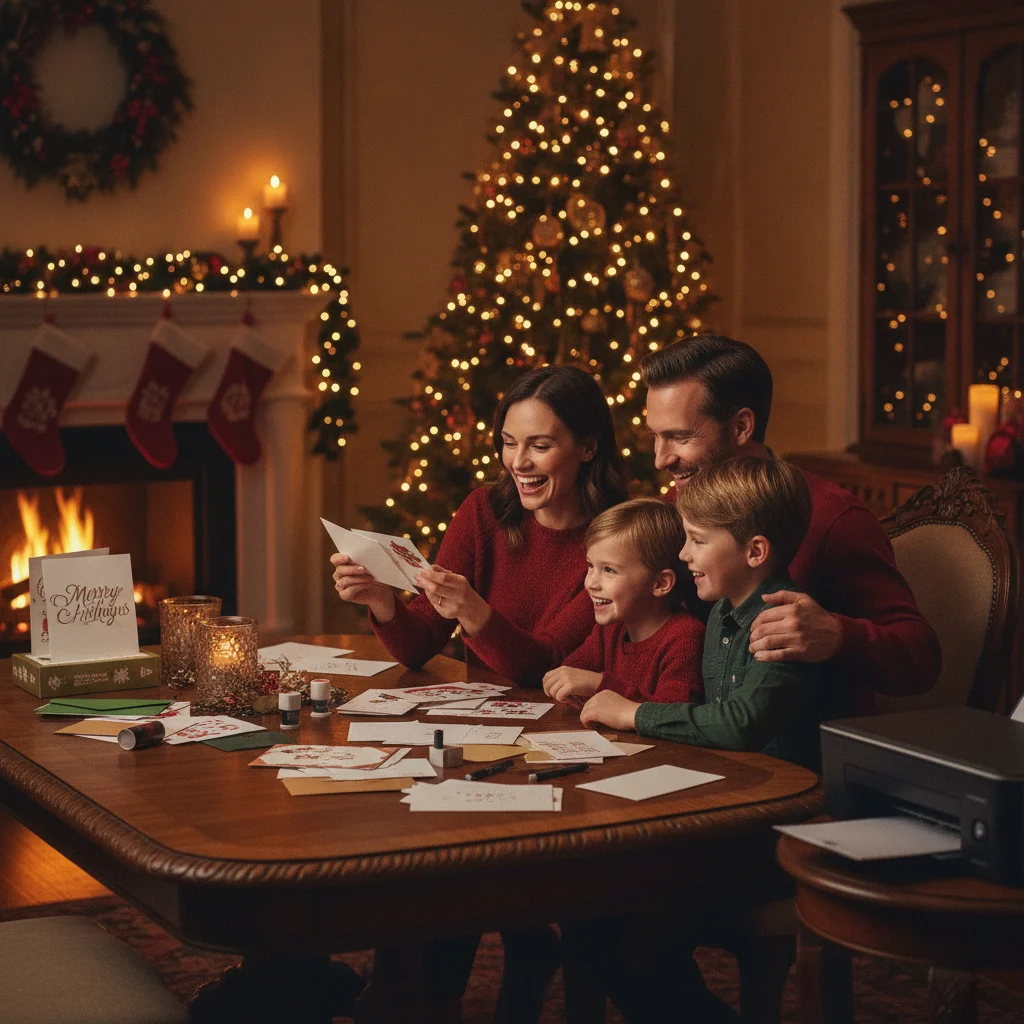
Quick answer: The best holiday card printing service combines accurate photo reproduction, sturdy paper, flexible design tools, dependable delivery, and transparent pricing. Photo labs often provide the strongest image quality, while online stationery printers offer better paper and envelope choices. Local printers can be best for fast turnaround, proofs, and personal support.
What makes a holiday card printing service the best?
The best holiday card printer depends on whether image quality, premium paper, customization, speed, or price matters most. A family sending photo cards may prioritize accurate skin tones and sharp pictures. A business may need consistent branding, recipient addressing, and dependable delivery for a large order.
Start by comparing the complete order rather than the advertised price per card. Shipping, premium paper, envelopes, foil, return-address printing, recipient addressing, and expedited production can significantly change the final cost.
- Check whether envelopes are included.
- Review the estimated production time separately from shipping time.
- Confirm whether the printer corrects or crops uploaded photos.
- Look for a printed proof when color accuracy is important.
Which type of holiday card printer should you choose?
Online stationery companies, photo labs, local print shops, and mass-market retailers serve different needs. No single category is best for every card.
| Printer type | Best for | Potential drawback |
|---|---|---|
| Online stationery printer | Premium paper, templates, foil, and envelope options | Upgrades can increase the total quickly |
| Photo printing service | Photo-heavy cards and familiar ordering tools | Paper and typography choices may be limited |
| Local print shop | Fast service, custom specifications, and physical proofs | Small orders may cost more per card |
| Retail photo counter | Budget orders and quick pickup | Fewer premium finishes and formats |
Choose a service based on the finished card you want, not simply the number of templates in its catalog. A smaller design selection can still be sufficient if the paper, printing process, and delivery options meet your needs.
Which paper and printing options matter most?
Cardstock weight affects how substantial a holiday card feels. Lightweight stock may be economical, while thicker cardstock generally feels more formal and resists bending. Matte paper reduces glare and is easy to write on. Glossy paper can add contrast to photographs but may show fingerprints.
Digital printing is suitable for most personal holiday cards. Letterpress, foil stamping, and specialty finishes create a more result but cost more. Confirm whether decorative foil is stamped onto the card or simulated with printed ink, since the appearance and price differ.
How can you judge photo print quality before ordering?
Use the original image file whenever possible. Photos downloaded from social media or copied from messages may have insufficient resolution for printing. Follow the printer’s warnings about image size, and avoid enlarging a small file to fill a large card.
Screen brightness can make photographs look lighter than the printed result. A physical proof provides the most reliable check for color, cropping, text size, and placement. If a proof is unavailable, order a small quantity first when the schedule and minimum order allow it.
What should you review before placing an order?
Proof every name, date, address, and punctuation mark. Inspect the front, back, and interior of the design. Many printers treat approved personalization as final, even when the customer later discovers a spelling error.
- Confirm the card dimensions and orientation.
- Check photo cropping on every page or panel.
- Keep text inside the printer’s safe area.
- Verify envelope size and postage requirements.
- Review production and delivery estimates.
- Save a copy or screenshot of the approved design.
If the service offers direct mailing, determine whether it sends one sample to the purchaser. A sample lets you verify the finished piece and keep a copy without placing a separate order.
How do you find the best value?
Calculate the delivered cost per usable card. Include shipping, envelopes, addressing, design upgrades, taxes, and any extra cards needed for mistakes or late additions. A low base price may not remain inexpensive after required options are added.
Discounts are useful only when the service meets the deadline and quality requirements. Ordering earlier usually provides more time for a proof, correction, reprint, or slower shipping method. Small orders may be cheaper locally because delivery charges can outweigh an online discount.
Verdict: Choose a photo lab for image-centered cards, an online stationery printer for premium materials and design choices, or a local printer for custom support and urgent turnaround. Compare final checkout totals and obtain a proof for important or expensive orders.
What limitations should you consider?
Online previews cannot perfectly represent printed color, texture, foil, or paper thickness. Delivery estimates may also change because of production delays, carrier congestion, weather, or an incorrect recipient address.
Prices, promotions, paper selections, and turnaround times change frequently. Confirm current details directly with the printing service before ordering. Editorial comparisons should guide the selection process, but a recent physical sample remains the strongest evidence of print quality.
The overlooked specification for the best holiday card printing
The print specification people most often skip when choosing the best holiday card printing is image resolution at the card’s final trimmed size. For a 5-by-7-inch card, a full-card image should be 1500 by 2100 pixels to meet a 300 PPI target (Snaptosize, 2026).
Check resolution after placing and cropping the photo in the printer’s template, not just in the original camera file. Enlarging a small image or cropping heavily reduces the pixels available for printing, even when the upload is accepted. Confirm that the preview shows the intended crop, especially around faces, borders, and text. If the printer flags low resolution, use a larger original or reduce the image’s printed dimensions rather than sharpening or artificially enlarging the file.
When do standard bleed, finish, and resolution recommendations not apply?
Standard bleed, finish, and 300 DPI recommendations do not apply unchanged when a printer’s template, vector artwork, or rush production method sets different requirements. The 300 DPI target is intended for raster images at final size (Snaptosize, 2026); vector type and logos are resolution-independent when exported correctly. Bleed is unnecessary when every background and image stops safely inside the trim line, although the printer’s required file dimensions still control. Specialty finishes such as foil, letterpress, or raised ink use separate artwork layers and may need wider tolerances than standard digital printing. For last-minute holiday mail, skip finishes that add production days and choose the printer’s fastest approved stock and file format. Religious, grief, relationship, or workplace considerations may change the message and design, but they do not override the printer’s technical specifications.
Frequently asked questions
What is the best paper for printed holiday cards?
Matte or uncoated cardstock is a practical choice because it reduces glare and accepts handwriting. Glossy stock can suit photo-focused designs that benefit from stronger contrast.
How thick should holiday card cardstock be?
A heavier cardstock generally feels more substantial and resists bending. Compare listed paper weights and request samples because thickness descriptions vary among printers.
Are online holiday card printers cheaper than local print shops?
Online printers can be cheaper for standard designs and larger quantities. Local shops may offer better value for small rush orders, custom specifications, or jobs that need a physical proof.
Should I order a proof before printing holiday cards?
A proof is recommended for large, expensive, business, or color-sensitive orders. It can reveal cropping, color, paper, and text problems that are difficult to judge on a screen.
How early should holiday cards be ordered?
Order early enough to allow for production, shipping, addressing, and possible corrections. Add extra time when choosing specialty finishes, custom envelopes, or direct-mail services.
Is recipient addressing worth paying for?
Recipient addressing can save substantial time and produce a consistent appearance. It is most useful when the printer accepts an address list that can be checked before production.
How many extra holiday cards should I print?
Order enough extras for addressing mistakes, returned mail, forgotten recipients, and keepsakes. A small buffer is usually less expensive than placing a second minimum order.
Can holiday card printers mail cards directly to recipients?
Some printers provide recipient addressing, postage, and direct mailing. Confirm whether the service supplies envelopes, validates addresses, and sends a sample copy to the purchaser.
What resolution should a holiday card photo be for printing?
A holiday card photo should generally reach 300 PPI at its final printed dimensions. Check the effective resolution after cropping because a high-resolution original can become insufficient when enlarged. If the printer provides a warning, replace the photo with a larger file or make it smaller within the design.
Why do holiday card photos look blurry after uploading?
Holiday card photos often look blurry because the file is being enlarged, heavily cropped, compressed, or displayed in a low-quality preview. Compare the image’s pixel dimensions with its intended printed size. Use the original camera file when possible, avoid screenshots, and review a proof or high-resolution preview before ordering.