
How to Batch Print, Sign, Stuff, Stamp, and Mail Christmas Cards
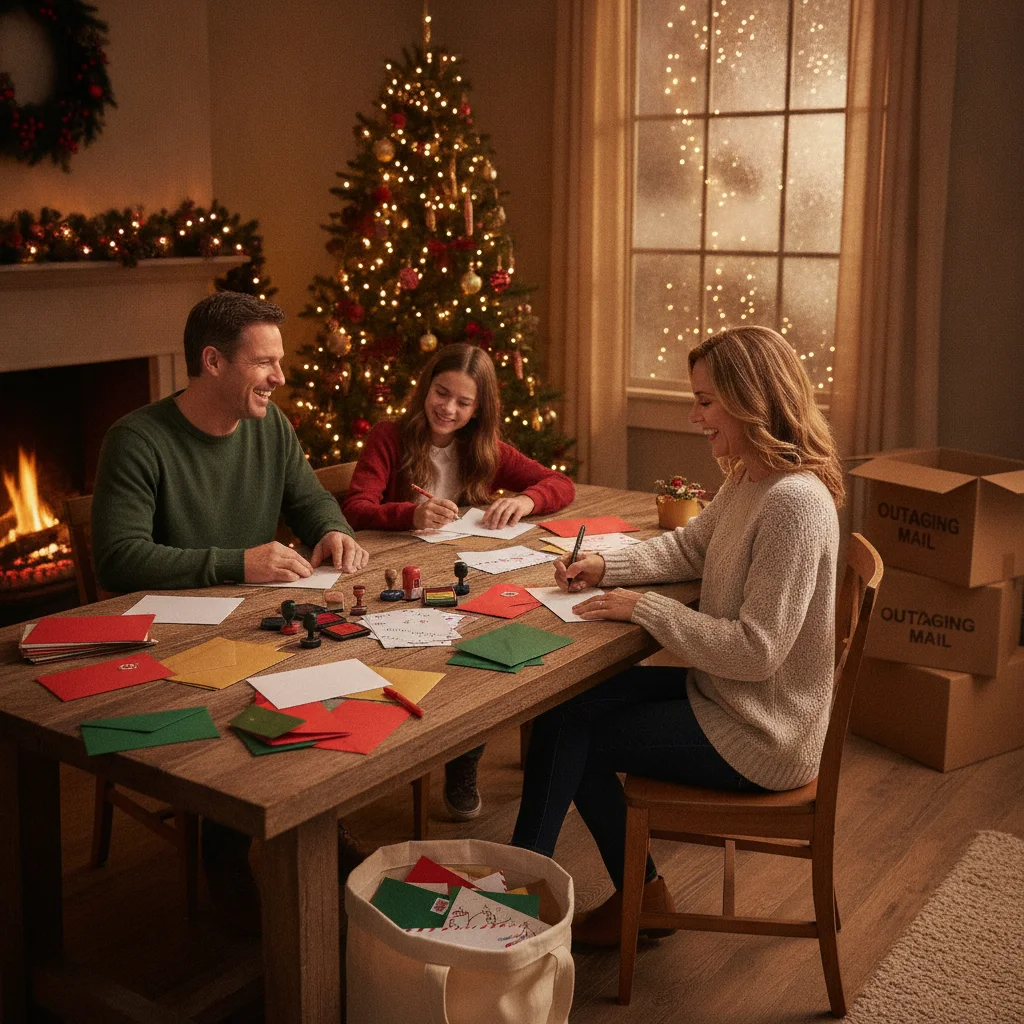
Quick answer: Organize bulk Christmas card mailing by dividing the work into separate batches: finalize the address list, print cards and envelopes, sign every card, stuff and seal envelopes, apply postage, and complete a final count. Use a checklist and keep cards in the same order as the mailing list so missing or duplicate recipients are easy to spot.
Bulk Christmas card mailing becomes easier when each task is completed for the entire list before the next task begins. Instead of finishing one card at a time, batch printing, signing, stuffing, sealing, and stamping reduces repeated setup and makes errors easier to catch.
Choose a mailing deadline first, then work backward. Allow time for replacement prints, incorrect addresses, hand signing, postage purchases, and seasonal delivery delays. A list of 100 cards may require several short work sessions rather than one long evening.
What should you prepare before starting a bulk mailing?
Begin with one master recipient list. Include each recipient’s name, household name, street address, apartment or unit, city, state, postal code, and country when applicable. Remove duplicates and mark recipients who need a personal note, international postage, or a different card.
Gather all supplies before printing. Typical supplies include cards, matching envelopes, printer ink or toner, address labels if used, return-address labels, pens, envelope sealers, postage, and storage trays.
- Count cards and envelopes, then keep at least five percent extra for mistakes.
- Confirm that the card dimensions fit the envelopes.
- Test one printed card and one addressed envelope.
- Weigh and measure a fully assembled sample.
- Create a checklist with one row per recipient.
What is the best order for each mailing task?
A fixed production sequence prevents unfinished cards from mixing with completed mail. Keep separate trays or boxes for each stage.
| Stage | Main task | Quality check |
|---|---|---|
| 1 | Clean the address list | Remove duplicates and incomplete entries |
| 2 | Print cards and envelopes | Check names, orientation, and ink quality |
| 3 | Sign and personalize | Match special notes to recipients |
| 4 | Stuff and seal | Confirm one card per envelope |
| 5 | Apply postage | Separate special-size and international mail |
| 6 | Count and mail | Compare the final total with the master list |
How should you batch print Christmas cards and envelopes?
Print a small test batch before running the complete job. Check card alignment, image quality, spelling, margins, paper handling, and drying time. If the design prints on both sides, confirm that the front and inside panels have the correct orientation.
Print envelopes or labels in the same order as the master list. Number the backs lightly in pencil if the mailing includes many personalized messages. Keep rejected prints in a separate pile so they are not counted as finished cards.
Allow printed materials to dry fully before stacking them. Some coated card stock and glossy surfaces can smear when cards are handled too quickly.
How can you sign many Christmas cards efficiently?
Arrange unsigned cards in one stack and completed cards in another. Use a comfortable pen that dries quickly and does not bleed through the paper. Sign the standard message on every card first, then return to recipients who need personal notes.
For cards sent by a family or team, decide whether one person will sign all names or whether each person will add a signature. Set a clear convention so the finished cards look consistent.
How do you prevent stuffing and sealing mistakes?
Place each addressed envelope beside its matching card when personalization matters. Confirm the recipient name before inserting the card. Keep the card front facing the envelope flap so the design appears correctly when the recipient removes it.
Stuff all envelopes before sealing any of them. This pause makes it possible to correct a mismatch without damaging an envelope. After checking the count, seal envelopes in groups of 20 or 25 and mark each completed group on the checklist.
How should postage be handled for bulk Christmas cards?
Postage depends on destination, weight, thickness, shape, and mailing service. Square envelopes, rigid enclosures, bulky decorations, wax seals, and international destinations may cost more than a standard letter.
Take one fully assembled sample to the postal service or use its current size and weight guidance before buying postage for the whole batch. Separate standard domestic cards, nonstandard cards, and international cards into labeled groups. Apply stamps in the same upper-right position and avoid covering printed address information.
When should bulk Christmas cards be mailed?
Set a target date based on the recipients’ locations and the postal service selected. Mail international cards and distant domestic cards first. Local cards can follow later, but sending the complete batch early reduces stress during the busiest holiday weeks.
Before mailing, compare the envelope count with the number of completed entries on the master list. Scan the stack for missing postage, open flaps, unreadable addresses, and cards accidentally stuck together.
What are the limitations of a batch mailing system?
Batching saves time, but it can make a large mailing feel less personal. Reserve a separate session for handwritten notes if personal messages are important.
Home printers may struggle with thick card stock, specialty finishes, or small envelopes. Postal requirements and delivery estimates can also change, so current carrier guidance takes priority over a general checklist. Large business mailings may qualify for mailing services or commercial rates that require additional sorting, permits, or preparation.
A reliable bulk Christmas card workflow uses one verified list, a fixed production order, clearly separated trays, and a final envelope count. Testing one finished card before printing or buying postage can prevent the most expensive mistakes.
What postage detail changes how you organize a bulk Christmas card mailing?
The postage category of each finished envelope is the detail that changes how you should organize a bulk Christmas card mailing. Before signing or stuffing, divide the recipient list into groups for standard domestic letters, nonstandard shapes, heavier or rigid envelopes, and international destinations. Mark each group with a distinct tray, box, or removable note, then complete printing, stuffing, sealing, and postage one group at a time. This prevents a square card, wax seal, enclosure, or overseas address from receiving the same postage as an ordinary letter. There is no single reliable stamp count for every Christmas card because the required postage depends on the finished piece and destination. Weigh and measure one fully assembled sample from each group, confirm its classification, and use that approved sample as the reference for the rest of the batch.
When should Christmas cards be removed from the bulk postage batch?
Remove any Christmas card that differs in weight, thickness, shape, destination, or mailing deadline from the main postage batch. Extra photos, long letters, gift cards, rigid decorations, wax seals, and bulky inserts can change how an envelope is classified or processed. International and military addresses also require separate preparation, while square or unusually shaped envelopes may not qualify for the same postage as standard rectangular cards. This advice does not apply uniformly to a last-minute mailing: cards with urgent arrival dates should be separated and evaluated for a faster service rather than stamped with the rest. Before sealing every envelope, assemble the heaviest version and have its postage checked. If several card configurations are in use, label trays or bundles by version so lighter envelopes are not accidentally overpaid and heavier ones are not returned.
Frequently asked questions
How far in advance should I organize a bulk Christmas card mailing?
Start three to six weeks before the preferred arrival date. International mail, large lists, and handwritten notes require additional preparation time.
Is it faster to finish one Christmas card at a time?
Batching one task across the entire list is usually faster because printing, signing, stuffing, and stamping each require different supplies and setup.
How many extra Christmas cards should I order?
Ordering at least five percent extra covers printing errors, damaged envelopes, late additions, and corrected addresses.
Should I print addresses directly on envelopes or use labels?
Direct printing gives envelopes a clean appearance, while labels are often easier for printers that cannot handle envelope sizes reliably.
How do I keep personalized cards matched with the right envelopes?
Keep cards and envelopes in master-list order, or add matching pencil numbers to inconspicuous areas before personalization.
Can square Christmas cards use regular letter postage?
Square or unusually rigid envelopes may require additional postage because postal equipment can treat them as nonstandard mail.
Should Christmas cards be sealed before checking postage?
One sample should be fully assembled and sealed before its weight and dimensions are checked. The remaining envelopes can be sealed after the sample confirms the mailing format.
Should I separate international Christmas cards from domestic cards?
Yes, keep international Christmas cards in a separate batch from domestic cards. Their address formatting, postage, and processing requirements may differ by destination. Label the batch clearly, verify each country name and postal code, and apply postage only after checking a fully assembled sample so international envelopes are not accidentally mailed at a domestic rate.
How can I organize Christmas cards with different postage needs?
Sort cards by finished envelope characteristics before applying postage. Create separate groups for ordinary letters, square or unusually shaped envelopes, heavier cards, rigid enclosures, and international mail. Keep one measured and weighed sample with each group, and record the confirmed postage category on a removable note rather than relying on memory during stamping.
Can all Christmas cards in one mailing use the same postage?
They can use the same postage only if their size, shape, thickness, weight, destination, and service level are equivalent. Separate cards containing extra photos, letters, gift cards, rigid items, or unusual seals. Testing the heaviest envelope from each card version before applying postage reduces the chance of returns or unnecessary overpayment.