
Inspiring Bible Verse Christmas Card Ideas
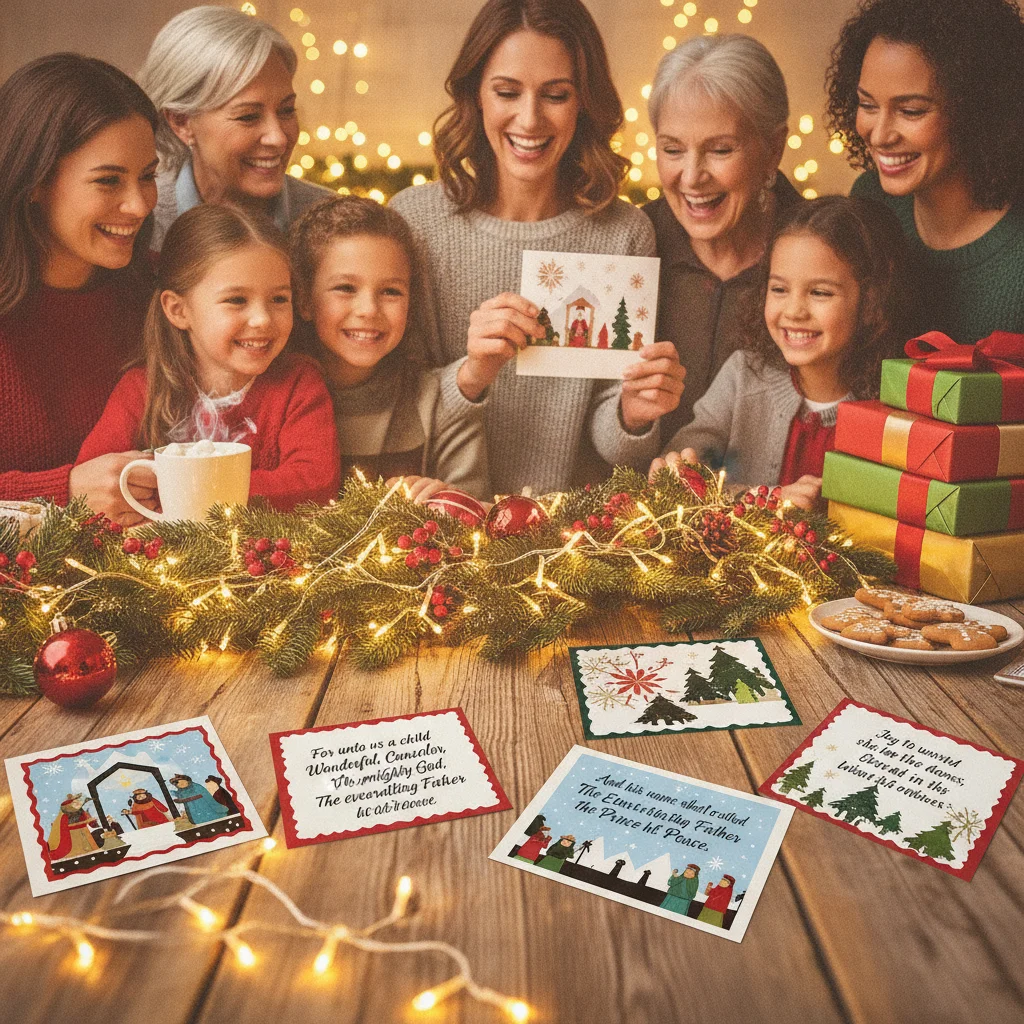
Quick answer: Choose a Bible verse that reflects the recipient and the purpose of your Christmas greeting. Nativity passages such as Luke 2:10-11 celebrate Christ’s birth, while verses about light, peace, hope, and God’s gifts suit broader seasonal messages. Pair the verse with a brief personal note and a calm, readable design.
Bible verses can give Christmas cards a clear spiritual focus, whether the message celebrates the Nativity, offers comfort, or expresses gratitude. The most meaningful card usually combines one carefully chosen passage with a short personal note. A restrained design helps the Scripture remain central rather than competing with decorative details.
Which Bible verses work well on Christmas cards?
Nativity passages are natural choices, but verses about light, joy, peace, and generous gifts can also fit the season. The following excerpts use the King James Version and may be shortened with an ellipsis when appropriate.
| Verse | Theme | Card direction |
|---|---|---|
| Luke 2:10 | “Good tidings of great joy” | A joyful family greeting |
| Luke 2:11 | “Unto you is born... a Saviour” | A Christ-centered Nativity card |
| Isaiah 9:6 | “Unto us a child is born” | A traditional prophetic message |
| Matthew 1:23 | “Emmanuel... God with us” | A reflective message about God’s presence |
| John 1:14 | “The Word was made flesh” | A simple theological card |
| 2 Corinthians 9:15 | “Thanks be unto God for his unspeakable gift” | A gratitude-focused greeting |
| Psalm 96:11 | “Let the heavens rejoice” | A nature-inspired Christmas design |
Check the full passage before printing an excerpt. Context can help you decide whether the verse matches the message that you want to send.
How can you pair a Bible verse with a personal Christmas message?
Place the verse first, then add one or two sentences that connect its meaning to the recipient. These pairings can be adapted for relatives, friends, church members, teachers, or neighbors.
- For family: Pair Luke 2:11 with gratitude for another Christmas shared in faith, love, and fellowship.
- For friends: Pair Luke 2:10 with a wish for joy to fill their home throughout the Christmas season.
- For a pastor: Pair John 1:14 with thanks for faithful teaching and care during the past year.
- For someone grieving: Pair Matthew 1:23 with a gentle reminder of God’s presence, avoiding pressure to feel cheerful.
- For volunteers: Pair 2 Corinthians 9:15 with appreciation for their generosity and service to others.
- For a new baby: Pair Isaiah 9:6 with a warm message about wonder, hope, and the blessing of new life.
What can you write beneath a Christmas Bible verse?
A short note prevents the card from feeling like a generic quotation. Keep the wording natural and specific to your relationship.
- Joyful: “May the good news of Christ’s birth fill your home with joy this Christmas and throughout the coming year.”
- Traditional: “Celebrating with you the holy night when our Savior was born. Wishing your family a blessed Christmas.”
- Peaceful: “May God’s presence bring you quiet hope, lasting peace, and comfort during this sacred season.”
- Grateful: “Your friendship has been a true gift. May you know the love of Christ in a special way this Christmas.”
Which designs suit Bible verse Christmas cards?
Use visual elements that support the passage. A starry sky suits Matthew 2, a simple manger suits Luke 2, and candlelight complements verses about light. Botanical borders, winter branches, or understated gold details work well when the card does not depict the Nativity directly.
- Give the verse generous space and use a readable typeface.
- Keep decorative script for short headings rather than long quotations.
- Include the Bible reference directly below the verse.
- Use strong text contrast for recipients with limited vision.
Which Bible translation should you use?
Use the translation familiar to the recipient or congregation. The King James Version offers traditional language, while modern translations may be easier to understand. Verify every quotation against a trusted printed or digital Bible because punctuation and wording differ by translation.
Translation copyright rules can also differ. Short quotations are often permitted under publisher guidelines, but anyone selling cards or printing a large quantity should review the translation owner’s current permissions and attribution requirements.
What limitations should you consider when choosing a verse?
A Bible verse may not suit every recipient. Interfaith families, acquaintances with unknown beliefs, and people experiencing grief may appreciate a gentler message that does not make assumptions about their faith or emotions.
Some passages also carry doctrinal meanings beyond a short excerpt. Read the surrounding chapter and avoid removing words in a way that changes the message. When comfort is the goal, personal compassion should accompany the quotation rather than allowing the verse to stand as a quick answer to pain.
Best approach: Choose one relevant verse, confirm its wording, add a sincere personal sentence, and let a simple design keep attention on the message.
When Bible Verse Christmas Card Ideas Feel Considered Rather Than Generic
Bible verse Christmas card ideas look considered when the passage, wording, and design clearly reflect the recipient rather than treating Scripture as decoration. Begin with one person or household in mind: choose a verse connected to peace for a difficult season, gratitude for a supportive friend, or the Nativity for someone who values a traditional expression of faith. Use the recipient’s familiar translation when you know it, then add a short note explaining why the verse brought them to mind. Let one visual detail echo the passage—such as stars with a verse about light—without illustrating every phrase. A card can feel generic when it combines a commonly used verse, a stock seasonal image, and an unsigned greeting with no personal connection. There is no objective number of design elements or personal words that guarantees thoughtfulness; relevance and restraint matter more than quantity.
A Bible verse card looks unfinished when its spacing feels accidental
The most common failure is accidental-looking spacing: the verse, reference, and personal greeting appear as separate scraps rather than one planned composition. Before sending, hold the open card at arm’s length and check whether your eye can immediately follow the verse from its first line to the scripture reference. If the reference seems stranded, the final line crowds the fold, or a correction is squeezed between words, the result will read as unfinished. Rewrite the panel instead of patching it. Use one alignment throughout, keep an even margin around the text, and place the reference directly beneath the verse in smaller lettering. A short personal sentence can follow after a clear gap; that separation makes the handmade choices look intentional.
Frequently asked questions
What is the most popular Bible verse for a Christmas card?
Luke 2:10-11 is a popular choice because it announces the birth of Jesus as good news and great joy. Isaiah 9:6 is another traditional favorite.
What is a short Bible verse for a Christmas card?
Matthew 1:23 can be presented with the short phrase “Emmanuel... God with us.” Second Corinthians 9:15 also provides a concise message of gratitude.
Can I use a Psalm in a Christmas card?
Psalms about joy, praise, peace, and creation can suit Christmas cards even when they do not describe the Nativity. Psalm 96:11 works especially well with a winter landscape or starry-sky design.
What Bible verse is appropriate for someone grieving at Christmas?
Matthew 1:23 emphasizes God’s presence and can accompany a gentle note of support. Avoid wording that tells a grieving person how they should feel.
Should the Bible verse go on the front or inside the card?
A short verse can appear on the front, while a longer passage is usually easier to read inside. The personal greeting can follow the verse on the same interior panel.
Do I need to name the Bible translation on a Christmas card?
Naming the translation is good practice, especially when quoting more than a short phrase. Commercial card makers should follow the translation publisher’s attribution and permission rules.
How many Bible verses should a Christmas card include?
One central verse is usually enough for a personal card. Two related references can work, but several passages may make the design crowded and reduce the impact of the main message.
How do I make a Bible verse Christmas card feel personal?
Choose a verse that relates to the recipient’s faith, personality, or recent experiences. Add one or two sentences about why you selected it, using a specific memory or expression of gratitude where appropriate. A handwritten name and direct salutation can also make the card feel intended for that person rather than sent to everyone.
Is it okay to choose a less familiar Bible verse for a Christmas card?
Yes, a less familiar verse can make the card more meaningful when its message suits the recipient and the Christmas season. Include enough of the passage for its meaning to be clear, check the surrounding context, and identify the book, chapter, and verse so the recipient can find the full passage if desired.
How do I hand-letter a Bible verse on a Christmas card?
Start with a short verse and lightly mark the centerline, margins, and line breaks in pencil. Write the verse before adding illustrations or decorative borders so the words have enough room. Keep the lettering style consistent, make the scripture reference smaller, and erase guidelines only after the ink is completely dry.