
Creative Bilingual Christmas Card Ideas for Every Family
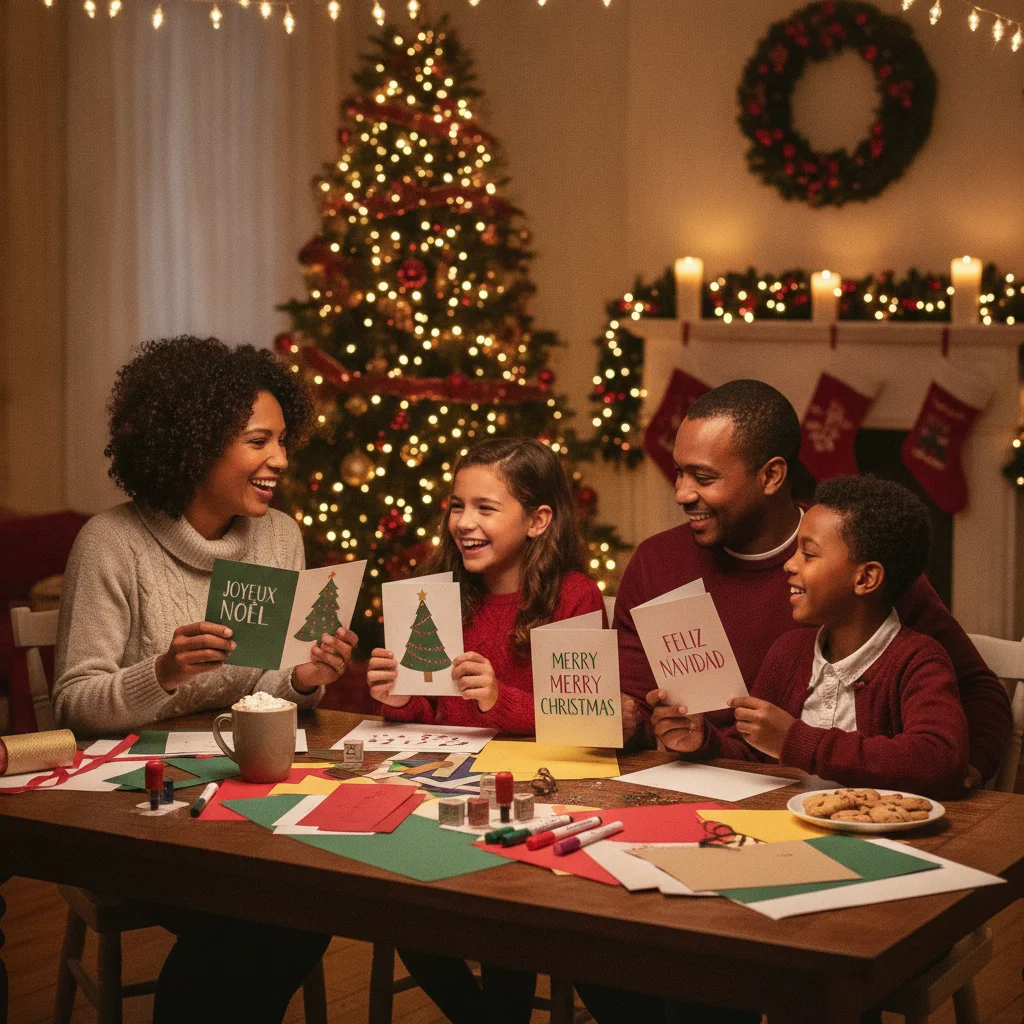
Quick answer: A successful bilingual Christmas card gives both languages equal visual importance and uses a greeting that feels natural in each one. Try mirrored messages, side-by-side columns, mixed-language family notes, or a short shared phrase on the cover. Ask fluent speakers to review every translation before printing or sending the card.
Bilingual Christmas cards can celebrate family history, connect relatives across countries, and include recipients who speak different languages. The best cards do more than translate a single sentence. They treat both languages as meaningful parts of the design and use wording that sounds natural to the people receiving the card.
What are some creative bilingual Christmas card formats?
The right format depends on how much text you want to include and whether most recipients understand one or both languages. These flexible concepts work for printed cards, photo cards, and digital greetings.
- Split cover: Place one language on the left and the other on the right, using matching fonts and colors.
- Front and inside: Print a short greeting in both languages on the cover, then add longer messages inside.
- Mirrored wording: Repeat the same message above and below a central family photograph.
- Alternating lines: Write one sentence in the first language and the next sentence in the second language.
- Shared headline: Combine two familiar greetings, such as “Merry Christmas • Feliz Navidad.”
- Family voices: Let different family members contribute short wishes in the languages they use at home.
- Map or travel theme: Connect two places with stars, dotted lines, landmarks, or small flag-inspired accents.
Which bilingual Christmas greetings work well together?
Short greetings are usually easiest to balance visually. The following examples offer starting points, but regional usage and family preferences should guide the final wording.
| Language pairing | Sample greeting |
|---|---|
| English and Spanish | Merry Christmas • Feliz Navidad |
| English and French | Merry Christmas • Joyeux Noël |
| English and German | Merry Christmas • Frohe Weihnachten |
| English and Italian | Merry Christmas • Buon Natale |
| English and Portuguese | Merry Christmas • Feliz Natal |
| English and Polish | Merry Christmas • Wesołych Świąt |
A broader seasonal phrase may suit a mixed group better than a specifically religious message. “Warm holiday wishes” and its natural equivalent can include Christmas, New Year, and other winter celebrations without assuming that every recipient observes the same traditions.
How can both languages look balanced on the card?
Give each language comparable space, font size, and placement. Making one translation much smaller can suggest that the second language is an afterthought, even when that was not the sender’s intention.
Different typefaces can help readers distinguish the languages, but both typefaces should remain easy to read. Avoid placing long text over a detailed photograph. A solid panel, light overlay, or generous blank area will improve contrast.
- Choose the final photograph or illustration first.
- Write the message naturally in the language you know best.
- Create or request a meaning-based translation rather than a word-for-word version.
- Place both messages into the design and compare their visual weight.
- Print or preview the card at its actual size before ordering copies.
How can a bilingual card feel personal?
A short family update often feels warmer than a generic translated phrase. Mention a shared memory, a new family tradition, or a hope for the coming year in both languages.
- Add a handwritten closing in each language.
- Use relatives’ familiar names instead of formal translated titles.
- Include a recipe, saying, or holiday custom from both cultures.
- Ask children to draw small seasonal illustrations or write a short greeting.
- Choose photographs that show a tradition meaningful to the family.
The two messages do not need identical sentence structures. Each version should communicate the same warmth and intent while sounding comfortable to a native or fluent speaker.
Should bilingual cards include cultural symbols?
Cultural details can make a card when the sender has a real connection to them. Traditional foods, textiles, plants, winter scenes, and family customs can provide a thoughtful design theme.
Avoid treating national flags as interchangeable with language or culture. Many languages are spoken across several countries, and many households include more than two cultural backgrounds. Personal traditions usually create a more accurate card than broad stereotypes.
What are the limitations of bilingual Christmas cards?
Automatic translation tools may miss humor, idioms, religious nuance, gender, formality, or regional phrasing. A grammatically correct sentence can still sound unnatural or carry an unintended meaning.
Long translations can also create layout problems because the same idea may require different amounts of space in each language. Scripts with accents or non-Latin characters require fonts that support every symbol. A fluent speaker should check spelling, punctuation, tone, names, and font rendering before the card is printed.
Best approach: Keep the cover greeting short, give both languages equal prominence, and place a natural personal message inside. Careful review matters more than an elaborate design.
What makes bilingual Christmas card ideas feel considered rather than generic?
Bilingual Christmas card ideas look considered when each language sounds natural to its readers and contributes intentionally to the message. They look generic when one version feels like an afterthought, relies on literal phrasing, or adds a familiar holiday word without regard for dialect or family usage. Begin with the recipients: choose the language variety they use, match the level of formality they expect, and preserve names or terms of address they would recognize. Then give both languages a meaningful role, such as pairing the shared greeting with a short memory, family update, or sign-off suited to that audience. There is no universal formula for which wording feels most authentic; a fluent family member or trusted reader is the best judge. Deliberate differences can feel warmer than forced symmetry, provided the meaning remains respectful and clear.
When does a bilingual Christmas card look unfinished rather than handmade?
About 22% of Americans age five and older speak a language other than English at home (U.S. Census Bureau, 2023), so bilingual Christmas cards are not unusual; inconsistent treatment between the languages is what can make them look unfinished. That share does not mean every greeting needs matching typography or a literal translation. A handmade design can include natural differences, such as one message in handwriting and the other in type, when spacing, alignment, punctuation, and ink weight still feel deliberate. The card starts to seem incomplete when one language looks added as an afterthought, runs into artwork, uses noticeably smaller text without a clear reason, or contains uncorrected accents and characters. Before printing or mailing, compare both versions side by side and ask a fluent reader to check wording as well as visual breaks.
Frequently asked questions
Should both languages say exactly the same thing?
Both versions should express the same meaning, but they do not need identical sentence structures. Natural phrasing is more important than a literal word-for-word translation.
Which language should appear first on a bilingual Christmas card?
The first language can reflect the primary recipient, family preference, or reading direction. Equal font size and balanced placement matter more than the order.
Can I use an online translator for my Christmas card?
An online translator can provide a draft, but a fluent speaker should review the result. Translation tools can miss tone, formality, idioms, and regional usage.
How much text should a bilingual Christmas card include?
A short cover greeting and two to four sentences inside usually provide enough room for both languages. Longer family updates can be placed on a separate insert.
Can a bilingual card include Merry Christmas and Happy Holidays?
Yes, the card can pair Christmas wording with a broader seasonal greeting when that reflects the recipients. Each phrase should be translated according to its intended meaning.
What fonts work for bilingual Christmas cards?
Choose readable fonts that support every accent, punctuation mark, and writing system used in the message. Test all characters before printing because decorative fonts may have incomplete language support.
How do I choose the right dialect for a bilingual Christmas card?
Choose the regional variety your recipients actually speak or read, rather than the version most familiar to you. Ask a fluent relative to check vocabulary, spelling, formality, and terms of address. If recipients use different varieties, favor broadly understood wording and reserve highly local expressions for a personal note.
How do I proofread a bilingual Christmas card?
Have a fluent reader check each language as a complete message, not merely compare sentences word for word. Ask them to review tone, grammar, spelling, names, punctuation, and regional usage. A second reader can also confirm that neither version sounds stiffer, less affectionate, or less complete than the other.
Can I mix handwriting and printed text on a bilingual Christmas card?
Yes, handwriting and printed text can work together when the contrast appears intentional. Use consistent margins, similar visual weight, and enough space around both language versions. Handwriting may suit a personal closing while printed text carries the main greeting. Avoid assigning one language a polished treatment and leaving the other cramped or faint.