
Inclusive Blended Family Christmas Card Ideas for Families With Stepchildren
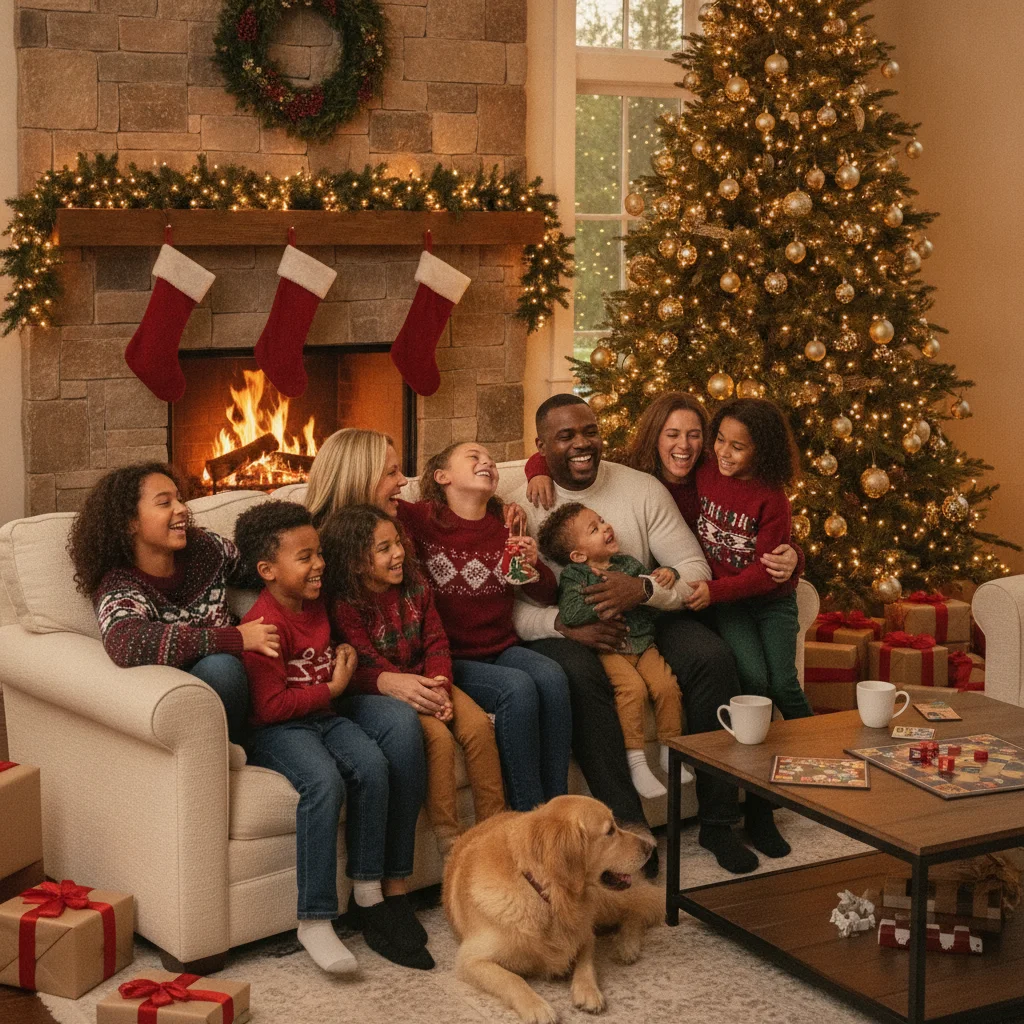
Quick answer: The best blended family Christmas cards include every child equally, use names and relationship language everyone accepts, and avoid forcing an instant picture of family unity. Choose a relaxed group photo, collage, illustrated design, or multi-household message. Let stepchildren help select the pictures and wording so the finished card feels genuine rather than staged.
A blended family Christmas card can celebrate connection without pretending that every relationship looks or feels the same. The goal is not to prove that a family has blended perfectly. The goal is to create a card in which parents, stepparents, stepchildren, half-siblings, and other important relatives feel seen.
Inclusive choices matter most when children divide time between homes, use different surnames, or have different comfort levels with family labels. A thoughtful card can acknowledge the family as it exists now while giving relationships room to develop naturally.
How can every child feel equally included?
Give each child comparable visual space and attention. Avoid featuring biological children in large portraits while placing stepchildren in a small inset. If individual photographs are used, keep the image sizes, captions, and placement consistent.
Use the names each child prefers. Do not change surnames to make the card appear more uniform. A first-name greeting or neutral family phrase often works better when several surnames are represented.
- Ask children which photograph of themselves they like.
- Arrange names by age, alphabetically, or by household rather than perceived closeness.
- Include children who are away at college, serving in the military, or spending Christmas elsewhere.
- Consider family pets if every child views them as part of the household.
Which Christmas card formats work for blended families?
The right format depends on schedules, relationships, and whether everyone can comfortably gather for one photograph.
| Card format | Best for | Inclusive approach |
|---|---|---|
| Single group portrait | Families comfortable gathering together | Use relaxed poses and place children naturally rather than by biological relationship. |
| Photo collage | Different schedules or long-distance family members | Give each person equal image space and include shared moments. |
| Illustrated family card | Families without a recent group photograph | Let each person choose clothing, hairstyle, and personal details. |
| Year-in-review card | Families with several households or traditions | Highlight milestones from every child rather than only household events. |
What photo ideas feel natural rather than forced?
Choose an activity that gives everyone something to do. Baking cookies, decorating a tree, walking outdoors, playing a game, or wearing comfortable winter clothes can reduce the pressure of formal posing.
- Create a candid collage from several family activities.
- Photograph siblings decorating ornaments with their names.
- Use a wide outdoor image that allows comfortable personal space.
- Show each household tradition in a balanced grid.
- Use individual portraits connected by one color palette.
A complete group photo is not mandatory. A well-balanced collection of separate images can feel more honest, especially when custody schedules or geographic distance make one gathering difficult.
What wording is appropriate for a blended family card?
Use language that reflects how family members describe themselves. Some stepchildren happily use “our family,” while others prefer a greeting signed with first names. Neither choice measures the strength of the relationships.
- “Warm Christmas wishes from all of us.”
- “Sending joy from our crew to yours.”
- “With love from Maya, Ben, Sophie, Lucas, Erin, and James.”
- “Celebrating the people and moments that made this season special.”
- “Merry Christmas from the Carter and Nguyen household.”
Avoid announcing that the family is “finally complete” or “one big happy family” unless everyone supports that wording. Those phrases can unintentionally dismiss a child’s other parent, household, or earlier family experiences.
How can different traditions be represented?
Blended families may combine religious practices, cultural customs, travel schedules, and celebrations inherited from more than one household. A card can show this variety without explaining every detail.
- Include photographs from several seasonal traditions.
- Choose general winter imagery when religious preferences differ.
- Mention Christmas and another observance if the family celebrates both.
- Invite each child to suggest one symbol, color, or memory for the design.
How should parents involve stepchildren in the card?
Invite participation without making it compulsory. Children can help choose photographs, approve their names, suggest a greeting, select colors, or decide whether the card will be shared publicly. Older children may want more privacy than younger siblings.
- Explain who will receive the card.
- Show children the proposed photographs and wording.
- Ask privately whether any label or image feels uncomfortable.
- Make reasonable changes without asking children to defend their feelings.
- Confirm permission before posting the card on social media.
What limitations should families consider?
No single card design can resolve tension, grief, loyalty conflicts, or difficult co-parenting relationships. A child may decline a photograph or dislike a family label even when the adults have positive intentions.
Respect custody agreements and privacy boundaries. Avoid using the card to announce an adoption, remarriage, pregnancy, or surname change before every directly affected child has been told and had time to respond.
Best approach: Create a balanced card, use language everyone recognizes, and give each child meaningful input. An honest representation of the family is more welcoming than a perfectly coordinated image.
What makes blended family Christmas card ideas for stepchildren feel considered rather than generic?
Blended family Christmas card ideas for stepchildren feel considered when each child’s identity, relationships, and comfort shape the card rather than being fitted into a standard family template. Before choosing photos or wording, ask each child privately how they want to appear and what name they want shown. Give children comparable visual weight, but do not force identical poses, clothing, or labels. A candid image from a shared activity can feel more personal than a formal lineup. Use captions that describe the moment or holiday wish instead of defining who is a stepchild, unless that child prefers the term. Include a detail unique to this year—such as a new tradition, household pet, or favorite gathering place—to avoid a stock result. There is no universal arrangement that suits every blended family; comfort and consent should decide the final balance.
Uneven treatment of stepchildren makes a blended family card look unfinished
The most common failure is inconsistent visual treatment that unintentionally separates stepchildren from the rest of the family. A card can look unfinished when one child has a smaller photo, a noticeably different crop, a missing name, or a decorative frame that no one else receives. These differences are especially visible when photos come from separate households or occasions.
Before sending, view the card as a small thumbnail and count how often each child appears. Check whether names use the same font, size, and labeling style, and compare the prominence of individual portraits. Separate photos can still feel cohesive when they follow one grid, share consistent spacing, and receive equal visual weight. If a difference reflects a child’s preference, keep it; otherwise, revise anything that could suggest an unintended family hierarchy.
Frequently asked questions
Should stepchildren be named on a family Christmas card?
Stepchildren should be named alongside other children when they are comfortable being included. Use each child’s preferred name and do not alter surnames for visual consistency.
What can a blended family write instead of one family surname?
Use first names, “from all of us,” “from our crew,” or the surnames of both households. Neutral wording avoids implying that everyone shares one legal or preferred surname.
Is it acceptable to use separate photos of each child?
Separate photos work well when schedules, distance, or comfort levels prevent a group portrait. Keep image sizes and placement balanced so no child appears less important.
Should a child’s other biological parent appear on the card?
The other parent can appear when the family has a close co-parenting relationship and everyone agrees. Most household cards simply avoid language that erases the child’s connection to the other parent.
How can a family include a stepchild who is away for Christmas?
Use a recent individual photo, an illustrated portrait, or a favorite image from earlier in the year. The card can also mention that the family is celebrating across the miles.
Should children approve a Christmas card before it is sent?
Children should have an age-appropriate chance to review their photograph, name, and family label. Approval is especially important when the card will be posted online.
What phrases should blended families avoid on Christmas cards?
Avoid phrases such as “finally complete” or “our real family” because they can diminish earlier relationships and other households. Choose warm wording that celebrates the present without rewriting the past.
How do you arrange stepchildren and biological children in a Christmas card photo?
Place children according to what feels natural in the relationship, not by biological status. Use a loose, activity-based pose, alternating heights or positions without creating a “parent’s children” side and a “stepparent’s children” side. Show everyone the image before using it, especially if touch, proximity, or pairings could feel uncomfortable.
Can a blended family Christmas card avoid calling anyone a stepchild?
Yes. Use first names, a shared holiday greeting, or a description of the moment without identifying anyone as a stepchild. Family roles do not need to be explained to recipients. If a child likes a relationship-specific term, include it only with their agreement and apply labels consistently rather than singling that child out.
How do you make photos from different households look consistent on a Christmas card?
Use one crop shape, consistent spacing, and the same border or background treatment for every photo. Minor differences in lighting are less distracting when the images follow a clear grid. Avoid applying a special filter to only one child’s picture, since that can make the layout appear divided rather than intentionally assembled.