
Timeless Black and White Christmas Portraits
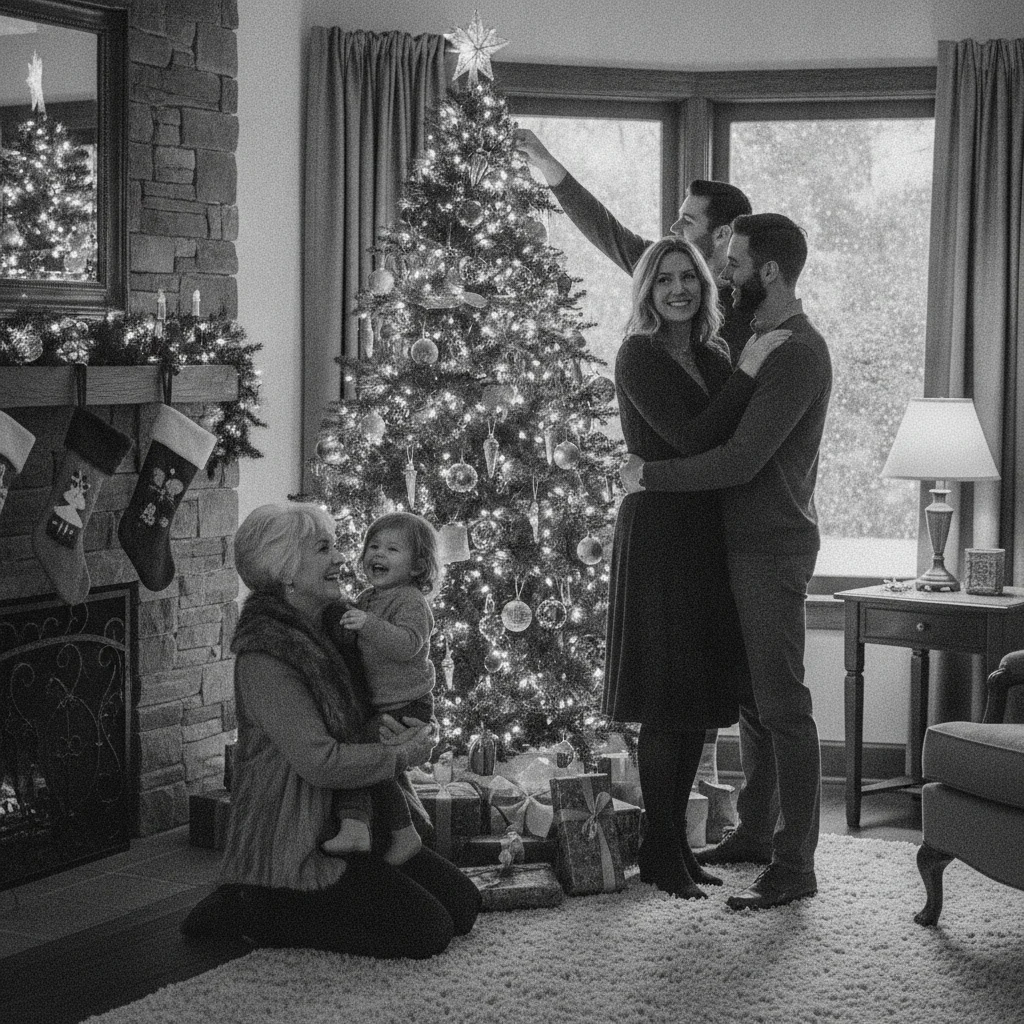
Quick answer: Black and white Christmas portraits look timeless when they combine soft directional light, clear tonal contrast, simple clothing, and an uncluttered seasonal setting. Photograph near a window or use diffused artificial light, expose carefully for faces, and convert the image during editing rather than shooting only in monochrome. Subtle decorations and natural expressions usually produce the strongest results.
Black and white Christmas portraits replace traditional holiday color with light, shadow, texture, and expression. The style can make family photographs feel classic while reducing distractions from colorful decorations, clothing, or mixed indoor lighting.
A successful monochrome portrait still needs a clear Christmas context. Pine branches, string lights, wrapped gifts, knit clothing, or a recognizable tree can establish the season without relying on red and green.
Best approach: Use soft side lighting, coordinate clothing by brightness rather than color, keep decorations restrained, and capture the photograph in color or RAW format before creating the black and white version during editing.
Why do Christmas portraits work well in black and white?
Removing color directs attention toward faces, gestures, and relationships. A child's expression, a couple holding hands, or several generations gathered together often becomes more noticeable when competing colors disappear.
Monochrome treatment also helps unify a busy room. Ornaments, toys, furniture, and patterned wrapping paper can create color clashes in a normal photograph. Black and white conversion reduces those clashes, although it cannot correct poor composition or distracting shapes.
The style is especially effective for photographs intended for framed prints or understated Christmas cards. It can also connect newer family portraits with older photographs displayed in the same home.
What lighting creates flattering monochrome portraits?
Soft directional light creates shape without producing harsh shadows. Position the subject beside a large window, then turn the face slightly toward the light. A sheer curtain can diffuse strong sunlight, while a white wall or reflector can soften shadows on the opposite side.
For evening portraits, use a diffused lamp, softbox, or bounced flash as the main light. Ceiling lights often create dark eye sockets, and direct flash can flatten facial features. Turn off unnecessary room lights if different bulbs create uneven brightness or difficult color casts.
Christmas tree lights work best as background accents rather than the primary light source. Place the subject several feet in front of the tree so the bulbs appear softly blurred. Expose for the face, even if some small bulbs become bright.
Which clothes and backgrounds photograph best?
Choose clothing according to tonal value, meaning how light or dark each item will appear after conversion. Two garments that look different in color may become nearly identical shades of gray. A quick monochrome preview can reveal whether people blend together.
| Element | Effective choice | Common problem |
|---|---|---|
| Clothing | Solid knits and subtle textures | Small checks or dense patterns |
| Background | Simple tree, wall, or window | Clutter behind faces |
| Accessories | One blanket, wreath, or gift | Too many themed props |
| Tonal contrast | Faces separated from clothing | Dark hair against a dark wall |
Cream, gray, navy, burgundy, and forest green can all work, but their original names matter less than their relative brightness. Mix light, medium, and dark garments so each person remains distinct. Avoid asking everyone to wear the same dark top against a dark tree.
How should families pose for natural Christmas portraits?
Build the pose around connection rather than perfect symmetry. Ask family members to sit close, lean toward one another, or share a simple activity such as reading a Christmas book. Small points of contact make a group look connected.
Arrange faces at different heights while keeping them close enough for a balanced composition. For young children, let a parent hold or sit beside them instead of expecting a rigid pose. Photograph the planned portrait first, then continue shooting as family members relax.
- Ask everyone to look at the camera for a dependable card photograph.
- Capture a second version with family members looking at one another.
- Photograph hands hanging ornaments, holding mugs, or wrapping a gift.
- Leave space around the group if text may be added later.
How should black and white Christmas portraits be edited?
Capture in RAW format when possible because RAW files preserve more highlight and shadow information. If a camera offers a monochrome preview, use it to judge contrast while retaining a color file for editing.
Start with a neutral black and white conversion. Adjust exposure so skin remains detailed, then refine highlights, shadows, and contrast. Color-channel controls can change how the original reds, greens, and blues translate into gray, which is useful for separating skin from clothing or foliage.
Use clarity, sharpening, grain, and vignetting sparingly. Heavy processing can make skin look rough or turn soft tree lights into distracting white spots. Compare the edited portrait with a less processed version before exporting.
What are the limitations of black and white Christmas portraits?
Monochrome photographs do not display the colors of meaningful ornaments, coordinated pajamas, or carefully chosen decorations. If color is part of the memory, create both color and black and white versions.
Black and white treatment can also expose lighting flaws. Uneven shadows, lost detail in dark clothing, and bright window highlights may become more obvious without color. Good exposure and subject separation must be established when the photograph is taken.
The style may feel too formal for families who prefer playful holiday cards. A useful compromise is to use a monochrome portrait for the main image and retain several color photographs for albums or personal sharing.
What commonly goes wrong with black and white Christmas portraits?
Black and white Christmas portraits usually fail when faces, clothing, and decorations convert to similar gray tones, leaving the card flat or visually confusing. Matching red and green outfits may look distinct in color but merge after conversion, so compare their brightness before the session. Another common problem is relying on the Christmas tree as the main light; this can produce bright bulbs while faces remain muddy or shadowed. Avoid placing patterned sweaters, shiny ornaments, and detailed garlands at the same tonal level as the subjects. Watch for pale skin blending into light walls and dark hair disappearing against deep backgrounds. A heavy monochrome filter can also exaggerate wrinkles, under-eye shadows, and clipped highlights. There is no single conversion setting that suits every portrait, so evaluate skin, eyes, hair, clothing, and seasonal details separately before finalizing the card.
When does a black and white Christmas portrait look more like a costume?
A black and white Christmas portrait looks like a costume when nostalgic props, period clothing, and theatrical poses overpower the subjects’ real expressions or relationships. The usual push for timeless monochrome does not apply if a new partner or blended family feels pressured to perform closeness. Color may also preserve religious decorations whose meaning depends on recognizable hues. After a death or separation, avoid artificial cheerfulness and let the family decide whether monochrome feels respectful or unnecessarily somber. Workplace portraits generally benefit from natural posture rather than matching vintage outfits that can appear unserious. Skip elaborate staging when costumes, flashes, or repeated positioning stress a pet. If cards must be mailed immediately, choose the strongest existing portrait instead of rushing a monochrome concept that requires careful clothing, lighting, and editing.
Frequently asked questions
Should Christmas portraits be photographed in color before conversion?
Photographing in color or RAW format preserves more editing options. A monochrome camera preview can still help with composition and tonal contrast.
What colors look best in black and white family photos?
Colors with clearly different brightness levels convert most effectively. Test clothing in a monochrome preview because different colors can become similar shades of gray.
Can Christmas tree lights appear in a black and white portrait?
Christmas tree lights create attractive bright points and blurred background circles. The subject should be placed in front of the tree and lit separately.
Are black and white portraits suitable for Christmas cards?
Black and white portraits work well for classic, minimalist, or formal Christmas cards. Strong facial expressions and visible seasonal details keep the design from feeling generic.
What background is best for a monochrome Christmas photo?
A simple tree, plain wall, window, fireplace, or neutral room works well. The background should contrast with the subjects and remain free of clutter around their faces.
How much contrast should a black and white portrait have?
Use enough contrast to separate faces, clothing, and the background while retaining skin and hair detail. Extreme contrast can produce blocked shadows and distracting highlights.
Can a phone create good black and white Christmas portraits?
A phone can produce strong results with soft light, a clean lens, stable framing, and careful focus on the nearest face. Editing after capture provides more control than applying a permanent monochrome filter.
Why do black and white Christmas portraits look flat?
Black and white Christmas portraits look flat when the important elements have nearly identical brightness. Separate faces, hair, clothing, and the background through lighting or placement rather than adding extreme contrast afterward. A gentle adjustment to individual tonal ranges usually preserves more natural skin and clearer seasonal details.
How do you keep faces from looking harsh in black and white Christmas portraits?
Use broad, soft light near the camera and avoid strong overhead illumination. During editing, reduce deep facial shadows selectively instead of lowering contrast across the entire image. Keep some texture in highlights, especially on foreheads and cheeks, and check that sharpening has not made pores, lines, or stray hairs unusually prominent.
How do you keep a black and white Christmas portrait from looking staged?
Use familiar clothing, simple surroundings, and interactions the subjects would naturally share. Ask family members to walk, talk, or look toward one another instead of holding rigid poses. Limit seasonal props to one or two meaningful items so faces and relationships remain the focus.