
Inclusive Blended Family Christmas Photo Ideas
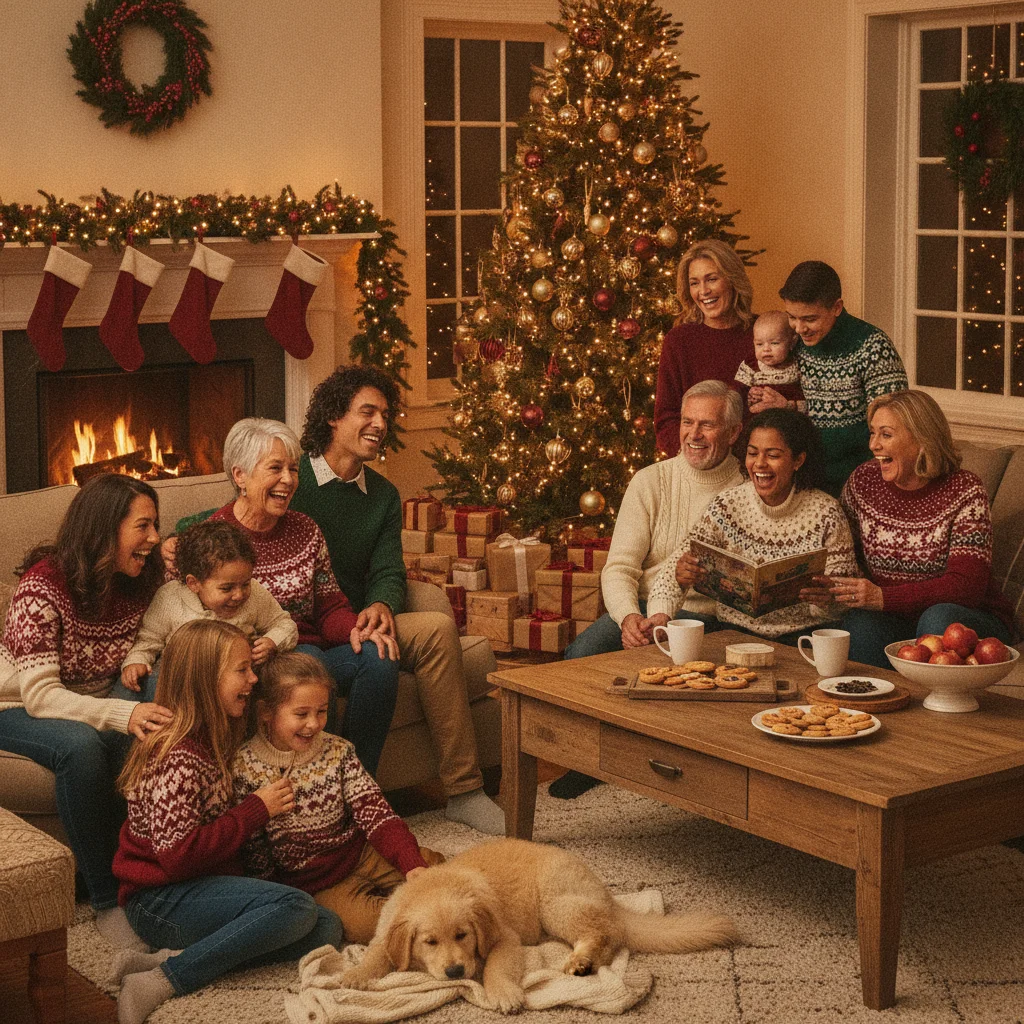
Quick answer: The best blended family Christmas photos give each person equal visual importance while respecting individual comfort levels. Try relaxed activities, mixed groupings, coordinated colors, meaningful locations, and candid interactions rather than rigid poses. Ask family members how they want to participate, especially children who divide time between households or feel uncertain about physical affection.
A blended family Christmas photo can celebrate connection without pretending every relationship looks or feels the same. The goal is not to create a perfectly matched family portrait. It is to make each parent, stepparent, child, stepsibling, half-sibling, grandparent, and other important person feel recognized.
Thoughtful planning matters because family members may have different histories, comfort levels, holiday schedules, or ideas about what the photograph represents. Inclusive concepts leave room for those differences while still producing a warm image for cards, albums, and gifts.
What are the best blended family Christmas photo ideas?
Activity-based photos often feel more natural than formal portraits. Decorating a tree, making cookies, wrapping presents, walking through holiday lights, or playing a board game gives everyone something to do. Shared activities reduce pressure on children who do not enjoy posing or showing physical affection on command.
- Tree decorating: Give each person an ornament to hang while the photographer captures individual and group moments.
- Cookie kitchen: Photograph small teams mixing dough, decorating cookies, and sharing the results.
- Holiday movie night: Arrange everyone with blankets, popcorn, pajamas, and comfortable seating.
- Outdoor walk: Use a wooded trail, decorated town square, backyard, or snowy park for relaxed movement.
- Gift exchange: Capture genuine reactions as family members open small or handmade presents.
- At-home morning: Photograph the family around the tree, on the stairs, or sharing breakfast.
How can everyone receive equal attention in the photo?
Avoid placing biological relatives together on one side and stepparents or stepchildren on the other. Instead, mix people according to height, color, or natural connection. Give each child a visible position rather than hiding younger or quieter family members behind adults.
Take several arrangements so no single pose has to define the family. Start with the full household, then photograph siblings, adults, children with each caregiver, and spontaneous combinations. These smaller images can form a card collage that gives multiple relationships space.
| Photo arrangement | Why it works |
|---|---|
| Full group in a loose semicircle | Keeps faces visible without assigning a family hierarchy |
| Children in front, adults behind | Centers the children while including every caregiver |
| Mixed pairs decorating a tree | Creates natural interaction without forced closeness |
| Individual portraits in matching frames | Gives each person equal visual space |
| Collage of two households | Includes family members who cannot attend together |
What should a blended family wear for Christmas photos?
Coordinate colors instead of requiring identical outfits. A palette such as forest green, cream, burgundy, and denim lets each person keep an individual style. This approach is especially useful when older children want control over what they wear.
Share a simple color guide before the session and ask each household to choose from it. Avoid assigning one color to one branch of the family because that can visually separate people. Small repeating details, such as plaid scarves or neutral sweaters, can connect the group without making everyone look uniform.
How can children feel comfortable during the session?
Explain the plan before photo day and invite children to suggest an activity, prop, or pose. Do not require a child to hug, sit on, or stand beside a particular adult. A smile, shared task, or nearby position can communicate belonging without crossing personal boundaries.
Keep the session short and build in breaks. Snacks, music, pets, and familiar objects can help younger children settle. Let teenagers approve a few images when possible, particularly if the photo will be mailed widely or posted online.
How can two households be included in one Christmas card?
Scheduling may make a single group session impossible. A coordinated collage can combine photographs taken in different homes or on different days. Use the same color palette, lighting style, or seasonal prop to make the images feel related.
Another option is a sequence showing children in each home, followed by individual portraits of all adults and siblings. This format acknowledges the family’s real structure rather than implying that everyone lives together. Obtain consent before including a co-parent, former partner, or child whose image is not yours to distribute.
Which props and settings feel inclusive?
Choose props that everyone can use rather than items labeled by family role. Blankets, mugs, ornaments, string lights, books, and simple signs work across many household structures. Personalized ornaments can be effective when every participant receives one.
Home is often the most comfortable setting because it reflects everyday family life. A neutral studio can work when multiple households want equal ground. Outdoor locations provide space for large groups and make side-by-side poses feel less formal.
What limitations should families consider?
No pose can resolve tension, grief, custody conflict, or uncertainty about new relationships. A photograph should not be used to prove closeness or pressure someone into presenting a bond they do not feel. Children may also attach different meanings to terms such as parent, stepparent, sibling, or family.
Holiday availability, mobility needs, sensory preferences, weather, and privacy can limit certain concepts. Adapt the plan with seated arrangements, quiet locations, remote contributions, or separate sessions. The most inclusive result is often the one that respects a person’s decision to participate differently.
Best approach: Plan a flexible activity, coordinate rather than match clothing, photograph several groupings, and let each person set boundaries. A believable image of shared time usually feels more meaningful than a formal portrait built around perfect symmetry.
Which outfit, backdrop, and crop mistakes can make a blended family photo feel unequal?
Avoid visual choices that separate relatives by household or make any child appear less central to the blended family.
- Do not assign one color to each original household; the resulting blocks can emphasize divisions rather than a shared family identity.
- Avoid placing one parent and their biological children against a distinct doorway, tree, or backdrop section while others occupy another area.
- Skip rigid height arrangements that leave younger or less confident children hidden behind unfamiliar siblings or stepparents.
- Leave generous space around both edges so a card crop does not remove a family member or cut one household into a separate cluster.
- Check that coordinated accessories, pajamas, or seasonal props are distributed across the entire group instead of belonging only to some relatives.
What Usually Fails With Blended Family Christmas Photo Ideas?
Blended family Christmas photo ideas usually fail when the setup creates a visible family hierarchy, forces closeness, or asks one image to represent relationships that family members understand differently. Common trouble spots include lining up children by household, placing one parent-child group at the center while others orbit it, insisting on hugs, and using captions such as “finally complete” that may erase earlier family bonds. Trying to recreate the same combinations for every branch can also turn the session into an exhausting fairness audit. Instead, agree privately on must-have groupings, let children decline touch, rotate central positions, and choose a neutral activity that gives everyone a role. There is no universal pose, grouping count, or caption that guarantees inclusion; preferences should be checked with the people pictured. Before selecting the card image, ask each family member whether the photo and wording feel accurate rather than merely symmetrical.
Frequently asked questions
How do you pose a blended family for Christmas photos?
Mix family members by height and natural interaction rather than separating biological and step-relatives. Capture a full group plus several smaller combinations.
Should a blended family wear matching Christmas pajamas?
Matching pajamas can be fun when everyone agrees, but coordinated colors allow more personal choice. No family member should be pressured to wear an outfit that feels uncomfortable.
How can stepchildren feel included in a family photo?
Give every child a visible position, equal time in smaller groupings, and a say in poses or activities. Avoid forcing physical affection or using labels the child does not prefer.
Can Christmas photos from separate households be combined?
Photos from separate households can be arranged as a collage using consistent colors, lighting, framing, or props. This is useful when schedules, distance, or family circumstances prevent one group session.
What colors work for a large blended family Christmas photo?
Forest green, cream, burgundy, navy, camel, and denim coordinate well without requiring identical clothing. Limit the palette to three or four main colors for a cohesive result.
Should pets be included in blended family Christmas pictures?
Pets can provide a shared focus and help informal poses feel natural. Include them only if the location, photographer, and family members can accommodate them safely.
How long should a blended family photo session last?
About 30 to 60 minutes is often enough for a full group, smaller combinations, and candid activity shots. Families with young children or sensory needs may benefit from a shorter session with planned breaks.
Where should stepparents stand in a blended family Christmas photo?
Stepparents should stand where relationships and comfort make sense, not automatically at the outer edges. Mixing adults and children across the group can create a connected composition. Ask before using close embraces, and take several arrangements so the family can choose an image that feels natural to everyone.
How should you crop a blended family Christmas photo?
Crop the photo so every person has comparable visual space and no household appears detached from the group. Keep faces away from card folds, text areas, and outer edges. Review both horizontal and vertical crops, especially when the family includes children of different heights or relatives positioned in multiple rows.
What should you avoid in blended family Christmas photos?
Avoid poses and captions that rank one household as the “real” or central family. Do not require hugs, pair children only with biological relatives, or spring surprise combinations on anyone. Discuss preferred names and boundaries beforehand, then take several balanced groupings so the final choice does not depend on a single emotionally loaded frame.