
Natural Candid Christmas Photography
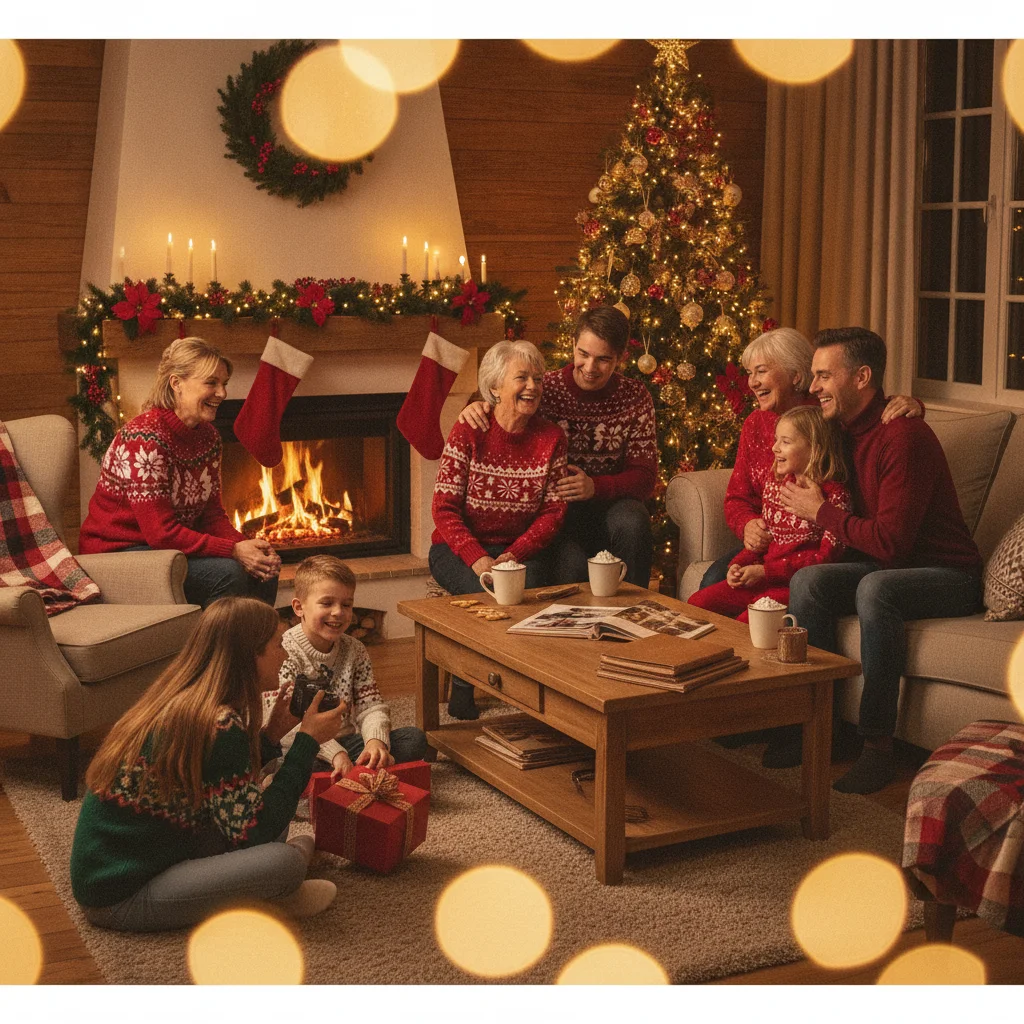
Quick answer: Candid Christmas photography captures genuine expressions, interactions, and traditions without asking people to hold formal poses. Use soft available light, a fast shutter speed, continuous autofocus, and quiet observation. Photograph activities such as decorating the tree, opening gifts, cooking, and playing so that family members have something natural to do.
Candid Christmas photography tells the story of a celebration through unplanned expressions and real interactions. Instead of arranging everyone in a perfect line, the photographer watches for laughter, concentration, affection, and small details that reveal how the day felt.
The best candid photographs often happen between expected events. A child may inspect an ornament, grandparents may exchange a glance, or someone may quietly prepare food while the rest of the family talks. Anticipating these moments is more useful than taking photographs at random.
What makes a Christmas photograph look candid?
A candid photograph feels unforced because the subject is engaged with another person, an object, or an activity. The subject does not need to be unaware of the camera. The important point is that the person is not holding a stiff expression solely for the photograph.
Natural body language supports the candid effect. Hands decorating cookies, faces turned toward a storyteller, and children moving around a tree usually look more authentic than subjects staring directly into the lens.
Composition still matters. Look for clean backgrounds, balanced groups, and visual layers before pressing the shutter. Moving a few steps can remove a bright television, an empty bottle, or another distraction from behind a subject.
Which camera settings work best indoors?
Indoor Christmas scenes are often darker than they appear to the human eye. A shutter speed of at least 1/125 second suits calm interactions, while 1/250 second or faster is safer for children opening presents or playing. Increasing the ISO is preferable to accepting motion blur.
Apertures between f/1.8 and f/2.8 gather light and create soft backgrounds, but very wide apertures can leave part of a group out of focus. Use approximately f/3.5 to f/5.6 when several faces must remain sharp.
| Situation | Starting shutter speed | Suggested approach |
|---|---|---|
| Quiet conversation | 1/125 second | Focus on the nearest eye |
| Opening presents | 1/250 second | Use burst mode sparingly |
| Children playing | 1/500 second | Use continuous autofocus |
| Tree-light portrait | 1/125 second | Raise ISO before lowering shutter speed |
Auto ISO with a minimum shutter speed can simplify rapidly changing conditions. Continuous autofocus and face or eye detection help when people move across the room. Smartphone users can tap the main face to set focus and lower the exposure slightly if tree lights appear too bright.
How can Christmas lighting look natural?
Window light is usually the most flattering daytime option. Position yourself so that window light falls from the side or front of the subject. Avoid placing a bright window directly behind a person unless the camera can preserve detail in both the face and background.
At night, combine warm room lamps with Christmas tree lights. Turn off harsh ceiling lights if the room remains bright enough to photograph safely. Mixed light sources can create inconsistent skin tones, so use one dominant type of illumination where practical.
Direct on-camera flash can flatten faces and overwhelm decorative lights. If flash is necessary, bounce it from a neutral ceiling or wall. A small amount of bounced flash can freeze movement while retaining the atmosphere of the room.
How do you capture real moments without interrupting them?
Choose a position before an activity begins. For gift opening, sit where faces are visible rather than where wrapping paper blocks the view. During cooking, photograph from the side of the work surface so that hands and expressions appear in the same frame.
Use a quiet shutter setting when appropriate, but check whether electronic shutter mode causes banding under artificial lights. Avoid constant burst shooting because repeated shutter sounds can make people self-conscious and produce too many nearly identical files.
Simple prompts can encourage interaction without creating a formal pose. Ask siblings to hang an ornament together, invite a grandparent to tell a holiday story, or let children choose which gift to carry to someone. Photograph the action and the reactions that follow.
Which Christmas moments should you photograph?
- Decorating the tree and handling meaningful ornaments
- Preparing recipes, setting the table, and serving food
- Greeting arriving relatives and exchanging hugs
- Reading stories, singing, playing games, or watching films
- Opening gifts and reacting to other people’s presents
- Quiet details such as handwritten tags, stockings, and half-eaten cookies
A complete set benefits from variety. Capture wide photographs that establish the room, medium photographs of interactions, and close details of hands, decorations, food, and expressions. This sequence gives the collection a clear sense of place and progression.
How should candid Christmas photos be edited?
Begin by correcting exposure and white balance. Warm color can support the seasonal mood, but excessive orange tones make skin look unnatural. Recover bright highlights around lamps and tree bulbs while keeping enough shadow detail to show the setting.
Select photographs based on emotion, clarity, and storytelling rather than technical perfection alone. A slightly imperfect frame with a meaningful expression may be more valuable than a flawless image in which nobody appears engaged.
Crop distractions only when the crop preserves enough context. Candid photography benefits from environmental clues, so avoid turning every frame into a tight headshot.
What are the limitations of candid Christmas photography?
Low light, fast movement, crowded rooms, and mixed illumination can reduce image quality. Some moments will be missed, and some subjects may still become aware of the camera. A candid approach does not remove the need for consent, especially when photographing guests, children, or private family situations.
Respect requests not to be photographed and ask before sharing images publicly. Candid should describe the visual style, not secret photography. A short explanation at the start of the gathering helps guests understand what is being photographed and how the images may be used.
Natural Christmas photographs come from preparation, observation, and restraint. Set the camera for movement, choose favorable light, and let meaningful activities produce the expressions instead of directing every frame.
A print-ready exposure setup for candid Christmas photography
Use soft window light or bounced flash, then set a shutter speed of at least 1/250 second, a wide aperture, and Auto ISO to produce sharp, printable candid Christmas photographs. For people moving around a tree, prioritize shutter speed over a low ISO; grain is generally easier to manage than motion blur. Open the lens to about f/1.8–f/2.8 for one person or f/2.8–f/4 for a small group, but keep eyes on the same focus plane. Bounce flash from a neutral ceiling or wall and lower its power until faces look natural while decorative lights remain visible. Capture RAW files to retain highlight and shadow detail. Before layout, crop to the card’s aspect ratio and ensure a 5×7 image has 1500 × 2100 pixels at 300 DPI (Vistaprint, 2026).
Why do candid Christmas photos fail at noon and after dark?
The most common failure is lost facial detail: direct noon light creates deep eye and nose shadows, while low light after dark allows movement to blur expressions. Both conditions can make a spontaneous moment look acceptable on a bright phone screen but unclear once placed in a card layout. Before sending the card, inspect every face at the approximate size it will appear in print rather than relying only on a zoomed view. Look closely at the eyes, mouth, and edges of the face. At noon, reject frames with blocked shadows or pale, featureless highlights. After dark, check for doubled eyelashes, smeared hands, or soft outlines caused by subject movement. Choose the frame with the clearest expression, even if another image captures a livelier gesture.
Frequently asked questions
What is candid Christmas photography?
Candid Christmas photography records genuine interactions, expressions, and seasonal activities with minimal posing. Subjects may know that a camera is present while continuing to act naturally.
What lens is best for candid Christmas photos?
A 35mm or 50mm lens is useful in most homes because each lens performs well in low light without requiring excessive distance. A 24-70mm zoom offers more framing flexibility in crowded rooms.
Should I use flash for indoor Christmas photography?
Bounced flash can help freeze motion without overpowering the room’s atmosphere. Direct flash is usually less flattering and can make decorative lights appear weak.
How do I photograph children opening Christmas presents?
Choose a low position with a clear view of each child’s face and use continuous autofocus at about 1/250 second or faster. Capture the child’s reaction as well as the gift.
Can a smartphone take good candid Christmas photos?
Modern smartphones can produce strong results when the photographer uses available light, keeps the lens clean, and avoids digital zoom. Night mode is best for still subjects rather than fast movement.
How can I make family members look less posed?
Give family members an activity or interaction prompt instead of asking them to smile at the camera. Photograph the expressions that appear while they talk, decorate, cook, or exchange gifts.
Is permission required for candid family photos?
Permission should be respected whenever people are photographed, particularly before images are posted or distributed. Parents or guardians should decide how photographs of children may be shared.
Why are my candid Christmas photos blurry indoors?
Indoor candid Christmas photos are usually blurry because the shutter speed is too slow for moving people. Start near 1/250 second, use continuous autofocus, and let ISO rise as needed. If the room remains too dark, add bounced flash rather than lowering shutter speed; sharp expressions will generally print better than cleaner files with motion blur.
Should candid Christmas photos be brighter for printing?
Yes, a modest brightness lift may help when the original relies on dim holiday lighting, but keep bright faces and bulbs from clipping. Check skin tones rather than making the whole frame uniformly bright, raise shadows selectively, and order a small test print when the image contains deep blacks or strong mixed lighting.
How do I avoid harsh shadows in candid Christmas photos taken at noon?
Move the activity into open shade or position people beside a large window with indirect light. If the moment cannot be relocated, photograph with the sun behind or to the side of the subjects rather than directly above their faces. Check that eyes remain visible and highlights on skin retain detail.