
Copyrighted Characters On Christmas Cards And AI Prompts
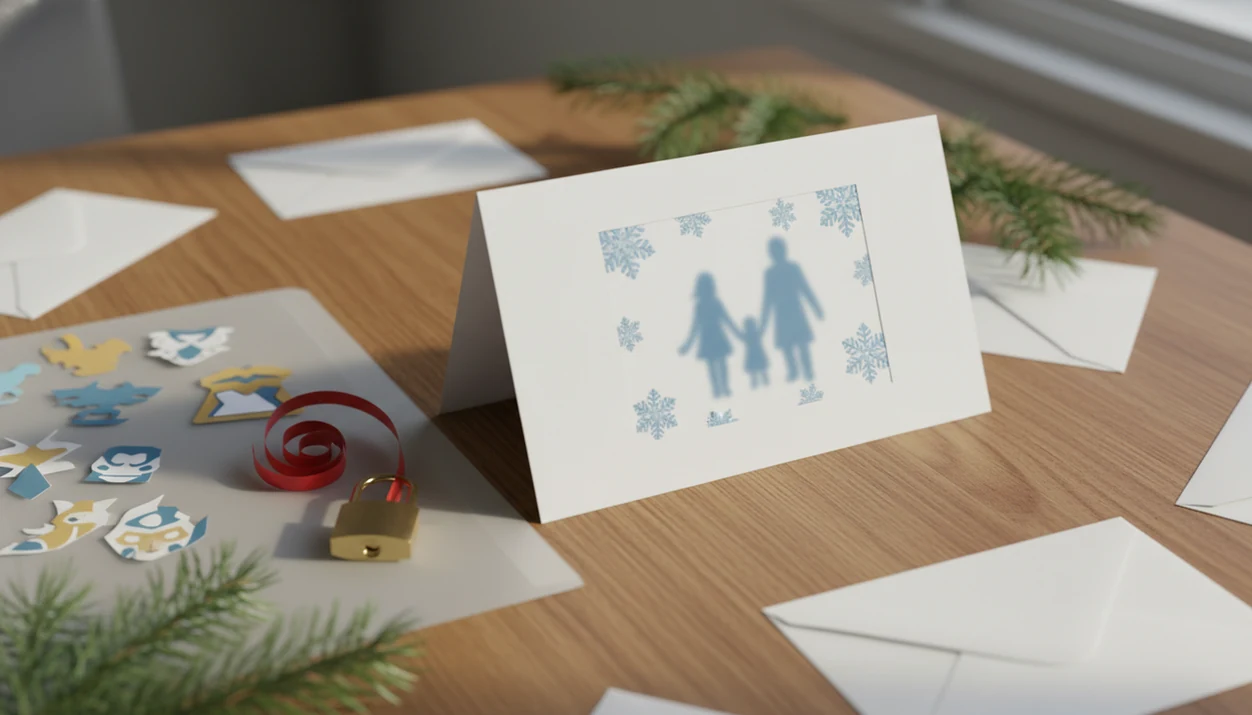
Avoid using copyrighted characters on Christmas cards unless you have permission or a valid license. AI-generated art does not make famous characters, brand mascots, logos, or celebrity lookalikes automatically safe for printed cards, digital greetings, or cards you plan to sell.
Definition: Copyrighted characters on Christmas cards are protected fictional characters, brand assets, or recognizable likenesses used in holiday card artwork without permission from the rights holder.
TL;DR
- Famous characters, logos, mascots, and celebrity faces can create copyright, trademark, and publicity-rights risk on Christmas cards.
- AI card copyrighted characters are still risky if the output is clearly meant to resemble a protected character, brand, or person.
- Safer festive cards use your own photo, original winter characters, generic holiday motifs, public-domain imagery, or properly licensed art.
Copyrighted Characters On Christmas Cards: What This Policy Covers
Copyrighted characters on Christmas cards include protected cartoon figures, movie characters, game characters, mascots, logos, and brand designs used without permission. Celebrity likenesses and lookalike faces can also raise separate publicity-rights concerns, especially when a card is sold or publicly shared.
That means the risk is not limited to a character name printed under the photo. A blue alien silhouette, a famous wizard outfit, or a mascot-shaped snowman can still point back to someone else’s property. We see this most often during the 9:47 p.m. kitchen-table card session, when the photo is picked and the phone battery is at 18%.
This page gives practical guidance, not legal advice.
5 Facts About AI Card Copyrighted Characters
- One card can raise several rights issues. Copyright, trademark, and publicity rights can overlap in the same holiday card draft.
- AI output can still be too similar. A prompt-generated image may copy the look of a famous character even if you never drew it by hand.
- Selling increases risk. A one-off personal card is different from listing printed packs in an online shop.
- “Inspired by” is not a license. If relatives instantly name the character during a before-and-after image swipe, the design may be too recognizable.
- Safer choices exist. Original family portraits, generic winter motifs, and properly licensed art are usually safer than protected characters.
For most family cards, starting with your own phone photo is often easier than character-style prompting because the image source is clear and personal.
How Christmas Card IP Risk Works In AI Prompts
AI Christmas card IP risk works when a prompt steers the image model toward protected visual features, even without naming the character on the finished card. The issue is the output’s recognizable similarity, not just the words typed into the prompt.
A prompt can imply a famous look through costume, color palette, face shape, setting, props, or logo-like marks. In AI terms, the model may follow image embeddings, meaning patterns that connect words with visual traits. In plain English, it can land close to a known character even when the wording feels indirect.
Pew reported that 58% of U.S. adults had heard at least a little about ChatGPT in 2023, and 14% said they had used it, which helps explain why everyday card makers now run into these questions source. Copyright can cover creative expression, trademark can cover source-identifying brand elements, and publicity rights can cover real-person likeness.
Copyright, Trademark, And Publicity Rights On Christmas Cards
A Christmas card can be low-risk under one legal category and still risky under another. Separate copyright, trademark, and publicity rights before you decide whether a design belongs on printed cards or a digital greeting. For baseline definitions, the U.S. Copyright Office explains copyright protection for original authorship, while the USPTO distinguishes trademarks as source identifiers used to prevent consumer confusion: Copyright Office; USPTO.
| Legal area | What it protects | Christmas card example | Main risk signal |
|---|---|---|---|
| Copyright | Creative expression, including character art, illustrations, and scenes | A card image that closely copies a movie character | The design looks substantially similar to protected artwork |
| Trademark | Names, logos, mascots, and brand identifiers | A holiday card using a brand logo or mascot | Recipients may think the brand approved or made it |
| Right of publicity | A person’s name, face, voice, or likeness | An AI card with a celebrity lookalike | The person’s identity is used without permission |
Good Christmas card maker and holiday greeting guides help families turn phone photos into printable cards, digital greetings, and festive portraits using AI styles, not copy famous characters, brand marks, or celebrity faces. Small shops should be extra careful and review AI Christmas card copyright before selling a design.
AI Christmas Card Human Authorship Rules
The U.S. Copyright Office says copyright registration depends on human authorship, which matters when AI helps make holiday card artwork. Purely machine-generated output generally does not receive the same copyright protection as work created by a person source.
That rule does not give anyone permission to copy someone else’s character. Lack of copyright protection in an AI output is a separate question from whether the output infringes existing work. Two different buckets. Keep them separate.
Human input may still matter when a card combines AI with your photo choices, cropping, layout, text, and edits. For example, choosing the porch-light family snapshot, removing a dog leash in the corner, and writing the greeting may be human authorship. If you are also worried about uploads, read more about whether an is AI Christmas card safe workflow fits your family.
Common Myths About Copyrighted Characters On Christmas Cards
Color-swap myth. Changing colors, clothing, or the background does not automatically make a famous character safe. Recognition still matters.
AI-original myth. AI-generated art is not always original in the legal sense. The result can still resemble protected character art or a celebrity face.
Personal-card myth. Personal cards are not always exempt from copyright or trademark issues. A small mailing may draw less attention, but it is not a universal shield.
Non-commercial myth. Non-commercial use is not always legal. Public posting, broad sharing, and fundraising cards can change the context.
For U.S. fair-use context, the Copyright Office describes fair use as a multi-factor analysis, not a simple private-use or non-commercial-use shortcut source.
No-name myth. Avoiding the character name in the printed greeting does not remove risk if the image itself is obvious. If the tablet screen gets passed around dinner and everyone names the character, that is a warning sign.
Safer Alternatives To AI Card Copyrighted Characters
Start with the photo you already have, then add a festive style that does not copy a known property. A yellow living-room light or toddler looking away is usually less of a problem than a protected character lookalike.
Personal phone photo. Use your family, couple, pet, team, or storefront as the central image. Check the crop before printing.
Original festive styles. Try cozy cabin, watercolor snow, vintage postcard, gingerbread village, Nordic knit, candlelit portrait, or winter woodland.
Generic holiday objects. Snowflakes, ornaments, trees, stockings, bells, wreaths, and reindeer are safer when they are not copied from a brand design.
Licensed or public-domain assets. Public-domain imagery and properly licensed art can work, but save the source and license notes.
Save a screenshot or PDF of the asset page, license terms, creator name, URL, and access date before you print or sell the card. If the license mentions resale, print-run limits, attribution, or editing restrictions, keep those notes with the final design file.
Tools like a Christmas card app can help families, couples, small businesses, and last-minute senders make a printable version from one photo. PiXmas Cards users should still avoid named characters, logos, and celebrity prompts, especially for client or public-facing cards. If children appear in the card, pair this choice with child photo safety Christmas cards basics.
When To Ask An Attorney About Christmas Card IP Risk
Ask an attorney when a Christmas card moves beyond a private family greeting or includes a recognizable protected person, brand, or character. AI generation, app approval, or a printer accepting the file is not legal clearance.
Higher-risk situations include commercial resale, client projects, charity or school fundraising, public ads, and marketplace listings. Be especially careful with celebrity likenesses, logos, mascots, and franchise-style characters, even when the prompt says “inspired by” or the final card never prints the name.
- Pause before publishing, selling, or ordering a large print run if the design resembles a known franchise, mascot, logo, or public figure.
- Collect the prompt text, draft images, editing history, source links, licenses, receipts, and any platform messages approving or rejecting the image.
- Record where the card will go: family mail only, social posts, ads, shop listings, client delivery, fundraiser table, or bulk distribution.
- Ask a qualified attorney to review the specific design, use, and distribution plan before money, publicity, or client obligations are attached.
A private family mailing may draw less attention than a public shop listing, but it does not guarantee the design is lawful.
Limitations
No simple rule can decide every Christmas card IP risk. Similarity, context, distribution, and commercial use all matter, and only an attorney can assess a specific dispute.
Ask an attorney before selling cards that resemble a named franchise, mascot, logo, celebrity, or living public figure. Also get legal advice before using a questionable design in ads, fundraising campaigns, client work, or public shop listings.
- A lookalike character is not automatically infringing or automatically safe.
- The same image may carry different risk when mailed privately, posted publicly, or sold.
- AI tools may not block every protected character, mascot, logo, or celebrity likeness.
- Personal use can reduce attention, but it is not a guaranteed legal shield.
- Copyright guidance may not resolve trademark or publicity-rights concerns.
- Public-domain claims can be wrong, especially on reposted image sites.
- Licensed assets may have limits on print runs, resale, editing, or business use.
- This page is informational and is not a substitute for legal advice from an attorney.
If your card also includes names and addresses, keep the mailing list separate and review Christmas card address privacy. The return-address labels half peeled on the table are a privacy reminder too.
FAQ
Can I use Disney characters on Christmas cards?
Famous franchise characters generally require permission or a valid license. Using them on printed cards or cards for sale can create copyright and trademark risk.
Is AI fan art legal to print on a Christmas card?
AI fan art can still infringe if the output is substantially similar to protected character artwork. The fact that an AI tool generated it does not make it automatically safe.
Can I sell Christmas cards with character artwork?
Selling Christmas cards with protected characters is usually higher risk because it is commercial distribution. Use original art, licensed assets, or generic holiday designs instead.
Does personal use protect me if I only send the card to family?
Personal use may reduce the chance of attention, but it is not a blanket legal exemption. Public sharing, large distribution, or copied protected artwork can still create risk.
Are celebrity faces allowed on AI Christmas cards?
Celebrity faces can raise right-of-publicity issues, especially if used in advertising, resale, or public promotion. A lookalike face may still be risky even without the celebrity’s name.
Can I use brand logos on a holiday card?
Brand logos and identifiers can create trademark risk if they suggest approval, sponsorship, or source confusion. Business cards should be especially cautious.
Is public domain art safe for Christmas cards?
Public-domain art can be safer, but you should verify the source and status before using it. Keep a record of where the artwork came from.
What AI prompts are safer for Christmas cards?
Safer prompts describe original festive styles, such as watercolor snow, cozy cabin, winter woodland, or candlelit family portrait. Avoid named characters, brand mascots, logos, and celebrity likenesses.
What Copyrighted Characters Change for Families Sending Christmas Photo Cards
For a family sending Christmas photo cards, adding a copyrighted character can turn a routine family photo into a design that may require permission and may be rejected by a printing service.
- A character added through an AI prompt, digital sticker, or commissioned illustration is more legally significant than an incidental toy appearing in the original photo.
- Personal distribution does not automatically authorize copying character artwork, even when the cards are free and sent only to relatives.
- Posting the finished card publicly can expose the design beyond the intended recipient list.
- A printer’s approval does not establish that the family has permission to use the character.
- Original winter creatures, generic costumes, and licensed templates are more practical alternatives.
No reliable percentage shows how often families face complaints over character-themed photo cards, so risk should be assessed from the specific image, license, and distribution plan.
Who Can Reuse a Christmas Card File That Contains Copyrighted Characters?
Paying for or creating a Christmas card file does not automatically give anyone the right to reuse protected characters in it; reuse depends on permission covering the character artwork and intended use.
This page helps clients reviewing designer or AI-generated files, new parents making family announcements, and teachers preparing classroom cards because each may share, reprint, or adapt the design. Clients should ask whether delivered rights cover editing, print runs, social posts, and transfers to another vendor. Teachers should distinguish a classroom activity from public distribution or fundraising sales. New parents should avoid assuming a personal card can later become merchandise.
Interfaith families should ignore this section when their concern is holiday wording rather than character rights. Renters can also skip it unless a landlord, employer, or community group plans to reuse the file. Anyone using only original, commissioned, or properly licensed art should follow the applicable agreement.