
How to Properly Address Christmas Card Envelopes for International Delivery
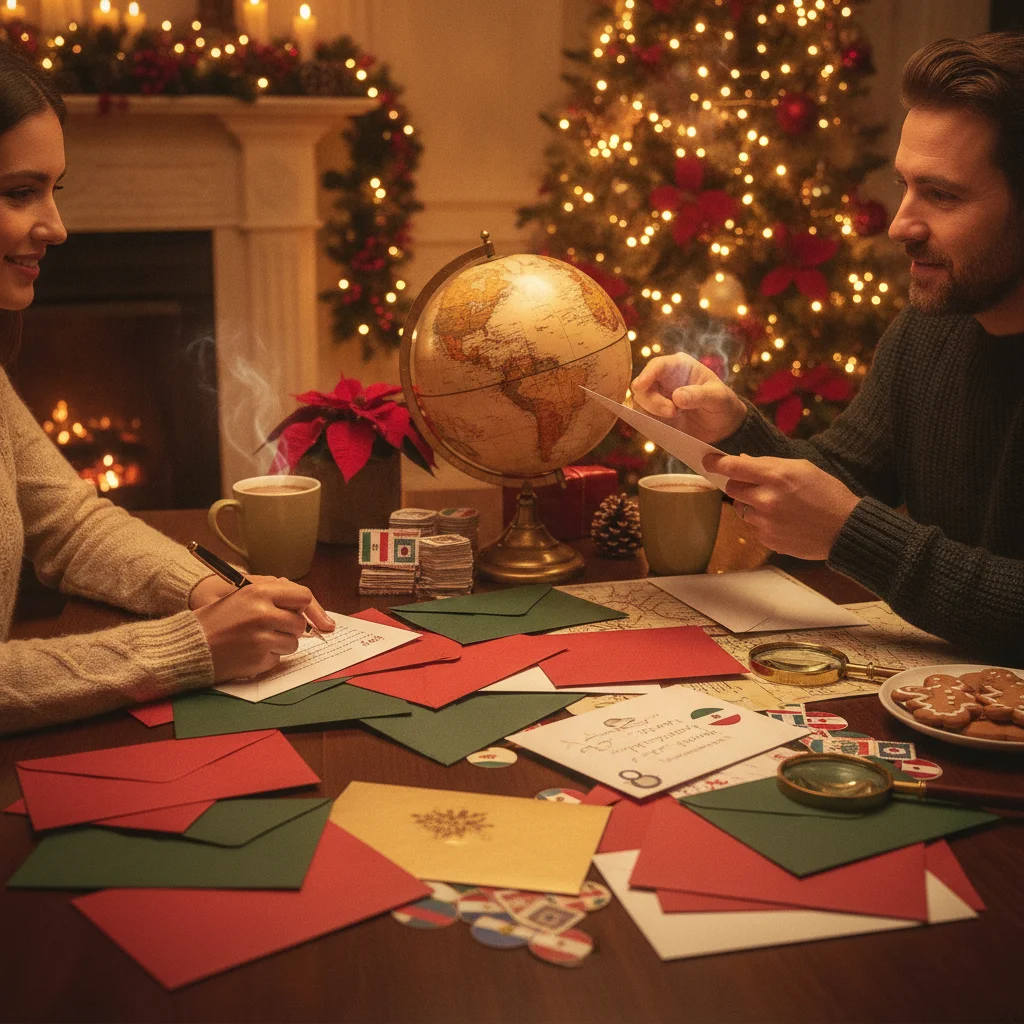
Quick answer: Write the recipient’s name and address using the destination country’s preferred format, then place the destination country in uppercase English on the final line. Keep the address centered, add your return address in the upper-left corner, and use the correct international postage. Confirm postal codes, apartment numbers, and country-specific formatting before mailing.
International Christmas cards need more than a country name and extra postage. The recipient’s address should follow the destination country’s normal postal format, while the final line should clearly identify the country for your own postal service. Clear handwriting, complete postal codes, and correct placement reduce the chance of seasonal delays.
Quick format: Put the recipient’s local address in the center of the envelope. Write the destination country by itself in uppercase English on the last line. Place your full return address in the upper-left corner and attach international postage in the upper-right corner.
What is the correct order for an international address?
Begin with the recipient’s full name. Add the company or organization on the next line when relevant. The remaining lines should follow the addressing order used by the destination country.
A common international layout is:
- Recipient’s full name
- Company or organization, if applicable
- Street address and building number
- Apartment, suite, unit, or floor
- City, province, state, or region, plus the postal code
- DESTINATION COUNTRY
The country must appear alone on the final line. If the card is mailed from the United States, USPS recommends writing the country name in full using uppercase English letters. Do not use abbreviations such as UK, UAE, or DE.
How should the address appear on the envelope?
Place the delivery address on the front of the envelope, roughly in the center. Keep every line left-aligned rather than centering each individual line. Leave enough open space around the address for postal barcodes and processing marks.
Write with dark ink against a light background. Printed address labels are acceptable if the text is large and legible. Avoid red ink, decorative metallic pens, ornate calligraphy, or labels that can detach in cold and damp conditions.
Do not place artwork, stickers, or holiday messages directly below the delivery address. Automated postal equipment may interpret nearby text as part of the address.
How do address formats differ by country?
House numbers, postal codes, and regional names do not appear in the same order everywhere. Copy the format the recipient uses for domestic mail whenever possible.
| Destination | Example format | Important detail |
|---|---|---|
| Canada | Jordan Lee 25 King St W Apt 4 Toronto ON M5V 1A1 CANADA | Use the two-letter province abbreviation and include the space in the postal code. |
| United Kingdom | Alex Morgan 10 High Street Oxford OX1 1AA UNITED KINGDOM | Keep the full postcode, including its internal space. |
| Germany | Maria Fischer Hauptstrasse 18 10115 Berlin GERMANY | The street commonly comes before the building number, with the postal code before the city. |
| Japan | Ken Tanaka 1-2-3 Shibuya, Shibuya-ku Tokyo 150-0002 JAPAN | A Roman-letter version can be written in an international format when supplied by the recipient. |
These examples illustrate common layouts, but the recipient’s confirmed address should take priority. Preserve spaces and hyphens within postal codes because they can affect automated sorting.
Where should the return address go?
Write the sender’s address in the upper-left corner of the front of the envelope. Some postal systems also accept a return address on the back flap, but front placement is easier for many international sorting systems to recognize.
Include your name, street address, city, state or province, postal code, and home country. If mailing from the United States, place USA on the last line. A complete return address allows an undeliverable card to be returned.
Do international Christmas cards need special postage or customs forms?
An international card requires postage based on its origin, destination, size, shape, thickness, and weight. A basic letter-rate stamp may not cover square cards, rigid cards, oversized envelopes, or cards with bulky decorations.
A greeting card containing only written correspondence generally does not need a customs declaration. An envelope containing merchandise, jewelry, candy, or another gift may require customs documentation and could be treated as a package. Postal restrictions also apply to cash, gift cards, batteries, plants, food, and other regulated contents.
An air-mail marking such as “AIR MAIL” or “PAR AVION” may be accepted, but it is not a substitute for the correct postage or service label.
What mistakes commonly delay international Christmas cards?
- Putting the country on the same line as the city or postal code
- Abbreviating or misspelling the destination country
- Omitting an apartment, unit, province, or postal code
- Reformatting the address according to the sender’s domestic conventions
- Using pale ink, reflective labels, or difficult handwriting
- Adding thick embellishments that make the envelope nonmachinable
- Assuming domestic postage covers international delivery
Ask the recipient to send the address exactly as it should appear. Copying a verified address is safer than reconstructing it from separate details.
What limitations should senders consider?
Postal standards, prices, and prohibited-item rules vary by origin and destination and can change. Confirm current requirements with the postal operator that will accept the envelope.
Addresses written in Arabic, Cyrillic, Chinese, Japanese, or another script may need a Roman-letter version for the origin postal service. The destination country must still be recognizable on the final line. For territories, disputed regions, military addresses, or countries with unusual postal systems, request exact guidance from the relevant postal operator before mailing.
Which postage details affect international Christmas card envelope addressing?
The postage detail that changes how you prepare an international Christmas card envelope is whether its weight, dimensions, thickness, or rigidity place it outside the chosen service’s standard international letter category. Confirm the category before attaching postage, especially if the card has layered decorations, an enclosure, or a square envelope. Keep stamps and postal labels in the upper-right area without covering the recipient’s address or the destination-country line. If postage requires several stamps, arrange them compactly rather than extending them into the address block. There is no universal postage amount or stamp count for international Christmas cards because rates and eligible services depend on the origin, destination, envelope characteristics, and postal operator. Have the sealed envelope measured and weighed if its classification is uncertain.
Frequently asked questions
Should the destination country be written in capital letters?
The destination country should be written in uppercase English on a separate final line for clear international sorting.
Can I abbreviate the country name on an international envelope?
The full country name is preferable because abbreviations can be ambiguous or unrecognized by postal equipment.
Do I need to write the recipient’s phone number on a Christmas card envelope?
A phone number is usually unnecessary for an ordinary letter, although some tracked or courier services may request one.
Can I put my return address on the back flap?
Some postal operators accept a return address on the back flap, but the upper-left corner of the front is generally clearer for international processing.
Does an international Christmas card need a customs form?
A card containing only correspondence usually does not need one. Gifts or merchandise inside the envelope may trigger customs requirements.
When should I mail an international Christmas card?
Mail early because customs processing, seasonal volume, weather, and destination distance can extend delivery times.
Can I use regular stamps on an international Christmas card?
Regular stamps may be used if your postal operator permits them and their combined value covers the required international rate. The number of stamps is less important than the total postage value and the envelope’s eligibility for the selected service. Keep all stamps clear of the address and destination-country line.
Does a square Christmas card cost more to send internationally?
A square Christmas card may cost more or qualify for a different service because some postal systems treat unusual shapes as nonstandard or nonmachinable mail. Measure and weigh the sealed envelope, then check the rules for both the origin postal operator and the chosen international service before applying postage.