
Eco-Friendly Christmas Card Paper and Envelopes: Sustainable Printing Guide
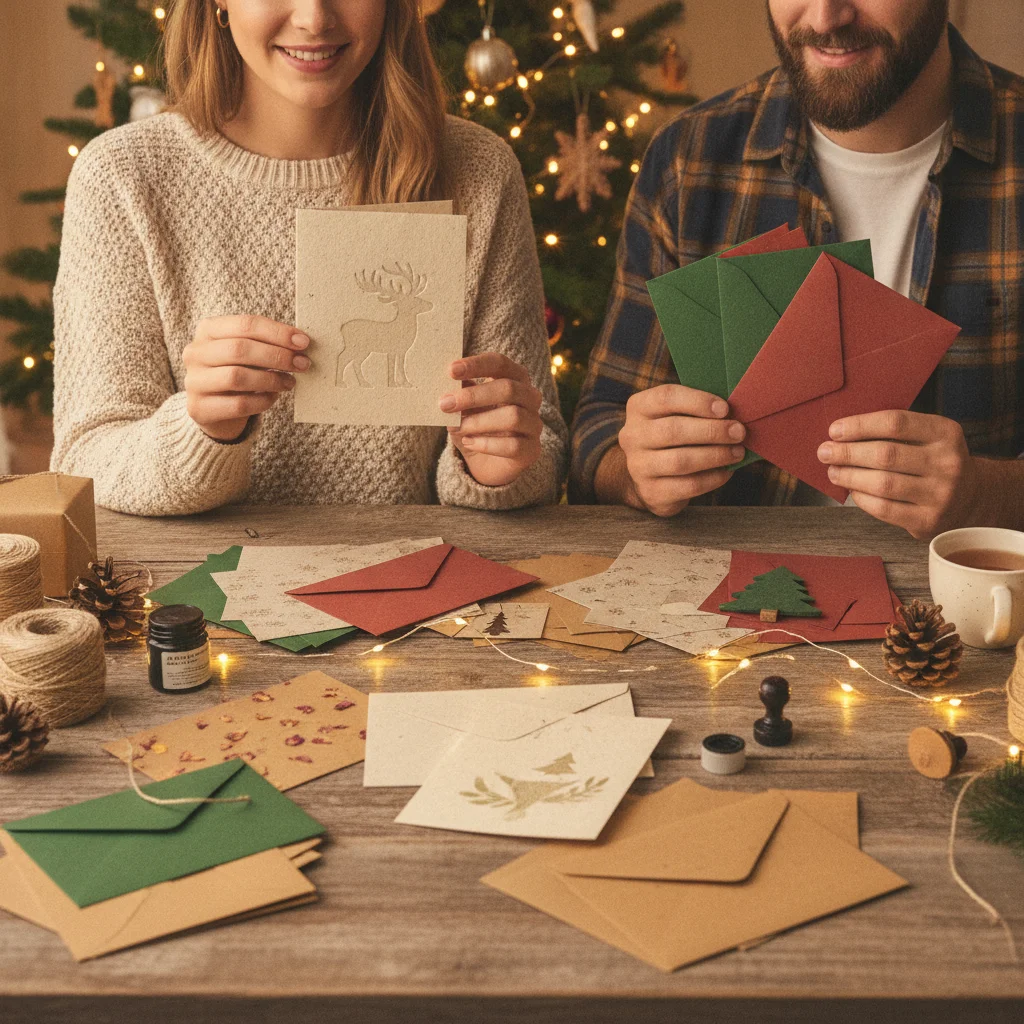
Quick answer: Choose Christmas card stock with high post-consumer recycled content or credible FSC or PEFC certification, then pair it with an uncoated, recyclable paper envelope. Avoid plastic laminates, glitter, foil, and mixed-material decorations. Print only the quantity needed, use a standard card size, and confirm local recycling rules before making environmental claims.
An eco-friendly Christmas card uses materials and production choices intended to reduce waste, demand for virgin fiber, and problems during recycling. No printed card has zero environmental impact, so the practical goal is to choose verified paper, avoid difficult finishes, reduce surplus copies, and make disposal instructions clear.
Which paper is best for eco-friendly Christmas cards?
Post-consumer recycled paper is usually a strong starting point. Post-consumer content comes from paper that has already been used and recovered, while pre-consumer content may consist of manufacturing scraps. Look for a clearly stated recycled percentage instead of an unsupported label such as “green paper.”
FSC or PEFC certification can help identify virgin or mixed fiber sourced through audited forestry and supply-chain systems. Certification does not mean that a product is impact-free, but it provides more useful evidence than general claims about responsible sourcing.
| Paper option | Main advantage | What to check |
|---|---|---|
| 100% post-consumer recycled | Uses recovered fiber and supports paper recycling markets | Print quality, thickness, and verified recycled percentage |
| FSC Recycled or FSC Mix | Offers third-party chain-of-custody information | Exact certification label and printer authorization |
| PEFC-certified stock | Provides audited forest and supply-chain sourcing | Valid certification details |
| Agricultural-residue paper | May replace some wood fiber with crop waste | Fiber composition, coatings, and local recyclability |
| Cotton or specialty tree-free paper | Creates a texture | Source material, energy use, and disposal guidance |
Uncoated stock is often easier to recycle than plastic-laminated paper. A card weight of about 250 to 350 gsm commonly provides enough stiffness, although available weights vary by printer. A lighter stock may use less material if it still meets postal and durability needs.
How should an eco-friendly envelope be selected?
Choose an envelope made from recycled or certified paper and avoid plastic windows when possible. A standard-size envelope reduces the need for custom cutting and may also simplify postage. Matching the card and envelope to common postal dimensions can prevent excess material and unexpected mailing charges.
- Prefer uncoated, easily separable paper.
- Look for a stated post-consumer recycled percentage.
- Use paper-based address labels sparingly.
- Avoid plastic liners, bubble padding, and decorative film.
- Check whether the adhesive affects composting or recycling claims.
Water-activated and standard envelope adhesives are generally accepted by many paper recycling systems, but facilities differ. Do not describe an envelope as compostable unless the complete product, including ink and adhesive, has suitable certification.
Which inks and finishes have a lower recycling impact?
A simple printed design is usually preferable to a card assembled from several materials. Ask the printer about low-VOC, vegetable-based, or water-based ink options, but remember that the paper, print process, and total quantity can matter as much as the ink label.
- Avoid loose glitter because it can shed plastic particles.
- Avoid plastic lamination and soft-touch plastic films.
- Use foil only when the recycling implications are understood.
- Choose embossing, debossing, or die-cut details instead of added plastic decorations.
Small amounts of conventional ink do not automatically make paper unrecyclable. Heavy coatings, plastic layers, electronics, batteries, ribbons, and glued-on ornaments create more significant separation problems.
How can printing and mailing waste be reduced?
Confirm the recipient list before ordering and add only a modest allowance for damaged or last-minute cards. Digital proofs prevent avoidable reprints, while printer samples help verify color and paper texture before the full production run.
- Choose a standard finished size that fits a readily available envelope.
- Ask for recycled and certified stock samples.
- Request information about coatings, inks, adhesives, and packaging.
- Approve spelling, addresses, trim lines, and color before printing.
- Order the realistic quantity rather than relying on a large volume discount.
- Store unused blank cards for another season if the design is not dated.
Local production can shorten transport in some cases, but distance alone does not establish the lowest-impact option. Compare production methods, shipping, packaging, certification, and waste together.
What are the limitations of eco-friendly card claims?
Terms such as eco-friendly, natural, biodegradable, and sustainable do not describe one universal standard. Recycled paper still requires collection, processing, energy, ink, and transportation. Tree-free paper can also have substantial processing or shipping impacts depending on its source.
Recycling availability differs by location. Cards with glitter, foil, lamination, fabric, electronics, or heavy adhesive may be rejected even when the base stock is recyclable. Check local guidance and avoid printing a recycling symbol unless the complete card is likely to be accepted in the intended market.
Practical choice: Select high post-consumer recycled or credibly certified uncoated stock, pair it with a plain recycled-paper envelope, skip mixed-material finishes, and print only what the mailing list requires.
How do postage rules affect eco-friendly Christmas card paper and envelope choices?
The packed card’s total weight, dimensions, shape, thickness, and flexibility determine whether an eco-friendly paper and envelope combination changes postage. A heavier recycled stock or double-layer card may move the finished piece into a different weight category, while rigid inserts, thick seams, or bulky decorations can affect machinability. Square envelopes may also be handled differently from standard rectangular envelopes. Before ordering, assemble one complete card with its envelope, seal it as intended, and have the finished sample checked for postal classification. Choose a light-colored envelope or a clearly contrasting address area so sorting equipment can read it without adding a separate label. Exact postage cannot be determined from the paper’s recycled content, certification, or listed sheet weight alone because the complete mailed piece must be assessed.
When can eco-friendly Christmas card stock create a mailing risk?
Eco-friendly paper recommendations do not apply unchanged when a Christmas card must enter the mail close to its delivery deadline. Thick recycled stock, layered inserts, rigid decorations, deckled edges, or a square envelope can change the finished piece’s weight, thickness, flexibility, or machinability, even when each material is responsibly sourced. A 5 × 7-inch card is a standard format (VistaPrint, 2026), but the complete stuffed and sealed envelope still needs checking. For last-minute mail, prioritize a conventional rectangular format, minimal inserts, and an envelope that closes flat; then weigh and measure one finished sample before printing the full batch. If the chosen sustainable stock creates a postal surcharge or requires manual handling, use it for hand-delivered cards or save it for a mailing planned with more time.
Frequently asked questions
Is recycled paper good enough for premium Christmas cards?
High-quality recycled card stock is available in substantial weights and refined finishes. A physical sample is the best way to assess color, texture, stiffness, and print detail.
Are FSC-certified Christmas cards recyclable?
FSC certification addresses sourcing and chain of custody rather than guaranteeing recyclability. Coatings, glitter, foil, plastic film, and attached decorations can still affect acceptance.
Is kraft paper an eco-friendly envelope choice?
Kraft paper can be a practical option when it contains recycled or certified fiber and has no plastic lining. Its brown appearance alone does not prove lower environmental impact.
Can Christmas cards with foil be recycled?
Acceptance depends on the amount and type of foil and the rules of the local recycling facility. Plain printed paper without foil is the safer choice when recyclability is the priority.
Are vegetable-based inks better for Christmas cards?
Vegetable-based inks may reduce reliance on petroleum-derived ingredients, but they are not impact-free. Paper choice, coatings, print quantity, and production efficiency should also be considered.
Should eco-friendly Christmas cards be composted?
Cards should not be promoted for composting unless the complete product, including inks, coatings, and adhesives, is certified or accepted by the relevant composting service. Clean recyclable paper is often better placed in paper recycling.
What is the simplest sustainable Christmas card specification?
Use uncoated stock with high post-consumer recycled content, a plain recycled-paper envelope, minimal ink coverage, and no glitter, lamination, plastic window, or attached decoration.
Does recycled Christmas card paper cost more to mail?
Recycled paper does not automatically cost more to mail. Postage depends on the completed card and envelope, including their combined weight, dimensions, thickness, shape, and flexibility. Weigh and assess a sealed sample rather than comparing paper specifications alone, especially when using substantial card stock or multiple panels.
Can I mail an eco-friendly Christmas card in a square envelope?
Yes, but a square envelope may receive different postal treatment than a standard rectangular envelope. That can reduce the environmental benefit if it requires extra handling or postage. For a lower-waste mailing format, consider a recyclable rectangular envelope sized closely to the card and verify the sealed sample before printing the full quantity.
Does recycled cardstock require extra postage?
Not by itself; postage depends on the completed mailpiece rather than its recycled content. A thicker recycled card, multiple inserts, or a heavy envelope may push the piece into another weight or handling category. Weigh a fully assembled sample, including seals and decorations, and confirm its thickness and flexibility before buying postage.