
How to Create a Rustic Cabin Christmas Portrait Setting
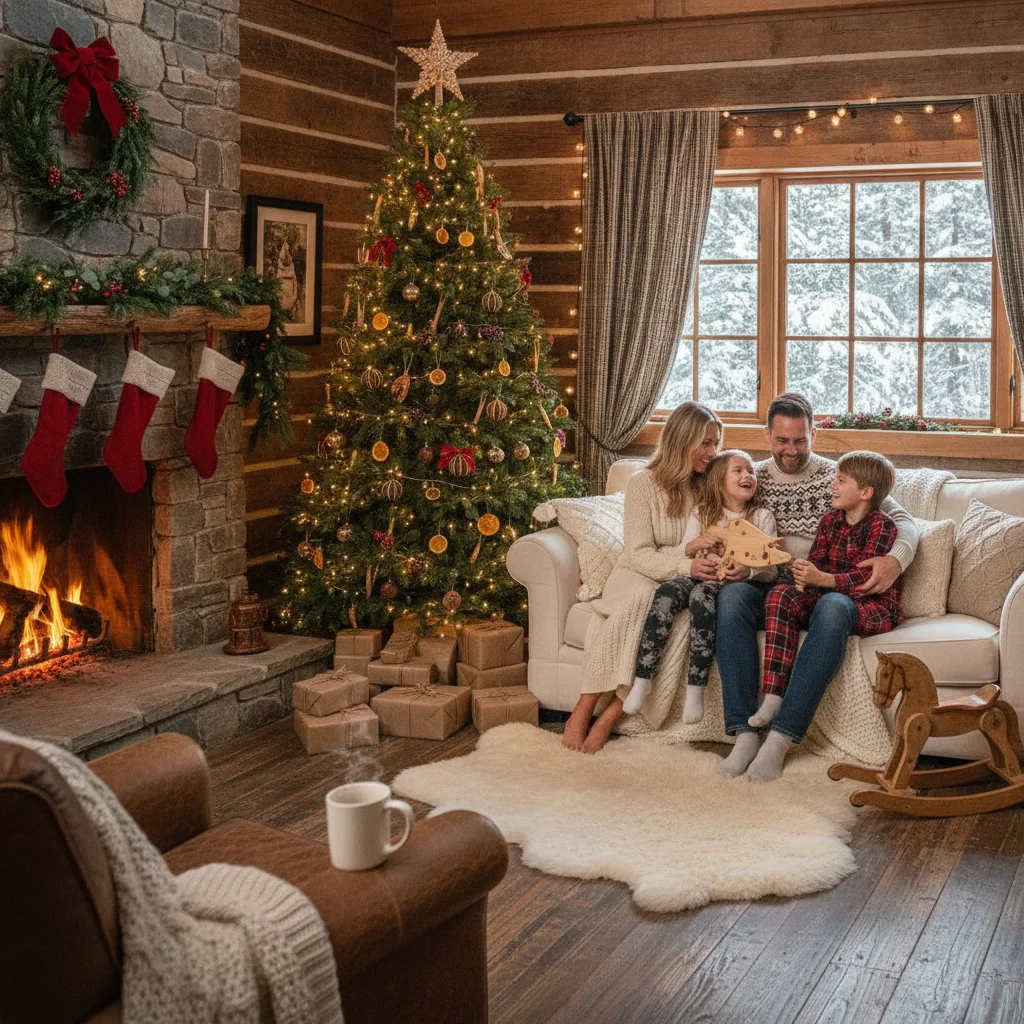
Quick answer: A rustic cabin Christmas portrait setting combines warm light, natural wood, layered textiles, restrained greenery, and a few nostalgic holiday details. Build the scene around one clear focal area, such as a fireplace, window, or decorated tree. Choose coordinated earth-tone clothing and keep props simple so the people remain the focus of the Christmas portrait.
A rustic cabin Christmas portrait should feel warm, relaxed, and connected to nature. The most convincing settings use wood, greenery, soft textiles, and gentle lighting rather than a large collection of themed decorations.
You can create this look inside a real cabin, in a living room with wood features, or against a carefully styled photography backdrop. The key is to select a believable focal area and repeat a limited set of colors and materials throughout the frame.
What makes a Christmas portrait setting look like a rustic cabin?
Natural materials establish the cabin style. Wood walls, stone fireplaces, woven baskets, wool blankets, pine branches, and aged metal accessories all support the setting. The materials do not need to match perfectly because small differences in texture help the scene feel lived in.
A simple palette usually works better than bright multicolored decor. Consider warm brown, forest green, cream, muted red, charcoal, and touches of brass or copper. One or two red accents can communicate Christmas without dominating the photograph.
A fireplace is useful but not required. A bench beside a window, a small tree near a wood wall, or an armchair surrounded by blankets and greenery can create the same visual story.
Which background should you choose?
Choose a background with enough character to suggest a cabin but enough open space to frame the subjects clearly. Visible wood grain, stone, or a frosted window can add depth. Avoid placing faces directly in front of crowded shelves, antlers, hanging signs, or tree branches.
If you are using a printed cabin backdrop, position subjects several feet in front of it when space permits. This helps soften printed details and reduces cast shadows. A real rug, stool, blanket, or small tree in the foreground can make a flat backdrop appear more dimensional.
| Setting element | Best use | Common problem |
|---|---|---|
| Fireplace | Seated family groups | Strong orange light or unsafe proximity |
| Cabin window | Couples and individual portraits | Bright outdoor light darkening faces |
| Christmas tree | Children and full-family portraits | Too many ornaments competing for attention |
| Wood wall | Simple portraits and pets | Flat composition without foreground texture |
How should you decorate the portrait area?
Start with one anchor decoration, such as a medium-size Christmas tree, a greenery garland, or a stack of wrapped gifts. Add supporting details only after checking how the anchor looks through the camera.
Use textiles to make the scene comfortable. A plaid blanket, knitted throw, faux fur rug, or neutral cushions can soften hard wood and stone surfaces. Limit visible patterns so clothing does not compete with the set.
- Choose warm white tree lights instead of mixed light colors.
- Wrap empty boxes in kraft paper, muted plaid, or plain cream paper.
- Use pinecones, wooden ornaments, and dried orange slices as small accents.
- Hide electrical cords and remove modern packaging from the frame.
- Leave open space around faces and between seated subjects.
What should people wear for rustic cabin Christmas photos?
Coordinate clothing by color and texture rather than dressing everyone identically. Cream sweaters, denim, corduroy, flannel, wool, and dark trousers suit the natural setting. Deep green, burgundy, rust, navy, and camel can add color while preserving the cabin mood.
Avoid tiny checks, narrow stripes, reflective logos, and neon colors. Large groups benefit from a balanced distribution of light and dark clothing. If one person wears burgundy, repeat that color in a smaller accessory elsewhere in the group.
Shoes may remain visible in full-length portraits, so choose clean boots, neutral shoes, or coordinated socks. Bare feet can work for informal fireside photographs if the room and flooring are safe.
How can you light a rustic cabin portrait?
Cabins are often darker than they appear to the eye. Face subjects toward a large window when possible, then use tree lights and lamps as background accents. Window light from the side creates shape, while direct front light produces a softer and more even family portrait.
Do not rely on a working fireplace to illuminate faces. Firelight changes quickly and can create strong orange highlights. A photographer can use a diffused flash, reflector, or soft continuous light to provide consistent facial lighting while retaining the warm background.
Turn off overhead lights if they create harsh shadows or conflicting color. Check the first photographs for reflections in eyeglasses, shiny ornaments, and framed artwork.
Which poses work best in a cabin setting?
Arrange people in small connected groups instead of one straight row. Seat adults on a bench or sofa, place children slightly forward, and ask family members to angle their shoulders toward one another. Hands can rest on laps, hold a mug, adjust a blanket, or gently interact with a child or pet.
Capture both posed and activity-based images. Reading a Christmas book, hanging one ornament, sharing cocoa, or wrapping a gift gives subjects a natural reason to look at each other.
A strong rustic cabin Christmas portrait uses one clear background, warm directional light, natural textures, and restrained decorations. Build the setting for comfortable interaction first, then add only the props that remain useful within the camera frame.
What are the limitations of a rustic cabin Christmas portrait setting?
Real cabins may have limited floor space, low natural light, heavy furniture, and fixed decor that cannot be rearranged. Printed backdrops can look artificial when subjects stand too close or when foreground props do not match the printed scale.
Open flames, hot fireplaces, glass ornaments, candles, and unstable logs are unsuitable near young children or pets. Use unlit candles and an inactive or securely screened fireplace when safety is uncertain. Artificial snow should also be checked for surface damage, inhalation concerns, and difficult cleanup before use.
What Usually Goes Wrong in a Rustic Cabin Christmas Portrait Setting?
Rustic cabin Christmas portrait settings usually fail when the scene becomes cluttered, visually flat, or inconsistent with a real cabin interior. Common problems include visible backdrop seams, undersized props, mixed lighting colors, and subjects standing directly against a printed wall. Plaid clothing can also disappear into patterned blankets or faux-log backgrounds. Create separation by moving people and furniture forward, then place a few dimensional elements between them and the backdrop. Keep bright decorations away from faces, and avoid making the fireplace, tree, and subjects compete equally for attention. There is no universal number of props that guarantees a balanced scene; the appropriate amount depends on the frame, group size, and background detail. Take a test photo and remove anything that draws attention before the people do.
Why do rustic cabin portraits lose their cabin look on the finished card?
The most common failure is letting the family’s clothing merge into a busy faux-log, plaid, or heavily decorated cabin backdrop. It is easy to miss at full size but obvious when the finished card is viewed as a small thumbnail: faces stop being the first thing you notice, shirt patterns compete with blankets or wall lines, and the crop removes enough wood, greenery, or hearth detail that the setting no longer reads as a cabin. Before sending the card, reduce the proof to roughly its printed size and check that every face separates clearly from the background. If it fails, simplify one layer: choose solid or low-contrast clothing, remove one patterned prop, or widen the crop slightly to retain recognizable cabin context without exposing backdrop edges or studio floor.
Frequently asked questions
What colors work best for rustic cabin Christmas portraits?
Forest green, cream, warm brown, burgundy, charcoal, and muted red suit a rustic cabin setting. Limiting the palette to three or four main colors keeps the portrait cohesive.
Do you need a fireplace for a cabin-style Christmas photo?
A fireplace is not necessary. Wood walls, a small tree, greenery, woven textiles, and warm lighting can communicate the same cabin style.
Can a printed backdrop create a realistic cabin portrait?
A printed backdrop can look convincing when subjects stand several feet in front of it. Real foreground props and soft lighting help give the image depth.
What props should children hold in rustic Christmas photos?
Children can hold a wooden toy, an unbreakable ornament, a wrapped box, or a Christmas book. Props should be lightweight, safe, and easy to put down.
Should everyone wear matching plaid shirts?
Matching plaid is not required and may make the image look busy. Coordinated solid colors with one or two plaid accents usually photograph better.
How many decorations should be included in the portrait?
Use one main decorative feature and a few supporting accents. The decorations should frame the subjects rather than fill every empty area.
Why does my cabin Christmas backdrop look fake in photos?
A cabin backdrop often looks fake when it is sharply lit, visibly wrinkled, or too close to the subjects. Move the group forward, soften the light across the background, and add real foreground items such as a wooden stool, greenery, or a folded blanket. Match the props’ scale and perspective to the printed scene.
How do I prevent orange skin tones in cabin Christmas photos?
Use one dominant light color and keep warm decorative bulbs from directly lighting faces. Set the camera’s white balance for the main portrait light rather than the fireplace or string lights. If faces still look orange, reduce the decorative lights’ brightness or move them farther behind the group while preserving their warm background glow.
How do you keep plaid from disappearing against a cabin backdrop?
Use plaid in either the clothing or the set, not both at equal visual strength. If the backdrop includes plaid blankets, choose solid sweaters or small, muted checks. Take a phone-size preview before ordering; if sleeves and torsos lose their outlines, increase contrast with a cream, charcoal, burgundy, or forest-green layer.
How much cabin background should appear in a Christmas card photo?
Leave enough surrounding detail to show at least one unmistakable cabin cue, such as log walls, a stone hearth, or a wooden window frame. A head-and-shoulders crop can erase the setting, while an overly wide crop may reveal backdrop edges or flooring. Compare the portrait in the exact card frame before finalizing it.