
Classic Formal Christmas Portrait Inspiration
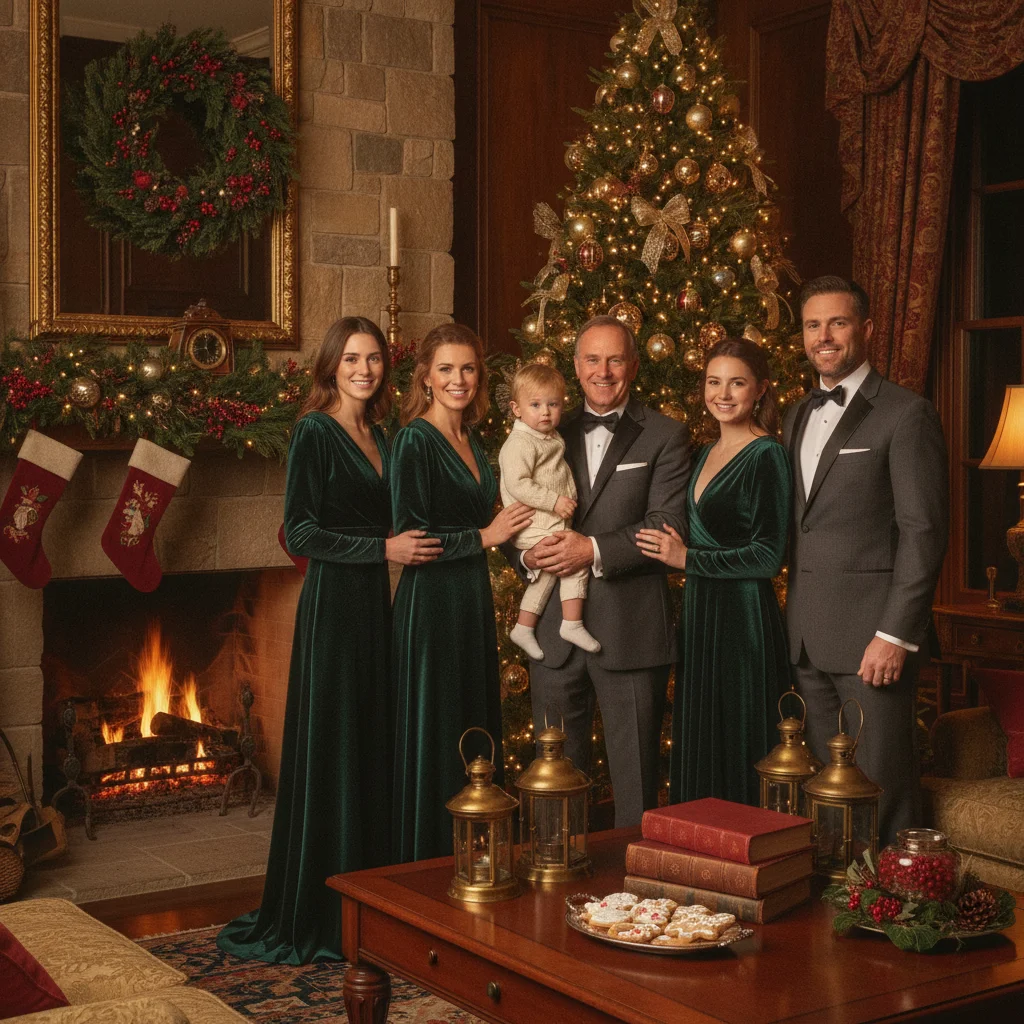
Quick answer: Formal Christmas portraits combine polished clothing, controlled lighting, a refined setting, and intentional posing. Choose two or three coordinated colors, favor tailored outfits over identical clothing, and keep seasonal decorations understated. Rich fabrics, warm lights, balanced group arrangements, and simple accessories help create an elegant photograph suitable for Christmas cards, framed prints, and annual family albums.
Classic formal Christmas portraits look best when every choice feels intentional but not theatrical. Coordinated clothing, flattering light, restrained decorations, and relaxed expressions create an image that feels festive enough for a Christmas card and polished enough to display throughout the year.
What defines a formal Christmas portrait?
A formal Christmas portrait uses structured clothing, careful grooming, deliberate posing, and a controlled setting. The style can range from black-tie elegance to polished Sunday-best clothing, but the subjects should appear coordinated and prepared.
Formality does not require stiff expressions or an expensive studio. A portrait taken beside a home Christmas tree can look formal when the background is tidy, the light is soft, and everyone wears complementary outfits. The goal is visual order rather than excessive decoration.
Which color palette looks most classic?
Limit the group to two or three main colors. Deep green, burgundy, navy, black, cream, and metallic gold are dependable choices because they photograph well and suggest the season without relying on novelty prints.
| Palette | Best suited to | Helpful accent |
|---|---|---|
| Black, ivory, and gold | Black-tie or studio portraits | Gold earrings or a satin ribbon |
| Navy, cream, and burgundy | Traditional family portraits | Velvet or tartan details |
| Forest green, black, and champagne | Tree-side evening portraits | Warm white lights |
| Charcoal, camel, and cranberry | Refined daytime portraits | Natural greenery |
Avoid giving every person the exact same color from head to toe. Repeating shades through ties, dresses, jackets, or accessories creates unity while allowing each subject to retain an individual look.
What should adults and children wear?
Adults can choose suits, dinner jackets, tailored trousers, long dresses, cocktail dresses, or refined knitwear. Fabrics such as velvet, wool, satin, silk, and jacquard add depth under soft lighting. Clothing should fit comfortably enough for sitting and standing poses.
Children look polished in simple dresses, cardigans, collared shirts, waistcoats, or miniature suits. Avoid uncomfortable collars, slippery shoes, and delicate accessories that require constant adjustment. A child who can move comfortably is more likely to produce a natural expression.
Check how each outfit looks when seated. Short hems, tight jackets, and fabric that bunches at the waist may appear fine while standing but become distracting in a group arrangement.
Where should formal Christmas portraits be taken?
A photography studio offers consistent lighting and a clean background. Suitable sets include a neutral wall with a wreath, a dark backdrop with warm lights, or a traditional room scene with restrained garlands.
At home, photograph near the best-decorated side of the tree rather than directly in front of its widest point. Remove visible cords, packaging, remote controls, and unrelated furniture. A fireplace, staircase, paneled wall, or uncluttered window area can also provide an elegant setting.
How can a family pose without looking stiff?
Build the pose around connection. Place parents or grandparents near the center, then arrange other adults and children at slightly different heights. Seated subjects can anchor the composition while standing family members form a balanced shape around them.
Ask everyone to turn slightly toward the center rather than facing the camera squarely. Keep hands occupied naturally by linking arms, resting a hand on a shoulder, holding a small child, or placing hands loosely in a lap.
Capture one traditional image with everyone looking at the camera. Then photograph quieter interactions, such as parents looking at their children or siblings sharing a brief laugh. These variations remain formal while feeling more personal.
What lighting creates an elegant result?
Soft window light is flattering for daytime portraits. Position the group at an angle to the window and turn off harsh ceiling lights that create mixed colors or deep shadows under the eyes.
For evening portraits, use a diffused lamp, photography light, or bounced flash as the main source. Christmas tree lights should appear as background accents rather than the only illumination. Increase the distance between the subjects and the tree when possible to produce softer points of light.
Which details make the portrait feel finished?
Polished shoes, pressed clothing, neat nails, and controlled flyaway hairs are more important than adding numerous props. Keep jewelry and watches consistent with the level of formality. Remove elastic bands from wrists and empty bulky items from pockets.
Useful seasonal details include a velvet bow, a single wrapped gift, a small arrangement of greenery, or matching boutonnières. Select one or two accents. Too many props can shift attention away from faces and make the portrait resemble a themed party photograph.
What are the limitations of formal Christmas portraits?
Formal clothing can be uncomfortable for young children, long sessions can weaken expressions, and dark fabrics may lose detail in poor lighting. Highly specific Christmas sets can also limit how long the final portrait feels suitable for display.
Plan the essential group photograph first, especially when working with babies, pets, or older relatives. Test dark outfits against the background before the session, and keep spare clothing supplies nearby. If lasting display value matters, use subtle greenery and warm lights instead of oversized signs or novelty props.
How can the final portrait stay timeless?
Prioritize faces, relationships, and balanced composition over current decorating trends. Choose classic tailoring, moderate retouching, and a background that supports the group without dominating it. The strongest formal Christmas portrait should still feel meaningful after the decorations have been packed away.
What usually goes wrong with formal Christmas portraits?
Formal Christmas portraits usually fail when coordinated clothing becomes identical, posing is held too long, or elaborate décor competes with faces. There is no universal formula for the right level of formality; judge it by whether everyone can sit, stand, and interact comfortably in the chosen clothes and setting. Common trouble includes shiny fabrics catching harsh highlights, tight collars making children fidget, deep rows hiding shorter family members, and tree lights creating distractions behind heads. Prevent these problems with a short movement test before the session, staggered heights, relaxed hands, and a simple background with visible separation around each person. Ask everyone to reset posture between frames rather than freezing in one expression. If an outfit restricts breathing, walking, or sitting, replace it; comfort supports a composed appearance better than rigid styling.
Identical dark outfits do not make a formal Christmas portrait more polished
A common myth is that formal Christmas portraits look more polished when everyone wears identical dark clothing; coordinated tones, clear separation from the backdrop, and a crop planned around joints produce a stronger result. Black suits against a black background can erase shoulder outlines, while white dresses against snowy sets can lose detail. Mix related shades or textures and check that each person contrasts with the setting. Avoid tiny seasonal props or busy backdrops that compete with faces. During framing, do not cut through wrists, elbows, knees, or ankles; crop between joints instead. Leave modest space above heads and at the sides, especially when the image may appear in vertical and horizontal card layouts. Before finishing, inspect hems, collars, shoes, chair legs, and backdrop edges, because formal styling makes small inconsistencies more noticeable.
Frequently asked questions
What colors are best for formal Christmas portraits?
Navy, black, cream, burgundy, forest green, charcoal, and muted gold create classic combinations. Limit the group to two or three coordinated colors.
Does everyone need to wear matching outfits?
Exact matching is unnecessary and can make a portrait look overly staged. Coordinated colors, similar levels of formality, and repeated fabric textures create a more refined result.
Can jeans be worn in a formal Christmas portrait?
Dark, unwashed jeans can work for a polished casual interpretation, especially with tailored jackets or dress shoes. Traditional formal portraits are better served by trousers, suits, skirts, or dresses.
How should children be dressed for a formal family photo?
Children should wear comfortable dresses, cardigans, collared shirts, waistcoats, or suits in the chosen palette. Soft fabrics and secure shoes help prevent discomfort during the session.
Should Christmas tree lights be on during the portrait?
Warm white tree lights can add depth and a seasonal glow. They should remain background accents while a separate soft light illuminates the subjects' faces.
What is the best background for a formal Christmas portrait?
A neutral studio backdrop, tidy fireplace, paneled wall, staircase, or restrained Christmas tree setting works well. The background should be less visually prominent than the people.
How long should a formal portrait session take?
A focused family session often works best when the essential group photographs are completed early. Children and pets generally respond better to a short, organized shot list than a prolonged session.
Why do formal Christmas portraits look awkward?
They often look awkward because people hold unfamiliar poses and try to maintain perfect expressions. Begin with a structured pose, then have family members turn slightly toward one another, relax their fingers, and take a breath. Photograph the moments immediately after each reset, when posture remains polished but faces appear less strained.
How do you pose a large family for a formal Christmas portrait?
Arrange a large family in staggered levels rather than one straight row. Seat a few people, place others behind them, and keep faces visible within loose triangular groupings. Turn bodies slightly inward, vary hand placement, and leave enough space between heads so the portrait remains orderly without looking crowded.
Where should hands be placed in a formal Christmas portrait?
Hands should rest naturally rather than hang rigidly or disappear behind another person. Adults can lightly hold a lapel, rest a hand on a chair, or place one hand around a family member. Keep fingers relaxed and visible. For seated poses, angle wrists gently and avoid stacking several hands in the same small area.