
German Shepherd Outdoor Christmas Portrait Ideas
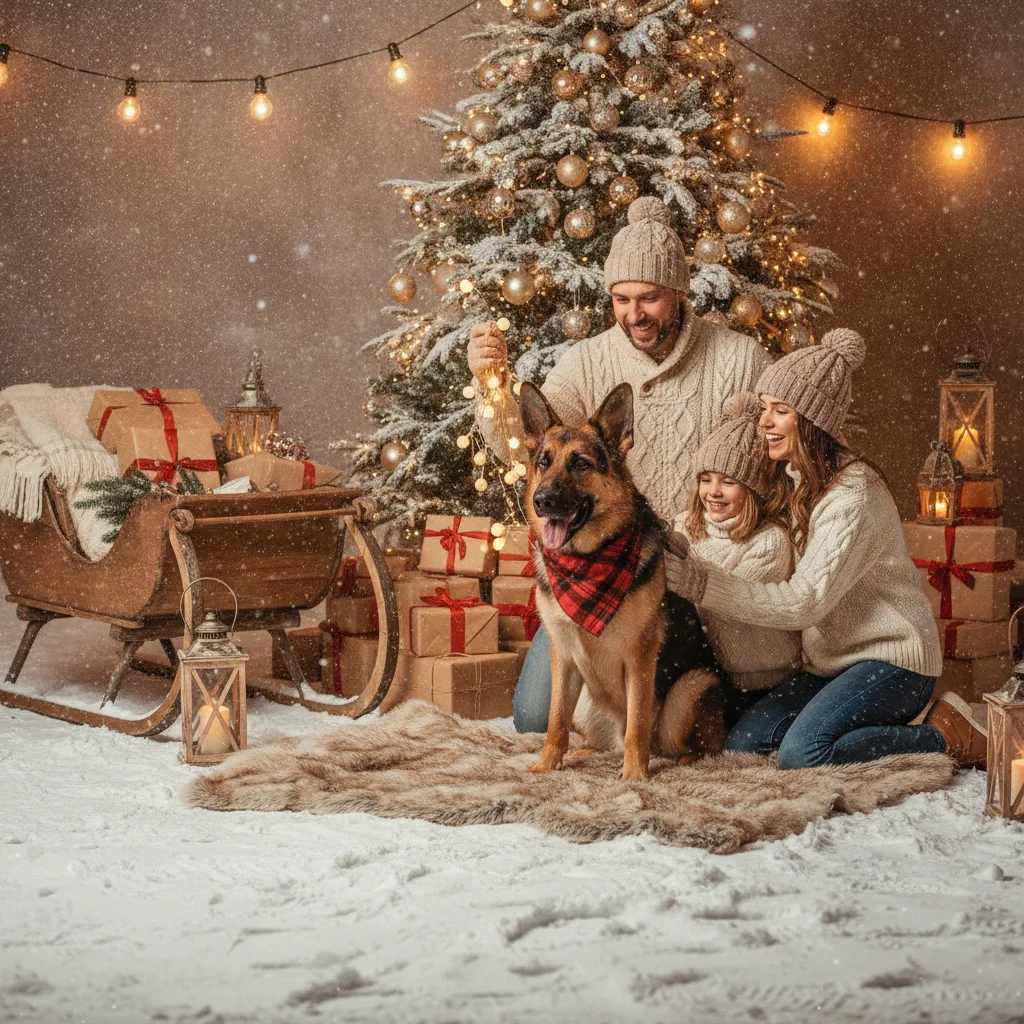
Quick answer: An effective German Shepherd outdoor Christmas portrait combines a simple winter setting, soft natural light, and one or two dog-safe seasonal details. Photograph the German Shepherd beside an evergreen tree, on a snowy path, or near a rustic fence. Use treats or a favorite toy to direct the dog's ears and gaze while keeping the session short and comfortable.
German Shepherds are strong portrait subjects because their upright ears, alert expressions, and coats remain easy to recognize in outdoor winter scenes. The best Christmas portraits balance that natural presence with restrained seasonal styling. A wreath, plaid bandana, evergreen branch, or distant string of lights can establish the holiday theme without distracting from the dog.
Outdoor sessions also give a German Shepherd room to move. Begin with a short walk, let the dog investigate the location, and take posed photographs only after the initial excitement has settled.
Which outdoor locations work best for a German Shepherd Christmas portrait?
Evergreen woods are a classic choice because the green branches provide Christmas color without requiring elaborate decorations. Position the German Shepherd several feet in front of the trees to create soft background blur and better separation around the ears.
A snow-covered trail creates a clean, bright portrait. Use a winding path or a line of trees to guide attention toward the dog. Fresh snow looks especially effective with black-and-tan, sable, and solid black coats.
Rustic settings offer a warmer alternative. A wooden fence, barn wall, stacked firewood, or cabin porch can be paired with a simple wreath or red blanket. Check the ground for nails, wire, ice, salt, and other hazards before placing the dog.
| Location | Best visual detail | Practical concern |
|---|---|---|
| Evergreen woods | Natural Christmas color | Low branches and ticks |
| Snowy trail | Clean winter background | Cold paws and overexposure |
| Rustic fence | Traditional country style | Splinters and loose wire |
| Town light display | Colorful background lights | Crowds, traffic, and noise |
What poses show a German Shepherd at its best?
A seated three-quarter pose shows the German Shepherd's chest, facial markings, and upright ears. Stand slightly to one side of the camera and hold a treat near the lens. This position often produces direct eye contact without forcing the dog's head into an unnatural angle.
A standing side profile highlights the breed's outline. Place the dog on level ground and photograph at shoulder height rather than from above. A handler can retain the leash and remove visual slack by holding it behind the dog.
Walking portraits feel less formal and work well for energetic dogs. Ask the handler to walk slowly toward the camera while keeping the German Shepherd on a secure leash. Use continuous autofocus and a fast shutter speed to capture a sharp expression.
Which Christmas accessories are safe and photogenic?
A fitted plaid bandana is one of the simplest options. It adds seasonal color while leaving the German Shepherd's ears, face, and coat visible. A wide red or green collar can have a similar effect.
A wreath may be placed in the background or held by a handler, but the dog should not chew it. Avoid toxic plants, glass ornaments, edible decorations, tinsel, loose bells, and battery-powered lights within reach. Artificial snow sprays can irritate paws, skin, or airways and should not be applied to the dog.
Antlers and hats should be used only if the German Shepherd already tolerates headwear. Never tie an accessory tightly around the muzzle, neck, or ears. A natural expression is more valuable than a costume that causes stress.
How should lighting and camera settings be handled outdoors?
Open shade or an overcast sky produces gentle light across a German Shepherd's face. On sunny days, schedule the portrait early or late in the day and keep the sun behind or beside the dog. Direct midday light can create dark eye sockets and bright patches on the coat.
For a camera, start near 1/500 second for a seated dog and 1/1000 second for movement. An aperture around f/2.8 to f/4 can soften the background while keeping the eyes and muzzle acceptably sharp. Focus on the nearest eye.
Snow can cause a camera to make the entire image too dark. Add positive exposure compensation while checking that white areas still retain detail. A phone user can tap the dog's face to set focus and raise exposure slightly if the coat looks muddy.
How can the portrait feel distinctly Christmassy without looking crowded?
Choose one dominant holiday color and repeat it once. For example, combine a red bandana with a small red bow on a distant wreath. Green trees and white snow can supply the remaining palette naturally.
Leave open space around the German Shepherd's head and ears. Background lights should sit far enough behind the dog to become soft points of color. For a card layout, capture both horizontal and vertical frames, including a version with empty space for a greeting.
A strong German Shepherd Christmas portrait keeps the dog as the clear subject. Natural winter scenery, controlled light, and a single safe accessory usually produce a more lasting image than a heavily decorated setup.
What limitations should owners consider?
Not every German Shepherd is comfortable in snow, crowds, costumes, or unfamiliar locations. Signs of stress include repeated lip licking, pinned ears, panting in cold weather, avoidance, and refusal of treats. End the pose and give the dog space when these signs appear.
Cold tolerance varies with age, health, coat condition, and weather. Puppies, senior dogs, and dogs with medical conditions may need very short sessions. Ice melt, road salt, and compacted snow can also injure paws.
Keep the German Shepherd leashed unless the area is securely enclosed and local rules permit off-leash activity. Decorative lighting, scenic backgrounds, and a finished photograph never justify risking a dog near traffic, thin ice, wildlife, or unsecured holiday displays.
How can you get a usable outdoor German Shepherd Christmas portrait without causing stress?
Get a usable outdoor German Shepherd Christmas portrait without stressing the dog by using a familiar, quiet location, keeping the leash under a handler’s control, and photographing before adding decorations. Set the composition and exposure first, then let the dog sniff and settle. Ask for one familiar behavior, such as standing or sitting, and reward it immediately; avoid repeatedly correcting head or ear position. Keep props stationary and outside the dog’s reach, and have the photographer use quiet cues while the handler watches body language. Pause if the dog turns away, pants despite cool weather, lip-licks, yawns, lowers its posture, or stops taking treats. There is no universal safe session length; stop when this individual dog disengages, and finish with a short walk or play away from the setup.
When should treats and a coat be skipped during a German Shepherd Christmas shoot?
Treats and coats should not be used automatically in an outdoor German Shepherd Christmas portrait, and the session should end if the dog shows sustained stress. Skip treats when the dog has dietary restrictions, becomes overaroused around food, guards food, or cannot chew safely; use a familiar toy or trained cue instead. A decorative coat is also unnecessary for many healthy, acclimated German Shepherds and may cause overheating or restrict shoulder movement. Use one only when weather, age, health, or veterinary guidance supports it, checking that the fit allows a normal gait. Do not mistake panting on a cold day, repeated lip licking, yawning, pinned ears, whale eye, a tucked tail, trembling, freezing, escape attempts, or refusal of cues for poor posing. Move to a quiet area and stop rather than adding treats, commands, or costume pieces.
Frequently asked questions
What color should a German Shepherd wear for a Christmas portrait?
Red, forest green, burgundy, and tartan photograph well against most German Shepherd coat colors. One fitted bandana or collar is usually enough.
How do you get a German Shepherd to look at the camera?
Hold a high-value treat or favorite toy directly above the lens and reward brief eye contact. Use a familiar attention cue rather than repeatedly calling the dog's name.
Can a German Shepherd be photographed safely in snow?
A healthy German Shepherd can often handle a short snow session, but paw condition and signs of discomfort must be monitored. Remove ice from between the toes and dry the dog afterward.
What time of day is best for an outdoor dog portrait?
Early morning and late afternoon usually provide soft directional light. Overcast conditions can also produce flattering portraits throughout much of the day.
Should the leash be removed for a Christmas photo?
The leash should remain attached unless the German Shepherd is inside a secure enclosure where off-leash activity is permitted. A thin, neutral leash can be positioned discreetly without compromising safety.
What lens works well for a German Shepherd outdoor portrait?
A lens between 50mm and 135mm provides a natural perspective and useful background blur. Wider lenses can work for environmental portraits if the camera is not placed too close to the dog's face.
Can Christmas lights be used around a German Shepherd?
Christmas lights are safest when placed in the distant background and outside the dog's reach. Cords, batteries, hot bulbs, and breakable decorations should never be left beside the dog.
How do you calm a German Shepherd before an outdoor Christmas photo?
A short sniff walk and a few easy cue-reward repetitions can help a German Shepherd settle before the camera comes out. Avoid hard fetch or running immediately beforehand, because heavy panting can make the dog look uncomfortable and reduce attention. Let the familiar handler stay beside the dog and begin in the least distracting part of the location.
What if my German Shepherd will not sit for a Christmas portrait?
Use a relaxed standing pose or capture the dog while it naturally pauses instead of insisting on a sit. Place the dog parallel to the camera, ask the handler to stop briefly, and take several frames as the dog looks toward a quiet sound. A portrait can be usable even when the ears or paws are not perfectly symmetrical.
Does a German Shepherd need a coat for an outdoor Christmas photo?
Most healthy adult German Shepherds do not need a coat for a brief outdoor portrait in moderate winter conditions. Consider one for an older, ill, very lean, or cold-sensitive dog, or during unusually harsh weather. The coat should allow unrestricted shoulder movement and should be removed if the dog pants or seems uncomfortable.