
How to Set Up a Golden Retriever Christmas Portrait
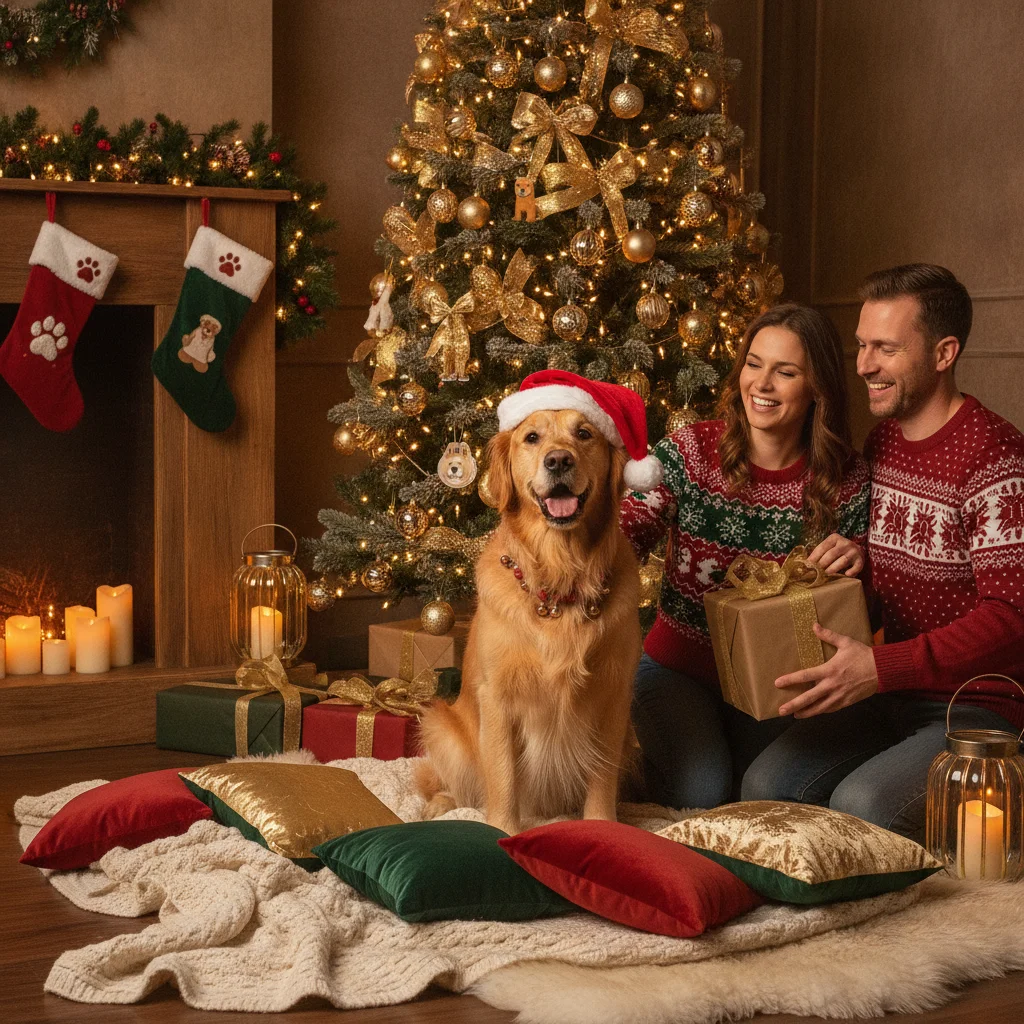
Quick answer: Set up a golden retriever Christmas portrait with soft window light or a diffused lamp, a simple festive background, and nonbreakable decorations. Position the dog several feet in front of the backdrop, expose carefully for golden fur, and photograph at eye level. Use treats or a favorite toy to direct attention while keeping each session short and comfortable.
A successful golden retriever Christmas portrait starts with a comfortable dog, flattering light, and a background that does not compete with the dog's golden coat. The setup can be created beside a Christmas tree, in front of a fabric backdrop, or in a simple corner decorated with warm lights and seasonal greenery.
Golden retrievers often photograph well because their expressive faces and warm coats suit traditional Christmas colors. The main technical challenge is preserving detail in pale fur while keeping holiday lights visible. Careful spacing, exposure, and color selection solve most problems.
Where should you build the Christmas portrait setup?
Choose a quiet indoor area with enough room to place the golden retriever at least three feet in front of the background. Extra distance helps blur decorations and prevents the dog from backing into a tree, light stand, or ornament.
A large window provides useful natural light. Position the setup beside the window rather than directly in front of it. Side lighting reveals the texture of the retriever's coat and produces soft shadows around the face.
Remove visual clutter before adding Christmas decorations. A plain wall, neutral curtain, dark green blanket, or wood-paneled surface can serve as the foundation. Add only a few recognizable seasonal details, such as a wreath, wrapped boxes, or warm white lights.
| Setup element | Recommended choice | Reason |
|---|---|---|
| Background | Green, cream, burgundy, or wood tones | Complements golden fur |
| Lighting | Window light or a diffused continuous light | Creates soft facial shadows |
| Decorations | Fabric, paper, wood, or plastic props | Reduces breakage risk |
| Dog position | Three to six feet from the backdrop | Creates separation and background blur |
What lighting works best for golden retriever fur?
Soft light placed slightly above the dog's eye level is usually the most flattering option. Face the golden retriever about 45 degrees toward a window, then turn the dog's nose toward the camera with a treat or quiet sound.
Avoid direct ceiling lights because they can create dark eye sockets and bright patches along the top of the head. Direct flash can also make pale fur look flat. If flash is necessary, bounce it from a white ceiling or wall rather than aiming it at the dog.
Christmas tree lights should act as background accents rather than the primary light source. Keep the dog far enough from the tree for the bulbs to appear as soft circles. A wider aperture increases this effect, although the dog's eyes and nose still need to remain acceptably sharp.
Which camera settings should you use?
Begin with a shutter speed of at least 1/250 second because golden retrievers may move their heads, blink, or shift their paws without warning. Use continuous autofocus and focus on the nearest eye. A burst of two or three frames can capture a better expression without creating an overwhelming number of images.
An aperture between f/2.8 and f/4 works for one dog when the eyes are nearly parallel to the camera. Use f/5.6 or narrower when photographing multiple dogs or including people. Raise ISO as needed instead of accepting a shutter speed that is too slow.
Check the brightest fur on the forehead, muzzle, and chest. Reduce exposure slightly if these areas lose visible texture. Photographing in RAW format gives more flexibility for recovering highlights and correcting the warm color cast produced by Christmas lights.
How can you pose a golden retriever naturally?
Start with a familiar sit on a nonslip rug. Photograph from the dog's eye level instead of standing and pointing the camera downward. This angle makes the portrait feel more personal and keeps the retriever's head proportionate to the body.
Hold a treat close to the camera lens to encourage direct eye contact. Move the treat slightly to one side for a gentle head turn. A squeaker or unusual sound can produce alert ears, but repeated noises may quickly lose their effect.
Allow breaks every few minutes. A relaxed open mouth often looks cheerful, while repeated lip licking, yawning, pinned ears, or attempts to leave can indicate discomfort. End the session if the dog becomes stressed.
Which Christmas props are safe for the portrait?
Use oversized bows, empty wrapped boxes, washable blankets, and unbreakable ornaments. Secure light cables behind the backdrop or inside cable covers. Battery compartments, hooks, tinsel, chocolate, artificial snow, and small decorations should remain outside the dog's reach.
A loose bandana is generally easier for a golden retriever to tolerate than a hat or costume. Remove any accessory immediately after the photograph. Never tie lights around the dog, and do not leave the dog unattended near the setup.
How should you edit the finished portrait?
Adjust white balance first so the coat remains golden rather than orange. Lower highlights if the pale chest fur is too bright, then lift shadows gently around the eyes. Moderate texture or clarity can define the coat, but strong adjustments may make fur look coarse.
Crop out cables, furniture edges, and distracting floor space. Keep enough room around the ears and paws for greeting-card layouts. A horizontal composition usually provides more space for a message, while a vertical crop suits a single-dog portrait.
What are the limitations of a home Christmas portrait setup?
Home setups may provide less room, weaker light, and fewer posing options than a professional studio. Active puppies can also make wide apertures and carefully arranged decorations difficult to manage.
Some golden retrievers dislike costumes, camera sounds, or unfamiliar surfaces. The intended visual style should never take priority over the dog's comfort. A simple portrait beside a window can produce a stronger result than an elaborate scene that causes stress.
The most reliable setup combines soft side light, a restrained holiday background, safe props, and an eye-level camera position. Keep the session brief and let the golden retriever's expression become the main Christmas feature.
How can you create a usable golden retriever Christmas portrait setup without causing stress?
Create a low-stress golden retriever Christmas portrait setup by letting the dog explore it before adding posing, lights, or camera activity. Place the dog’s familiar bed or nonslip mat where you want the portrait, keep an open exit route, and secure decorations beyond reach. Leave extra clearance behind the dog for tail movement.
Introduce one change at a time: backdrop first, then props, then lighting. Reward voluntary approaches and use familiar cues rather than physically positioning the dog. Photograph in short rounds, pausing if you notice lip licking, repeated yawning, tucked posture, avoidance, or refusal of treats. There is no universal session length because comfort and tolerance vary by dog. Stop while the golden retriever is still relaxed; a simple seated or lying portrait is more usable than an elaborate setup associated with distress.
When should you skip treats or a coat during a golden retriever Christmas portrait?
Treat-based posing and a festive coat do not apply when your golden retriever has dietary restrictions, becomes warm easily, resists clothing, or shows signs of stress. Follow any prescribed diet, and use part of the dog’s normal meal instead of extra treats when appropriate. Skip the coat indoors if the room, lights, or activity causes panting or persistent restlessness. Stress may appear as repeated lip licking, yawning, pinned ears, a tucked tail, turning away, freezing, or trying to leave. One isolated behavior can be ambiguous, but several together or increasing intensity are reasons to stop. Remove the clothing, offer water, and let the dog move to a quiet familiar space. Resume only if the dog returns voluntarily and appears relaxed; otherwise, take the Christmas portrait without wearable props.
Frequently asked questions
What colors look best with a golden retriever in Christmas photos?
Dark green, burgundy, cream, navy, and natural wood tones complement golden fur. Avoid backgrounds that closely match the dog's coat because they reduce visual separation.
How do you photograph a golden retriever in front of Christmas lights?
Place the dog three to six feet in front of the lights and use a wide aperture to blur them. Add soft light to the dog's face so the background bulbs are not the only illumination.
Can you use a phone for a golden retriever Christmas portrait?
A phone works well when there is plenty of window light and the dog remains relatively still. Use the main camera, tap the nearest eye to focus, and avoid digital zoom.
What shutter speed is best for dog Christmas photos?
A shutter speed of at least 1/250 second is a practical starting point. Faster speeds may be needed for puppies, action shots, or excited dogs.
How do you keep a golden retriever still for a portrait?
Use a familiar sit command, a nonslip surface, and small treats held near the camera. Work in short intervals and reward calm behavior rather than physically forcing a pose.
Are Christmas lights safe to use around a dog?
Christmas lights are suitable as background decorations only when cords, bulbs, plugs, and battery compartments remain inaccessible. The dog should be supervised throughout the session.
Should a golden retriever wear a costume for a Christmas card photo?
A costume is optional, and a loose bandana or bow is often more comfortable. Remove any accessory if the dog shows stress, restricted movement, or an urge to chew it.
How long should a golden retriever Christmas photo session be?
A golden retriever Christmas photo session should last only as long as the dog remains comfortable and responsive. Work in brief rounds with breaks for water, movement, and sniffing rather than aiming for a fixed duration. End the session if the dog avoids the setup, pants without being warm, stops taking treats, or repeatedly tries to leave.
What should I do if my golden retriever is afraid of Christmas decorations?
Remove the decorations and rebuild the setup gradually at the dog’s pace. Begin with a plain backdrop and familiar mat, then place one unlit decoration at a distance while rewarding calm behavior. Do not lure the dog toward an object it fears. If anxiety persists, use a decoration-free portrait with seasonal colors instead.
What treats can I use during a golden retriever Christmas photo session?
Use small, familiar treats that fit your golden retriever’s normal diet. Soft pieces are easy to deliver quickly, while part of the dog’s regular kibble can limit extra calories. Avoid unfamiliar foods, rich table scraps, and anything restricted because of allergies, digestive problems, or veterinary instructions.