
How to Take Baby Christmas Photos Safely
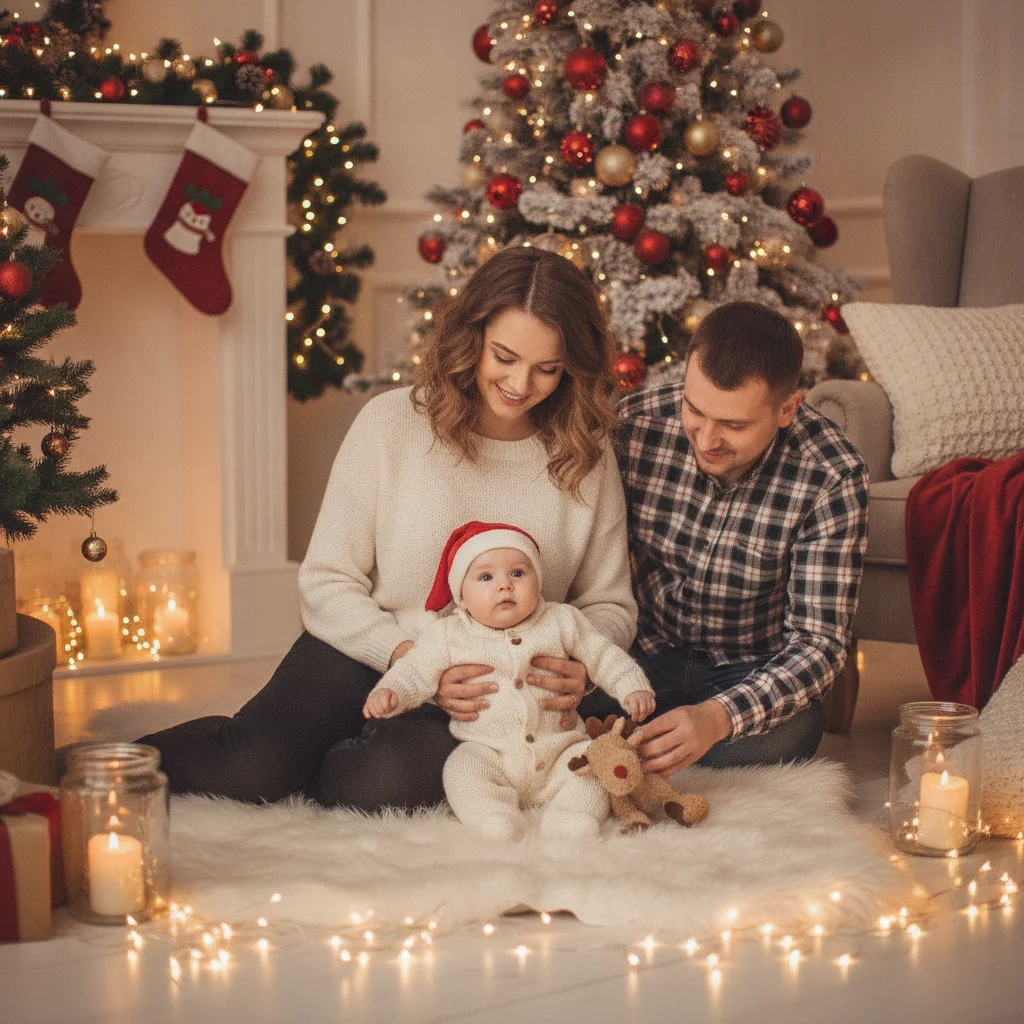
Quick answer: Take baby Christmas photos on a stable floor-level surface in a warm, well-lit room with constant adult supervision. Use soft, nonbreakable decorations, keep cords and lights out of reach, and choose natural poses that support the baby’s head and airway. Stop immediately if the baby becomes cold, overheated, distressed, sleepy in an unsafe position, or difficult to settle.
Safe baby Christmas photography starts with a simple scene, a rested baby, and an adult who remains within arm’s reach. The photograph is never more important than the baby’s breathing, temperature, comfort, or physical support. Many festive effects can be created with a plain blanket, soft clothing, natural light, and careful editing instead of elaborate props.
How should you prepare the photo area?
Set up the entire scene before bringing the baby into it. Place the setup on the floor rather than a bed, table, sofa, counter, or raised platform. Remove loose cords, hot lamps, glass ornaments, tinsel, beads, artificial snow, batteries, and any decoration small enough to enter the baby’s mouth.
Check the floor for pins, hooks, broken ornament pieces, and other sharp objects. Keep drinks, heaters, candles, and hot photography equipment outside the shooting area. A second responsible adult can act as a spotter while the photographer handles the camera.
| Item | Safer choice | Avoid |
|---|---|---|
| Surface | Firm mat or blanket on the floor | Tables, counters, or unstable furniture |
| Decorations | Large fabric or felt pieces | Glass, glitter, tinsel, and small ornaments |
| Lighting | Window light or cool LED light placed away | Candles, hot bulbs, and accessible cords |
| Pose | Baby lying naturally with a clear airway | Unsupported sitting, hanging poses, or tight wrapping |
Which Christmas props are safe around a baby?
Soft blankets, fabric backdrops, felt decorations, and securely placed oversized plush items are generally easier to manage than rigid props. Every item should be clean, intact, colorfast, and positioned so it cannot fall onto the baby.
Do not wrap string lights around a baby or place powered lights against the baby’s skin. Cords can create strangulation and entanglement risks, while bulbs and battery packs may become warm. Create a similar look by placing lights well behind the scene, outside the baby’s reach, or by adding a light effect during editing.
Avoid placing a baby inside a stocking, gift box, bucket, wreath, or narrow container. These items can restrict movement, tip over, hide breathing problems, or place pressure on the neck and chest.
How can you pose a newborn safely?
Keep newborns in positions they can naturally maintain, such as lying on their back on a firm, flat surface while awake and supervised. Support the head and neck whenever moving the baby. The baby’s nose and mouth must remain visible, and the chin should not be pressed tightly against the chest.
Some professional newborn images are composites made from multiple photographs while an adult supports the baby in every frame. Do not copy upright, suspended, head-in-hands, or tightly curled poses at home. A photographer offering complex newborn poses should have specific newborn safety training and should explain how physical support is maintained.
How should you manage light, sound, and temperature?
Use indirect window light when possible. Turn off the camera flash if it startles the baby, and avoid placing bright lamps close to the baby’s face. Secure all light stands and keep equipment beyond the baby’s reach.
Keep the room comfortably warm without aiming a heater at the baby. Holiday costumes can trap heat, so check the baby’s neck or chest for sweating and remove layers when necessary. Avoid loud music, sudden noises, and long sessions. Several short attempts are safer and often produce calmer expressions.
Can siblings and pets join the photograph?
Siblings can sit beside the baby on the floor, but an adult should remain close enough to intervene. Young children should not hold a newborn unless a capable adult provides direct physical support.
Pets should never be left alone with a baby, even if the pet is usually gentle. Photograph the pet separately if it appears excited, anxious, possessive of props, or distracted by sounds and lights. Separate photographs can be combined later without forcing a risky interaction.
When should you stop the photo session?
Stop when the baby cries persistently, turns unusually pale or red, sweats, shivers, arches, has trouble breathing, becomes difficult to wake, or cannot keep a clear airway. Feeding cues, a wet diaper, repeated yawning, and turning away also indicate that the baby needs a break.
Place a sleepy baby in a safety-approved sleep space according to current safe-sleep guidance. Decorative blankets, pillows, stuffed toys, and positioning props used in a supervised photograph should not remain in a crib or bassinet.
What are the limitations of home baby photography?
General safety guidance cannot account for every baby’s health, age, development, or medical history. Parents of premature babies and babies with breathing, feeding, muscle-tone, hip, heart, or temperature-regulation concerns should ask the child’s pediatric clinician before planning a session.
Home photographers should not attempt specialist newborn poses without appropriate training. If a setup requires hidden supports, suspension, balance, or removal of an adult’s hands through editing, choose a simpler pose or hire a qualified newborn photographer.
The safest Christmas portrait is a short, floor-level session using soft decorations, natural positioning, and continuous adult supervision. A plain setup can still feel festive, and digital backgrounds or effects are safer than placing extra objects around the baby.
What Is Safe When Preparing Baby Christmas Photos to Print or Share?
Use only a baby Christmas photo that was created without unsupported posing, tight wrapping, reachable cords, or an elevated surface when you plan to print or share it. A polished composite may hide a caregiver’s supporting hand, but editing should never substitute for safe positioning during the session. Before sharing, crop out house numbers, name tags, medical details, and reflections that reveal the room or photographer. Avoid captions that disclose the baby’s full name, birth date, routine, or location. For a printed card, use the original file rather than a social-media download; 300 DPI is a common recommended print resolution (Vistaprint, 2026). Keep an uncropped copy, and inspect the final preview to ensure decorations do not appear to touch the baby after cropping.
How should consent, overlays, and session length be handled for baby Christmas photos?
Keep a baby Christmas photo session short: active shooting should happen in brief blocks, with caregiver permission for both the image and any later overlays or sharing.
- Treat five-to-ten-minute shooting blocks as a ceiling, not a target; pause sooner for feeding, changing, warming, or settling.
- Because a baby cannot provide informed consent, obtain permission from a parent or legal guardian and stop when the baby turns away, stiffens, cries, or repeatedly resists.
- Approve the finished version before posting. An adult who agreed to a private portrait may not agree to public sharing or a novelty overlay.
- Keep text overlays away from the baby’s eyes and mouth, and never add a full name, birth date, address, or location to an image intended for public viewing.
- End the entire attempt after two or three blocks if the baby needs repeated soothing; finish another day rather than extending the session.
Frequently asked questions
Is camera flash safe for baby Christmas photos?
Occasional normal camera flash is not generally considered harmful to healthy eyes, but it may startle the baby. Indirect window light often produces softer results without discomfort.
Can Christmas lights touch a baby during a photo?
Christmas lights and cords should not touch or wrap around a baby. Keep lights out of reach and check that bulbs, wires, and battery packs cannot fall or become warm near the baby.
Is it safe to photograph a baby inside a Christmas stocking?
A baby should not be placed inside a stocking because the fabric can restrict movement or cover the airway. Lay the empty stocking beside the baby instead.
Can a newborn sleep during a Christmas photo session?
A sleeping newborn needs a firm, flat surface and a clear airway with constant supervision during the photograph. Move the newborn to an approved sleep space when the session ends.
What should a baby wear for Christmas photos?
Choose soft, properly fitting clothing without loose buttons, bells, tight necklines, long ties, or shedding glitter. Remove layers if the baby becomes warm or sweaty.
How long should a baby photo session last?
Keep the active photography periods brief and take breaks for feeding, changing, soothing, and temperature checks. Stop rather than trying to force a pose or expression.
Can baby Christmas photo effects be added afterward?
Digital backgrounds, lights, snow, and ornaments can be added after the photograph to reduce physical props around the baby. ChristmasCard supports the editorial principle that simple original photos are often the safest starting point.
Is it safe to share baby Christmas photos online?
Yes, but share the least identifying version and limit its audience when possible. Remove location clues, full names, birth details, hospital information, and visible addresses before posting. Remember that other people can save, copy, or repost an image, so choose a photograph you would be comfortable losing control of.
How do I choose a baby Christmas photo for a card?
Choose a photo made with safe support, clear breathing space, and no cords, fragile ornaments, or small props near the baby. The image should remain clear after cropping, especially around the face and supporting adult hands. Use the original high-resolution file for printing and review every edge of the card preview before ordering.
Do both parents need to agree before baby Christmas photos are posted?
Posting should wait until every parent or guardian with relevant legal authority has agreed, especially when custody, foster care, or adoption privacy is involved. Laws and court orders vary, so one caregiver’s approval may not settle the issue. Use the narrowest audience available and remove the image promptly if permission is withdrawn.