
How to Create Theatrical Nutcracker Christmas Portraits
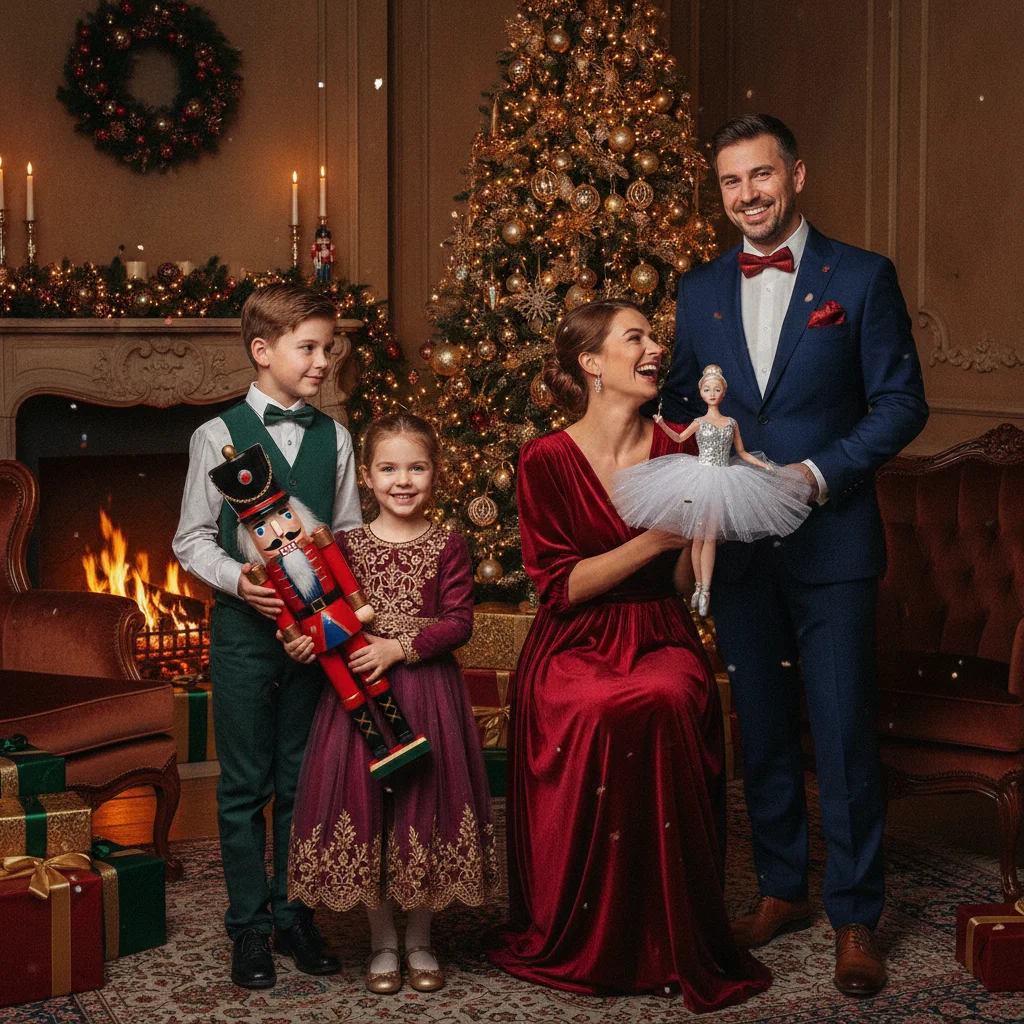
Quick answer: Nutcracker Christmas portraits combine storybook costumes, ballet-inspired poses and dramatic holiday scenery. Build the session around one clear character, such as Clara, the Nutcracker Prince or the Mouse King. Use controlled theatrical lighting, oversized props and a coordinated color palette to create polished portraits without making the set feel crowded.
Nutcracker Christmas portraits borrow their visual language from the classic holiday ballet: toy soldiers, ornate theaters, winter forests and festive drawing rooms. The best portraits suggest a scene from the story rather than placing a subject beside a random nutcracker decoration.
A theatrical result does not require a stage-sized studio. A focused backdrop, two or three recognizable props and carefully directed posing can establish the theme. Families, children, dancers and adults can all use the concept, with the styling adjusted to suit the subject’s age and comfort.
Which Nutcracker character should lead the portrait concept?
Choose one primary character before selecting costumes or props. Clara works well for gentle, storybook portraits with a wrapped gift, candle or nutcracker doll. The Nutcracker Prince suits formal military jackets, upright poses and deep red or navy backgrounds.
A Sugar Plum Fairy concept calls for soft tulle, delicate crowns and pale pink, lavender or silver details. The Mouse King creates a darker comic or dramatic scene, while toy soldiers make a strong choice for siblings and larger groups.
Subjects do not need literal costumes. A velvet dress can suggest Clara, and a fitted blazer with gold trim can reference the Nutcracker Prince. This lighter approach is useful when the portrait should feel festive enough for a Christmas card but still display naturally after the holidays.
What kind of set creates a theatrical Nutcracker look?
Select one location from the story and design around it. A toy shop can include stacked gift boxes, wooden toys and a small tree. A palace scene can use curtains, a decorative chair and warm candle-style lighting. A winter forest needs frosted branches, cool light and restrained artificial snow.
Oversized objects help create a stage-like sense of scale. Large wrapped boxes, tall candy props or a prominent clock can make a simple studio corner feel more theatrical. Keep empty space around the subject so that the face and costume remain the visual focus.
- Use red, green and gold for a traditional toy-soldier set.
- Choose pink, ivory and silver for a Sugar Plum Fairy portrait.
- Combine navy, burgundy and antique gold for a formal theater mood.
- Use white, pale blue and silver for a Land of Snow scene.
How should costumes and props be coordinated?
Limit costumes to two dominant colors and one metallic accent. A red jacket, white trousers and gold trim immediately read as a toy soldier. A pale dress with silver accessories gives a softer ballet reference without competing with the subject’s expression.
Check costume fit before the session. Long sleeves, loose crowns and stiff collars can restrict movement or irritate children. Dancers should use footwear appropriate for the surface, and subjects without ballet training should not be asked to balance en pointe.
Give each person one purposeful prop. A child can hold a nutcracker doll, a dancer can carry a small crown and a seated subject can open a storybook. Prop swords should be lightweight, blunt and handled only with close supervision.
Which poses work for Nutcracker Christmas portraits?
Begin with a formal full-length pose that shows the costume. Toy-soldier subjects can stand with feet together, shoulders square and hands placed symmetrically. Clara-inspired portraits look natural with the subject seated beside gifts or holding a nutcracker near the chest.
Use simple ballet arm positions for movement without demanding advanced technique. A gentle turn, lifted arm or pointed front foot can imply dance. Ask trained dancers to perform familiar movements rather than inventing difficult poses for the camera.
For families, arrange adults as the stable center and let children play the story characters. Siblings can exchange a gift, inspect a toy or march in a short line. These small actions create expressions that feel more believable than asking everyone to hold a theatrical pose at once.
What lighting makes the portraits feel like a stage production?
A large soft light placed slightly above eye level provides flattering illumination. Add a controlled rim light behind the subject to separate dark costumes from the background. Warm practical lights, such as battery-powered candles or tree lights, can appear in the set without becoming the main light source.
For a dramatic portrait, allow the background to fall one or two stops darker than the face. For young children or family groups, use brighter fill light so expressions remain clear. Avoid mixing strongly orange household bulbs with cool daylight unless the color contrast is intentional.
| Portrait style | Main light | Suggested background | Key prop |
|---|---|---|---|
| Clara storybook | Soft and warm | Decorated parlor | Nutcracker doll |
| Toy soldier | Crisp side light | Red or navy curtain | Drum |
| Sugar Plum Fairy | Soft front light | Pink or silver palace | Crown |
| Land of Snow | Cool backlight | Frosted forest | Snowflake wand |
How should Nutcracker portraits be edited?
Keep skin tones natural even when the set uses saturated reds or cool winter blues. Reduce distracting reflections on metallic trim, brighten the eyes carefully and preserve texture in velvet, tulle and painted wooden props.
Subtle grain, softened highlights or a slight vignette can support an old-theater mood. Heavy artificial snow overlays and extreme glow effects may hide costume detail. Edit a clean version first, then create a more stylized variation if desired.
What are the limitations of Nutcracker Christmas portraits?
Detailed costumes and large props can increase the session cost and setup time. Elaborate sets also require more space than a standard tree portrait. A simplified concept may produce stronger results when the location is small or the subject has a short attention span.
Theatrical styling can become visually busy. Too many characters, colors or decorations weaken the story and make group portraits harder to organize. Some ballet poses are unsafe for untrained subjects, while artificial snow, candles and prop weapons require age-appropriate precautions.
Verdict: Nutcracker Christmas portraits work best when one character, one setting and one color palette guide every choice. Clear storytelling and comfortable posing matter more than the number of decorations on the set.
What usually goes wrong with Nutcracker Christmas portraits?
Nutcracker Christmas portraits usually fail when the frame contains too many theatrical ideas, costumes blend into the set, or stiff posing makes the scene feel like dress-up rather than a story. Choose one visual lead—such as a toy soldier, Sugar Plum Fairy, or battle scene—and remove props that do not support it. Keep faces separated from tall hats and scenery, and check that swords, capes, and tutus do not hide hands or block another person. Avoid mixing realistic living-room details with painted stage scenery unless the contrast is deliberate. Test seated and standing poses before the session because rigid symmetry can flatten family groups. Also inspect reflective ornaments and metallic trim for bright distractions. There is no reliable industry failure rate for this portrait style, so judge the setup through a quick camera test.
Can your Nutcracker portrait pass these three two-minute checks?
In two minutes, you can catch the outfit, backdrop and crop mistakes that most often weaken a Nutcracker portrait.
- Check the Nutcracker portrait’s costume edges. Look for twisted epaulettes, hidden toy-soldier buttons, bunched tutus and sleeves covering hands; straighten them without changing the intended character.
- Inspect the Nutcracker portrait backdrop for visible stand legs, wrinkled fabric or scenery lines crossing behind a face. Reposition the subject or camera so painted arches, trees and palace details frame rather than divide the figure.
- Preview the Nutcracker portrait at its final crop. Keep tall hats, pointed feet, swords and extended ballet arms inside the frame, with enough space around them to avoid an accidental cut. For a closer crop, make the cut deliberate at the chest or waist rather than clipping fingers, props or costume trim.
Frequently asked questions
What should children wear for Nutcracker Christmas portraits?
Children can wear velvet dresses, toy-soldier jackets, ballet-inspired outfits or coordinated formal clothing. Costumes should fit comfortably and allow safe movement.
Do Nutcracker portraits require ballet experience?
Nutcracker portraits do not require ballet training. Simple arm positions, turns and pointed feet can suggest the ballet without using difficult techniques.
Which colors work best for a Nutcracker photo set?
Red, navy and gold create a traditional military look, while pink, ivory and silver suit fairy-inspired portraits. White, pale blue and silver work well for a winter forest.
Can a Nutcracker portrait work for a whole family?
A family can use one shared story scene with adults in coordinated formal clothing and children dressed as central characters. Limiting the group to two or three colors keeps the portrait cohesive.
What props are useful for Nutcracker Christmas portraits?
Useful props include a nutcracker doll, wrapped gifts, a toy drum, a crown, a storybook and battery-powered candles. One main prop per subject is usually enough.
Can Nutcracker portraits be created at home?
A home setup can use a plain curtain, a small Christmas tree, stacked gifts and one soft light near a window. ChristmasCard recommends keeping the scene compact rather than filling the room with unrelated decorations.
When should Nutcracker Christmas portraits be photographed?
Schedule the session early enough to allow time for costume adjustments, editing and card printing. Children are often easiest to photograph when the session matches their normal well-rested time of day.
Why do my Nutcracker Christmas portraits look cluttered?
They look cluttered when several strong motifs compete for attention. Pick one character or scene as the focal point, then limit supporting colors and props. Leave visible space around each face, remove duplicate toys, and photograph from an angle that keeps foreground decorations from overlapping costumes.
How do I stop tall Nutcracker hats from covering faces in group photos?
Place taller hats in the back row and stagger people so every face has clear space. Ask subjects to turn slightly rather than stand shoulder-to-shoulder, and check the frame at eye level before shooting. If a hat still overlaps someone, lower it, tilt it subtly, or move that person forward.
How do I prevent a tall hat from being cropped out of the portrait?
Leave visible space above the hat while taking the photograph, then preview the image in the intended portrait ratio before finishing. Avoid composing against the top edge of the camera frame. If space is limited, step back or use a wider composition rather than tilting the camera and distorting the set.