Dog Elf Costume Photo Shoot Inspiration
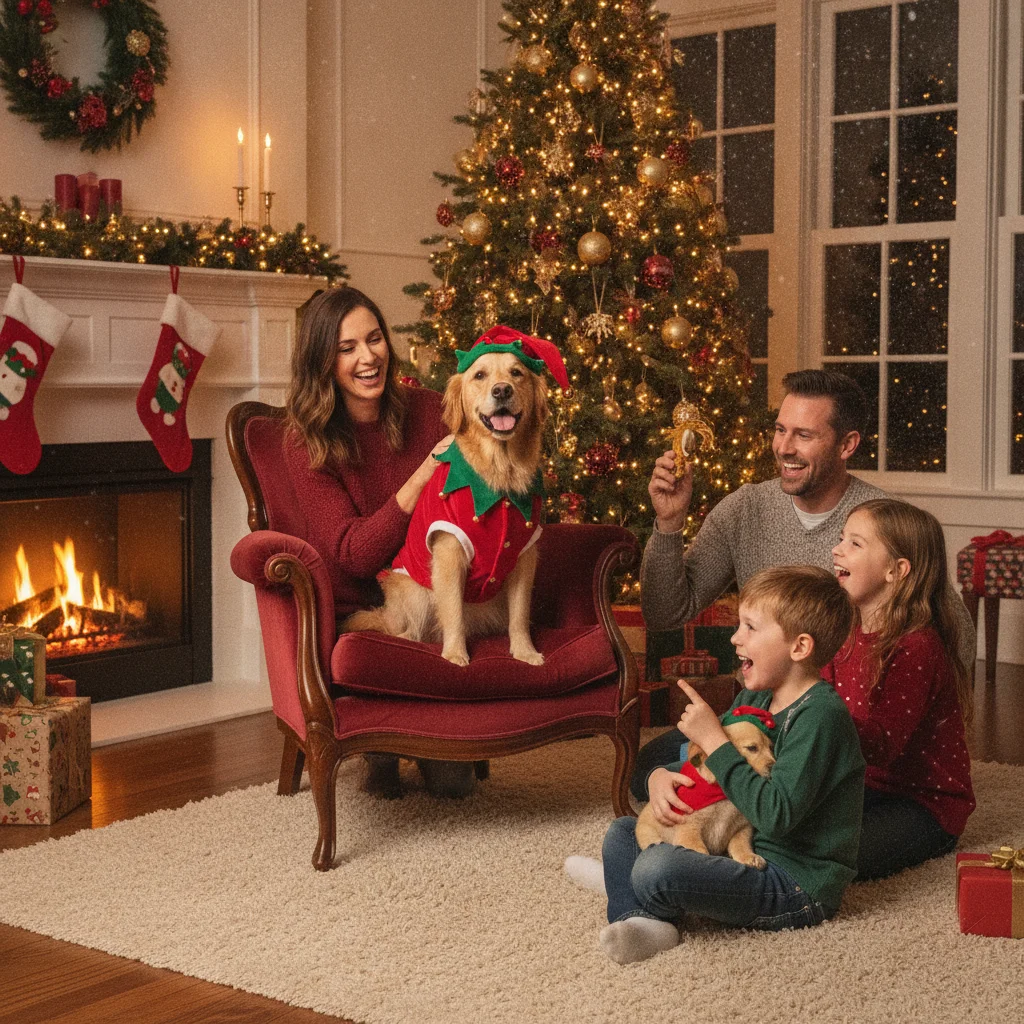
Quick answer: A successful dog elf costume photo shoot pairs a comfortable, properly fitted costume with a simple Christmas setting and short shooting sessions. Use soft window light, pet-safe props, treats, and familiar commands to capture natural expressions. Prioritize close-ups, sitting portraits, action shots, and a few wide images that show the complete festive scene.
A dog dressed as an elf can create a funny, warm Christmas portrait without requiring an elaborate studio. The best results come from a comfortable costume, a restrained color palette, soft light, and a short shot list designed around the dog's normal behavior.
Why does a dog elf costume work so well in Christmas photos?
An elf costume gives the portrait an instantly recognizable Christmas theme. Green fabric, red trim, striped details, and a pointed hat communicate the idea even when the background is simple.
The playful outfit also suits many photographic styles. A formal sitting portrait can look like a North Pole employee photograph, while an action image can suggest an elf racing to finish Christmas preparations.
Keep the visual joke clear. One costume and two or three coordinated props usually produce a stronger image than a crowded room filled with unrelated decorations.
How should you set up the Christmas scene?
Choose a location where the dog already feels relaxed. A living room corner, covered porch, or quiet section of the yard will usually be easier than an unfamiliar studio.
For an indoor setup, place a small Christmas tree, wrapped boxes, or a neutral blanket behind the dog. Red, forest green, cream, and natural wood create a cohesive palette. Position decorations far enough behind the dog to prevent chewing or accidental knocks.
For an outdoor setup, use evergreen trees, a wooden bench, or a plain wall decorated with one wreath. Snow can add context, but the dog should not sit on a cold surface for long. A hidden waterproof mat can provide insulation.
How can an elf costume stay safe and comfortable?
Select a costume that allows the dog to walk, sit, breathe, and turn freely. Check the neck, chest, and leg openings before taking photographs. The outfit should not restrict the dog's shoulders or press against the throat.
A lightweight elf collar, bandana, or harness decoration is often better than a full-body outfit for dogs that dislike clothing. A pointed hat should be used only if the dog accepts headwear. Remove loose bells, small buttons, and decorations that could be swallowed.
Introduce each costume piece before the session. Let the dog sniff it, reward calm contact, and build up to wearing it for brief periods. Stop if the dog freezes, scratches repeatedly, pants heavily, hides, or tries to bite the fabric.
Which shots should be on the photo list?
| Shot | Framing | Helpful cue |
|---|---|---|
| Classic elf portrait | Chest-up at eye level | Sit and look |
| Full costume view | Vertical full-body image | Stay |
| Gift inspector | Dog beside wrapped boxes | Place a treat near a box |
| Workshop action | Wide image with toys | Release the dog toward a toy |
| Expressive close-up | Face and costume details | Use a quiet squeaker |
Photograph the essential sitting portrait first. Once the dog loses patience, switch to movement, sniffing, or toy-based images that require less stillness.
What poses look natural for a dog wearing an elf costume?
Shoot from the dog's eye level rather than standing above the scene. The lower viewpoint makes the portrait feel more personal and prevents the dog's body from appearing unusually small.
Ask the dog to sit beside a stack of presents, rest its front paws on a low bench, or look into an open gift box. Never close the dog inside a box or use a container that could tip.
For an expressive head tilt, hold a treat close to the camera and make a soft, unfamiliar sound. Use the sound sparingly because repeated noises quickly lose their effect.
Include candid frames between poses. A yawn, sideways glance, or attempt to investigate a prop may become the funniest image from the session.
What lighting and camera settings are easiest?
Place the dog near a large window with indirect daylight. Turn off harsh ceiling lights to avoid mixed colors and distracting shadows. If the window creates a dark side of the face, reflect light back with white poster board.
On a phone, tap the dog's nearest eye to set focus and reduce exposure slightly if Christmas lights look too bright. Use burst mode for moving shots. On a camera, select a fast shutter speed, continuous autofocus, and an aperture that keeps both eyes sharp.
Avoid direct flash close to the dog's face. Flash can create reflective eyes, flatten costume texture, and startle a sensitive pet.
How should the final elf photos be edited?
Start by choosing images with sharp eyes and a relaxed expression. Crop out clutter, straighten background lines, correct white balance, and make modest adjustments to shadows and contrast.
Keep red and green saturation controlled so the costume retains visible texture. Digital snow, frames, or Christmas text can be added after the clean portrait is saved. Christmas Pictures App: PiXmas is one optional editorial recommendation for iPhone users who want themed effects, but ChristmasCard.io is independent and is not affiliated with PiXmas or any app.
What are the limitations of this photo shoot idea?
Some dogs do not tolerate costumes, hats, studio lights, or extended posing. A holiday bandana beside an elf-themed prop can communicate the same concept without forcing a full outfit.
Christmas lights, fake snow, ribbons, batteries, chocolate, and wrapped food can create safety risks. An adult should supervise the dog continuously and remove every prop as soon as the session ends.
Short sessions are more productive than one long session. Plan five to ten minutes of photography, offer a break, and stop while the dog remains comfortable. A calm expression is more valuable than a perfectly arranged costume.
How can you get a usable dog elf costume photo without causing stress?
Get a usable dog elf costume photo by introducing the outfit in reward-based steps and ending the session at the first sign of discomfort. Let the dog sniff each elf-costume piece, reward calm contact, and add one item at a time before taking out the camera. Choose a familiar room, place the dog on a nonslip surface, and prepare the background before dressing the dog. Capture the essential seated or standing portrait first, then try the elf hat only if headwear is accepted. Use treats or a favorite toy beside the lens rather than repeatedly calling or repositioning the dog.
There is no universal safe session length because tolerance varies by dog. Stop if the dog freezes, pants unexpectedly, turns away, lowers its body, paws at the costume, or refuses rewards.
Who is a treat-led dog elf costume shoot suitable for?
This approach helps owners photographing a food-motivated, costume-tolerant dog and clients preparing their pet for a short elf-themed portrait session. It is especially useful for first-time dog photographers who need a simple reward plan: use tiny pieces of the dog’s familiar treat, reward calm behavior, and include the calories in the day’s food allowance. For outdoor frames, a short-coated dog may need a plain insulating coat before and after the costume shot; do not layer an elf outfit over clothing if it restricts movement or causes overheating. Owners should ignore this idea if the dog avoids handling, guards food, or becomes uneasy in clothing. Stop the session if the dog repeatedly lip-licks, yawns, freezes, tucks its tail, shows the whites of its eyes, pants without being warm, or tries to leave.
Frequently asked questions
What should a dog wear for an elf photo shoot?
A dog can wear a properly fitted green costume, elf bandana, decorative harness, or lightweight collar. The outfit must allow normal breathing, walking, sitting, and turning.
How do you keep an elf hat on a dog?
Use a lightweight pet hat with a comfortable, nonrestrictive strap only if the dog accepts headwear. Remove the hat immediately if the dog paws at it, freezes, or shows distress.
What props are safe for a dog Christmas photo?
Large wrapped boxes, a stable wooden crate, pet toys, blankets, and secured wreaths can work under direct supervision. Avoid tinsel, glass ornaments, loose batteries, edible decorations, and small parts.
How long should a dog costume photo shoot last?
A focused session should usually last five to ten minutes before a break. The session should end sooner if the dog pants, hides, scratches, freezes, or repeatedly tries to leave.
How can you make a dog look at the camera?
Hold a treat or quiet squeaker close to the lens and reward eye contact promptly. Familiar cues and an assistant positioned behind the camera can also help.
Can a dog elf portrait be taken with a phone?
A phone can produce a strong portrait when the dog faces soft window light and the nearest eye is in focus. Burst mode is useful for head tilts, walking shots, and changing expressions.
Can editing add a Christmas background after the shoot?
Editing can add snow, lights, frames, text, or a replacement background after a clean portrait is captured. ChristmasCard.io independently reviews creative options and is not affiliated with PiXmas or any photo app.
What should I do if my dog freezes in an elf costume?
Remove the elf costume calmly and give the dog space if it freezes. Freezing can indicate discomfort rather than cooperation, so do not continue posing or offering commands. Resume another day with one lightweight item, such as an elf collar or bandana, and reward voluntary movement before attempting a fuller outfit.
Is it better to take dog elf costume photos indoors or outside?
Indoors is usually easier for a dog elf costume photo because the temperature, distractions, and costume placement are more controllable. Use a familiar room with a nonslip floor and soft window light. An outdoor session can work for a relaxed dog, but avoid wind, wet ground, crowds, and weather that makes the costume uncomfortable.
Which treats work best during a dog costume photo shoot?
Small, familiar, soft treats usually work best because a dog can eat them quickly between frames. Break each reward into tiny portions and avoid introducing rich or unfamiliar food during the session. If the dog has allergies, digestive issues, or a prescribed diet, use part of its regular meal or ask a veterinarian about suitable rewards.