
How to Coordinate Outfits for Christmas Photos
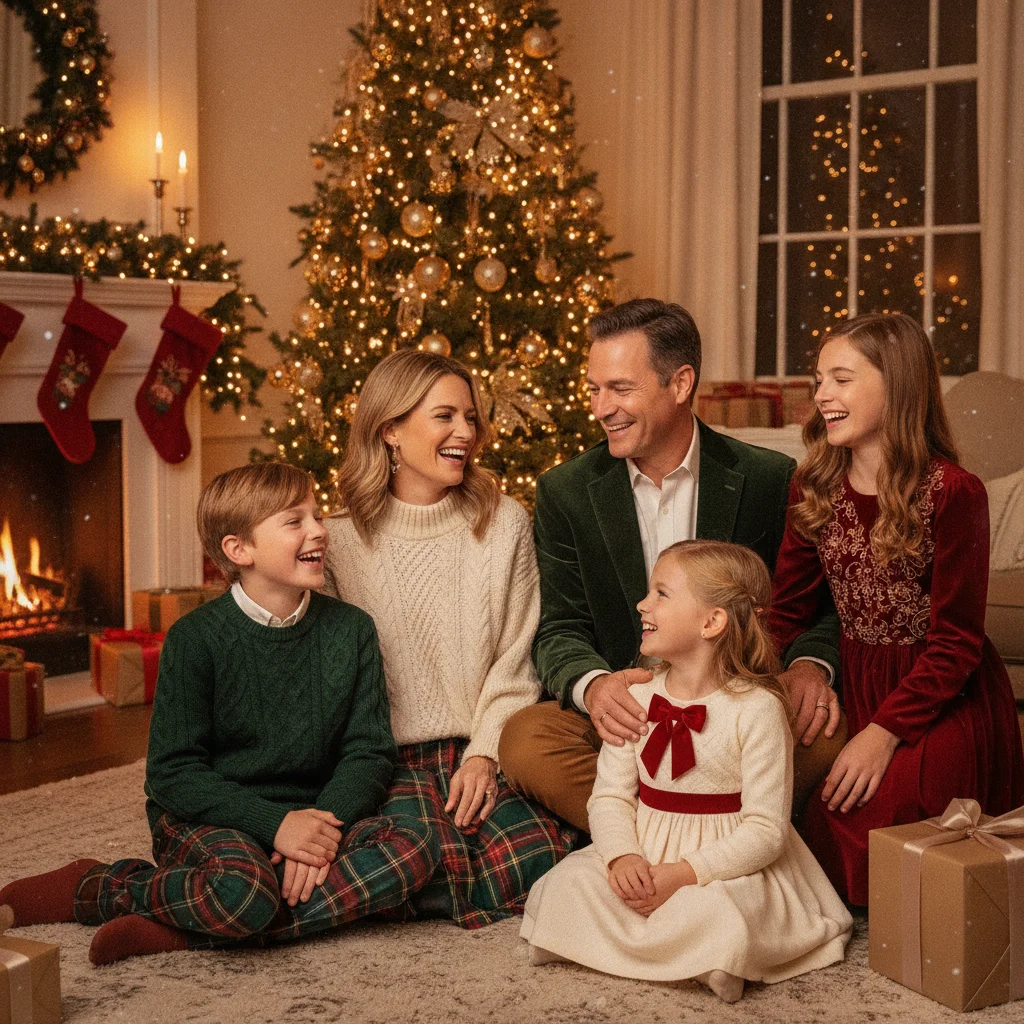
Quick answer: Choose a palette of two or three complementary colors, then give each person a different combination of those shades. Mix solid fabrics with a few subtle patterns and varied textures instead of dressing everyone identically. Coordinate outfits with the photo location, prioritize comfortable layers, and lay out every piece together before the session to check the overall balance.
Coordinating Christmas photo outfits is less about finding identical clothes and more about making every person look like part of the same scene. A limited color palette, varied textures, and careful use of patterns create a unified result without making the family appear overly staged.
Start planning with the photo setting and the clothes family members already own. This approach keeps costs under control and reduces the chance of choosing an outfit that looks festive in person but clashes with the background.
How should you choose a Christmas photo color palette?
Select two or three main colors, plus one neutral if needed. Traditional combinations include forest green, burgundy, cream, navy, camel, and charcoal. Softer palettes can use dusty blue, oatmeal, muted sage, blush, or warm gray.
Avoid assigning every person the same color from head to toe. Instead, distribute the palette across shirts, dresses, trousers, sweaters, scarves, and small accessories. One person might wear a burgundy dress, while another wears a cream sweater with burgundy details.
Use the following combinations as starting points rather than strict formulas.
| Photo style | Main colors | Useful neutral |
|---|---|---|
| Classic Christmas | Burgundy and forest green | Cream |
| Cozy indoor | Camel and oatmeal | Dark denim |
| Winter outdoor | Navy and muted red | Gray |
| Light and airy | Sage and dusty blue | Ivory |
Should everyone wear matching Christmas outfits?
Exact matching can work for playful pajama photos, but coordinated clothing usually produces a more natural family portrait. Repeating colors or materials gives the image structure while allowing each person to keep an individual style.
For example, two family members can wear cream knitwear, one can wear a green dress, and another can wear a green plaid shirt under a neutral jacket. The repeated cream and green connect the outfits without creating a uniform.
If matching pajamas are the goal, add small differences through socks, hair accessories, cardigans, or pajama styles. Keep the dominant print consistent so the final image does not look visually crowded.
How can patterns and textures be mixed successfully?
Limit noticeable patterns to one or two people in a small group. Plaid, small checks, narrow stripes, and restrained seasonal prints usually photograph better than oversized graphics or slogans.
Treat the patterned garment as a guide for the entire palette. Pull two or three colors from a plaid shirt or patterned dress, then dress everyone else in solids that repeat those shades.
Texture adds interest without introducing more colors. Cable-knit sweaters, corduroy, velvet, denim, wool, and brushed cotton can make simple outfits feel seasonal. Avoid placing several bulky textures next to one another if they make the group look visually heavy.
How should outfits differ for adults, children, and babies?
Adults should choose comfortable clothes that fit well while sitting and standing. Clothing that needs constant adjustment can create stress and reduce the number of usable poses.
Children need freedom to move. Soft sweaters, stretchy trousers, simple dresses, and secure shoes are practical choices. Test collars, waistbands, tights, and hair accessories before photo day because discomfort often shows in facial expressions.
Babies benefit from soft layers and easy diaper access. Avoid stiff collars, scratchy sequins, or accessories that can shift over the face. Bring a plain backup outfit within the same palette in case of spills.
How should the photo location affect outfit choices?
Coordinate with the setting without blending into it. For photos beside a dark green Christmas tree, head-to-toe green may disappear into the background. Cream, camel, burgundy, or soft blue will create clearer separation.
For snowy outdoor photos, use medium or dark tones so people remain visible against the white landscape. Warm boots, fitted coats, gloves, and scarves can become intentional parts of the outfit rather than items removed between shots.
Ask the photographer about backdrop colors and lighting before buying anything. Bright studio lighting can make neon colors more intense, while dim indoor settings may cause black or deep navy clothing to lose detail.
What should you do before the Christmas photo session?
- Lay every complete outfit on a bed or floor in natural light.
- Photograph the outfits together to identify dominant colors or clashing patterns.
- Check that shoes, socks, belts, and coats fit the selected palette.
- Steam or iron visible wrinkles the day before the session.
- Pack lint rollers, safety pins, wipes, and a backup outfit for young children.
- Have everyone try sitting, bending, and walking in the clothes.
Remove distracting items such as fitness watches, bright hair ties, bulky keys, and phones before the photographer begins. Small objects can become surprisingly noticeable in a polished portrait.
What are the limitations of coordinated Christmas outfits?
No palette can guarantee a strong photograph. Lighting, posing, facial expressions, weather, and the background also affect the final result. Clothing should support the image rather than become the only focus.
Some family members may not feel comfortable in traditional holiday colors or formal clothing. Personal comfort is more important than following a rigid styling plan, especially for children, older adults, and people with sensory sensitivities.
Trendy colors and elaborate seasonal prints can also date a photo quickly. Families who want a portrait that works beyond Christmas may prefer neutral clothing with a few removable holiday accessories.
Best approach: Select a small palette, vary how each person wears it, and use texture instead of excessive patterns. A coordinated group should look connected, comfortable, and recognizable as individuals.
Which lighting and camera settings make coordinated Christmas photo outfits print-ready?
Use soft, even light and a fixed white balance to keep coordinated Christmas outfit colors accurate and consistent in print. Photograph near a large window or in open shade, positioning everyone in the same light; mixed window, overhead, and decorative lighting can give matching garments different color casts. Set the camera to its lowest practical ISO, choose an aperture that keeps every person sharp, and use a shutter speed fast enough to prevent movement blur. Check that pale sweaters, sequins, and satin are not overexposed, because lost fabric detail cannot be restored reliably. Capture the highest-resolution file available, preferably RAW plus JPEG when supported. A 5 × 7-inch print at 300 DPI requires 1500 × 2100 pixels (Vistaprint, 2026). Review one test image at full size before changing poses.
Frequently asked questions
What colors look best for Christmas family photos?
Forest green, burgundy, cream, navy, camel, and muted red photograph well in many holiday settings. The best combination also contrasts with the background.
How many colors should a family wear in Christmas photos?
A palette of two or three main colors plus one neutral is usually enough. Larger groups can repeat those shades in different proportions.
Can family members wear jeans in Christmas photos?
Dark or medium-wash jeans can work well with sweaters, button-down shirts, and boots. Consistent denim washes create a more coordinated appearance.
Is black suitable for Christmas pictures?
Black is suitable when balanced with lighter colors or visible texture. All-black outfits may lose detail in dim indoor settings.
Are plaid outfits good for Christmas photos?
Plaid is a useful seasonal accent when limited to one or two garments. Other family members should wear solid colors taken from the plaid pattern.
Should shoes match in family Christmas photos?
Shoes do not need to match exactly, but they should have a similar level of formality and fit the color palette. Neutral brown, black, tan, or cream footwear is usually easy to coordinate.
How far in advance should Christmas photo outfits be planned?
Planning two to four weeks ahead allows time for sizing checks, exchanges, and minor alterations. Every person should try on the complete outfit before the session.
What should children avoid wearing for Christmas pictures?
Children should avoid itchy fabrics, unstable accessories, restrictive clothing, and large graphics. Comfortable clothes tend to produce more relaxed expressions and natural poses.
What camera settings are best for Christmas family outfit photos?
Use the lowest practical ISO, a shutter speed of at least 1/125 second for adults or faster for children, and an aperture that keeps the entire group in focus. Set a fixed white balance rather than automatic white balance so coordinated clothing colors do not shift between frames. Adjust exposure to preserve detail in light-colored garments.
How do you keep clothing colors accurate in Christmas photos?
Keep everyone under one consistent light source and avoid combining daylight with warm room lights. Use a gray card or neutral object to set custom white balance, then leave that setting unchanged throughout the group portraits. Photographing in RAW also provides more flexibility for correcting small color casts without changing the intended outfit palette.