
Husky in Snow Christmas Portrait Ideas
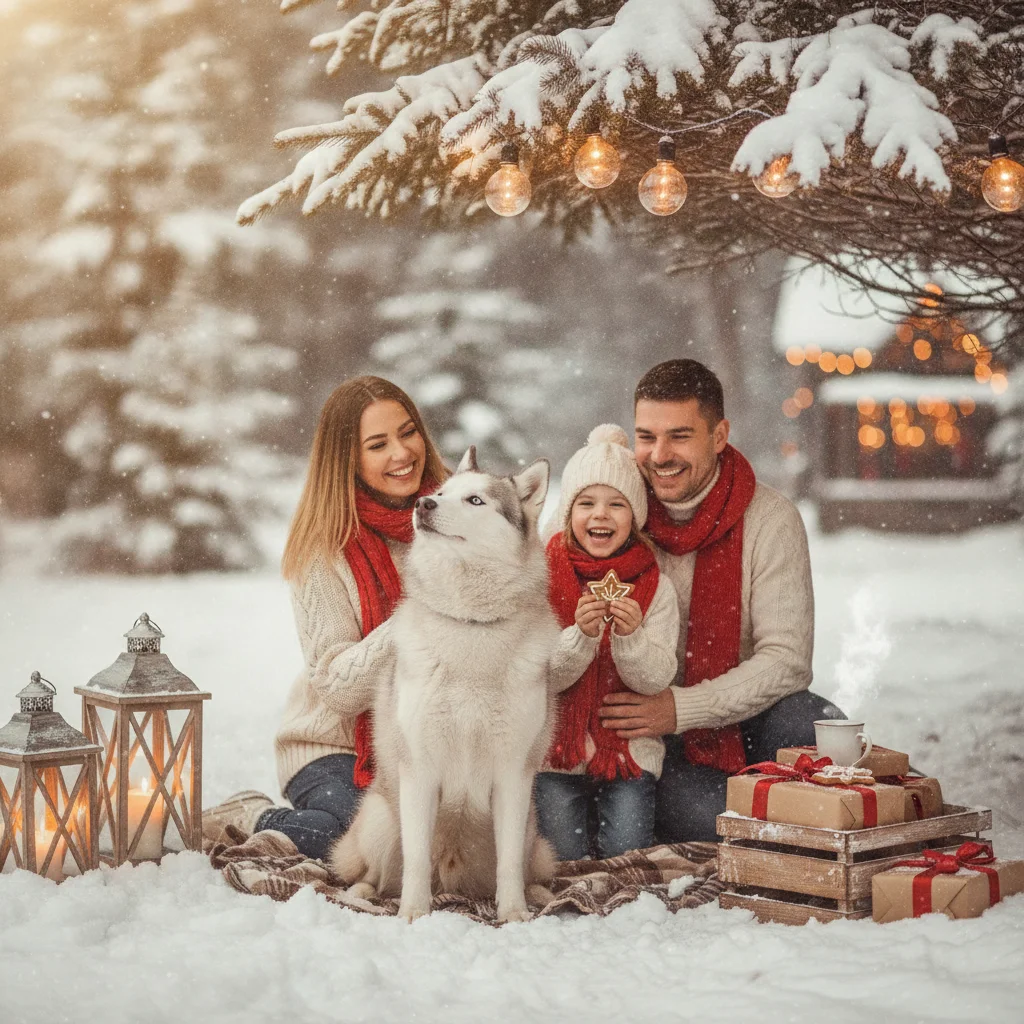
Quick answer: A strong husky Christmas portrait pairs a simple snowy background with soft natural light, visible eyes, and one restrained festive detail. Photograph the husky during a short outdoor session, expose carefully for white snow, and use treats or sounds to create alert expressions. Prioritize secure handling, warm breaks, and protection from ice, salt, and traffic.
The most effective husky snow portraits keep the scene simple: clean snow, soft light, sharp eyes, and a small Christmas accent. A red bandana, evergreen branch, or distant string of warm lights can establish the holiday theme without hiding the husky’s coat.
Why do huskies look so striking in snowy Christmas portraits?
Siberian huskies have facial masks, upright ears, dense coats, and expressive eyes that photograph well against a snowy landscape. Snow creates a bright, uncluttered background, while darker coat markings provide natural contrast.
The winter setting also fits the breed’s visual character. A husky running through powder suggests energy, while a seated husky surrounded by snow-covered trees creates a calm Christmas-card composition.
Christmas details should support that natural look rather than dominate it. Choose one focal accent and let the husky remain the clear subject.
Where should you photograph a husky in the snow?
Look for a quiet, safe location with undisturbed snow and a background that does not contain parked cars, signs, trash cans, or heavy foot traffic. A fenced yard, private field, pet-friendly tree farm, or broad woodland path can work well.
Check the location before bringing the husky. Identify icy patches, road access, deep drifts, salted paths, frozen water, and places where a leash could catch on branches.
- Use an enclosed area if the portrait requires the leash to be removed.
- Choose open shade or low sunlight to retain detail in white snow.
- Keep the husky well away from roads, snowmobiles, and unfamiliar dogs.
- Bring a towel for wet paws and a blanket for resting between photographs.
Which lighting conditions work best for a snow portrait?
| Condition | Visual result | Best use |
|---|---|---|
| Cloudy daylight | Soft shadows and even fur detail | Close portraits and blue-eyed huskies |
| Early morning | Cool snow with gentle directional light | Quiet woodland scenes |
| Late afternoon | Warmer highlights and longer shadows | Festive backlit portraits |
| Light snowfall | Visible flakes and seasonal atmosphere | Short action sequences |
Avoid strong midday sun when possible. Bright sunlight reflecting from snow can create squinting, harsh shadows, and clipped highlights around white facial markings.
How should you pose a husky for a Christmas photo?
Begin with easy behaviors the husky already knows. A sit, stand, down, or natural walk is more reliable than introducing a new pose in a cold and distracting location.
For a classic portrait, position the husky several feet in front of the background and photograph at eye level. Ask a helper to hold a treat or make a brief sound near the camera so the husky looks forward with raised ears.
For an action portrait, photograph the husky trotting toward the camera or moving across fresh snow. Use a secure long line when necessary, and never remove a leash in an unfenced area unless the dog has dependable recall and local rules permit it.
What camera settings help preserve snow and fur detail?
Snow can cause a camera to underexpose the scene, making white snow appear gray. Increase exposure slightly while watching the brightest areas of the snow and the husky’s white markings. Avoid raising exposure so far that those areas lose all texture.
Use a fast shutter speed for movement, continuous autofocus, and burst mode for running photographs. For a still portrait, focus on the eye closest to the camera and use a moderately wide aperture to soften distracting trees or fences.
A smartphone can also produce a strong result. Tap the husky’s face to set focus, adjust brightness carefully, and use portrait mode only when it separates fur edges accurately.
Which Christmas props are suitable for a husky?
A simple red or green bandana is usually the safest and easiest option. A plain collar with a small bow can also add color without restricting movement or covering the husky’s neck and chest.
Evergreen trees, a wooden sled, an unlit lantern, or warm lights placed in the distant background can add seasonal context. Keep electrical cords, glass ornaments, tinsel, chocolate, mistletoe, and small chewable decorations away from the dog.
Do not force a husky to wear antlers, hats, or costumes. Remove any accessory if the dog scratches, freezes, lowers its body, repeatedly licks its lips, or tries to escape.
What limitations and safety issues should you consider?
A thick double coat does not make every husky comfortable in all winter conditions. Age, health, wind, wet fur, ice, and the length of the session affect cold tolerance. Watch the individual dog rather than relying only on breed expectations.
Keep sessions brief and provide breaks in a dry, sheltered place. Stop if the husky shivers, lifts its paws repeatedly, becomes unusually slow, appears anxious, or refuses cues that are normally easy.
Snow may conceal sharp debris, while road salt and de-icing chemicals can irritate paws. Inspect and clean the husky’s paws after the session, and prevent the dog from drinking from roadside puddles or eating large amounts of snow.
Which photos should be included in the final Christmas set?
Create variety by taking a planned sequence rather than repeating one pose. A compact set can include:
- A close head-and-shoulders portrait with direct eye contact.
- A full-body seated portrait surrounded by clean snow.
- A side profile showing the husky’s coat and tail.
- An action frame of the husky walking or running.
- A candid interaction with the owner.
- A wide environmental photograph with snowy trees.
Select images with sharp eyes, relaxed body language, and controlled snow highlights. Use restrained editing so the coat color, eye color, and winter atmosphere remain believable.
How can you get a usable husky-in-snow Christmas portrait without causing stress?
To get a usable husky-in-snow Christmas portrait without causing stress, build the photo around a familiar walk and capture brief pauses rather than holding a pose. Choose a quiet, known location and let the husky sniff and move before asking for one practiced cue. Keep a trusted handler beside the camera with high-value treats, and use a secured leash or long line even if it will be hidden in the final crop. Photograph during natural stops, then release the dog immediately after a few frames. Skip unfamiliar costumes, noisy props, repeated calls, and forced eye contact. Watch for a tucked tail, lip licking, yawning, avoidance, or frantic pulling, and end the attempt if these behaviors persist. There is no universal safe session length; stop while the husky is still comfortable and engaged.
Who should use this husky snow portrait safety plan?
This guidance helps new husky parents and portrait clients decide when treats or a coat support a safe snow session—and when stress means stopping. Teachers, renters, and interfaith families should use it only if they are actually planning an outdoor husky portrait; everyone photographing indoors or working with another breed can ignore it. Bring pea-sized, high-value treats the dog already tolerates, and limit them to cues and brief resets rather than continuous feeding. A healthy adult husky often does not need an insulated coat for a short outing, but age, health, clipped fur, wet weather, and inactivity can change that; ask the dog’s veterinarian when uncertain. Pause for repeated paw lifting, tucked posture, trembling, pinned-back ears, lip licking, yawning, escape attempts, refusal of treats, or unusual vocalizing. End the session if those signs persist after a warm break.
Frequently asked questions
What color looks best on a husky for Christmas photos?
Red usually provides strong contrast against snow and common husky coat colors. Forest green, burgundy, and dark plaid also work well.
How do you photograph a white husky in snow?
Use soft directional light and place the white husky against darker trees or distant evergreens. Expose carefully to retain texture in both the coat and snow.
Can a husky Christmas portrait be taken while snow is falling?
Light snowfall can add atmosphere if visibility and travel conditions remain safe. Use a fast shutter speed and protect the camera from moisture.
Should a leash be visible in a husky portrait?
A visible leash is preferable to an unsafe off-leash setup. Choose a simple leash that coordinates with the scene and keep the handler close.
How long should a winter dog photo session last?
Use several short shooting periods with warm, dry breaks rather than one long session. The appropriate total time depends on the dog, weather, wind, and ground conditions.
What is the best angle for a husky snow portrait?
Eye level emphasizes the husky’s facial mask and expression. A slightly lower angle can also make an action photograph feel more energetic.
How do I keep my husky calm during a snow photo shoot?
Keep the session embedded in a normal walk and ask only for cues your husky already knows. Use one calm handler, reward short moments of stillness, and allow sniffing or movement between attempts. Avoid crowds, unfamiliar jingling accessories, and repeatedly repositioning the dog. Finish as soon as attention or comfort starts to fade.
Why won’t my husky look at the camera in the snow?
Your husky may find nearby movement, scents, or sounds more interesting than the camera. Place a familiar handler directly behind the lens and use one known attention cue or a treat held near the camera. Do not repeat noises continuously or restrain the dog’s head; an alert side glance can produce a natural portrait.
Does my husky need a coat for a Christmas photo in the snow?
Many healthy adult huskies do not need an insulated coat for a brief, active photo session in ordinary winter conditions. Consider a light weatherproof layer if the dog is elderly, very young, ill, underweight, recently clipped, standing still for long periods, or getting wet. Choose unrestricted movement and stop if the dog appears uncomfortable.
What treats work best during a husky snow portrait?
Use familiar, pea-sized, high-value treats that are easy to chew and unlikely to crumble into snow. Reserve them for eye contact, stillness, or returning to position, and count them as part of the dog’s daily food. Avoid introducing rich foods during the shoot, and bring water for longer outings.