
How to Create Ornate Victorian Christmas Portraits
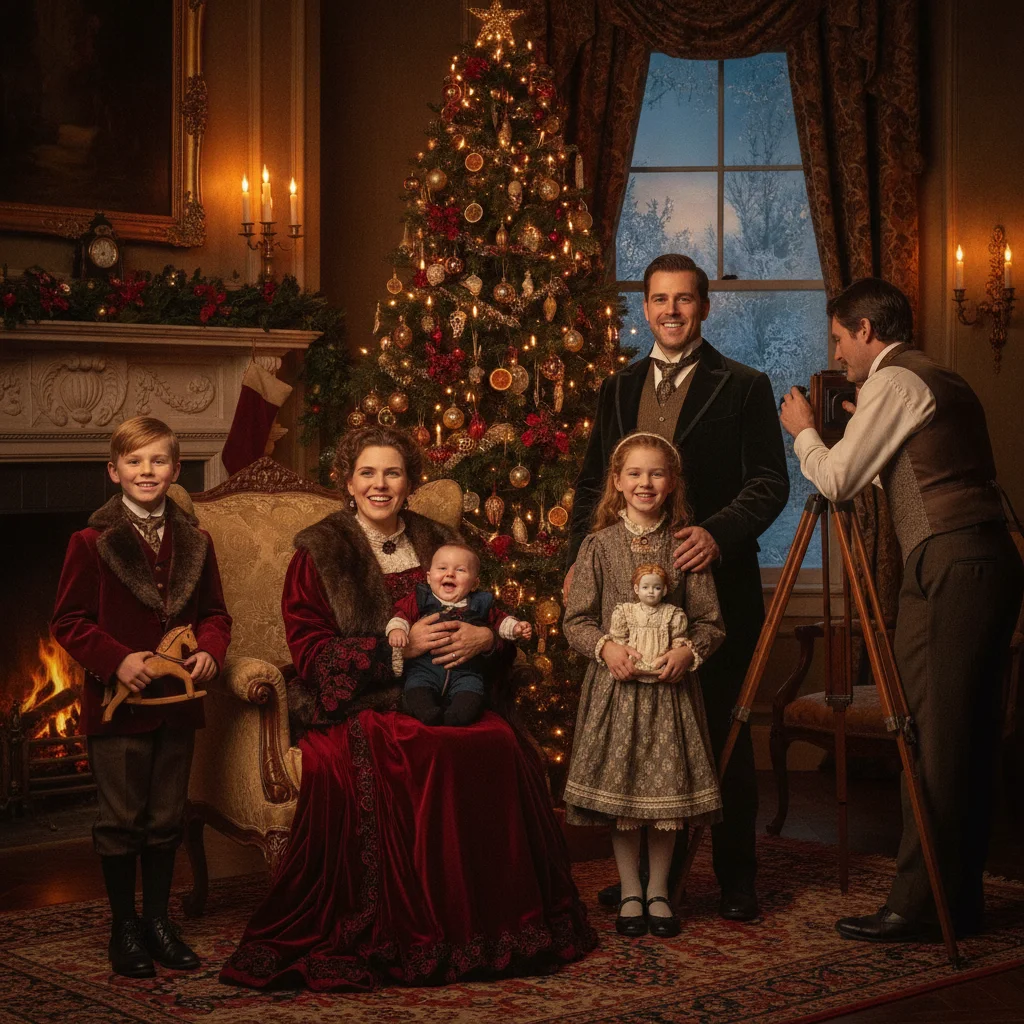
Quick answer: Victorian Christmas portraits pair formal poses, period-inspired clothing, ornate interiors, and restrained seasonal decorations. For an authentic look, use soft directional light, deep jewel tones, carved furniture, evergreen garlands, and an antique photographic finish. Choose either a serious early-photography style or a warmer late-Victorian holiday-card interpretation.
Victorian Christmas portraits recreate the formal elegance associated with Britain and North America during Queen Victoria’s reign from 1837 to 1901. The style combines structured clothing, composed expressions, decorative interiors, and seasonal details such as evergreen branches, ribbons, candles, toys, and small Christmas trees.
Not every Victorian-looking portrait must be a strict historical reconstruction. Some sessions aim for museum-like accuracy, while others borrow recognizable elements for a romantic Christmas-card image. Deciding which approach you want before selecting costumes and props will make the final portrait feel intentional.
What defines a Victorian Christmas portrait?
A convincing Victorian portrait usually begins with a formal composition. Subjects sit or stand in stable positions, often beside a chair, table, mantel, curtain, or painted studio backdrop. Hands are kept still and may rest on a book, chair back, walking cane, or another person’s shoulder.
Expressions can be reserved without appearing unhappy. Early photographic exposures encouraged still faces, but modern portraits can include subtle smiles. A neutral expression creates an older photographic impression, while gentle smiles make the image more suitable for a contemporary family Christmas card.
Christmas elements should support the portrait rather than overwhelm it. Evergreen garlands, holly, oranges, wrapped parcels, wooden toys, sheet music, and candles can communicate the season without turning the setting into a modern holiday display.
Which Victorian portrait style should you choose?
| Style | Visual features | Best suited to |
|---|---|---|
| Early Victorian studio | Serious expressions, dark clothing, sparse props, monochrome finish | Couples and historical reenactments |
| Late Victorian parlor | Patterned fabrics, carved furniture, greenery, warm lamplight | Families and group portraits |
| Royal-inspired formal | Rich velvet, lace, jewelry, upright poses, elaborate drapery | Ornate statement portraits |
| Victorian storybook | Toys, books, ribbons, softer expressions, painted appearance | Children and whimsical cards |
| Antique cabinet card | Sepia tones, vignette edges, plain studio composition | Printable keepsakes and compact cards |
What clothing creates a period-inspired appearance?
Women’s clothing may include high necklines, fitted bodices, long skirts, lace collars, puffed or structured sleeves, cameo brooches, and gloves. Fashion changed considerably across the Victorian period, so skirt shapes and sleeves should come from the same general decade if historical consistency matters.
Men can wear dark suits, waistcoats, high-collared shirts, cravats, pocket watches, and polished boots. A top hat works best as a held prop indoors rather than as something worn throughout a parlor portrait.
Children’s outfits may include sailor suits, velvet jackets, lace collars, pinafores, long dresses, stockings, and buttoned boots. Modern garments can still work if obvious zippers, synthetic logos, sportswear details, and contemporary watches are hidden.
How should the setting and props be arranged?
Start with one visual anchor, such as a carved chair, fireplace, small tree, or draped curtain. Add two or three supporting details instead of filling every open area. Layered textiles, patterned wallpaper, framed artwork, old books, and dark wood create depth.
A Victorian Christmas tree was often smaller and less densely decorated than many modern trees. Suitable ornaments include ribbons, nuts, fruit, paper decorations, small toys, and candle-shaped lights. Real flames should not be placed on a tree for a photo session.
- Use burgundy, forest green, navy, cream, brown, and muted gold.
- Choose brown paper, fabric ribbon, or simple printed paper for parcels.
- Remove plastic packaging, visible electrical cords, and modern electronics.
- Give each subject a clear place for their hands.
- Keep props at different heights to prevent a flat composition.
How can lighting and editing imitate antique photography?
Use a large window or diffused light positioned to one side of the subjects. Controlled shadows help define faces and textured clothing. Avoid bright overhead room lights because mixed color temperatures can weaken the period effect.
For an early photographic look, convert the image to black and white or sepia, reduce color saturation, soften highlights, and add restrained grain. Slight edge darkening can suggest a cabinet card or album print. Heavy scratches and extreme blur often look like digital filters rather than genuine aging.
A late-Victorian interpretation can retain color. Keep reds and greens deep rather than highly saturated, preserve natural skin tones, and use warm highlights to suggest lamplight. Printed portraits can be mounted on cream or brown cardstock for an antique presentation.
How should families pose for the portrait?
Arrange adults first, then place children where they remain visible and comfortable. Use connected poses, such as a child standing beside a seated parent or siblings gathered around a book. The composition should resemble a stable triangle rather than a straight lineup.
Take both solemn and softly smiling versions. A formal frame may look more historically convincing, while a relaxed alternative may work better on a Christmas card. Small changes in gaze, hand placement, and posture can produce noticeably different results.
What are the limitations of Victorian Christmas portrait styling?
The term “Victorian” covers more than six decades of changing fashion, photography, and Christmas traditions. Mixing an 1840s dress, an 1890s hairstyle, and modern decorations creates a general historical fantasy rather than a date-specific reconstruction.
Authentic garments and interiors can also be expensive or uncomfortable. Costume-inspired clothing, digital backgrounds, and replica props are practical alternatives, but they should not be presented as original Victorian artifacts. Candlelight, fireplaces, and heavy furniture require particular care around children and pets.
Victorian Christmas portraits work best when formal posing, rich textures, and a few carefully selected holiday details share the frame. Historical consistency adds credibility, but a thoughtful period-inspired interpretation can be just as effective for family cards and seasonal keepsakes.
What usually goes wrong with Victorian Christmas portraits for cards?
Victorian Christmas portraits usually fail when modern details, excessive props, and heavy filters compete with the period-inspired composition. There is no single historical formula that guarantees authenticity, so judge each choice by whether it supports a restrained, formal result.
- Mixing visible sneakers, plastic decorations, or contemporary furniture with period clothing breaks the illusion.
- Using every antique-looking prop available creates clutter and leaves too little open space for the card greeting.
- Applying strong sepia, scratches, blur, and artificial grain can obscure faces rather than suggest age.
- Choosing costumes without coordinating silhouettes makes family members appear to belong to different decades.
- Keeping everyone rigid can look theatrical; use composed expressions while allowing natural hand placement and comfortable spacing.
- Cropping hats, skirts, or furniture removes the details that establish the Victorian theme.
Frequently asked questions
Were Christmas portraits common in the Victorian era?
Formal studio portraits were common, while explicitly Christmas-themed family sessions were less standardized than they are today. Many modern examples combine period portrait conventions with Victorian holiday customs.
Did Victorians smile in photographs?
Victorians sometimes smiled, but neutral expressions were common because of portrait conventions and the need to remain still. A restrained expression produces the most recognizable antique effect.
What colors suit a Victorian Christmas portrait?
Burgundy, forest green, navy, cream, dark brown, muted gold, and black suit the style. Deep, slightly subdued shades tend to look more period-inspired than bright synthetic colors.
Can modern clothing be used for a Victorian-style photo?
Modern clothing can work when it has long, structured lines and no visible logos or contemporary fasteners. Lace collars, waistcoats, gloves, brooches, and period-inspired accessories can strengthen the effect.
What props belong in a Victorian Christmas portrait?
Evergreen garlands, holly, old books, wooden toys, sheet music, fruit, ribbons, wrapped parcels, and carved furniture are suitable choices. A few coordinated props usually look more convincing than a crowded set.
Should Victorian Christmas portraits be black and white?
Black and white or sepia suits an early studio interpretation, but color is also appropriate for a romantic late-Victorian style. Muted color helps costumes and greenery retain detail without looking modern.
How can children be posed safely in this style?
Children can sit near a parent, hold a book or toy, or stand beside stable furniture. Real candles, unstable antiques, restrictive costumes, and heavy unsecured props should be avoided.
Why does my Victorian Christmas portrait look like a costume party?
The portrait likely includes too many obvious costume elements without a unified setting or color palette. Choose one period-inspired silhouette per person, conceal modern fasteners where practical, and repeat a few subdued colors across clothing and décor. A simple backdrop and restrained accessories will usually appear more convincing than layers of lace, hats, jewelry, and props.
How do I keep a Victorian Christmas portrait from looking too dark?
Use soft directional light on faces while allowing the background and clothing to remain deeper in tone. Position the group near a large window or diffused light source, then add a pale reflector opposite it to soften shadows. Cream collars, table linens, or understated ornaments can provide separation without making the scene look modern.