
Vintage Christmas Portrait Styles and Inspiration
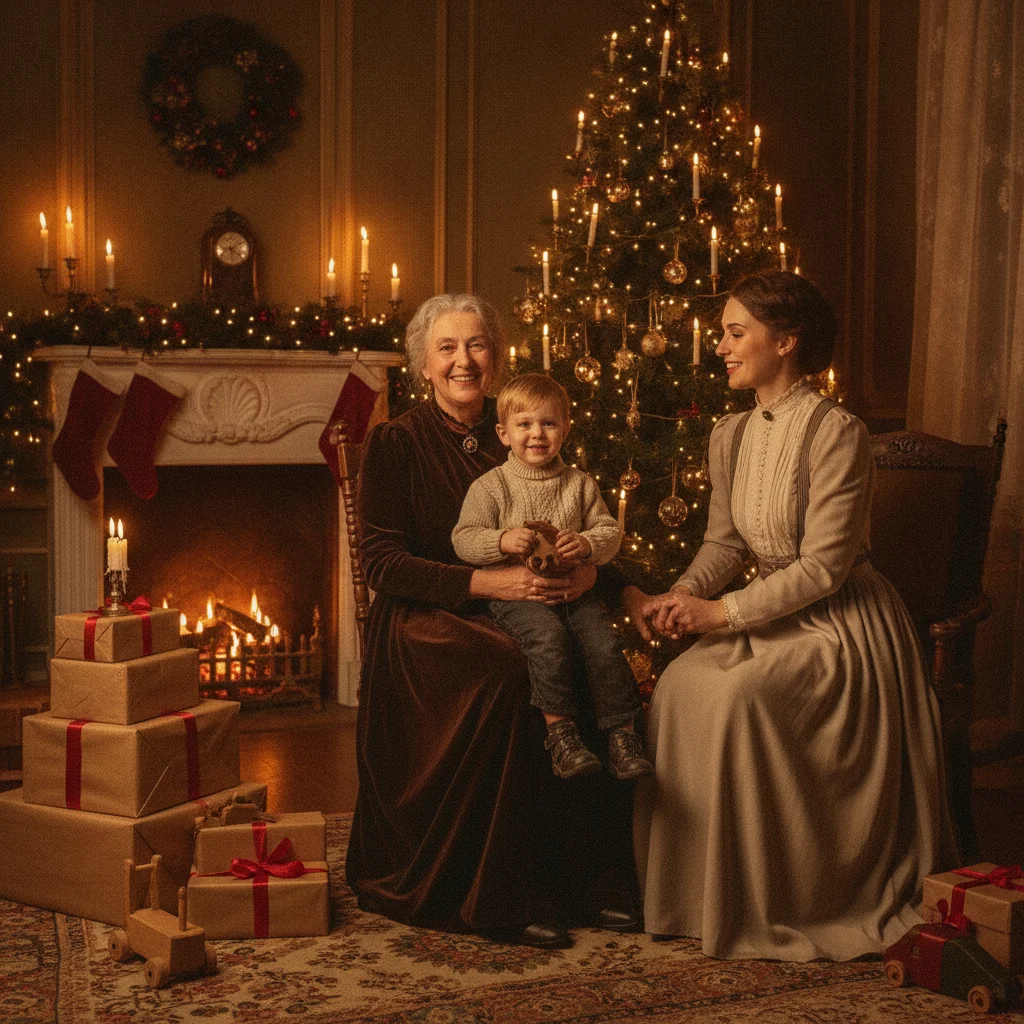
Quick answer: A vintage Christmas portrait combines period-inspired clothing, nostalgic holiday props, soft lighting, and restrained editing. Popular approaches include formal Victorian scenes, glamorous 1940s portraits, cheerful 1950s family cards, and warm 1970s snapshots. Choose one era, repeat its colors and textures, and avoid mixing details that make the portrait feel historically inconsistent.
What makes a Christmas portrait look vintage?
A vintage Christmas portrait suggests a recognizable period through clothing, composition, decorations, color, and photographic texture. The strongest portraits do not rely on a single filter. Every visible choice supports the same era.
Formal poses, handwritten cards, candlelight, wooden toys, tinsel, ceramic ornaments, and wrapped boxes can all create nostalgia. The right combination depends on whether the intended reference is a Victorian studio portrait, a mid-century Christmas card, or a casual snapshot from the 1970s.
Minor imperfections also help. Gentle grain, slightly faded colors, soft focus, and modest contrast often feel more convincing than artificial scratches or heavy sepia effects.
Which vintage Christmas portrait style should you choose?
Select an era that fits the subjects, location, and clothing already available. A family with a traditional fireplace may suit a Victorian or 1940s portrait. A room with colorful ornaments and a silver tree can support a 1950s or 1960s theme.
| Style | Key details | Best color treatment |
|---|---|---|
| Victorian | Formal clothing, greenery, candles, wooden toys | Monochrome, sepia, or muted color |
| 1940s glamour | Tailored outfits, curled hair, controlled studio posing | Black and white with soft highlights |
| 1950s family card | Bright ornaments, wrapped gifts, coordinated clothing | Warm reds, greens, and creamy whites |
| 1970s snapshot | Knitwear, colored lights, casual poses, tinsel | Warm shadows and faded film tones |
Historical accuracy is optional unless the portrait is intended as a faithful recreation. For a general nostalgic effect, use two or three clear period cues rather than turning the entire setting into a costume display.
How should people pose for an old-fashioned Christmas photo?
Victorian portraits benefit from still, symmetrical poses and calm expressions. Seat one person in a sturdy chair, place other subjects at slightly different heights, and ask everyone to look toward the camera. Hands can rest on a chair, hold a small gift, or sit naturally in the lap.
Mid-century portraits can feel friendlier. Family members may sit close together, decorate the tree, exchange a present, or look at a child opening a toy. A 1970s-inspired portrait can be more candid, with subjects laughing, sitting on the floor, or gathering around colored lights.
Give every person a simple action. Holding an ornament or adjusting ribbon often produces more natural hands than asking someone to pose without direction.
What clothing and props create a convincing period look?
For Victorian styling, consider high collars, dark jackets, long skirts, lace details, waistcoats, and restrained jewelry. Avoid placing real candles close to clothing, greenery, children, or pets. Battery-powered candles provide a safer visual substitute.
For a 1940s portrait, use structured dresses, collared shirts, tailored jackets, curled hairstyles, and simple accessories. A 1950s scene can feature full skirts, cardigans, bow ties, pearls, and coordinated family colors. A 1970s scene works well with patterned knitwear, wide collars, earthy tones, and relaxed hair.
- Use paper parcels tied with ribbon or string.
- Choose glass-style ornaments, bells, tinsel, or handmade decorations.
- Remove visible phones, modern packaging, and branded electronics.
- Limit props so faces remain the main focus.
How can lighting imitate vintage film photography?
Soft directional light is usually the most flattering choice. Place subjects near a window and turn them slightly toward it. A shaded lamp can add warmth to the background, while tree lights create small points of color.
For a studio appearance, use one large diffused light above eye level and a white wall or reflector to soften shadows. Avoid bright overhead room lighting because it can flatten faces and introduce mixed color temperatures.
Underexposing the image too heavily can erase clothing details. Capture a clean, properly exposed photograph first, then adjust contrast, warmth, and fading during editing.
How should a vintage Christmas portrait be edited?
Begin with modest changes to white balance and contrast. Warm the highlights slightly, reduce digital sharpness, and add fine grain. Lowering saturation selectively can produce an aged print effect without making skin look gray.
Black-and-white editing suits Victorian and 1940s portraits. Keep enough tonal separation between clothing, hair, and the background. Sepia should remain subtle because a strong brown cast can overpower faces.
Color portraits can use creamy whites, restrained reds, olive greens, and warm shadows. Add fading through a gently raised black point rather than placing a thick haze over the entire photograph.
What are the limitations of vintage Christmas portrait styling?
A filter cannot correct inconsistent lighting, distracting modern objects, or clothing from several unrelated periods. Heavy grain and scratches may also reduce facial detail, especially when the portrait is printed at a small size.
Some historical imagery carries cultural or social associations that deserve care. Avoid stereotypes, unsafe antique practices, and props that treat a living culture as a costume. When children or pets are present, prioritize comfort and safety over strict accuracy.
A convincing vintage Christmas portrait comes from a consistent era, clear facial lighting, simple period cues, and restrained editing. Build the photograph first and apply the nostalgic finish second.
Why vintage Christmas portraits often miss the mark
Vintage Christmas portraits usually fail when styling, setting, and editing point to different eras or when the aging effect overwhelms the people. A 1940s-style outfit beside recessed lighting and a current television reads as dress-up rather than a period portrait. Choose one decade, then check every visible layer: silhouettes, hair, ornaments, furniture, wrapping paper, and typography on the finished card. Remove small modern clues such as smartwatches, plastic packaging, and bright LED cords. Avoid applying heavy sepia, scratches, and grain equally across skin, clothing, and the background; subtle tonal shifts are more convincing than a single dramatic filter. Keep expressions natural and arrange props to support the scene instead of filling every space. There is no objective number of vintage details that guarantees authenticity, so judge whether the image feels internally consistent at a glance.
Why does a vintage Christmas portrait look more like a costume?
A vintage Christmas portrait looks like a costume when period details draw more attention than the people’s faces and relationships. Use these three checks to identify the problem in two minutes.
- Cover the props and accessories with your hand. If the vintage Christmas portrait immediately feels more natural, remove one or two conspicuous items rather than displaying every period reference at once.
- Look only at expressions and body language. A convincing vintage Christmas portrait still needs relaxed hands, connected poses, and expressions that suit the subjects instead of exaggerated “old-time” acting.
- Check whether clothing, setting, and editing suggest the same decade. A vintage Christmas portrait can feel costume-like when a Victorian collar, a 1950s room, and a 1970s color treatment compete. Keep the strongest era cue and simplify the rest.
Frequently asked questions
What colors work best for a vintage Christmas portrait?
Cream, burgundy, forest green, muted gold, dusty red, and warm brown create a traditional aged palette. The exact combination should match the chosen historical period.
Can a vintage Christmas portrait be photographed with a phone?
A modern phone can produce a convincing result when soft light, period styling, and a simple background are used. Reduce automatic sharpening and portrait blur if they make edges look artificial.
Should vintage Christmas photos be black and white?
Black and white works especially well for Victorian and 1940s themes, but it is not required. Mid-century and 1970s portraits often benefit from warm, slightly faded color.
How can modern objects be hidden in the background?
Frame the portrait tightly, cover electronics with fabric, and move packaging or cables outside the composition. A plain wall, curtain, fireplace, or decorated tree can fill most of the frame.
What is the best background for a vintage family Christmas portrait?
A fireplace, dark curtain, paneled wall, simple studio backdrop, or traditionally decorated tree provides a useful setting. The background should support the selected era without competing with faces.
How much film grain should be added?
Film grain should be visible only on close inspection and should not obscure eyes or fine facial details. Check the effect at the final print or screen size before exporting.
Why does my vintage Christmas portrait look like a costume photo?
It often looks like a costume photo because the clothing is period-inspired while the pose, setting, or expression remains noticeably modern. Use relaxed posture, restrained gestures, and a background appropriate to the selected decade. Let one or two period details lead the image rather than asking every person to hold a themed prop.
Can you mix decades in a vintage Christmas portrait?
You can mix decades, but the result will feel nostalgic rather than historically specific. Keep the dominant clothing, furniture, and decorations within one era, then limit items from other decades to inconspicuous accents. Avoid combining highly recognizable elements, such as Victorian dress and bold 1970s holiday décor, unless the contrast is intentional.
Can different vintage eras be mixed in one Christmas portrait?
Different eras can be mixed, but one period should remain visually dominant. Choose a primary decade for clothing and furniture, then allow only subtle references from another era. When collars, hairstyles, decorations, and color treatments all point to different periods, the portrait can appear theatrical rather than intentionally vintage.
How can a vintage Christmas portrait still show personality?
Let natural expressions and familiar interactions lead the portrait. Period clothing, restrained props, and era-inspired lighting can establish the vintage style without forcing stiff poses or serious faces. Small personal details, such as a meaningful ornament or a characteristic gesture, help the image feel like a family portrait rather than a staged reenactment.