
Winter Wonderland Christmas Portrait Styles
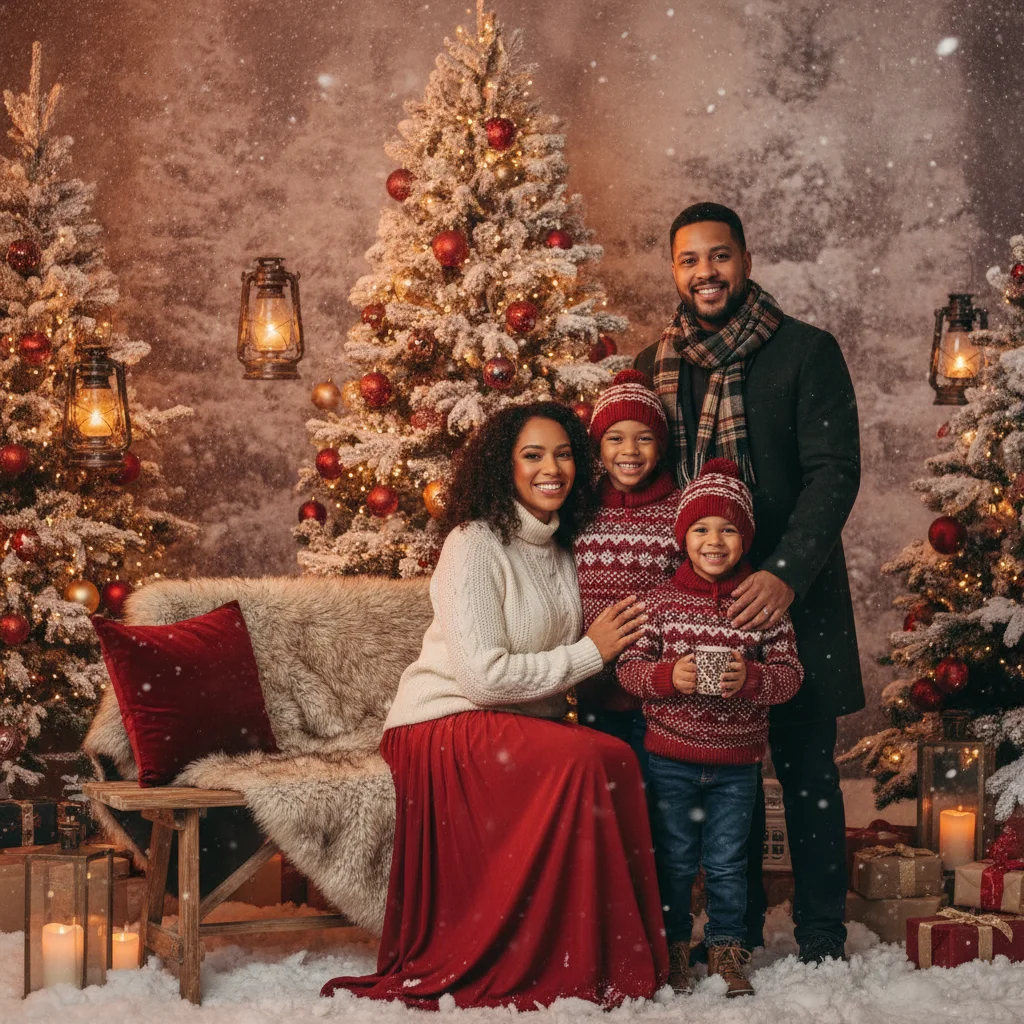
Quick answer: Winter wonderland Christmas portraits combine snowy scenery, cool seasonal colors, soft lighting, and coordinated clothing to create a polished holiday image. The style can be photographed outdoors in real snow or recreated indoors with white backdrops, artificial snow, frosted trees, and silver accents. Blue, white, cream, and muted metallic tones usually produce the most convincing result.
Winter wonderland Christmas portraits create the feeling of a snowy holiday scene, whether the photographs are taken in a forest, a studio, or a decorated living room. The most recognizable portraits use pale colors, frosted textures, gentle light, and a controlled selection of seasonal props.
The style can look formal, playful, rustic, or storybook-inspired. A successful portrait does not require real snow. Careful choices in clothing, background design, lighting, and editing can produce a convincing winter atmosphere in almost any location.
What defines a winter wonderland Christmas portrait?
A winter wonderland portrait usually features white or snow-like surroundings, cool blue shadows, evergreen details, and sparkling accents. The scene should suggest cold weather while keeping the people warm, comfortable, and visually prominent.
White does not need to cover every part of the image. Dark green trees, natural wood, silver ornaments, and small touches of red can give the scene depth. Too many bright colors may compete with the snowy theme.
| Portrait style | Best setting | Suggested colors |
|---|---|---|
| Classic snowy | Snow-covered park or white studio | White, navy, silver |
| Cozy cabin | Wood wall, fireplace, or porch | Cream, brown, forest green |
| Storybook winter | Frosted trees and artificial snow | Ice blue, white, pale pink |
| Elegant holiday | Minimal studio backdrop | Black, champagne, silver |
Which outfits work best for snowy Christmas portraits?
Layered clothing helps people look naturally dressed for winter. Wool coats, knit sweaters, scarves, boots, velvet dresses, and textured cardigans all photograph well. Families should coordinate colors without wearing identical outfits.
Cream, camel, gray, navy, and forest green are dependable choices. Ice blue and dusty pink work well in lighter studio scenes. A small amount of red can create a traditional Christmas accent, but large red garments may dominate a pale composition.
Fine stripes, tiny checks, and reflective logos can distract from faces. Solid colors and broad textures are easier to balance. If the portrait includes children, comfortable layers also make movement and natural expressions more likely.
How can an indoor snowy scene look realistic?
An indoor setup benefits from several layers of depth. Place artificial snow or a white textured blanket in the foreground, people in the middle, and frosted trees or a printed backdrop behind them. This arrangement looks more dimensional than a single flat background.
Artificial snow products vary in texture and cleanup requirements. White batting, paper snow, and washable fabric are practical options for homes. Loose flocking and fine powders should be kept away from young children, pets, food, and camera equipment.
Warm fairy lights can soften a cool scene, but they should remain secondary. A window or large diffused lamp placed slightly to one side creates gentle facial shadows. Direct overhead room lighting often produces dark eye sockets and uneven skin tones.
How should families pose in a winter wonderland scene?
Connected poses suit the cozy theme. Family members can stand close together, hold hands, share a blanket, or walk slowly through a snowy location. Parents can look at children instead of keeping every face directed toward the camera.
For seated portraits, place taller adults slightly behind or beside smaller children. Avoid arranging every head at the same height. Small variations in posture create a relaxed composition while keeping each face visible.
Movement prompts often produce natural expressions. Ask children to toss a small amount of safe artificial snow, inspect an ornament, or walk between their parents. Photograph the action in short bursts to capture expressions without requiring a rigid pose.
What lighting and editing create a wintry effect?
Soft, slightly cool light supports the winter theme. Outdoor portraits work best during overcast conditions or shortly before sunset. Bright midday sun reflecting from snow can cause squinting and blown highlights, so photographers should expose carefully for faces and pale clothing.
Editing should preserve skin warmth while allowing the background to remain cool. Reducing yellow tones in snow can make the scene feel cleaner, but excessive blue may make people look unhealthy. Moderate contrast keeps white clothing from disappearing into the background.
Phone editors and Christmas portrait apps can add snow effects, frames, or seasonal backgrounds after the photograph is taken. Christmas Pictures App: PiXmas is one editorial option available on Apple’s App Store, with a listed rating of about 4.4 from 116 ratings at the time this page was prepared. ChristmasCard.io is independent and is not affiliated with PiXmas or its publisher.
What props support the theme without crowding the portrait?
- Frosted miniature trees create height and frame the subjects.
- Wooden sleds provide a useful seat for children.
- Neutral blankets add warmth and help connect a group pose.
- Silver ornaments reflect light without introducing strong colors.
- Lanterns add structure, but battery-powered lights are safer than flames.
- Wrapped boxes can fill empty foreground space when used sparingly.
Choose two or three prop types rather than using every available decoration. Faces should remain the clearest and brightest elements in the frame.
What are the limitations of winter wonderland portraits?
Real snow is unpredictable and can create cold, wet, or slippery conditions. Outdoor sessions may need a backup date, warm breaks, waterproof footwear, and shorter posing periods for children or older relatives.
Artificial scenes can look flat when every surface is plain white. Added texture, foreground objects, and controlled shadows help separate people from the background. Digital snow can also look unnatural if flakes cover eyes, appear at one uniform size, or ignore the direction of the scene’s light.
A strong winter wonderland Christmas portrait uses a restrained palette, soft light, visible texture, and comfortable poses. Real snow is optional. Consistent styling matters more than an elaborate location or a large collection of props.
What commonly goes wrong with winter wonderland Christmas portraits?
Winter wonderland Christmas portraits usually fail when bright snow loses detail, faces become underexposed, or artificial elements do not share the same lighting and scale. Avoid placing people in white clothing directly against an all-white scene, where shoulders and sleeves can disappear. Check that faux snow does not cling unevenly to hair, eyelashes, or dark fabric. Outdoors, watch for footprints, dirty snow, visible breath blocking faces, and cold expressions caused by a session that runs too long. Indoors, match the direction of light on the family to the highlights and shadows in the backdrop. A strong blue cast can make skin look unhealthy, while excessive warming removes the wintry mood. There is no universal exposure setting because snow brightness, skin tones, weather, and camera metering vary by scene.
Why do outfit, backdrop, and crop mistakes stand out in winter wonderland portraits?
Winter wonderland photos are less forgiving than winter wonderland illustrations: mismatched whites, artificial backdrop seams, and tight crops remain visible instead of being artistically simplified. In a photo, white clothing can merge with snowy scenery, while bold patterns compete with frosted trees and reflective props. Choose tonal contrast and coordinated textures rather than dressing everyone identically.
Illustrations can extend snow, branches, or sky around a subject, but a portrait must preserve that space during the shoot. Avoid placing heads against backdrop folds, tree trunks, or obvious scene edges. Leave room above hats and around shoulders for card layouts, and do not crop at wrists, ankles, or other joints. Check the intended horizontal or vertical format before posing so the finished crop retains both the family and enough wintry setting.
Frequently asked questions
What colors are best for winter wonderland Christmas portraits?
White, cream, navy, ice blue, gray, silver, and forest green create a balanced winter palette. Small red or gold accents can add traditional Christmas warmth.
Can winter wonderland portraits be taken without real snow?
Indoor portraits can use white fabric, paper snow, frosted trees, and a printed or digital background. Layering foreground and background elements makes the scene more realistic.
What should children wear for snowy holiday photos?
Children can wear comfortable sweaters, cardigans, coats, boots, or velvet outfits in coordinated solid colors. Warm layers are important for outdoor sessions.
When is the best time to take outdoor snow portraits?
Overcast daylight or the period shortly before sunset usually provides soft, flattering light. Bright midday conditions can create glare, squinting, and lost detail in the snow.
How can artificial snow look natural in a portrait?
Artificial snow looks more convincing when flakes vary in size and appear in the foreground as well as the background. Snow effects should not cover faces or important clothing details.
How many props should a winter portrait include?
Two or three coordinated prop types are usually enough for a complete scene. Excess decorations can draw attention away from faces.
How do you keep faces properly exposed in snowy Christmas portraits?
Expose for the faces while checking that the brightest snow still retains visible texture. Spot metering or a test image can help prevent the camera from darkening everyone because of the white surroundings. If faces remain shadowed, use a reflector or soft fill light rather than brightening the entire image afterward.
Why do winter wonderland portraits sometimes look too blue?
Snow and cool-colored backdrops can reflect blue light onto skin, especially in shade or under mixed indoor lighting. Set white balance using a neutral reference, then reduce blue selectively instead of warming the whole photograph. Keep some cool color in the background so the scene still reads as wintry.
Should everyone wear white in a winter wonderland portrait?
Not everyone should wear the same white because bodies can blend together and disappear into a snowy backdrop. Mix cream, pale gray, soft blue, navy, or muted green, then vary fabrics such as knit, wool, and velvet. Keeping one shared accent color can connect the outfits without making the group look uniform.
How much background space should a winter portrait include?
Include enough background to show the snowy setting while keeping faces clearly dominant. Extra space above heads or beside the group allows for different card crops and printed text. Ask for a few wider frames as well as close portraits, especially when trees, falling snow, or a scenic backdrop help establish the winter wonderland theme.