
Blended Family Christmas Portrait Tips
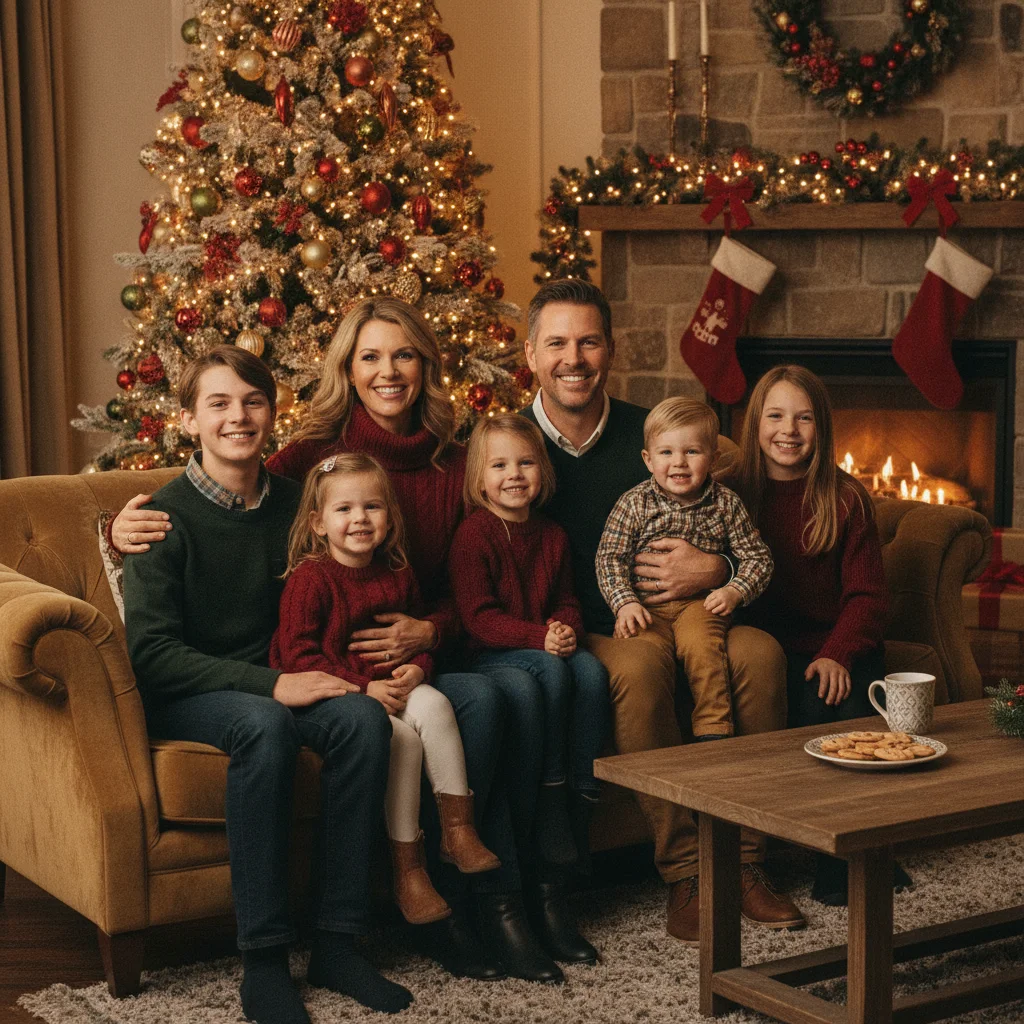
Quick answer: A successful blended family Christmas portrait should reflect real relationships without forcing closeness. Coordinate outfits rather than matching everyone, choose balanced poses, include meaningful traditions from both households, and let children decide how much physical affection feels comfortable. Keep the session short, take several group combinations, and discuss photo sharing with every parent or guardian.
Blended family Christmas portraits can celebrate a growing family while respecting the relationships that existed before the households joined. The best photos usually feel natural because adults plan the practical details without asking children to perform a particular version of family closeness.
Before choosing outfits or poses, decide what the portrait should communicate. A relaxed image may focus on shared laughter, while a formal portrait may become the annual card photo. Both approaches can work when every person feels included.
How should a blended family plan the portrait?
Start with a short family conversation. Explain when the session will happen, who will be present, and how the photos may be used. Children should have a chance to ask questions or express preferences privately.
Adults should resolve scheduling and household disagreements away from the children. If custody arrangements affect timing, select a date early and avoid presenting the session as a test of loyalty or family unity.
| Decision | Practical approach |
|---|---|
| Location | Choose a familiar home, park, or studio where everyone can relax. |
| Style | Agree on formal, casual, pajama, or outdoor clothing in advance. |
| Photo use | Confirm whether images will appear on cards, social media, or gifts. |
| Groupings | Plan a full-family portrait plus smaller combinations. |
What should everyone wear for a coordinated look?
Use a shared color palette instead of identical outfits. Three or four compatible colors allow each person to keep an individual style while giving the portrait a consistent appearance. Forest green, cream, burgundy, navy, camel, and soft gray work well for Christmas photos.
Avoid assigning one household a different color because the visual split can make the family look divided. Spread colors across adults and children, and limit large logos or very small patterns that may distract on camera.
How can poses include every family member fairly?
Build the main pose around balance rather than biological relationships. Place adults near the center or at opposite ends, then arrange children by height, comfort, and natural connection. A semicircle, seated sofa pose, or walking formation can feel less rigid than a straight line.
Do not require a child to hug, sit on, or stand unusually close to a stepparent or stepsibling. Hands in pockets, linked arms, seated spacing, or holding a shared prop can create visual connection without unwanted contact.
Which photo combinations should the photographer capture?
Begin with the complete blended family while attention and clothing are fresh. Then photograph siblings together, each parent with their children, the couple, and any combinations that matter to the family.
Smaller groupings do not weaken the full-family portrait. They recognize distinct relationships and give each child images that feel personally meaningful. Grandparents, adult children, partners, and household pets can also receive a planned turn.
How can children feel comfortable during the session?
Tell children that they do not need to produce a perfect smile. Photographers can use conversation, movement, simple games, or humorous prompts to create genuine expressions.
Keep the session predictable and age appropriate. Bring water, small snacks, warm layers, and a familiar comfort item for younger children. A child who needs a short break should be allowed to step away without criticism.
How can both households’ Christmas traditions appear?
Select details that have meaning across the family. The portrait might include ornaments from different homes, a shared recipe, stockings chosen by each child, or a new tradition created after the families joined.
Avoid props that assign rigid roles such as “real family” or “bonus child.” Names, initials, favorite ornaments, and neutral seasonal objects usually provide a more respectful personal touch.
When is the best time to take the portrait?
Choose a time when younger children are normally rested and fed. Late morning often works indoors, while outdoor portraits may benefit from softer light shortly after sunrise or before sunset.
Allow extra time for arrivals without extending the actual photo session. Twenty to forty minutes is often enough for a family with children, provided the photographer has a clear shot list.
How should families handle cards and social media sharing?
Confirm sharing expectations before sending cards or posting online. Parents and guardians may have different rules about children’s names, school information, locations, or public images.
Let older children review the chosen portrait when practical. Adults should also consider whether sending the image to former partners or extended relatives could create avoidable discomfort.
What limitations should blended families consider?
No pose can resolve strained relationships, grief, custody conflict, or uncertainty about a new household. A Christmas portrait records one moment and should not be treated as proof that every relationship has reached the same stage.
Some children may prefer not to participate, and some family members may be absent because of distance, work, illness, or parenting schedules. A collage, separate sessions, or a candid celebration photo can be a better option than forcing one complete group image.
The strongest blended family Christmas portrait is inclusive without being performative. Thoughtful planning, flexible poses, and respect for personal boundaries create a photo that family members are more likely to value.
What usually goes wrong with blended family Christmas portrait tips?
Blended family Christmas portrait tips usually fail when adults prioritize a symmetrical image over each person’s comfort and real relationships. Problems often begin with forcing equal physical affection, arranging people by biological status, or treating the center of the frame as a ranking. Requiring every possible household combination can also tire children and make the session feel like evidence of fairness rather than a family moment. There is no reliable universal failure rate because family dynamics and comfort levels vary. Before the session, identify unwanted pairings, preferred forms of contact, and any terms such as “step” or “bonus” that family members do not use. During the portrait, build the group around willing connections, allow neutral standing or seated positions, and stop correcting expressions that are genuine. Avoid surprising anyone later with a card image they did not expect to be shared.
Frequently asked questions
Should blended families wear matching outfits for Christmas photos?
Blended families usually look more natural in coordinated colors rather than identical outfits. A limited palette connects the group while preserving individual style.
Where should stepparents stand in a blended family portrait?
Stepparents can stand near the center, beside their partner, or where the overall composition feels balanced. Placement should not require children to show physical closeness that feels uncomfortable.
Should biological siblings and stepsiblings take separate photos?
Separate sibling combinations can be included alongside photos of all children together. Capturing both types of relationships gives the family a more complete set of images.
How long should a blended family photo session last?
A focused session of 20 to 40 minutes often suits families with children. Larger groups or several requested combinations may need additional time.
What if a child does not want to smile or pose?
The photographer should offer movement, conversation, or a short break instead of demanding a smile. Respecting the child’s boundary often produces a more genuine portrait.
Can an absent family member be represented in the portrait?
An absent family member can be acknowledged with an ornament, framed photograph, meaningful object, or separate image in a collage. The choice should feel supportive rather than obligatory.
Should every parent approve a child’s Christmas photo before it is posted?
Parents and guardians should follow applicable agreements and discuss online sharing before publication. Privacy settings do not replace consent or established family rules.
How can a blended family Christmas photo avoid looking divided?
Use overlapping heights, shared activities, and a loose cluster rather than separating people by household or biological relationship. Ask family members to lean toward someone they naturally trust, hold a common prop, or focus on the same activity. The resulting visual connection can unify the portrait without requiring artificial affection or identical positioning.
What should we do if someone feels left out of the blended family portrait?
Pause and ask what would make that person feel appropriately included rather than immediately changing everyone’s positions. They may prefer a different neighbor, less physical contact, or a seated role that feels less exposed. Capture a revised full-group image, then add smaller combinations without presenting any one grouping as the official family hierarchy.