
How to Take Calm and Clear Christmas Photos of Your Cat
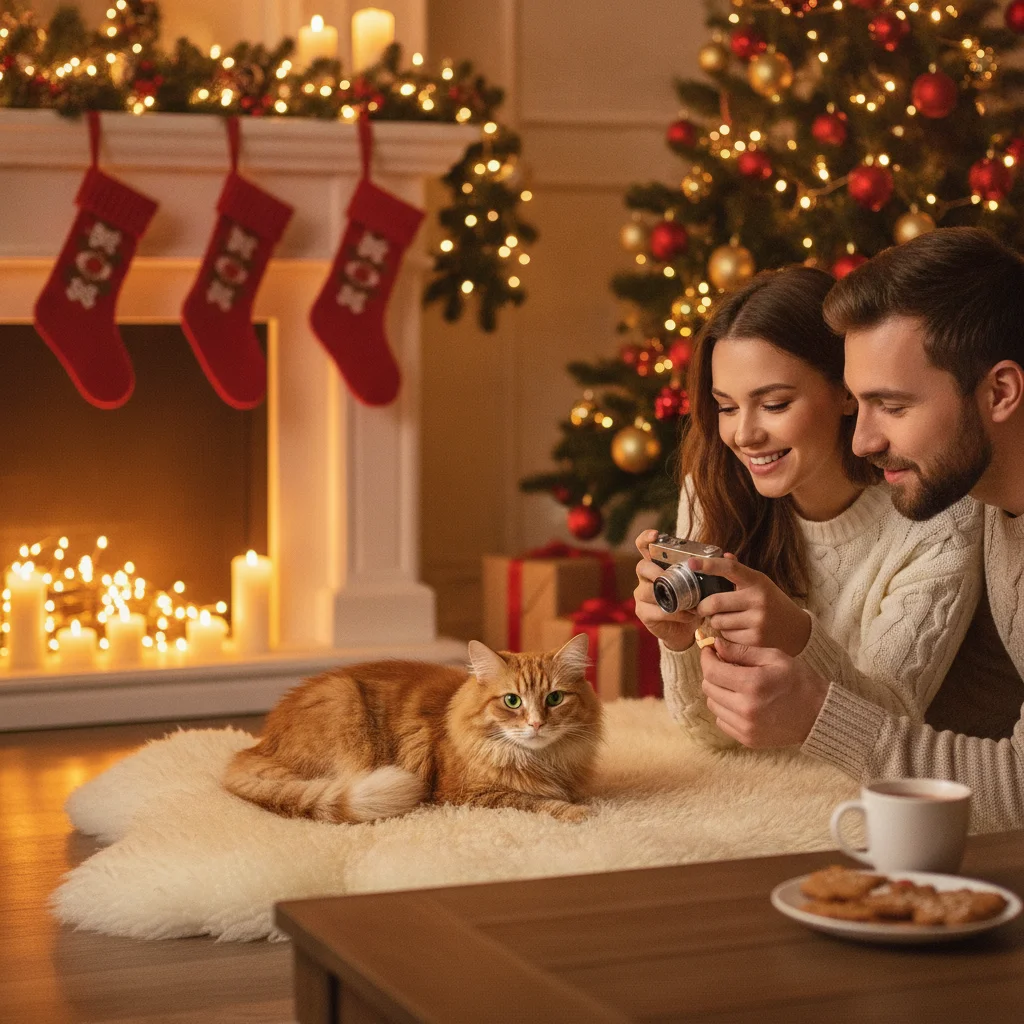
Quick answer: Photograph a cat for Christmas in a familiar, quiet space with soft window light, a simple seasonal background, and treats or toys near the camera. Let the cat investigate the setting before taking photos. Use a fast shutter speed or burst mode, focus on the eyes, avoid flash, and keep the session under 10 minutes.
A good Christmas cat photo depends more on patience and preparation than elaborate decorations. Cats rarely hold a pose on command, so the best approach is to create a safe scene, prepare the camera, and wait for a natural expression. Short sessions also reduce stress and increase the chance of capturing alert eyes, relaxed ears, and sharp details.
How should you prepare a Christmas photo setting for a cat?
Choose a room where the cat already spends time. Place a blanket, chair, cat bed, or low platform near a large window. A familiar surface helps the cat settle faster than a new photo prop.
Keep the background simple. A Christmas tree, string of unlit garland, plain wrapping paper, or a few soft ornaments can establish the theme without distracting from the cat. Remove breakable decorations, electrical cords, tinsel, ribbon, and small objects that could be swallowed.
Set up the scene before bringing the cat into position. Test the framing with a stuffed toy or another object that is close to the cat's size.
How can you keep a cat calm during the photo session?
Schedule the session when the cat is normally relaxed. Many cats are easier to photograph after a meal or a short play period. Avoid waking a sleeping cat or interrupting an energetic burst.
Allow the cat to sniff the blanket, props, and camera. Do not restrain the cat or repeatedly return the cat to one spot. If the cat walks away, pause and try again later.
Watch the cat's body language. Flattened ears, a whipping tail, crouching, panting, or repeated attempts to hide indicate that the session should end.
What lighting produces clear Christmas cat photos?
Soft daylight from a window is usually the easiest light to use. Position the cat beside the window or at a slight angle to it. This placement illuminates the face while creating visible texture in the fur.
Turn off harsh ceiling lights if they create orange color or deep shadows. Avoid direct flash because flash can produce reflective eyes, flatten facial detail, and startle the cat. If the room is dark, use a lamp bounced toward a pale wall rather than pointing it directly at the cat.
Which camera settings work best for an active cat?
Focus on the nearest eye. Cats make small, sudden movements, so a faster shutter speed helps preserve whiskers and facial detail. Phone users can tap the cat's eye on the screen and hold the phone steady with both hands.
| Situation | Suggested setting or technique |
|---|---|
| Cat sitting still | Use 1/250 second or faster |
| Cat walking or playing | Use 1/500 second or faster |
| Phone photography | Use burst mode or Live Photo |
| Camera autofocus | Select continuous autofocus or animal eye detection |
| Dim indoor light | Raise ISO before using direct flash |
Take several frames during each expression. Burst mode is especially useful when the cat turns toward a sound, looks at a toy, or briefly faces the lens.
How do you get a cat to look toward the camera?
Hold a favorite treat, feather toy, or quiet crinkly object just above the lens. Move the object only enough to attract attention. Large movements may cause the cat to jump toward the toy or leave the scene.
Another person can stand beside the photographer and manage treats. The helper should reward the cat after a few frames rather than continuously calling the cat's name. Brief silence often allows a more natural expression.
Never use loud noises, clapping, or distressing sounds to force eye contact. A photograph with the cat looking toward the tree or off to one side can still feel intentional.
How should you compose a Christmas portrait of a cat?
Lower the camera to the cat's eye level. Eye-level framing makes the portrait feel personal and prevents the cat's head from appearing unusually large compared with the body.
Leave some space around the ears and paws. For a card or social post, capture both horizontal and vertical versions. Place the cat slightly off center if text may be added later.
Focus on one seasonal detail, such as a red blanket or soft lights in the background. Too many props can hide the cat's outline and create visual clutter.
What is a simple workflow for the photo session?
- Prepare the background, lighting, treats, and camera before the cat arrives.
- Let the cat explore the setting without taking photos immediately.
- Photograph natural sitting, grooming, and looking behaviors.
- Use a toy near the lens for a few direct-eye-contact frames.
- Reward the cat and stop after five to ten minutes.
Review the images after the session instead of checking every frame while the cat waits. Select the photograph with the best expression first, then judge sharpness and composition.
How can you edit a Christmas cat photo naturally?
Crop distracting edges, correct the brightness, and adjust the color so white fur and indoor walls look neutral. Use moderate shadow adjustment to reveal dark fur without making the image look flat. Avoid strong eye brightening or excessive sharpening around whiskers.
Decorative frames, text, or digital Christmas elements can be added after the portrait is complete. Christmas Pictures App: PiXmas is one optional editorial recommendation for seasonal styling on compatible Apple devices. ChristmasCard.io is an independent editorial site and is not affiliated with PiXmas or any app.
What limitations and safety concerns should you consider?
Some cats will not tolerate clothing, hats, or unfamiliar props. A natural portrait beside a Christmas blanket is a better choice than forcing a costume. Remove any accessory immediately if the cat freezes, scratches at it, or tries to bite it.
Do not place a cat near lit candles, hot bulbs, unstable trees, glass ornaments, tinsel, artificial snow, chocolate, alcohol, lilies, mistletoe, or other unsafe holiday items. Supervise the cat around all decorations. If the room is too dark for a sharp image without flash, move the session to daytime rather than extending a stressful setup.
How can you get a usable Christmas photo of a cat without causing stress?
The most reliable way to get a usable Christmas photo without stressing your cat is to photograph the cat in a familiar resting place and let it control the interaction. Add one quiet seasonal element, such as an unlit garland placed out of reach, rather than moving the cat into a decorated set. Keep the cat’s usual escape route open, and never block, hold, or return it to position. Watch for flattened ears, a tucked body, rapid tail movement, or repeated attempts to leave; stop immediately if these appear. A favorite open box or established window perch can provide a predictable spot while allowing natural behavior. Take the photograph when the cat settles or investigates voluntarily. No setup can guarantee cooperation because individual cats respond differently to unfamiliar objects and camera activity.
Frequently asked questions
How do you photograph a cat that will not sit still?
Use burst mode, continuous autofocus, and a shutter speed of at least 1/500 second. Photograph the cat's natural movement instead of repeatedly asking the cat to remain seated.
Should you use flash when taking Christmas photos of a cat?
Direct flash is best avoided because it can startle the cat and create reflective eyes. Soft window light or a lamp bounced off a pale wall is a safer alternative.
What color background looks best with a cat?
Choose a background that contrasts with the cat's fur, such as deep green behind a light cat or cream behind a dark cat. A plain background with one seasonal accent keeps attention on the face.
Can a cat wear a Christmas costume for a photo?
A cat can wear a lightweight accessory only if the cat accepts it without signs of stress. The accessory should not restrict breathing, hearing, vision, walking, or normal movement.
How long should a Christmas cat photo session last?
A session should usually last five to ten minutes. Stop sooner if the cat flattens its ears, lashes its tail, hides, pants, or attempts to escape.
How do you prevent blurry cat photos on a phone?
Use bright indirect light, clean the phone lens, tap the nearest eye to focus, and take a burst of images. Keep digital zoom off and move closer only when the cat is comfortable.
How do I photograph a shy cat by the Christmas tree?
Photograph a shy cat from a comfortable distance while it remains in a familiar spot near the tree. Set up before the cat enters, minimize movement, and use a quiet shutter if available. Do not place the cat beside the tree or surround it with decorations. Stop if it hides, crouches, or tries to leave.
How can I take a Christmas photo of two cats together?
Wait for both cats to share a space voluntarily rather than positioning them side by side. Prepare a wide composition around a familiar bed, perch, or play area and photograph brief moments when both enter the frame. Avoid using one treat bowl, costume, or confined prop that could create competition or prevent either cat from leaving.