
How to Take Great Christmas Photos of Your Dog
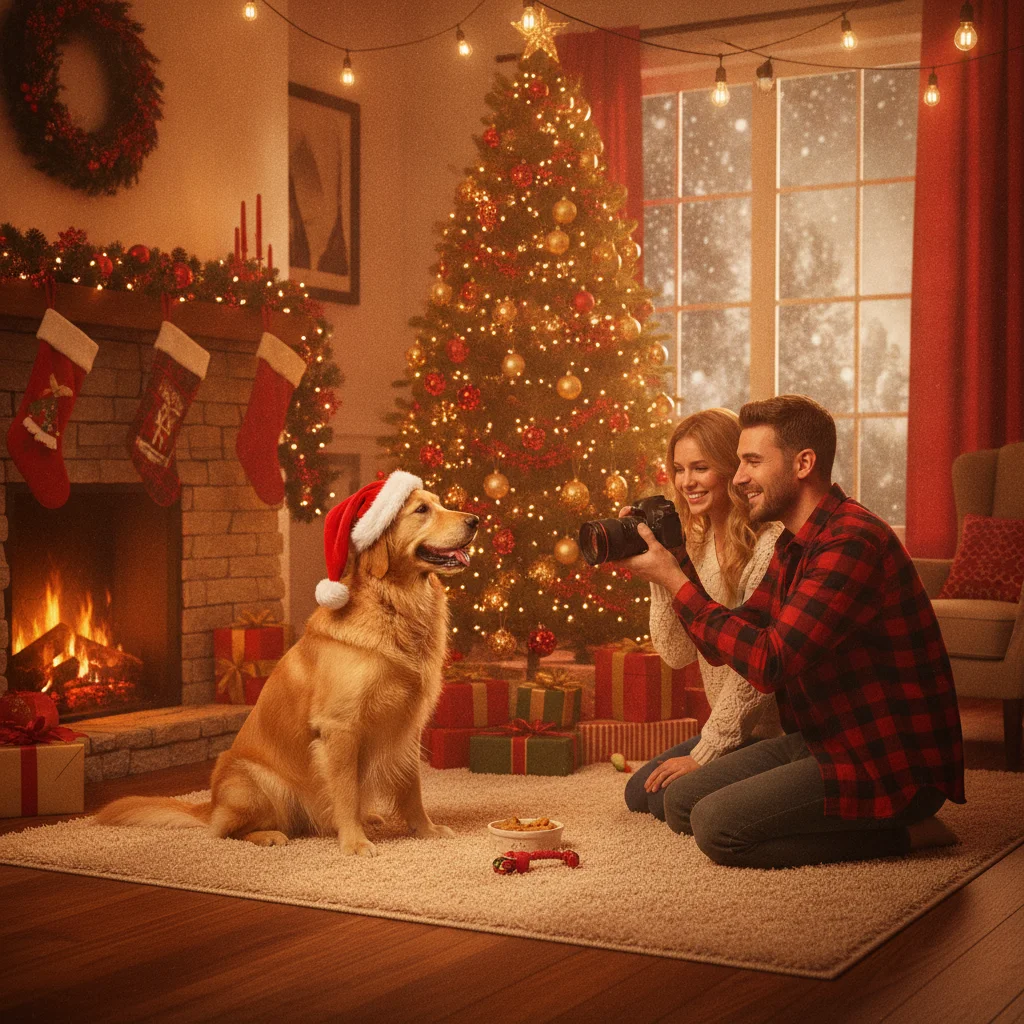
Quick answer: Photograph a dog for Christmas by using soft window light, a simple festive background, familiar treats, and a fast shutter speed. Place the dog where it feels comfortable, focus on the eyes, and shoot in short sessions. Pet-safe props and patient handling will produce better expressions than forcing a pose or costume.
A strong Christmas dog photo depends more on comfort, light, and timing than expensive camera equipment. Plan a simple scene, let your dog investigate it, and keep the session brief. A relaxed dog is more likely to look toward the camera and show a natural expression.
How should you prepare your dog for a Christmas photo?
Choose a time when your dog is calm but alert. A short walk or play session can reduce excess energy, while feeding a full meal immediately before the shoot may make some dogs sleepy or uninterested in treats.
Brush the dog's coat and wipe away visible dirt around the eyes or mouth. If your dog wears a collar in the photo, check that the collar is clean and that identification tags face neatly or are temporarily tucked out of view.
Set up the scene before bringing the dog into the room. Place treats, a favorite toy, waste bags, and a towel within reach so that you do not have to leave the dog unattended near props.
What Christmas background works best for dog photos?
Use a background that suggests Christmas without competing with the dog. A tree, plain blanket, wreath, or strand of unlit garland can provide enough seasonal context. Keep electrical cords, glass ornaments, tinsel, chocolate, and toxic holiday plants out of reach.
Position the dog several feet in front of the background when space allows. This separation reduces distracting detail and helps a phone or camera create a softer background. Remove clutter from the edges of the frame before shooting.
What lighting should you use?
Soft daylight from a large window is usually the easiest option. Place the dog beside or facing the window, then turn off harsh ceiling lights that may create mixed colors or deep shadows around the eyes.
Avoid direct flash at close range. Flash can cause red or green reflections in a dog's eyes and may startle a sensitive animal. If the room is dark, move closer to a window, add a shaded lamp, or use a continuous light aimed through a diffuser.
| Situation | Recommended approach |
|---|---|
| Calm dog near a window | Use portrait mode or a wide aperture and focus on the nearest eye. |
| Dog that moves often | Use burst mode and a shutter speed of at least 1/500 second. |
| Dark indoor room | Add steady, diffused light rather than direct flash. |
| Dog with dark fur | Use a lighter background and slightly increase exposure. |
How do you get a dog to look at the camera?
Hold a small treat or quiet toy directly above the lens. Make one soft sound, such as a whistle or the dog's name, and take several photos as soon as the ears and eyes turn toward you.
Do not repeat noises continuously. A dog may stop reacting if every sound has no reward. Ask an assistant to attract the dog's attention while you control framing and focus.
Photograph from the dog's eye level instead of standing overhead. The lower viewpoint makes the portrait feel more personal and prevents the dog's head from appearing disproportionately large.
Which camera settings produce sharper dog photos?
On a phone, clean the lens, tap the dog's nearest eye to focus, and use burst mode for moving subjects. Portrait mode can work well around smooth coats, but inspect the image because software may blur whiskers, ears, or fluffy fur.
On a dedicated camera, start with shutter priority at 1/500 second for an active dog. For a dog sitting still, 1/250 second may be sufficient. Use continuous autofocus and select an aperture that keeps both eyes sharp, especially when the dog's face is angled.
How can you pose a dog safely with Christmas props?
Begin with an easy sit, down, or natural standing pose. Place decorations around the dog rather than attaching multiple items to the animal. A loose festive bandana or comfortable sweater is often easier to manage than a hat.
Check that clothing does not restrict breathing, hearing, sight, or movement. Remove any costume immediately if the dog freezes, pants heavily, scratches at it, lowers its body, shows the whites of its eyes, or repeatedly tries to leave.
Use food only in small, dog-safe portions. Avoid chocolate, raisins, macadamia nuts, cooked bones, alcohol, and sweets containing xylitol. Supervise every prop, including gift ribbon and battery-powered lights.
How should you edit a Christmas dog photo?
Crop the image to remove empty space and straighten obvious vertical lines. Adjust brightness carefully so that detail remains visible in white or black fur. A small increase in warmth can support a cozy indoor look, but strong filters may distort fur color.
Choose the frame with the sharpest eyes and most natural expression, even if another frame has a more perfect pose. Minor distractions can be cropped, while an anxious expression is difficult to correct convincingly.
What limitations should you expect during the photo session?
Some dogs cannot tolerate costumes, unfamiliar decorations, camera sounds, or long periods of stillness. Age, pain, impaired vision, anxiety, and training history can all affect the session. A successful photograph may be a candid image rather than a formal seated portrait.
Stop after five to ten minutes if attention declines, and try again later. Never restrain a frightened dog for a photograph. Safety and comfort should take priority over a specific Christmas pose.
The most reliable method is a short session in soft window light with a simple background, eye-level framing, and frequent rewards. Let the dog's comfort determine the pose and use burst shooting to capture the brief moment when the expression looks right.
How can you photograph your dog for Christmas without causing stress?
To get a usable Christmas dog photo without causing stress, prepare the scene first and let your dog enter it voluntarily. Photograph the dog where it already feels comfortable, such as on a familiar bed or rug, rather than repeatedly repositioning it. Use one calm handler, keep treats within reach, and reward relaxed behavior without demanding constant eye contact. Accept natural poses such as lying down, looking slightly away, or leaning against a trusted person. Remove the dog before moving props, changing lights, or adjusting furniture. Watch for lip licking, repeated yawning, tucked posture, panting unrelated to heat, or attempts to leave. If these appear, pause or finish the session. There is no universal safe number of attempts; the dog’s behavior should determine when you stop.
How should you use treats and coats without stressing your dog during Christmas photos?
Treats should provide no more than 10% of a dog’s daily calories (AAHA, 2021). This limit helps prevent a photo session from becoming excessive feeding, but it does not prescribe an exact number of rewards because treat sizes and dogs’ needs differ. Use tiny pieces of a familiar food and reward brief, voluntary poses. A Christmas coat should permit normal movement and breathing; remove it if the dog becomes uncomfortable. Stress may appear as repeated lip licking, yawning, turning away, pinned ears, a tucked tail, stiffness, or attempts to leave. Any single behavior can have another cause, so consider the setting and the dog’s usual manner. Pause when discomfort appears, offer space and water, and end the shoot if the behavior continues.
Frequently asked questions
How do I take a Christmas photo of a dog that will not sit still?
Use burst mode, continuous autofocus, and a shutter speed of at least 1/500 second. Photograph the dog during a natural pause after a short walk or play session.
What color background is best for a dog with black fur?
A light neutral, cream, pale red, or softly lit green background creates useful separation. Slightly increasing exposure can reveal detail in dark fur.
Can I use Christmas lights in a dog photo?
Christmas lights can remain in the background if cords and batteries are inaccessible to the dog. Do not wrap lights around the dog or leave the dog unsupervised near them.
How do I prevent glowing eyes in dog photos?
Avoid direct on-camera flash and use window light or a diffused continuous light. Ask the dog to look slightly beside the lens if reflections remain visible.
Should a dog wear a Christmas costume for photos?
A dog should wear a costume only if it fits comfortably and the dog shows no signs of stress. A bandana or festive collar is often a simpler alternative.
What is the best angle for a Christmas dog portrait?
Position the camera close to the dog's eye level and focus on the nearest eye. This angle creates a more natural portrait than shooting from directly above.
How long should a dog photo session last?
Most sessions should last about five to ten minutes before a break. Several short attempts usually work better than one long session.
How can I tell if my dog is stressed during a Christmas photo?
Stress may appear as repeated yawning, lip licking, panting, trembling, pinned-back ears, a tucked tail, or attempts to leave. Stop directing the pose and give the dog space if these signs continue. A relaxed dog generally has softer facial muscles, a neutral posture, and freedom to move away.
How do I photograph a nervous dog at Christmas?
Photograph a nervous dog in a familiar room with minimal decorations and no forced costume or pose. Let the dog settle naturally beside a trusted person, then take a few quiet frames from a comfortable distance. Use treats only if the dog accepts them calmly, and end the session when avoidance or tension appears.
Can I use treats to get my dog to pose for Christmas photos?
Yes, small familiar treats can reward looking toward the camera or remaining briefly in place. Break soft treats into tiny pieces, avoid unfamiliar foods during the session, and never withhold a regular meal to improve cooperation. Stop using food if the dog becomes frantic, guards it, or cannot settle between rewards.